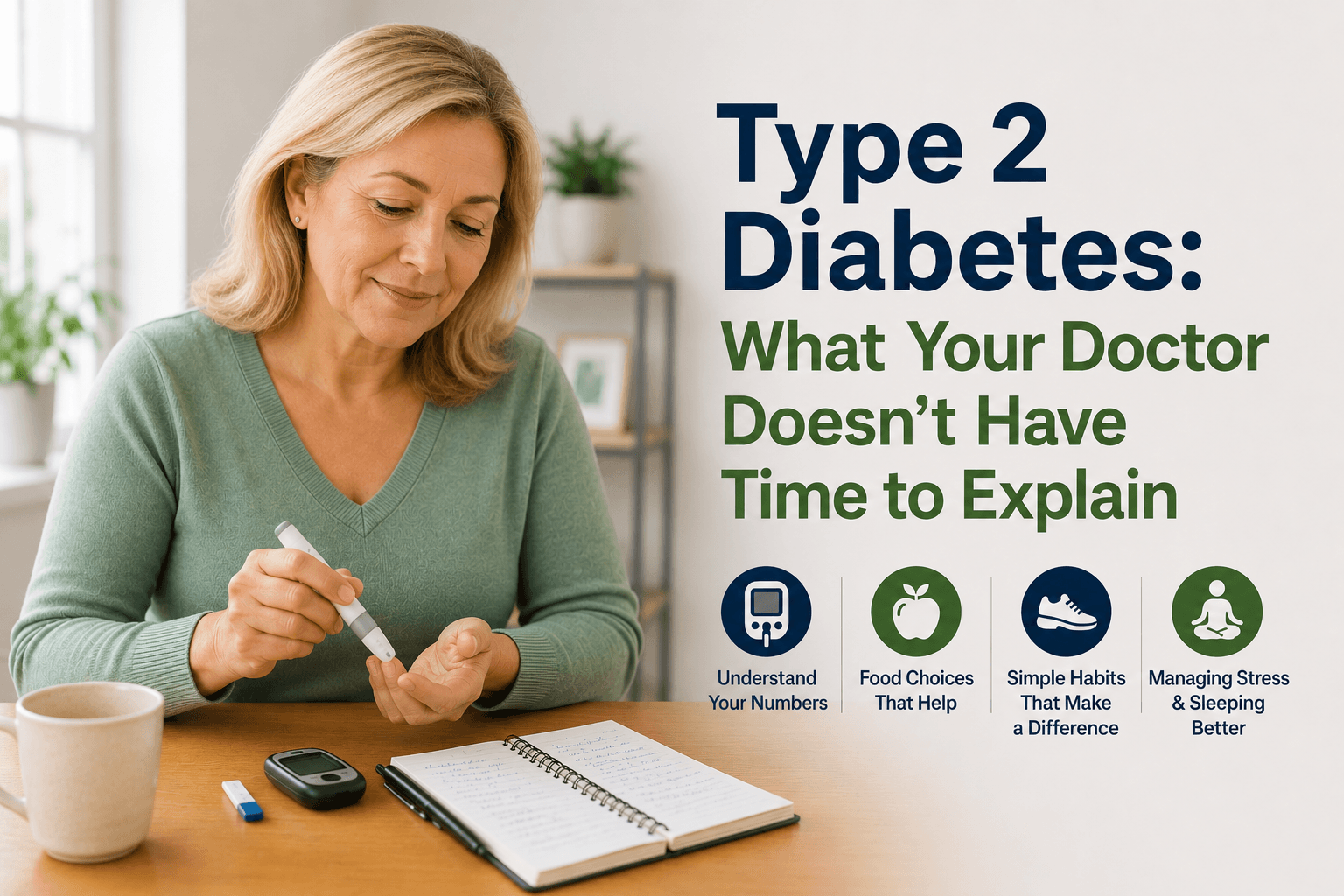
Your doctor has 15 minutes. This condition needs 15 hours.
More than 37 million Americans have diabetes — about 1 in 10 — and roughly 90–95% of those cases are type 2. Another 96 million adults have prediabetes, most without knowing it. Globally, the International Diabetes Federation estimates 537 million adults are living with diabetes, and that number is projected to hit 783 million by 2045.
If you've been diagnosed, you've probably been told to "watch your carbs" and "exercise more." Maybe you were handed a pamphlet. Maybe you left the office with a prescription and a follow-up in three months. And maybe you walked out feeling like you understand less than when you walked in.
That's not your doctor's fault. The average primary care visit is 15.7 minutes long. Type 2 diabetes is a complex metabolic condition that affects nearly every organ system in your body. Explaining it properly takes time that the healthcare system simply doesn't allocate.
This article is the explanation you didn't get. We'll cover what type 2 diabetes actually is at a cellular level, what your numbers mean, how to eat without losing your mind, which habits move the needle the most, and when to worry (and when not to).
Type 2 diabetes is not a sugar problem — it's an insulin resistance problem. Your body still makes insulin, but your cells have stopped responding to it efficiently. Understanding this distinction changes everything about how you manage it.
What type 2 diabetes actually is
Let's start with what's happening inside your body, in plain language.
When you eat, your digestive system breaks food down into glucose (a type of sugar) and releases it into your bloodstream. Your pancreas detects the rising blood sugar and releases insulin — a hormone that acts like a key, unlocking your cells so glucose can enter and be used for energy.
In type 2 diabetes, something has gone wrong with this process. Your cells have become resistant to insulin. The key still fits the lock, but the lock is stuck. Your pancreas responds by producing more insulin to compensate — sometimes two, three, or five times the normal amount. For a while, this works. Blood sugar stays in a normal range because the sheer volume of insulin forces glucose into cells.
But over time — often years or decades — the pancreas can't keep up. It becomes exhausted. Insulin production declines, and blood sugar starts to rise. By the time you're diagnosed with type 2 diabetes, you may have lost 50–80% of your beta cell function (the cells in the pancreas that produce insulin).
This is not a character flaw
Insulin resistance has strong genetic components. If one parent has type 2 diabetes, your lifetime risk is about 40%. If both parents have it, the risk climbs to 70%. Ethnicity, age, hormonal changes, sleep patterns, stress, and even the composition of your gut microbiome all play a role.
Yes, diet and physical activity matter enormously. But the idea that type 2 diabetes is simply caused by "eating too much sugar" is a damaging oversimplification that prevents people from understanding — and managing — their condition effectively.
Your numbers — and what they actually mean
If there's one thing that causes the most confusion and anxiety, it's the numbers. Let's demystify the three most important ones.
A1C (Hemoglobin A1C)
A1C measures the percentage of hemoglobin in your blood that has glucose attached to it. Because red blood cells live for about 3 months, A1C gives you an average picture of your blood sugar over the past 90 days. It's the single most important number for tracking long-term diabetes management.
| A1C Level | Category | What It Means |
|---|---|---|
| Below 5.7% | Normal | Blood sugar management is healthy |
| 5.7% – 6.4% | Prediabetes | Insulin resistance is present; reversible with lifestyle changes |
| 6.5% or higher | Diabetes | Diagnostic threshold; management plan needed |
The ADA recommends an A1C target of below 7% for most adults with diabetes. But your doctor may set a different target based on your age, other health conditions, and risk of hypoglycemia. An older adult with heart disease might target below 8%. A younger, otherwise healthy person might aim for below 6.5%.
The landmark UKPDS trial found that every 1% reduction in A1C was associated with a 21% reduction in diabetes-related deaths, a 14% reduction in heart attacks, and a 37% reduction in microvascular complications (eye, kidney, nerve damage). Small improvements in A1C have outsized effects on long-term outcomes.
Fasting blood glucose
This is your blood sugar level after at least 8 hours without eating. It's a snapshot, not a trend — useful for diagnosis and for understanding your baseline, but less informative than A1C for ongoing management.
| Fasting Glucose | Category |
|---|---|
| Below 100 mg/dL | Normal |
| 100 – 125 mg/dL | Prediabetes |
| 126 mg/dL or higher | Diabetes |
Post-meal blood sugar
Your blood sugar 1–2 hours after eating. The ADA recommends keeping post-meal glucose below 180 mg/dL, though many endocrinologists prefer a target of below 140 mg/dL. Post-meal spikes are where a lot of the damage happens — they stress blood vessels and contribute to complications over time.
If you're using a glucometer or continuous glucose monitor (CGM), tracking post-meal readings is one of the most actionable things you can do. It tells you exactly which foods and portions your body handles well — and which ones it doesn't.
Understanding insulin resistance (the real problem)
Most diabetes education focuses on blood sugar. But blood sugar is the symptom. The underlying disease is insulin resistance — and it starts years, sometimes decades, before blood sugar ever goes out of range.
Insulin resistance is driven by several interconnected mechanisms:
- Excess visceral fat: Fat stored around organs (especially the liver and pancreas) actively interferes with insulin signaling. This is why waist circumference is a better predictor of diabetes risk than BMI.
- Chronic inflammation: Visceral fat releases inflammatory cytokines (like TNF-alpha and IL-6) that block insulin receptors on cells.
- Liver overproduction of glucose: In insulin resistance, the liver doesn't get the signal to stop releasing stored glucose, so it dumps sugar into your blood even when you haven't eaten — which is why fasting blood sugar can be high.
- Mitochondrial dysfunction: Your cells' energy factories become less efficient at burning glucose, so more of it stays in the bloodstream.
This is why weight loss — particularly loss of visceral fat — has such a dramatic effect on blood sugar. It's not about the scale number. It's about reducing the fat that's physically interfering with insulin's ability to do its job.
You can have perfectly normal blood sugar and still have significant insulin resistance. Your pancreas is just working overtime to compensate. This is the prediabetes phase — and it's the most important window for intervention, because the process is still largely reversible.
How to eat — without losing your mind
Nutrition is where most people feel the most overwhelmed, the most judged, and the most confused. Let's cut through it.
Carbs are not the enemy — but they matter most
Carbohydrates have the largest and most direct impact on blood sugar. That's a biochemical fact, not a moral judgment. When you eat carbs, they're broken down into glucose. The more carbs you eat at once, the higher your blood sugar will spike — and the more insulin your body needs to produce to deal with it.
But "avoid carbs" is terrible advice. Your brain runs almost exclusively on glucose. Fiber (a type of carb) is essential for gut health, cholesterol management, and blood sugar stability. The issue isn't carbs themselves — it's the type, the amount, and the context.
The practical framework
- Prioritize complex carbs over simple ones: Whole grains, legumes, vegetables, and most fruits break down slowly and cause gentler blood sugar rises. White bread, white rice, sugary drinks, and pastries break down fast and cause sharp spikes.
- Pair carbs with protein, fat, or fiber: Eating a piece of bread alone spikes blood sugar much more than eating bread with avocado and eggs. The protein and fat slow gastric emptying, meaning glucose enters your bloodstream more gradually.
- Watch portions, not categories: A cup of brown rice is fine. Three cups of brown rice will still spike your blood sugar. Learning your personal portion thresholds (via a glucometer or CGM) is more useful than any food list.
- Front-load non-starchy vegetables: Fill half your plate with vegetables, a quarter with protein, and a quarter with complex carbs. This isn't a rigid rule — it's a visual anchor that consistently produces better post-meal numbers.
- Eat meals in order: Emerging research suggests eating vegetables and protein before carbs within the same meal reduces post-meal glucose spikes by 30–40%. The mechanism involves gastric emptying and incretin hormone response.
A 2023 study in Diabetes Care found that participants who ate vegetables first, then protein, then carbs — within the same meal — had 35% lower post-meal glucose spikes compared to those who ate the same foods in the opposite order. Same food, same calories, different sequence, dramatically different blood sugar response.
Foods that consistently help
- Leafy greens (spinach, kale, arugula) — virtually no blood sugar impact, high in magnesium
- Legumes (lentils, chickpeas, black beans) — high fiber slows glucose absorption
- Nuts and seeds — healthy fats improve insulin sensitivity over time
- Fatty fish (salmon, sardines, mackerel) — omega-3s reduce inflammation
- Berries — lower glycemic impact than most fruit, high in polyphenols
- Vinegar — 1–2 tablespoons of apple cider vinegar before meals has been shown to reduce post-meal glucose by 20–30% in some studies
- Cinnamon — modest evidence for improving fasting blood sugar (1–3 grams per day)
What about sugar?
You don't need to eliminate sugar entirely. That's unsustainable and unnecessary. What matters is the dose and the context. A small dessert after a high-fiber, protein-rich meal will have a much smaller blood sugar impact than a sugary drink on an empty stomach. The worst offenders are liquid sugars — soda, fruit juice, sweetened coffee drinks — because they hit your bloodstream with no fiber to slow the absorption.
Exercise: the most underused medication
If exercise were a pill, it would be the most prescribed drug in the world. For type 2 diabetes specifically, physical activity directly addresses the core problem — insulin resistance — in ways that no medication fully replicates.
What exercise does to your cells
When you move your muscles, they need energy. Exercise activates an alternative pathway (called GLUT4 translocation) that lets your muscle cells absorb glucose without needing insulin. This is why blood sugar drops during and after exercise even if your insulin resistance hasn't changed yet.
Regular exercise also improves insulin sensitivity for 24–72 hours after each session. Over weeks and months, it reduces visceral fat, lowers inflammation, and improves mitochondrial function — essentially reversing the mechanisms that drive insulin resistance.
What actually works
- Walking after meals: A 10–15 minute walk after eating reduces post-meal glucose spikes by 20–30%. This is the single easiest intervention and one of the most effective. The timing matters — walking 30 minutes after finishing a meal captures the peak glucose absorption window.
- Aerobic exercise: 150 minutes per week of moderate intensity (brisk walking, cycling, swimming). Lowers A1C by an average of 0.6–0.7% — comparable to some oral medications.
- Resistance training: Lifting weights 2–3 times per week. Muscle tissue is the largest consumer of glucose in the body. More muscle = more glucose disposal capacity = lower blood sugar. A 2021 meta-analysis found resistance training alone reduces A1C by 0.3–0.5%.
- Combined training: Doing both aerobic and resistance exercise produces the largest A1C reduction — typically 0.7–1.0%.
A 10-minute walk after each meal is one of the most effective blood sugar interventions available — and it requires no gym, no equipment, and no fitness level. Three 10-minute walks per day can reduce average blood sugar by more than some prescription medications.
Medication: what you should know
Medication isn't a failure. For many people, it's a necessary and effective part of management — especially since significant beta cell loss has often already occurred by the time of diagnosis.
Metformin (first-line treatment)
Metformin has been the default first-line medication for type 2 diabetes for decades, and for good reason. It works primarily by reducing the amount of glucose your liver produces and by improving insulin sensitivity. It's cheap, well-studied, and generally safe. Side effects (mostly GI — nausea, diarrhea) are common initially but often resolve within a few weeks.
Metformin typically lowers A1C by 1.0–1.5%. It does not cause weight gain (and may cause modest weight loss), and it does not cause hypoglycemia when used alone.
GLP-1 receptor agonists (the new standard)
Drugs like semaglutide (Ozempic, Wegovy), liraglutide (Victoza), and tirzepatide (Mounjaro) have transformed diabetes management in recent years. They work by mimicking a gut hormone (GLP-1) that stimulates insulin release, suppresses glucagon, slows gastric emptying, and reduces appetite.
The A1C reductions are significant — typically 1.0–2.0% — and many patients experience substantial weight loss (10–15% of body weight), which further improves insulin resistance. Major cardiovascular outcome trials (SUSTAIN-6, LEADER, SELECT) have shown reduced heart attacks, strokes, and cardiovascular death.
SGLT2 inhibitors
Drugs like empagliflozin (Jardiance) and dapagliflozin (Farxiga) work by causing your kidneys to excrete excess glucose in urine. They lower A1C by 0.5–0.8%, cause modest weight loss, reduce blood pressure, and have shown significant benefits for heart failure and kidney disease — even in people without diabetes.
Insulin
Some people with type 2 diabetes eventually need insulin — and that's okay. It means your pancreas has lost enough beta cell function that oral medications and lifestyle changes can't keep up. Starting insulin is not a failure of willpower. It's a rational response to a physiological reality.
Never adjust or stop diabetes medications without talking to your doctor. Changes in medication need to be coordinated with your blood sugar monitoring and may require dose titration. This article is educational — it is not medical advice and does not replace your physician's guidance.
Monitoring: your daily feedback loop
You can't manage what you don't measure. Blood sugar monitoring gives you direct, real-time feedback on how your body responds to food, exercise, stress, and sleep.
Glucometers (finger sticks)
Traditional glucometers are inexpensive and widely available. They're best for spot-checking — fasting glucose in the morning, pre-meal, and 2 hours post-meal. The downside is that each reading is a single snapshot. You might miss spikes and drops between measurements.
Continuous glucose monitors (CGMs)
CGMs like the Dexcom G7 and Abbott FreeStyle Libre 3 have been game-changers. They measure glucose every 1–5 minutes via a small sensor worn on the skin, giving you a complete picture of how your blood sugar behaves throughout the day and night. They reveal patterns that finger sticks miss — overnight drops, post-meal spikes, the impact of stress, how different foods compare.
CGMs are increasingly covered by insurance for type 2 diabetes, especially if you're on insulin or have an A1C above target. Even a 2-week trial can be enormously educational if long-term coverage isn't available.
We've tested the leading monitors and glucometers in our glucose monitoring device rankings.
Complications — and how to prevent them
Uncontrolled blood sugar damages blood vessels and nerves over time. The complications of diabetes are serious, but they're largely preventable with consistent management.
- Heart disease and stroke: The leading cause of death in people with diabetes. Managing blood pressure, cholesterol, and blood sugar together dramatically reduces risk. Statins and blood pressure medications are often prescribed alongside diabetes treatment.
- Kidney disease (nephropathy): High blood sugar damages the tiny blood vessels in your kidneys. Annual screening (urine albumin-to-creatinine ratio and eGFR) catches problems early. SGLT2 inhibitors and ACE inhibitors/ARBs have shown kidney-protective effects.
- Eye damage (retinopathy): Diabetes is the leading cause of blindness in working-age adults. Annual dilated eye exams can detect retinopathy before you notice symptoms. Early-stage retinopathy is treatable and often reversible with better glucose control.
- Nerve damage (neuropathy): Affects up to 50% of people with diabetes over time. Usually starts as tingling or numbness in the feet and hands. Tight blood sugar control is the most effective prevention.
- Foot problems: Neuropathy + poor circulation = increased risk of foot ulcers and infections. Daily foot checks, proper footwear, and regular podiatry visits are essential — not optional.
The UKPDS and ADVANCE trials demonstrated that intensive blood sugar management reduces microvascular complications (eye, kidney, nerve) by 25–37%. And the benefits compound over time — a concept called "metabolic memory" or the "legacy effect." Better control now pays dividends for decades.
The mental health side nobody talks about
Living with diabetes is mentally exhausting. The constant monitoring, food decisions, medication management, and fear of complications create a chronic cognitive load that most healthcare providers don't address.
Diabetes distress — a specific form of emotional burden related to managing diabetes — affects an estimated 33–45% of people with type 2 diabetes. It's different from clinical depression (though the two overlap), and it directly impacts self-management. People experiencing diabetes distress are less likely to check their blood sugar, take medications consistently, or follow dietary guidelines.
If you feel overwhelmed, burned out, or defeated by diabetes management, that's not weakness. It's a recognized and well-studied consequence of living with a relentless chronic condition. Speak to your healthcare team about it. Diabetes educators, mental health professionals with diabetes experience, and peer support groups can all help.
Can type 2 diabetes be reversed?
This is the question everyone asks. The honest answer: sometimes, and it depends on what you mean by "reversed."
The DiRECT trial (2018, The Lancet) demonstrated that intensive weight loss — primarily through calorie restriction — put 46% of participants with type 2 diabetes into remission at 12 months (defined as A1C below 6.5% without medication). At 2 years, 36% maintained remission. Weight loss of 15 kg (33 lbs) or more was associated with an 86% remission rate.
The mechanism makes sense: losing visceral fat — particularly fat around the liver and pancreas — reduces inflammation and allows insulin signaling to recover. If enough beta cell function remains, the pancreas can resume adequate insulin production.
But "remission" is the preferred term, not "cure." The underlying genetic predisposition doesn't go away. If weight is regained, diabetes almost always returns. And remission becomes less likely the longer someone has had diabetes, because progressive beta cell loss continues regardless of lifestyle.
The practical takeaway: early intervention offers the best chance of remission. If you're in the prediabetes or early diabetes stage, aggressive lifestyle changes can genuinely change your trajectory.
Building a daily routine that works
Here's what a sustainable daily routine might look like for someone managing type 2 diabetes. This isn't prescriptive — adapt it to your life.
- Morning: Check fasting blood sugar. Take medications. Eat a protein-rich breakfast (eggs, Greek yogurt, nuts) with modest complex carbs. Avoid sugary cereals and juice.
- After breakfast: 10-minute walk — even around the block or up and down stairs.
- Lunch: Half-plate vegetables, quarter protein, quarter complex carbs. Drink water, not soda or juice.
- After lunch: Another 10-minute walk if possible.
- Afternoon: If snacking, choose protein-based options (handful of almonds, cheese, hummus with vegetables) over carb-heavy snacks.
- Dinner: Vegetables and protein first, then carbs. Check blood sugar 2 hours after if monitoring.
- Evening: 10-minute walk or light stretching. Avoid heavy eating within 2–3 hours of bed.
- Before bed: Take evening medications if applicable. Brief foot check.
Perfection is not the goal. Consistency is. Missing a walk or having a high-carb meal is not a crisis. What matters is the pattern across weeks and months — not any single day.
The bottom line
Type 2 diabetes is a complex, chronic, and progressive condition. It's also one of the most manageable diseases in modern medicine — if you understand it, track it, and address it consistently.
The most important things to remember:
- It's an insulin resistance problem, not just a sugar problem
- A1C is your most important long-term number — small improvements have big effects
- Food order and composition matter as much as calorie counting
- Walking after meals is underrated and extremely effective
- Medication is a tool, not a failure
- Monitoring gives you power — consider a CGM trial even if briefly
- Mental health is part of diabetes management
- Early, aggressive lifestyle change offers the best shot at remission
You don't need to be perfect. You need to be consistent. Understand your numbers, walk after meals, prioritize protein and fiber, take your medication, and check your feet. Do those things most days, and the trajectory of this condition changes dramatically. Talk to your doctor about setting personalized targets — and don't be afraid to ask for the time and explanations you deserve.