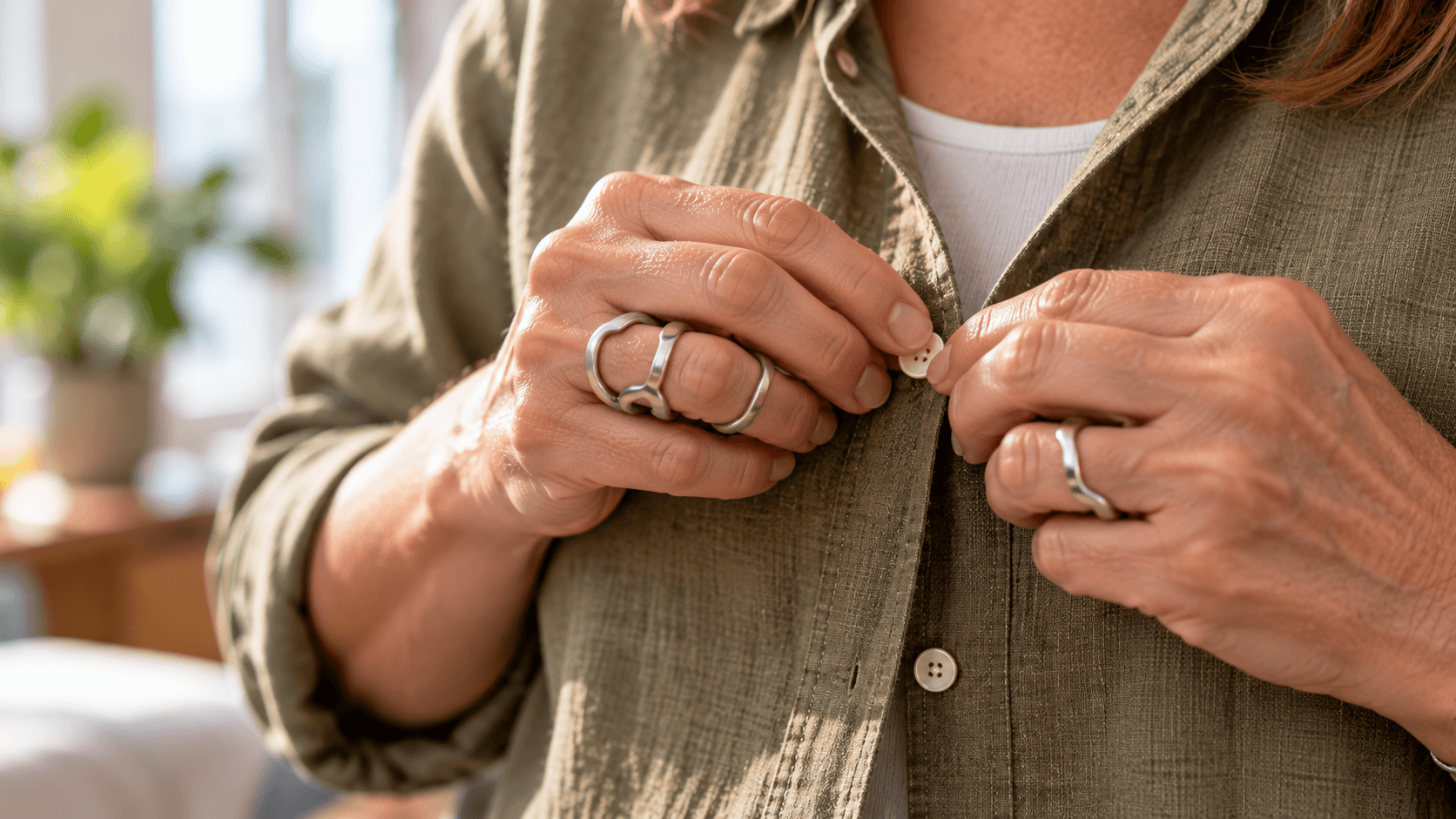
Rheumatoid arthritis, or RA, can cause joint pain, swelling, stiffness, fatigue, reduced grip, and difficulty with daily tasks. At-home pain and mobility tools may help protect joints, improve comfort, support function, and make daily routines easier. But the right tool depends on which joints are affected, whether inflammation is active, what tasks are difficult, and whether the device fits correctly.
Support tools do not replace RA treatment. RA is an inflammatory autoimmune disease, and long-term control usually depends on medical care, disease-modifying medicines when appropriate, monitoring disease activity, and follow-up with a rheumatology team. Home tools can support function, but they cannot stop joint inflammation or prevent damage by themselves.
This guide explains how to compare at-home pain and mobility tools for rheumatoid arthritis, what each option may help with, what it cannot do, and when pain, swelling, or mobility changes should prompt medical care.
Start With the Goal: Pain Relief, Protection, or Function
Before buying a device, define the problem. Are you trying to reduce morning stiffness, protect a painful wrist, make jars easier to open, walk more safely, reduce hand fatigue, or manage a temporary flare? Different goals need different tools.
The 2022 American College of Rheumatology guideline for exercise, rehabilitation, diet, and integrative interventions in RA conditionally recommends splinting, orthoses, and compression for people with hand or wrist involvement, and conditionally recommends assistive devices over no assistive devices. It also conditionally recommends against electrotherapy modalities such as TENS for RA management because of low-certainty evidence showing no improvement in pain and physical function specific to RA.
In practical terms, many RA tools are best used as add-ons to medical care and occupational or physical therapy—not as stand-alone treatment.
Tool 1: Splints and Orthoses
Splints and orthoses are supports designed to position, stabilize, or protect a joint. They are commonly used for wrists, thumbs, fingers, ankles, feet, and other joints affected by RA.
- May reduce painful movement during specific tasks
- May support unstable or inflamed joints
- May help during flares or repetitive activities
- Requires proper fit to avoid pressure, stiffness, or skin injury
NIAMS notes that occupational therapists can teach ways to protect joints, minimize pain, perform activities of daily living, and conserve energy, and advises talking with a doctor or physical or occupational therapist before wearing a splint.
Splint and Orthosis Buying Checklist
Fit matters more than appearance. A poorly fitted support can make symptoms worse.
- Match the device to the joint and task.
- Check whether it is for rest, activity, night use, or flare support.
- Look for adjustable straps that do not dig into skin.
- Check for breathable material and smooth seams.
- Make sure it does not press on swollen joints.
- Ask whether a custom orthosis is better than an off-the-shelf option.
Stop using a splint if it causes numbness, tingling, blue or pale skin, increased swelling, skin breakdown, or worsening pain.
Tool 2: Compression Gloves
Compression gloves are soft gloves designed to provide light pressure, warmth, or sensory support. Some people with RA use them for hand stiffness, swelling sensation, or comfort during low-demand activities.
- May feel soothing for mild hand discomfort
- May provide warmth during stiffness
- May remind you to protect irritated joints
- Does not replace hand therapy or disease control
The ACR guideline conditionally recommends compression as one possible rehabilitation support for RA hand or wrist involvement, but this recommendation is based on limited evidence and should be individualized.
Compression Glove Buying Checklist
Choose gloves based on comfort and safe compression.
- Measure your hand before choosing a size.
- Choose mild, even compression rather than tight compression.
- Check whether seams rub painful joints.
- Decide whether fingerless or full-finger gloves match your tasks.
- Choose washable, breathable fabric.
- Look for a return policy if fit is poor.
Compression should never cause finger color changes, numbness, throbbing, or swelling above the glove.
Tool 3: Ring Splints and Finger Supports
Ring splints can support finger alignment and stability in selected people with RA hand changes. They may help with grasping, finger positioning, or joint protection during tasks.
- May help stabilize specific finger joints
- May improve alignment during grasping
- Requires careful fitting
- May not be appropriate for every finger deformity or flare
The Arthritis Foundation explains that ring splints may help provide stability and improve alignment in finger joints for people with osteoarthritis or rheumatoid arthritis, and advises asking for evaluation by an occupational therapist or certified hand therapist when hand swelling, pain, or instability develops.
Tool 4: Assistive Devices for Daily Tasks
Assistive devices can reduce strain during everyday activities. These may be more useful than pain gadgets because they directly solve a task problem.
- Jar openers and bottle openers
- Built-up handles for utensils or pens
- Button hooks and zipper pulls
- Reachers and long-handled tools
- Key turners and doorknob adapters
- Adaptive kitchen tools
The ACR guideline describes occupational therapy services as potentially including joint protection, activity pacing, work simplification, fatigue management, splinting, orthotics, adaptive devices, environmental adaptations, and pain or stress management training.
Assistive Device Buying Checklist
Compare devices by the task they solve.
- Which task is painful or difficult?
- Does the tool reduce gripping, twisting, bending, or pinching?
- Can it be used during a flare?
- Can it be cleaned easily?
- Does it fit your hand size, strength, and home setup?
- Can an occupational therapist suggest a better option?
The best assistive device is often simple. If it makes the task safer and easier, it may be worth more than a complicated device that does not match your daily life.
Tool 5: Mobility Aids
Some people with RA need mobility aids during flares, after joint damage, after surgery, or when balance and walking are affected. Options include canes, walkers, shoe inserts, braces, and supportive footwear.
- May reduce fall risk
- May reduce load on painful joints
- May improve confidence during walking
- Needs fitting and instruction to avoid new pain or unsafe movement
The ACR guideline conditionally recommends assistive devices for RA, and NICE recommends access to specialist occupational therapy for adults with RA who have problems carrying out everyday activities or hand function problems.
Mobility Aid Buying Checklist
Do not guess the right mobility aid if balance, pain, or weakness is significant.
- Ask whether a cane, walker, brace, or footwear change is best.
- Check height, grip, weight capacity, and stability.
- Use non-slip tips or soles.
- Make sure the device works on stairs and uneven ground if needed.
- Practice with a therapist before relying on it outside the home.
If a device makes you limp more, lean heavily, or develop wrist, shoulder, hip, or back pain, it may need adjustment.
Tool 6: Heat Therapy
Heat can feel helpful for stiffness, especially in the morning or before gentle movement. Options include warm towels, heating pads, warm baths, paraffin baths, and heated mitts.
- May reduce stiffness temporarily
- May help muscles relax before movement
- Should be used cautiously around numb skin or circulation problems
- Should not be used over infected, open, or severely inflamed skin
The Arthritis Foundation advises applying heat for no more than 15 to 20 minutes at a time and recommends seeing a physical or occupational therapist for proper fitting and instruction with adaptive devices.
Heat Therapy Buying Checklist
Choose heat tools that are easy to control and unlikely to burn skin.
- Adjustable temperature settings
- Automatic shutoff
- Washable cover
- Clear instructions for time limits
- No direct heat on open wounds or numb skin
- Easy handling if grip is limited
Stop heat if skin becomes painful, unusually red, blistered, numb, or irritated.
Tool 7: Cold Therapy
Cold may help during a flare when a joint is hot, swollen, or acutely irritated. Options include cold packs, wrapped ice packs, gel packs, or cold compression wraps.
- May temporarily reduce swelling sensation or acute pain
- Should be wrapped, not placed directly on skin
- Should be limited in time
- May be unsafe with poor circulation or reduced sensation
Cold is not a substitute for contacting a clinician when inflammation is severe, spreading, or paired with fever or loss of function.
Cold Therapy Buying Checklist
Look for cold tools that protect skin and are easy to use.
- Soft, flexible pack that conforms to the joint
- Fabric barrier or sleeve
- Clear time instructions
- No leaking gel or damaged seams
- Easy freezer storage and safe handling
Stop cold therapy if skin becomes white, blue, numb, painful, or blistered.
Tool 8: TENS Units
TENS stands for transcutaneous electrical nerve stimulation. It sends mild electrical pulses through pads placed on the skin. Some people use TENS for pain, but evidence for RA specifically is limited.
- May feel temporarily soothing for some pain conditions
- Is not a disease-modifying RA treatment
- Requires careful pad placement and intensity control
- May not be appropriate with implanted devices, pregnancy, seizure disorders, heart rhythm concerns, or reduced sensation
The ACR RA guideline conditionally recommends against electrotherapy modalities such as TENS for RA management because evidence specific to RA did not show improvement in pain and physical function.
TENS Safety Checklist
If a clinician or therapist says a TENS trial is reasonable for your specific pain pattern, prioritize safety.
- Start at the lowest comfortable setting.
- Use only on intact skin.
- Do not place pads on the front of the neck or across the chest unless specifically instructed.
- Do not use while driving, bathing, sleeping, or operating machinery.
- Stop for burning, rash, dizziness, palpitations, or increased pain.
FDA notes reports of interference between electrical stimulation devices and implanted devices such as pacemakers and defibrillators. FDA guidance also states powered muscle stimulators should only be used under medical supervision for adjunctive therapy for medical diseases and conditions.
Tool 9: Exercise and Stretching Supports
Gentle exercise, strengthening, stretching, and mobility work can support function, but the plan should fit disease activity, joint status, and pain levels.
- Hand exercise programs may help selected people with hand or wrist pain and dysfunction.
- Resistance bands can be useful if they do not increase joint irritation.
- Grip tools should be used carefully during hand inflammation.
- Exercise should be adjusted during flares.
NICE recommends considering a tailored strengthening and stretching hand exercise program for adults with RA who have hand or wrist pain and dysfunction when they are not on a drug regimen for RA or if they have been on a stable drug regimen for at least 3 months.
Exercise Tool Buying Checklist
Choose tools that support gentle progression rather than forcing painful gripping.
- Low-resistance bands
- Soft grip aids only if tolerated
- Instruction from a therapist when hands, wrists, or shoulders are involved
- Easy-to-hold handles
- Clear plan for sets, reps, and flare adjustments
Stop exercises that cause sharp pain, lasting swelling, new weakness, numbness, or worsening function.
Tool 10: Home Setup and Ergonomic Changes
Sometimes the most effective tool is not worn on the body. It is a change in the environment that reduces strain.
- Lever-style door handles
- Lightweight cookware
- Electric can opener
- Voice controls or larger phone grips
- Supportive chair with armrests
- Raised toilet seat or grab bars if transfers are difficult
Occupational therapy can help match these changes to real daily routines, work tasks, childcare, cooking, bathing, and hobbies.
What At-Home Tools Cannot Do
Home tools can reduce strain and support comfort, but they cannot control RA inflammation by themselves.
- They cannot replace disease-modifying antirheumatic drugs when those are indicated.
- They cannot diagnose whether pain is from active inflammation, joint damage, infection, tendon injury, nerve compression, or another condition.
- They cannot prevent joint damage if RA is uncontrolled.
- They cannot replace rheumatology follow-up.
NIAMS explains that rheumatoid arthritis treatment may include medicines, physical and occupational therapy, and surgery when needed, and that exercise is important for maintaining muscles, mobility, and flexibility.
Buying Checklist: Before You Purchase
Before buying any RA pain or mobility tool, ask whether it solves a specific problem.
- Which joint or task is this for?
- Is the goal rest, support, compression, warmth, stability, or easier movement?
- Is the joint currently hot, swollen, or flaring?
- Could the device cause skin pressure or limit movement too much?
- Can it be adjusted as swelling changes?
- Can an occupational or physical therapist fit it?
- What symptoms mean I should stop using it?
A device should make daily function safer or easier. If it only adds complexity, it may not be the right tool.
Buying Checklist: Safety Red Flags
Be cautious with products that overpromise or ignore RA-specific risks.
- Claims to cure RA
- Claims to replace medication or rheumatology care
- No sizing information
- No return policy for fit problems
- No warnings about skin, circulation, implanted devices, or pregnancy when relevant
- High-pressure claims about “detoxing inflammation”
- Instructions to push through swelling, numbness, or severe pain
RA is a medical condition. A support product should not encourage delaying care when inflammation is active or symptoms are changing.
How to Run a Safe Tool Trial
Try one new tool at a time so you can tell what helps and what causes problems.
- Choose one goal, such as easier jar opening or less wrist pain while typing.
- Use the tool for a defined trial period.
- Track pain, swelling, stiffness, and function before and after use.
- Check skin and circulation after each use.
- Stop if symptoms worsen.
A tool is worth continuing only if it improves comfort or function without causing new problems.
What to Track for Follow-Up
A short log can help your clinician or therapist decide what to adjust.
- Joint: fingers, wrist, elbow, shoulder, ankle, foot, knee, or other area
- Tool: splint, glove, ring splint, cane, heat, cold, TENS, or adaptive device
- Symptoms: pain, stiffness, swelling, warmth, redness, fatigue, or weakness
- Function: grip, walking, dressing, cooking, typing, sleep, or work tasks
- Side effects: rash, numbness, tingling, skin marks, color changes, dizziness, or increased pain
- Pattern: morning stiffness duration, flare timing, medication changes, and activity triggers
Bring the log to rheumatology, occupational therapy, or physical therapy visits.
Common Mistake: Buying a Device Before Defining the Task
A painful hand does not automatically mean you need gloves. A painful wrist does not automatically mean you need a brace. A painful knee does not automatically mean you need a cane.
Start with the task that is hard.
Then match the tool to that task.
Common Mistake: Wearing Supports Too Long Without Guidance
Supports can reduce strain, but overuse may contribute to stiffness, weakness, or dependence if they limit movement unnecessarily.
Ask when to wear the device and when to remove it.
Use movement and strengthening plans as advised.
Common Mistake: Ignoring Skin and Circulation
RA tools often contact skin for long periods. Splints, gloves, braces, pads, and compression can cause pressure or irritation.
Check skin daily.
Stop for blisters, deep marks, numbness, tingling, swelling, or color change.
Common Mistake: Using TENS as RA Treatment
TENS may feel helpful for some kinds of pain, but evidence specific to RA is limited and the ACR guideline conditionally recommends against electrotherapy for RA management.
If you use TENS, do so only as a cautious pain-modulation trial with clinician guidance.
Do not use it to delay RA medication review or flare evaluation.
Common Mistake: Assuming Every Pain Is an RA Flare
People with RA can also have osteoarthritis, tendon injury, carpal tunnel syndrome, gout, infection, fracture, neuropathy, or medication side effects.
New or unusual pain deserves attention.
Do not keep adding devices if the diagnosis or cause is unclear.
When to Talk to a Clinician or Therapist
Talk to a rheumatologist, primary care clinician, occupational therapist, or physical therapist if pain, swelling, stiffness, fatigue, or mobility problems are worsening; if morning stiffness is increasing; if daily tasks are becoming harder; or if a device is causing skin irritation, numbness, weakness, or new pain.
You should also seek guidance before using splints, compression, TENS, heat, cold, braces, or exercise tools if you have neuropathy, circulation problems, skin wounds, implanted devices, pregnancy, heart rhythm problems, severe swelling, recent surgery, infection risk, or unclear symptoms.
A clinician or therapist may recommend medication review, inflammatory marker testing, imaging, occupational therapy, hand therapy, physical therapy, splint fitting, adaptive devices, joint protection strategies, or changes to your RA treatment plan depending on symptoms.
When to Seek Urgent or Emergency Care
Seek urgent care for a joint that is very red, hot, severely swollen, suddenly much more painful, or paired with fever or chills. Seek urgent evaluation for sudden inability to move or bear weight, new severe weakness, new numbness, major injury, rapidly spreading redness, or possible infection.
Seek emergency care for chest pain, severe shortness of breath, fainting, stroke symptoms, confusion, severe allergic reaction, or symptoms that feel life-threatening.
Do not wait for a brace, glove, cold pack, or TENS unit to fix symptoms that could signal infection, blood clot, fracture, heart problem, stroke, medication reaction, or another emergency.
The Bottom Line
At-home pain and mobility tools can help people with rheumatoid arthritis protect joints, reduce strain, improve comfort, and complete daily tasks more safely. Helpful options may include splints, orthoses, compression gloves, ring splints, adaptive devices, mobility aids, heat, cold, ergonomic changes, and carefully selected exercise supports.
The strongest approach is to match the tool to the task and get guidance from an occupational therapist, hand therapist, physical therapist, or clinician when symptoms are significant. TENS should be approached cautiously because RA-specific evidence is limited and ACR conditionally recommends against electrotherapy for RA management.
The most common mistakes are buying a device before defining the task, wearing supports too long without guidance, ignoring skin and circulation, using TENS as RA treatment, and assuming every pain is an RA flare.
Use tools as part of an RA care plan, not as a replacement for disease control or follow-up. If a tool does not improve function, causes new symptoms, or symptoms are worsening, stop and ask for guidance.
Medical disclaimer: This content is for informational purposes only and is not a substitute for professional medical advice, rheumatoid arthritis diagnosis, rheumatology care, medication management, occupational therapy, physical therapy, device fitting, hand therapy, imaging, lab testing, or emergency care. Always consult your physician, rheumatologist, occupational therapist, physical therapist, hand therapist, pharmacist, or qualified health provider before using or changing pain and mobility tools if you have RA, active inflammation, medical conditions, implanted devices, pregnancy, reduced sensation, circulation problems, skin wounds, or severe symptoms. If you have a very red hot swollen joint, fever with joint pain, sudden inability to move or bear weight, rapidly spreading redness, chest pain, severe shortness of breath, stroke symptoms, fainting, confusion, severe allergic reaction, or another emergency, seek urgent medical care right away.