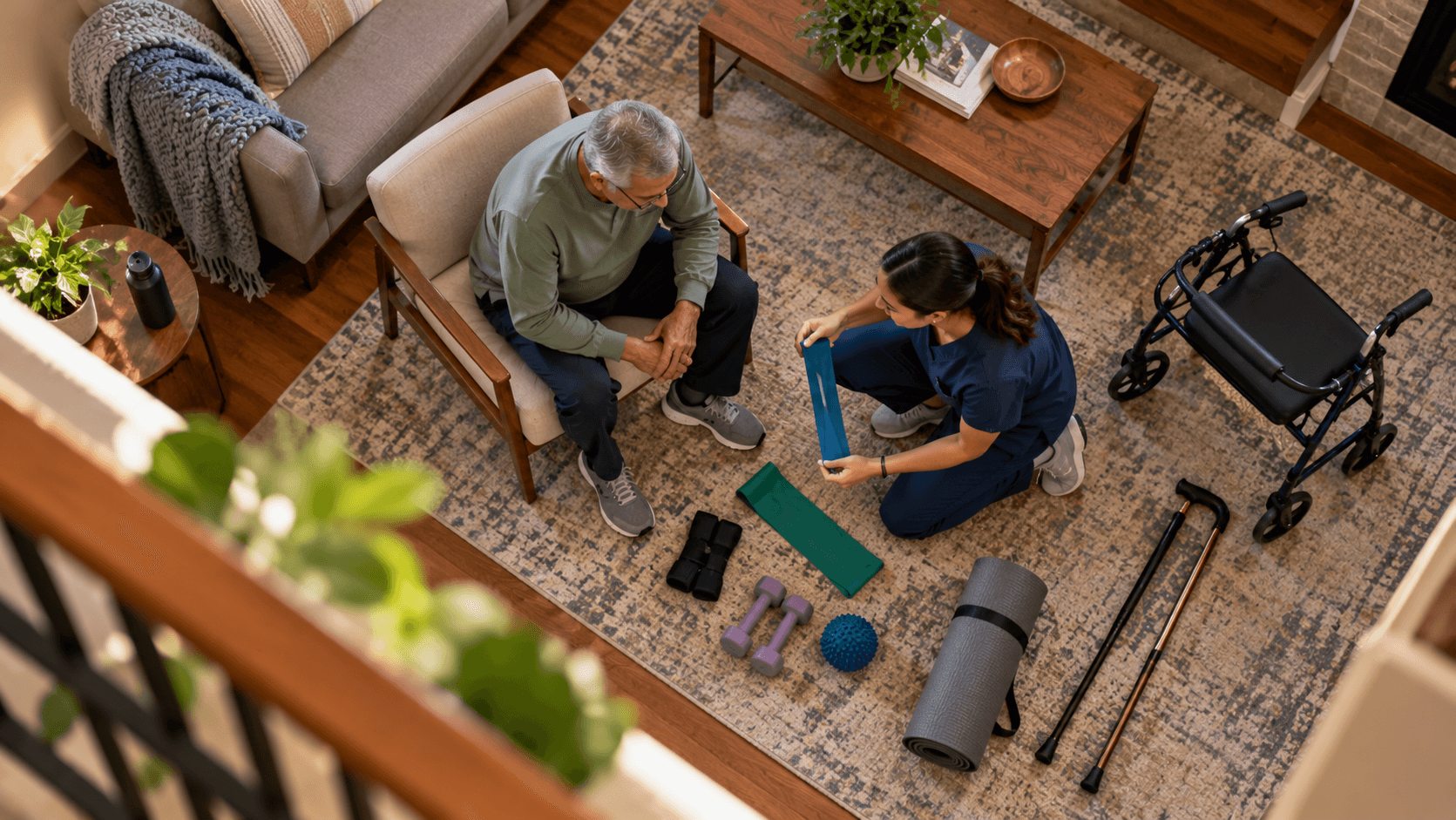
Sarcopenia — the gradual loss of muscle mass and strength that tends to accelerate after middle age — affects millions of older adults in the United States. It can make everyday tasks like climbing stairs, carrying groceries, or rising from a chair feel unexpectedly difficult. Over time, reduced muscle mass can also contribute to joint discomfort, balance problems, and a higher risk of falls.
While working with a physical therapist or physician is the most important step in managing sarcopenia, many people find that the right at-home tools help them stay consistent between appointments, manage day-to-day discomfort, and maintain a sense of independence. The challenge is that the market is crowded with options that range from genuinely helpful to overhyped — and what works well for one person may not suit another.
This guide is designed to help you think through the categories of tools available and the questions worth asking before you spend your money.
Why Sarcopenia Calls for a Thoughtful Approach to Tools
Unlike a single injury with a defined recovery timeline, sarcopenia is an ongoing condition rooted in the biology of aging — specifically in how the body synthesizes and breaks down muscle protein over time. That means the most effective management strategies tend to be consistent and long-term, rather than one-time fixes.
At-home tools are most useful when they support two core goals: building or preserving muscle and reducing barriers to movement. Pain and stiffness can make it tempting to move less, but reduced movement typically worsens muscle loss — so tools that help you stay active safely are genuinely valuable. Tools that simply mask discomfort without encouraging functional movement may offer short-term comfort but limited long-term benefit.
With that framing in mind, here are the main categories to consider.
Resistance Training Tools
Resistance exercise is the most evidence-supported intervention for slowing sarcopenia. Studies consistently show that progressive resistance training — gradually increasing the challenge to your muscles over time — can help maintain and even modestly rebuild muscle mass at any age. At-home tools in this category include:
- Resistance bands: Lightweight, inexpensive, and available in a range of resistance levels, bands are often the first recommendation for older adults beginning strength work at home. They allow for seated and standing exercises and are easy on joints compared to heavy free weights. Look for sets that include multiple resistance levels so you can progress gradually.
- Light dumbbells or adjustable weights: Free weights offer more versatility for experienced users and make it easier to track the load you're lifting. Adjustable dumbbell sets save space and grow with your fitness level, though they tend to cost more upfront.
- Ankle weights: Useful for lower-body exercises like leg lifts or seated knee extensions — movements that can strengthen the quadriceps, a muscle group that tends to weaken early in sarcopenia.
- Stability balls and balance boards: These add a neuromuscular challenge to strength exercises, engaging stabilizing muscles and potentially improving balance — an important consideration given that sarcopenia raises fall risk.
When comparing resistance tools, ask yourself: Can I use this safely without supervision? and Does this allow me to gradually increase the challenge? Progression is essential — staying at the same difficulty level indefinitely limits the training benefit.
Mobility and Flexibility Aids
Stiff joints and reduced range of motion are common companions to muscle weakness in sarcopenia. These tools are designed to help you move more comfortably through your daily range of motion:
- Foam rollers: Self-myofascial release with a foam roller is widely used to reduce muscle tightness and improve short-term flexibility. While the research on long-term outcomes is still evolving, many users report that rolling before or after exercise helps them move more comfortably. Denser rollers provide firmer pressure; textured rollers may target deeper tissue. If you have osteoporosis or fragile skin, consult a clinician before using one.
- Massage balls and handheld massage tools: Smaller and more targeted than foam rollers, these work well for areas like the feet, calves, or upper back. Percussive massage devices (sometimes called massage guns) have become popular and may help reduce post-exercise soreness, though they're a higher-cost option.
- Stretching straps: Simple fabric straps with loops allow you to guide your limbs through stretches without needing full flexibility to begin with — making them particularly accessible for older adults or those with limited range of motion.
Walking and Balance Aids
For those whose sarcopenia has progressed to the point of affecting gait or balance, mobility aids can be genuinely life-changing — not just for safety, but for preserving the confidence to stay active.
- Walking canes: A single-point cane can reduce the load on a painful hip or knee and provide a point of reference for balance. Fit matters enormously: the handle should align with your wrist when your arm hangs at your side. An adjustable cane lets you dial in the right height.
- Quad canes and forearm crutches: These provide more stability than a standard cane and may be appropriate for those with more significant balance challenges. A physical therapist can help you determine whether a standard cane or a more supportive option is right for your situation.
- Rollators (wheeled walkers): A four-wheeled rollator with a seat can be helpful for people who tire easily on longer walks, offering both support and a place to rest. They require some coordination to use safely, so a brief fitting session with a clinician or PT is advisable.
- Balance boards and wobble cushions: At the lower end of the mobility aid spectrum, these can be used during light standing exercises to challenge your proprioception — the body's sense of its own position — which tends to decline alongside muscle strength.
Pain Management Tools
Discomfort around the joints or in muscles that are working harder than usual to compensate for weakness is common in sarcopenia. A few at-home tools can help manage this without relying solely on medication:
- Heat therapy: Heating pads and microwaveable wraps can help relax tight muscles and improve local blood flow before exercise or activity. Heat is generally best for stiffness and chronic muscle tension rather than acute injury.
- Cold therapy: Ice packs or cold wraps are more useful after activity, when muscles or joints feel inflamed or swollen. Reusable gel packs that can be used warm or cold offer good versatility.
- TENS units: Transcutaneous electrical nerve stimulation devices send mild electrical impulses through the skin and may help some people manage chronic musculoskeletal pain. Over-the-counter TENS units are widely available, though they aren't appropriate for everyone — people with pacemakers or certain neurological conditions should avoid them. Ask your doctor before trying one.
- Supportive bracing: Knee sleeves, compression socks, or wrist braces can provide proprioceptive feedback and mild joint support during movement. They work best as a short-term adjunct to strengthening — not as a replacement for building the muscle that provides natural joint support.
How to Compare Options: A Simple Framework
With so many products available, it helps to run any potential purchase through a few key questions:
- Does it support movement, or just comfort? Tools that help you stay active or exercise more effectively tend to deliver more long-term benefit than those that only reduce pain in the moment.
- Is it appropriate for your current fitness level? Some tools — heavy resistance equipment, dense foam rollers, advanced balance boards — assume a baseline of strength or coordination that may not be there yet. Start where you are, not where you'd like to be.
- Is it adjustable or scalable? The best tools grow with you. Resistance bands in multiple levels, adjustable weights, and multi-height canes offer more value over time than fixed options.
- Has your care team weighed in? A physical therapist, physiatrist, or your primary care physician can recommend specific tools based on your individual presentation — and steer you away from products that might do more harm than good given your full health picture.
- What does the evidence actually say? Some tools are well-studied (resistance bands and progressive resistance training, for instance); others rely more on user testimonials. Healthy skepticism about dramatic marketing claims is warranted.
A Note on Cost
At-home tools range from a few dollars for a simple resistance band to hundreds of dollars for adjustable weight sets or percussive massage devices. In general, the most effective interventions for sarcopenia — consistent resistance training, adequate protein intake, and staying active — don't require expensive equipment. A modest investment in a resistance band set and a good pair of supportive shoes may do more than a premium gadget used inconsistently.
Before you buy: Ask whether your insurance or Medicare plan covers any durable medical equipment (such as a rollator or cane) or physical therapy visits. In many cases, professional guidance is covered, while the gadget you're eyeing is not.
The Bottom Line
At-home tools can meaningfully support your quality of life when you're managing sarcopenia — but they work best as part of a broader plan that includes professional guidance, appropriate exercise, and good nutrition. No single device reverses muscle loss on its own.
If you're unsure where to start, the most valuable first step is a conversation with your doctor or a physical therapist who can assess your current strength, balance, and mobility and recommend the specific tools and exercises most likely to help you. From there, building a small, intentional toolkit — one that keeps you moving safely and consistently — is a practical and worthwhile goal.