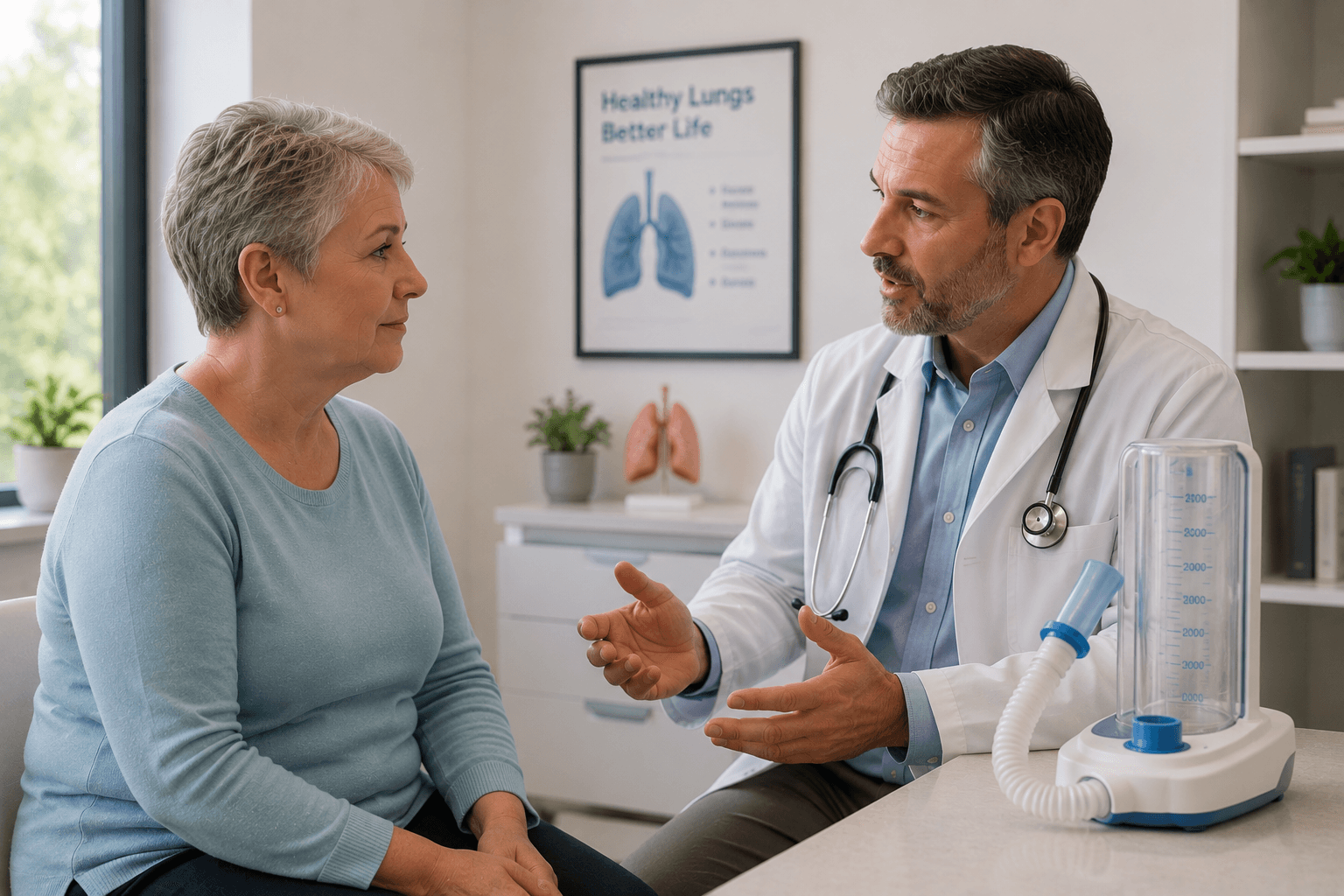
Chronic obstructive pulmonary disease, often called COPD, is a long-term lung condition that can make breathing harder over time. It includes conditions such as emphysema and chronic bronchitis and may cause shortness of breath, cough, mucus, wheezing, fatigue, and reduced activity tolerance.
For people living with COPD, prevention usually means reducing the risk of flare-ups and respiratory complications. A COPD flare-up, also called an exacerbation, is a period when symptoms suddenly get worse. Flare-ups may be triggered by infections, smoke, air pollution, weather changes, allergens, or missed medications.
COPD cannot always be reversed, but the right plan can help protect lung function, reduce symptoms, lower infection risk, and make it clearer when to call for help. This checklist explains the habits, tools, vaccines, and warning signs that matter most.
What Is COPD?
COPD is a chronic lung disease that makes it harder to move air in and out of the lungs. The airways may become inflamed and narrowed, and the air sacs in the lungs may become damaged. This can make breathing feel more difficult, especially during activity.
The most common symptoms include shortness of breath, ongoing cough, mucus production, wheezing, chest tightness, and fatigue. Symptoms may be mild at first and become more noticeable over time.
The CDC notes that tobacco smoke is the main cause of COPD in the United States, but exposure to environmental or workplace breathing hazards can also contribute. The CDC also notes that lung infections can cause serious problems for people with COPD and that respiratory disease vaccines can help prevent illness. :contentReference[oaicite:0]{index=0}
What Is a COPD Flare-Up?
A COPD flare-up is a noticeable worsening of breathing symptoms beyond the usual day-to-day pattern. A flare may include more shortness of breath, more coughing, more mucus, thicker mucus, a change in mucus color, wheezing, chest tightness, fever, low energy, or trouble doing normal activities.
Flare-ups can range from mild to life-threatening. Some can be managed early with the steps in a COPD action plan. Others need urgent medical care, especially when breathing becomes difficult, oxygen levels drop, confusion appears, or symptoms do not improve with prescribed treatment.
The World Health Organization notes that COPD flare-ups are often caused by respiratory infections and that treatment may include inhaled or nebulized medicines, antibiotics, or steroid tablets when needed. :contentReference[oaicite:1]{index=1}
Checklist Step 1: Avoid Tobacco Smoke
Avoiding tobacco smoke is one of the most important COPD prevention steps. If you smoke, quitting is the most important step you can take to slow lung damage and reduce future complications.
Secondhand smoke can also make breathing harder and trigger symptoms. A smoke-free home and car are especially important for people with COPD. This includes cigarettes, cigars, pipes, marijuana smoke, and other smoke exposures.
Quitting smoking is difficult, but support can help. Ask a healthcare provider about nicotine replacement, prescription medications, counseling, quitlines, and support programs. Even if you have tried before, another attempt can still be worthwhile.
Checklist Step 2: Know Your Personal Triggers
COPD triggers are things that make breathing symptoms worse. Common triggers include cigarette smoke, wildfire smoke, air pollution, dust, fumes, strong odors, cold air, hot humid air, respiratory infections, pollen, mold, and workplace exposures.
Not everyone has the same triggers. A symptom diary can help you notice patterns. Track shortness of breath, cough, mucus, wheezing, activity level, weather, air quality, infection symptoms, medication use, and possible exposures.
The American Lung Association advises people with COPD to identify and reduce exposure to triggers that can make symptoms worse, including smoke, weather, pollen, and poor air quality. :contentReference[oaicite:2]{index=2}
Checklist Step 3: Stay Current on Vaccines
Respiratory infections can be harder on people with COPD. Flu, COVID-19, pneumonia, RSV, and other infections may trigger flare-ups, worsen breathing, or lead to hospitalization.
Ask your healthcare provider which vaccines are recommended for you based on age, health history, medications, and prior vaccination records. This may include flu, COVID-19, pneumococcal, RSV, Tdap, shingles, or other vaccines depending on your situation.
The American Lung Association notes that flu vaccination is the best way to prevent influenza and that people with COPD can also protect themselves by getting vaccinated against respiratory diseases such as COVID-19 and pneumonia. :contentReference[oaicite:3]{index=3}
Checklist Step 4: Check Air Quality Before Going Outside
Outdoor air can affect COPD symptoms. Pollution, ozone, wildfire smoke, pollen, extreme heat, cold air, and humidity may make breathing harder for some people.
Before outdoor activity, check the local air quality index, pollen count, weather, and wildfire smoke alerts when relevant. On poor air quality days, consider moving activities indoors, shortening outdoor time, avoiding heavy exertion, keeping windows closed, or using well-fitted masks when appropriate.
The American Lung Association recommends checking the pollen count and air quality index before leaving home as one way to reduce exposure to COPD triggers. :contentReference[oaicite:4]{index=4}
Checklist Step 5: Improve Indoor Air When Possible
Indoor air matters too. Smoke, dust, mold, pet dander, cleaning sprays, scented candles, gas stove fumes, wood smoke, and poor ventilation can all worsen symptoms for some people.
Helpful steps may include keeping the home smoke-free, reducing dust buildup, fixing leaks, addressing visible mold, using exhaust fans when cooking, avoiding strong fragrances, ventilating when safe, and choosing cleaning products that do not trigger symptoms.
If you use a fireplace, wood stove, gas appliance, or space heater, make sure it is properly vented and maintained. Carbon monoxide detectors and smoke alarms are important for household safety.
Checklist Step 6: Use Medicines Exactly as Prescribed
COPD medications may include long-acting inhalers, rescue inhalers, nebulized treatments, anti-inflammatory medicines, antibiotics or steroids during flare-ups, oxygen therapy, or other treatments depending on severity.
Preventive inhalers often work best when taken consistently, even on better breathing days. Rescue medicines are usually used for sudden symptoms or as directed in an action plan.
Do not stop or change COPD medicines without medical guidance. If cost, side effects, refill timing, or device use is a problem, tell your healthcare provider or pharmacist. There may be alternatives or training that can help.
Checklist Step 7: Review Inhaler and Nebulizer Technique
Inhaler technique problems are common. If medicine is not reaching the lungs, symptoms may stay worse even when the right medication was prescribed.
Common mistakes include not sealing the lips around the device, inhaling at the wrong speed, forgetting to hold the breath afterward, skipping a spacer when one is recommended, not cleaning the device, or running out of medication without realizing it.
Ask your healthcare provider, pharmacist, respiratory therapist, or COPD educator to watch you use each device. Bring all inhalers, spacers, nebulizer equipment, oxygen supplies, and medication lists to follow-up visits.
Checklist Step 8: Create and Follow a COPD Action Plan
A COPD action plan tells you what to do when symptoms are stable, when symptoms are getting worse, and when symptoms are an emergency. It should be personalized by your healthcare provider.
An action plan may include daily medicines, rescue medicine instructions, oxygen instructions when prescribed, when to start flare-up medicines, when to call the provider, and when to seek urgent care.
The American Lung Association recommends working with a healthcare provider to create a personalized COPD Action and Management Plan. :contentReference[oaicite:5]{index=5}
Checklist Step 9: Monitor Symptoms and Key Numbers
Home monitoring can help identify changes early. Important symptoms to track may include shortness of breath, cough, mucus amount, mucus color, wheezing, chest tightness, energy level, sleep, appetite, and ability to do normal activities.
Some people may also use a pulse oximeter to track oxygen saturation, especially if recommended by a provider. Others may monitor weight, temperature, heart rate, or activity tolerance. If you use oxygen therapy, follow the prescribed settings and do not adjust oxygen flow without guidance unless your action plan specifically says what to do.
A normal number does not always mean everything is fine. If you feel severely short of breath, confused, faint, or unable to speak normally, seek help even if a home device reading seems reassuring.
Checklist Step 10: Stay Active Safely
Many people with COPD avoid activity because breathing feels difficult. But too much inactivity can weaken muscles, reduce stamina, and make daily tasks feel harder.
Safe activity can support breathing efficiency, strength, mood, balance, and independence. Walking, light strength training, stretching, breathing exercises, and pulmonary rehabilitation may all be helpful depending on severity and medical guidance.
Ask your healthcare provider whether pulmonary rehabilitation is appropriate. It can teach breathing strategies, exercise pacing, energy conservation, and symptom management for people with chronic lung disease.
Common Mistake: Waiting Too Long to Act on a Flare-Up
Many COPD flare-ups start with small changes: more mucus, thicker mucus, a different mucus color, more coughing, slightly worse shortness of breath, lower energy, or needing rescue medicine more often.
Waiting until symptoms are severe can make treatment harder. Follow the early steps in your COPD action plan and call your provider if symptoms are not improving or if you are unsure what to do.
Early action may reduce the chance of an urgent visit, emergency room visit, or hospitalization.
Common Mistake: Ignoring Infection Symptoms
Respiratory infections are a common trigger for COPD flare-ups. Fever, chills, sore throat, increased cough, new body aches, worsening mucus, or exposure to someone with flu, COVID-19, RSV, or pneumonia should be taken seriously.
People with COPD should ask their healthcare provider when to test for infections, when antiviral medicines might be appropriate, and when antibiotics or steroids should be considered. These decisions depend on symptoms, oxygen levels, medical history, and the action plan.
Do not use leftover antibiotics or steroids without guidance. The wrong medication or timing can cause harm or delay needed care.
Common Mistake: Relying Only on a Pulse Oximeter
A pulse oximeter can be useful, but it is not a complete safety tool. Readings can be affected by cold fingers, nail polish, poor circulation, movement, device quality, skin pigmentation, and incorrect placement.
More importantly, symptoms matter. A person can feel dangerously short of breath, exhausted, confused, or unable to speak even before a device reading is recognized as concerning.
Use home numbers as part of the picture, not the whole picture. Follow your provider's guidance for what oxygen levels require a call or urgent care.
Common Mistake: Skipping Follow-Up When Symptoms Are Stable
COPD can change over time. Even when symptoms feel stable, regular follow-up helps review inhaler technique, medication needs, oxygen use, vaccines, flare-up history, activity limits, nutrition, sleep, and action plan steps.
Follow-up is especially important after an emergency visit, hospitalization, new oxygen prescription, medication change, or repeated flare-ups.
Bring questions, medication lists, inhalers, home readings, and symptom notes to appointments. These details can help the care team adjust the plan before symptoms become more serious.
When to Talk to a Healthcare Provider
Talk to a healthcare provider if you have more shortness of breath than usual, increased cough, more mucus, change in mucus color, wheezing, chest tightness, reduced activity tolerance, fever, low energy, weight loss, poor appetite, or repeated respiratory infections.
You should also ask for guidance if you do not have a COPD action plan, are unsure how to use inhalers, need rescue medicine more often, feel limited by activity, or have questions about vaccines, oxygen, pulmonary rehabilitation, or air quality precautions.
A provider may adjust medicines, review inhaler technique, order lung function testing, update vaccines, recommend pulmonary rehabilitation, evaluate oxygen needs, or check for infection or other causes of worsening symptoms.
When to Seek Urgent or Emergency Care
Seek urgent medical care if breathing is getting worse quickly, rescue medicine is not helping, oxygen levels are below the range set by your provider, mucus changes are severe, fever is high or persistent, or symptoms are not improving with your action plan.
Call emergency services if you have severe shortness of breath, trouble speaking in full sentences, blue or gray lips or fingernails, confusion, fainting, chest pain, severe drowsiness, or signs of a serious infection or respiratory emergency.
Do not drive yourself if breathing is severe, oxygen is low, you are confused, or symptoms feel life-threatening.
The Bottom Line
COPD prevention is mostly about reducing flare-ups and respiratory complications. The most important steps include avoiding smoke, knowing triggers, staying current on vaccines, checking air quality, using medicines correctly, reviewing inhaler technique, and following a COPD action plan.
Home monitoring can help, but symptoms matter as much as numbers. More shortness of breath, more cough, mucus changes, fever, low energy, or needing rescue medicine more often can be early signs that a flare-up is starting.
If you live with COPD and do not have a written action plan, ask your healthcare provider to create one with you. Knowing what to do during stable days, worsening days, and emergency symptoms can make COPD care safer and less confusing.