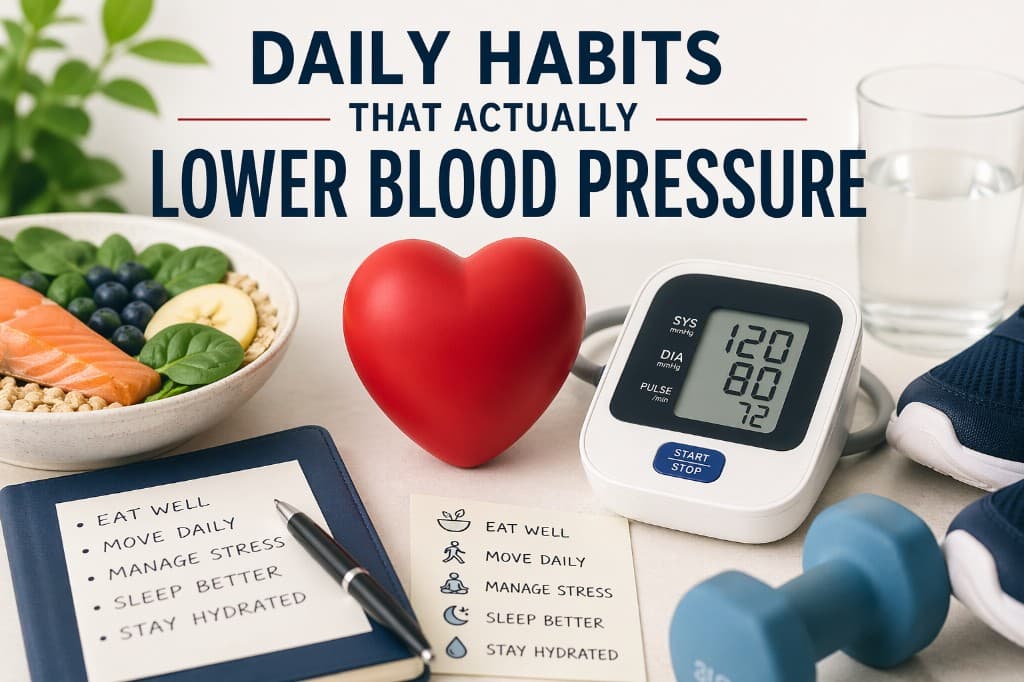
Nearly half of American adults have high blood pressure. Most know it. Far fewer do anything about it.
Hypertension affects roughly 119 million adults in the United States alone, close to 47% of the population. The World Health Organization estimates 1.28 billion people worldwide live with elevated blood pressure, and it's the single largest risk factor for heart disease, stroke, and kidney failure.
Yet blood pressure is one of the most modifiable risk factors in medicine. Decades of clinical research have identified specific daily habits that reliably lower systolic and diastolic pressure, some by as much as 11 mmHg, which is comparable to taking a prescription medication.
We spent three weeks reviewing meta-analyses, randomized controlled trials, and guidelines from the American Heart Association (AHA), the European Society of Cardiology, and the Cochrane Library. What follows is what the data supports, ranked by the size of the effect.
Combining three or four of the habits below can reduce systolic blood pressure by 15–20 mmHg, often enough to delay or avoid medication. Lifestyle changes work best when they're done consistently, not perfectly.
The habits, ranked by impact
Below is a summary of the habits we'll cover, ranked by the average systolic blood pressure reduction observed in clinical trials. Individual results vary based on genetics, starting blood pressure, and adherence.
| Habit | Avg. Systolic Reduction | Evidence Level |
|---|---|---|
| DASH diet | –11 mmHg | Very strong |
| Sodium reduction | –5 to –6 mmHg | Very strong |
| Regular aerobic exercise | –5 to –8 mmHg | Very strong |
| Weight loss (if overweight) | –1 mmHg per kg lost | Very strong |
| Limiting alcohol | –4 mmHg | Strong |
| Potassium-rich foods | –3 to –5 mmHg | Strong |
| Stress management | –3 to –5 mmHg | Moderate |
| Better sleep | –2 to –4 mmHg | Moderate |
1. Follow the DASH diet (–11 mmHg)
The DASH (Dietary Approaches to Stop Hypertension) diet is the single most effective lifestyle intervention for blood pressure. It was developed for exactly that purpose through NIH-funded research in the 1990s, and the results have been replicated dozens of times since.
DASH is an eating pattern built around:
- Fruits and vegetables: 8–10 servings per day
- Whole grains: 6–8 servings per day
- Lean protein: fish, poultry, beans, and nuts
- Low-fat dairy: 2–3 servings per day
- Limited saturated fat, added sugars, and red meat
The original DASH trial (1997, NEJM) showed an 11.4 mmHg reduction in systolic BP among participants with hypertension, achieved in just 8 weeks, without any changes to sodium intake or exercise. When combined with sodium reduction (the DASH-Sodium trial), the effect was even larger: up to 12–13 mmHg.
The hardest part of DASH is the volume of produce. Most people don't eat 8–10 servings of fruits and vegetables a day. Start by adding one serving at each meal rather than overhauling everything overnight.
2. Reduce sodium intake (–5 to –6 mmHg)
The American Heart Association recommends no more than 2,300 mg of sodium per day, with an ideal target of 1,500 mg for adults with hypertension. The average American consumes roughly 3,400 mg, mostly from processed and restaurant food rather than the salt shaker.
Sodium reduction is one of the most reliably studied interventions in blood pressure research. A 2019 Cochrane review of 133 studies confirmed that reducing sodium intake lowers blood pressure in both hypertensive and normotensive individuals.
Practical tips for cutting sodium
- Cook at home more often. Restaurant meals average 1,200+ mg per dish
- Read labels: canned soups, deli meats, bread, and condiments are the biggest culprits
- Rinse canned beans and vegetables before eating
- Use herbs, citrus, vinegar, and spices instead of salt for flavor
- Choose "no salt added" or low-sodium versions of staples
Salt sensitivity varies a lot between people. People of African descent, older adults, and those with chronic kidney disease tend to be more salt-sensitive, so they see larger blood pressure changes from sodium reduction.
3. Get regular aerobic exercise (–5 to –8 mmHg)
Physical activity is one of the most consistent blood pressure interventions across every group studied. The AHA recommends at least 150 minutes of moderate-intensity aerobic exercise per week (about 30 minutes, 5 days a week) for cardiovascular health.
You don't need intense exercise for the benefit. Brisk walking, cycling at a conversational pace, swimming, and even gardening all count as moderate-intensity activity. A 2023 meta-analysis in the British Journal of Sports Medicine found that isometric exercises like wall sits and planks may be even more effective than traditional cardio for blood pressure, with an average reduction of 8.2 mmHg systolic.
Isometric resistance exercises (wall sits, planks, hand-grip squeezes) showed the largest blood pressure reductions in a 2023 BJSM meta-analysis, more than running or cycling. Three 2-minute wall sits with rest periods, done 3 times per week, can lower systolic BP by 8+ mmHg.
Consistency matters more than intensity. A daily 20-minute walk does more over the long run than a weekly 90-minute gym session followed by six days of sitting still.
4. Lose weight if overweight (–1 mmHg per kg)
Weight loss has a linear relationship with blood pressure: for roughly every 1 kilogram (2.2 lbs) lost, systolic blood pressure drops by about 1 mmHg. So a person who loses 10 kg (22 lbs) can expect roughly a 10 mmHg reduction, approaching the effect of a first-line medication.
This holds across BMI categories. Even modest weight loss, around 5% of body weight, is linked to meaningful improvements in blood pressure, lipid profiles, and insulin sensitivity.
The method of weight loss matters less than the result. Whether through calorie restriction, more activity, or both, the blood pressure benefit tracks with the weight change itself rather than the approach used to get there.
5. Limit alcohol (–4 mmHg)
Moderate alcohol consumption is defined as up to 1 drink per day for women and up to 2 for men. Going past that consistently raises blood pressure and blunts the effect of antihypertensive medications.
A 2023 meta-analysis in JAMA Network Open found that reducing alcohol intake lowered systolic blood pressure by about 4.0 mmHg, with the largest reductions in people who drank more than 2 drinks per day at baseline. The benefits began within the first few weeks of cutting back.
If you don't drink, there's no evidence that starting would provide cardiovascular benefits.
6. Eat more potassium-rich foods (–3 to –5 mmHg)
Potassium works as a natural counterbalance to sodium. It helps your kidneys flush excess sodium and relaxes blood vessel walls. Most adults don't get enough. The recommended intake is 3,400 mg per day for men and 2,600 mg for women, and average consumption falls well short.
Top potassium-rich foods:
- Bananas: 422 mg per medium banana
- Sweet potatoes: 541 mg per medium potato
- Spinach (cooked): 839 mg per cup
- White beans: 1,189 mg per cup
- Avocados: 975 mg per whole avocado
- Yogurt: 573 mg per cup
- Salmon: 534 mg per 3 oz serving
If you have chronic kidney disease or take potassium-sparing diuretics (like spironolactone), talk to your doctor before increasing potassium intake. Excess potassium can be dangerous with impaired kidney function.
7. Manage chronic stress (–3 to –5 mmHg)
Chronic stress keeps your sympathetic nervous system activated, which constricts blood vessels and raises heart rate. Over time, that "always on" state contributes to sustained hypertension.
The evidence for specific stress-reduction techniques is moderate, weaker than for diet or exercise, but several approaches show measurable effects:
- Mindfulness meditation: A 2020 AHA scientific statement acknowledged that meditation can lower systolic BP by 2–5 mmHg, though study quality varies
- Deep breathing exercises: Slow, device-guided breathing (fewer than 10 breaths per minute for 15 minutes) has reduced BP by 3–4 mmHg in multiple trials
- Yoga: Regular practice (3+ times per week) is associated with a 3–5 mmHg reduction, likely from a mix of gentle exercise, breathing, and relaxation
- Time in nature: Emerging research suggests 20+ minutes of outdoor exposure in natural settings reduces cortisol and blood pressure readings
The best stress-management strategy is the one you'll keep doing. The data doesn't strongly favor one technique over another, so regular practice matters more than the choice.
8. Improve sleep quality (–2 to –4 mmHg)
Sleep is the most underappreciated factor in blood pressure management. During normal sleep, blood pressure drops 10–20% (a pattern called "nocturnal dipping"). Disrupted or short sleep prevents this dip, and over time, non-dipping patterns are associated with higher cardiovascular risk.
The sweet spot for adults appears to be 7–8 hours a night. Both short sleep (under 6 hours) and long sleep (over 9 hours) are associated with increased hypertension risk. Sleep apnea is a particularly strong driver: it causes repeated oxygen drops and surges in blood pressure throughout the night.
Sleep hygiene basics that matter for BP
- Keep a consistent sleep and wake time, even on weekends
- Keep the bedroom cool (65–68°F / 18–20°C)
- Limit caffeine after noon
- Avoid screens for 30–60 minutes before bed
- If you snore loudly or wake unrefreshed, ask your doctor about a sleep apnea evaluation
Combining habits: where the real gains happen
No single habit is a magic bullet, but the effects add up. A 2021 analysis in the Journal of the American College of Cardiology found that adults who adopted 3 or more lifestyle modifications at once achieved systolic reductions of 15–20 mmHg on average, often enough to move from Stage 1 hypertension to the normal range without medication.
A realistic combination might look like this:
- Follow a DASH-style eating pattern (focus on adding produce, not eliminating foods)
- Walk briskly for 25–30 minutes most days
- Reduce sodium by cooking more meals at home
- Cut back to 1 alcoholic drink per day or less
None of this is dramatic. None of these changes require a gym membership, a special diet plan, or expensive supplements. They require consistency and some intentionality, which is harder than it sounds and more effective than most people expect.
Track your progress at home
Home blood pressure monitoring is one of the best tools for staying accountable. It removes white-coat effects, lets you see the impact of changes in real time, and gives your doctor much better data than occasional office visits.
Measure at the same time each day (morning is best, before coffee or exercise), sit quietly for 5 minutes first, and take two readings one minute apart. Track the averages over time rather than fixating on single readings.
Need help choosing a monitor? We've tested and ranked the best options in our Top 5 Blood Pressure Monitors for Hypertension guide.
The bottom line
Blood pressure responds to how you live. That's the good news and the hard news at once, because it puts the responsibility largely in your hands, every day.
You don't need to adopt all eight habits at once. Pick one or two that feel manageable and build from there. Most studies show measurable improvements within 2–4 weeks. If you can hold 3–4 of these habits for 3 months, you'll likely see a meaningful, lasting reduction.
And if lifestyle changes aren't enough, that's okay too. Some people need medication regardless of their habits, and there's no shame in that. The goal isn't perfection; it's a lower number on the monitor and a healthier heart behind it.
Hypertension is the most treatable major risk factor for heart disease. The DASH diet, sodium reduction, regular exercise, and modest weight loss, combined, can lower systolic BP by 15–20 mmHg. Start with one change, track your numbers at home, and build from there. Talk to your doctor before making major changes, especially if you're already on medication.