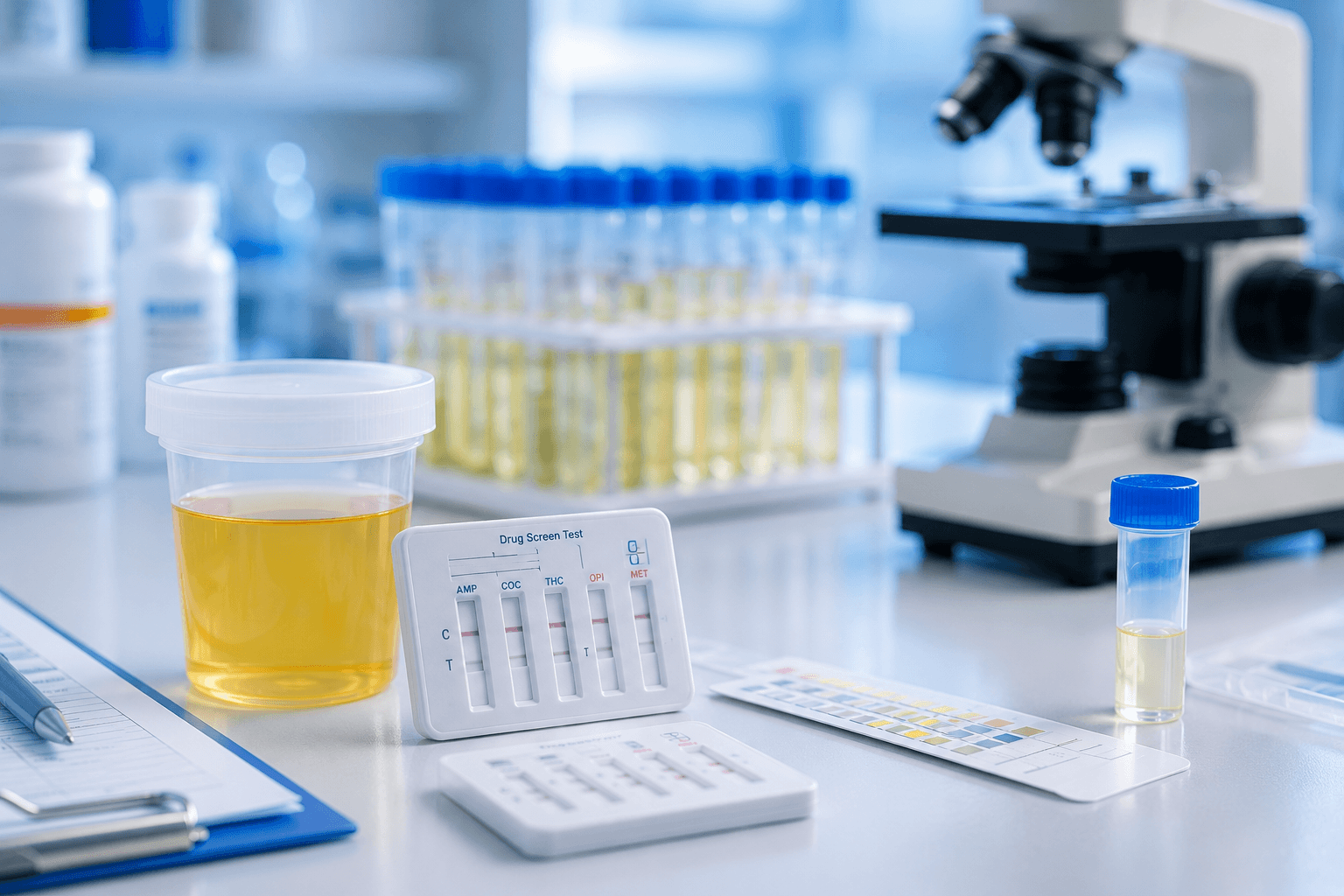
Drug screening is used in many settings, including workplaces, healthcare, treatment programs, sports, schools, legal situations, and at-home monitoring. A test may look simple, but the meaning of a result is not always simple.
A positive result does not always prove misuse. A negative result does not always prove no drug exposure. Accuracy can depend on the type of test, the sample collected, the timing of use, the drug being tested for, the cutoff used by the lab, medications, supplements, storage, and whether a confirmatory test was performed.
Understanding how drug screening works can help you interpret results more carefully, protect privacy, and know what steps to take if a test is positive, negative, invalid, or unexpected.
What Is Drug Screening?
Drug screening is a process used to check whether certain substances or their byproducts are present in the body. These substances may include illegal drugs, controlled substances, misused prescription medications, or specific medications that need monitoring.
Most screening tests do not measure impairment. Instead, they look for evidence that a substance or metabolite may be present in a sample such as urine, oral fluid, blood, hair, sweat, or breath.
This distinction matters. A test may show that a substance was used or present within a certain detection window, but it may not prove when the substance was taken, how much was taken, whether the person was impaired, or whether the use was medically appropriate.
Screening vs. Confirmation
The most important distinction to understand is between a screening test and a confirmatory test.
A screening test is usually the first step. It is designed to quickly identify samples that may contain a drug or drug metabolite. Many rapid tests and at-home tests use immunoassay technology, which can be sensitive but may also produce false positives or false negatives.
A confirmatory test is a more specific laboratory test used to verify a preliminary result. Confirmatory testing may use methods such as gas chromatography-mass spectrometry or liquid chromatography-tandem mass spectrometry. These tests are generally more reliable for identifying specific substances.
For this reason, a positive screening result should often be treated as preliminary until it is confirmed by a qualified laboratory. The FDA explains that at-home drugs-of-abuse tests typically involve a quick first test, followed by laboratory testing if the result suggests drugs may be present. The FDA also advises that serious actions should not be taken until the laboratory result is available because foods, supplements, beverages, and medicines can affect some results. :contentReference[oaicite:0]{index=0}
Common Types of Drug Tests
Drug tests vary based on the sample type. Each sample has strengths and limitations.
Urine Testing
Urine testing is one of the most common types of drug screening. It is widely used because it is relatively easy to collect, can detect many substances, and is often less expensive than some other methods.
Urine tests usually detect drug metabolites, which are substances produced as the body breaks down a drug. They may show exposure over a detection window that can range from hours to days, and sometimes longer depending on the substance, frequency of use, body composition, hydration, and test sensitivity.
Oral Fluid Testing
Oral fluid testing uses saliva or oral fluid collected from the mouth. It is often used when a more recent exposure window is important, because oral fluid may reflect more recent use than urine for some substances.
Collection is usually observed, which may reduce the chance of sample substitution. However, oral fluid tests may be affected by timing, dry mouth, recent food or drink, collection technique, and the specific drugs being tested.
Hair Testing
Hair testing can provide a longer lookback period than urine or oral fluid testing. It may detect repeated or past exposure over weeks to months, depending on hair length and testing method.
Hair testing is less useful for very recent use because it can take time for substances to appear in growing hair. It can also raise interpretation questions related to cosmetic hair treatment, environmental exposure, hair color or texture, and whether a result reflects use versus contamination.
Blood Testing
Blood testing is usually used in medical, legal, or emergency contexts. It can be more closely related to current levels of a substance in the body, but it is more invasive and has a shorter detection window for many drugs.
Blood testing may be used when timing, impairment, overdose, medication monitoring, or emergency care is part of the question.
Breath Testing
Breath testing is most commonly associated with alcohol. It estimates blood alcohol concentration from a breath sample. Breath tests are often used in roadside, workplace, clinical, and legal settings.
Breath testing has its own accuracy issues, including device calibration, timing, mouth alcohol, medical conditions, and proper testing procedure.
What Drug Tests Can and Cannot Tell You
A drug test can sometimes tell you whether a tested substance or metabolite was detected above a specific cutoff. It may also help monitor treatment adherence, document abstinence, or identify possible substance exposure.
However, many tests cannot tell you whether someone is currently impaired, whether use was intentional, whether a prescription was taken correctly, or exactly when a drug was used. Some tests are qualitative, meaning they report whether a drug may be present, not how much is present. The FDA notes that many home drugs-of-abuse tests are qualitative and cannot indicate acceptable versus abusive levels of prescribed drugs. :contentReference[oaicite:1]{index=1}
That is why context matters. A result should be interpreted alongside the person's medication list, prescriptions, medical history, timing, symptoms, sample type, lab method, and whether confirmation was performed.
What Affects Accuracy?
Several factors can affect drug test accuracy. These include collecting the sample too early or too late, testing for the wrong substance, using an expired or improperly stored test, contamination, lab or collection errors, diluted urine, adulterated samples, and medications or supplements that cross-react with the screening method.
The FDA lists several factors that may affect at-home drug test results, including how the test was performed, how the test or urine was stored, what the person ate or drank, and prescription or over-the-counter drugs taken before testing. It also notes that a negative result does not always rule out drug use because the test may have been done at the wrong time or may not have included the relevant drug. :contentReference[oaicite:2]{index=2}
Accuracy also depends on whether the result is confirmed. A rapid screening test is useful for quick information, but confirmatory laboratory testing is usually more appropriate when the result may affect employment, medical care, legal status, housing, family decisions, or treatment plans.
False Positives and False Negatives
A false positive means the test suggests a substance is present when it is not actually present. A false negative means the test does not detect a substance even though it was used or present.
False positives may occur because of cross-reactivity with certain medications, supplements, foods, or testing chemistry. False negatives may occur when the drug is not included in the test panel, the sample is collected outside the detection window, the concentration is below the cutoff, the sample is diluted, or the test is expired or performed incorrectly.
If a result is unexpected, do not assume the first result tells the whole story. Ask whether the test was a screening test or confirmatory test, what substances were included in the panel, what cutoff was used, whether the sample was valid, and whether a medical review process is available.
Privacy and Confidentiality
Drug screening results can be sensitive. They may affect employment, insurance, treatment, school participation, legal decisions, or family relationships. Because of this, privacy and confidentiality matter.
In workplace programs, policies should explain who is tested, when testing happens, who receives the results, what substances are tested for, who pays for testing, what steps protect accuracy, and what rights employees have after a positive result. SAMHSA advises workplace programs to develop systems that protect the confidentiality of employee drug-testing records and to identify a responsible person for receiving results who understands confidentiality protocols. :contentReference[oaicite:3]{index=3}
Rules vary by setting and location. A healthcare drug test may be handled differently from an employer test, school test, probation test, athletic test, or at-home test. If a test result may have serious consequences, it is reasonable to ask how the result will be stored, who can access it, whether it will be shared, and how long it will be kept.
At-Home Drug Tests: What to Know
At-home drug tests can be convenient, but they have limits. They may be useful for personal awareness, family discussions, or recovery monitoring when used carefully. However, they should not be treated as perfect proof.
Check the label to make sure the test includes the substance you are concerned about. Follow the instructions exactly, use the test before the expiration date, store it as directed, and consider confirmatory lab testing for any positive or unexpected result.
At-home testing can also create emotional and privacy concerns. Testing someone without clear consent, using results to punish without confirmation, or making major decisions based on a rapid test can damage trust and lead to unfair conclusions.
Common Mistake: Treating a Screening Result as Final
The biggest mistake is treating a preliminary screening result as a final answer. Screening tests are useful, but they are not the same as confirmatory lab testing.
This is especially important when a result could lead to job loss, legal consequences, school discipline, loss of housing, treatment changes, or family conflict. In those situations, confirmation and review by a qualified professional are important safeguards.
Before acting on a positive screening test, ask whether the result has been confirmed, whether the person's medications were reviewed, and whether there is an appeal or retesting process.
Common Mistake: Assuming a Negative Result Proves No Use
A negative result can be reassuring, but it does not prove that no substance was used. The test may not include the substance, the sample may have been collected too early or too late, the level may be below the cutoff, or the sample may be diluted.
This matters when symptoms, behavior, medication adherence, or safety concerns do not match the test result. A healthcare provider or qualified testing professional can help determine whether repeat testing, a different sample type, or a different panel is appropriate.
Common Mistake: Ignoring Prescriptions and OTC Medications
Prescription medications, over-the-counter medicines, and supplements can affect interpretation. Some substances may trigger a positive screen, while others may explain why a result is expected rather than concerning.
A person with a valid prescription may test positive for a medication they are taking appropriately. That does not automatically mean misuse. The medication list should be reviewed, ideally through a formal medical review process when the result has consequences.
What to Do After a Positive Result
If a drug test is positive, first ask whether it is a screening result or a confirmed result. If it is only a screening result, ask about confirmatory laboratory testing before taking serious action.
Review all prescription medications, over-the-counter medicines, supplements, foods, and recent medical treatments that could affect the result. If the testing is for work, school, legal, or treatment purposes, ask about the written policy, confidentiality protections, appeal process, and whether a medical review officer or qualified clinician will review the result.
If the positive result reflects substance use and you are concerned about safety, dependence, withdrawal, or relapse, consider speaking with a healthcare provider, counselor, or substance use treatment professional. Testing should ideally be used to guide support and safety, not just punishment.
What to Do After a Negative or Invalid Result
If the result is negative but concerns remain, consider whether the right test was used, whether the sample was collected within the detection window, and whether the substance is included in the panel. Repeat testing or a different sample type may be appropriate in some situations.
An invalid or inconclusive result means the test could not be interpreted reliably. This may happen because of sample problems, dilution, adulteration, collection errors, device issues, or lab concerns. In most cases, the next step is repeat testing with clear instructions and proper chain-of-custody procedures when needed.
When to Talk to a Healthcare Provider
Talk to a healthcare provider if a drug test result is unexpected, if you are taking prescription medications that may affect results, if you are worried about withdrawal or dependence, or if testing is part of a treatment or recovery plan.
You should also seek professional help if drug or alcohol use is affecting work, school, relationships, sleep, mood, finances, safety, or physical health.
Seek urgent medical care if someone is unconscious, difficult to wake, having trouble breathing, having chest pain, having seizures, severely confused, or showing signs of overdose. A drug test should never delay emergency care.
The Bottom Line
Drug screening can be useful, but results need context. The type of test, timing, sample, cutoff, medication list, collection process, and confirmatory testing all affect what the result means.
A positive screening result should usually be confirmed before serious decisions are made. A negative result does not always rule out use. Privacy matters because drug test results can have major personal, medical, legal, and workplace consequences.
If a result is unexpected or important, ask clear questions: What was tested? Was the result preliminary or confirmed? Could medications or supplements explain it? Who can see the result? What are the next steps?
Medical disclaimer: This content is for informational purposes only and is not a substitute for professional medical advice, diagnosis, legal advice, or treatment. Always consult your physician, qualified health provider, or appropriate legal professional for guidance related to your situation.