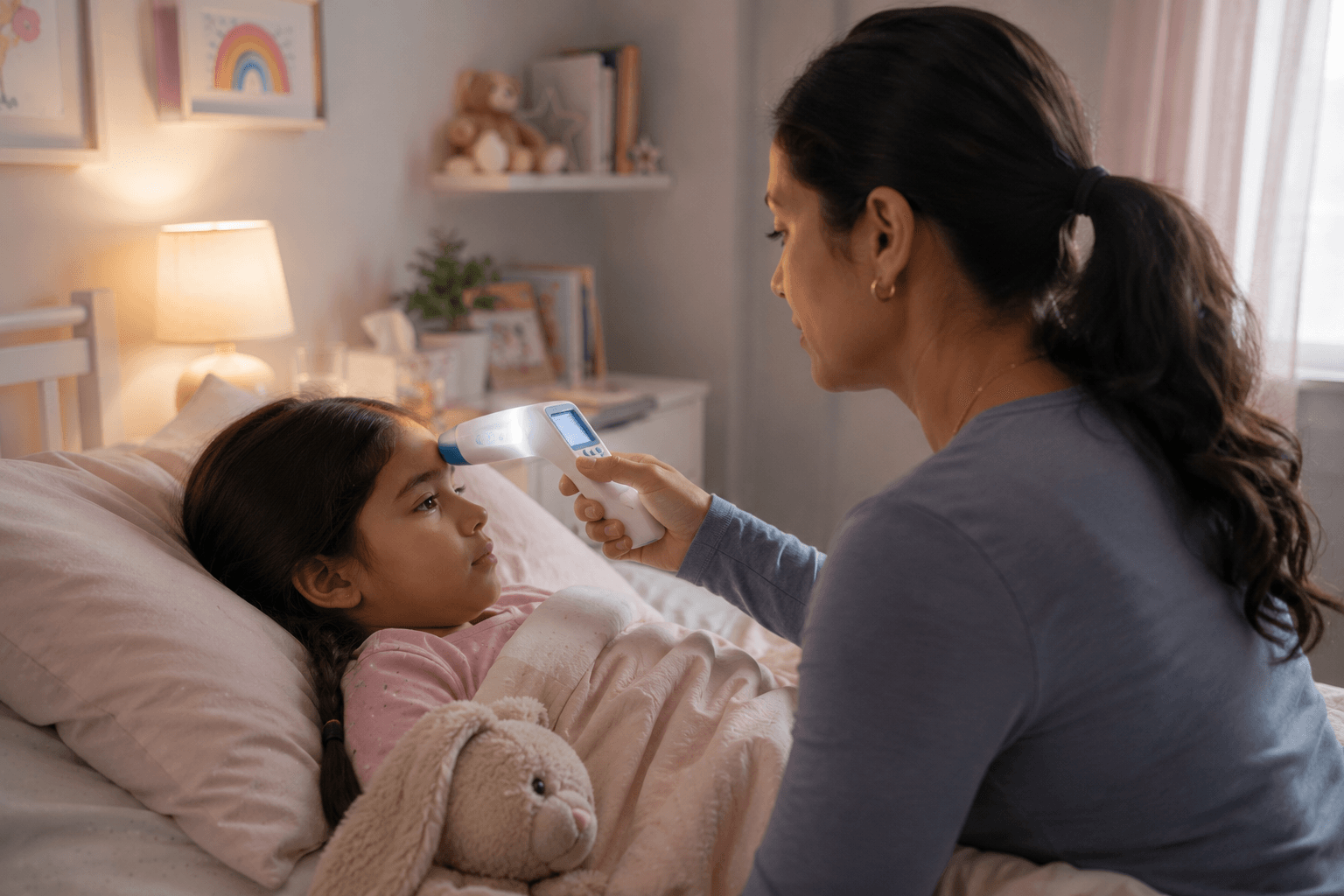
A fever is a rise in body temperature that often happens when the body is responding to an infection or inflammation. Fever can feel alarming, especially in babies, older adults, or people with chronic medical conditions, but the number on the thermometer is only one part of the picture.
Fever monitoring means tracking temperature, symptoms, hydration, behavior, breathing, medication use, and how the person changes over time. A child who is drinking, breathing comfortably, and acting close to normal may be less concerning than someone with a lower temperature who is confused, dehydrated, struggling to breathe, or getting worse.
This checklist explains how to monitor a fever at home, when to recheck temperature, when to call a healthcare provider, and which symptoms need urgent or emergency care.
What Counts as a Fever?
A fever is usually defined as a body temperature of 100.4°F, or 38°C, or higher. Temperature can vary by time of day, activity level, age, measurement method, clothing, room temperature, and recent medicines.
Different thermometer methods can give different readings. Rectal temperatures are often used for infants when accurate measurement is important. Oral, ear, forehead, and underarm readings can be useful, but technique matters.
Mayo Clinic notes that body temperature varies based on activity, age, and time of day, and that temperature measurement method matters when interpreting a fever.
Checklist Step 1: Use the Right Thermometer Method
Choose a thermometer method that fits the person's age and situation. Follow the device instructions carefully and use the same method when comparing readings over time.
For infants, ask your pediatrician which method is best. Rectal temperature is often considered the most accurate for young infants, but it must be done carefully. For older children and adults, oral, forehead, ear, or other digital methods may be used depending on the device and technique.
Avoid old glass mercury thermometers. If you have one, ask your local pharmacy or waste program how to dispose of it safely.
Checklist Step 2: Recheck Based on Symptoms, Not Anxiety Alone
It is easy to recheck temperature every few minutes, but that usually does not help. Fever numbers can fluctuate, and fever-reducing medicine may take time to work.
For a stable person who is resting, drinking fluids, and not showing warning signs, rechecking every few hours is usually more useful than constant checking. Recheck sooner if symptoms worsen, breathing changes, the person becomes hard to wake, dehydration signs appear, or the fever rises quickly.
Write down the time, temperature, thermometer method, symptoms, and any medicine given. This record can help a clinician understand the pattern.
Checklist Step 3: Track Behavior and Alertness
Behavior often matters more than the exact fever number. A child who is alert, making eye contact, drinking, and improving between fever spikes is different from a child who is limp, difficult to wake, inconsolable, confused, or acting very unusual.
Adults should also be monitored for confusion, unusual behavior, severe weakness, fainting, or worsening sleepiness. These symptoms can suggest a more serious illness, dehydration, medication effect, low oxygen, or another urgent problem.
Mayo Clinic advises immediate medical attention when fever is accompanied by mental confusion, strange behavior, altered speech, seizure, stiff neck, severe headache, or other serious symptoms.
Checklist Step 4: Watch Breathing Closely
Breathing symptoms can change the level of concern quickly. Fever with mild congestion may be manageable at home for many people, but fever with trouble breathing should be taken seriously.
Warning signs include fast or labored breathing, ribs pulling in, grunting, blue or gray lips, chest pain, severe wheezing, pauses in breathing, inability to speak normally, or shortness of breath at rest.
The CDC advises seeking medical care for cold-like illness if symptoms are severe or concerning, including difficulty breathing, dehydration, fever that lasts longer than 4 days, symptoms that improve and then worsen, or symptoms such as fever or cough that improve but then return or worsen.
Checklist Step 5: Monitor Hydration
Fever can increase fluid needs, and vomiting, diarrhea, sweating, poor intake, or fast breathing can raise dehydration risk. Hydration is especially important for infants, older adults, and people with kidney disease, diabetes, heart disease, or frailty.
Signs of dehydration may include very little urination, dark urine, dry mouth, no tears when crying, dizziness, sunken eyes, unusual sleepiness, fast heartbeat, or inability to keep fluids down.
Offer small frequent sips of fluid if the person can drink safely. Babies should continue breast milk or formula unless a clinician says otherwise. Seek medical advice if drinking is poor or dehydration signs appear.
Checklist Step 6: Note Other Symptoms
A fever is a clue, not a diagnosis. Other symptoms can help identify whether the illness may involve the lungs, throat, ears, urinary tract, stomach, skin, brain, or another part of the body.
Track symptoms such as cough, sore throat, ear pain, rash, headache, stiff neck, vomiting, diarrhea, abdominal pain, painful urination, back pain, joint swelling, chest pain, shortness of breath, confusion, or worsening fatigue.
Also note recent travel, sick contacts, insect bites, animal bites, new medications, immune system problems, pregnancy, recent surgery, or exposure to extreme heat.
Checklist Step 7: Use Fever Medicine Safely
Fever-reducing medicines may help comfort, but they are not always necessary. The goal is usually to improve comfort and hydration, not to force the temperature to normal.
Acetaminophen or ibuprofen may be used for many people when appropriate, but dosing depends on age, weight, medical history, and other medications. Do not give aspirin to children or teenagers unless a healthcare provider specifically recommends it.
Check labels carefully to avoid accidentally doubling acetaminophen, which can be found in many cold and flu products. Ask a clinician or pharmacist before using fever medicine in infants, people with liver disease, kidney disease, stomach ulcers, blood thinners, pregnancy, or complex medical conditions.
Checklist Step 8: Avoid Unsafe Cooling Methods
Do not use ice baths, alcohol rubs, or very cold baths to treat a fever. These can cause shivering, discomfort, skin problems, or dangerous effects, especially in children.
Light clothing, a comfortable room temperature, fluids, and rest are usually safer. A lukewarm bath may help comfort in some cases, but it should not cause shivering.
If the person was exposed to extreme heat, such as being left in a hot car or exercising in high heat, treat it as possible heat illness rather than routine fever. Heat stroke is an emergency.
Checklist Step 9: Know High-Risk Groups
Some people should call a healthcare provider sooner when they have a fever. This includes infants, older adults, pregnant people, people with weakened immune systems, people receiving chemotherapy, transplant recipients, people taking immune-suppressing medicines, and people with serious chronic conditions.
People with heart disease, lung disease, kidney disease, diabetes, sickle cell disease, cancer, neurologic conditions, or implanted medical devices may also need earlier guidance.
When in doubt, call the clinician who knows the person's medical history. Fever advice is not the same for everyone.
Checklist Step 10: Know When to Test for Respiratory Viruses
Fever with cough, sore throat, congestion, body aches, or fatigue may be related to respiratory viruses such as flu, COVID-19, RSV, or the common cold. Testing may matter because some people qualify for antiviral treatment or need precautions to protect others.
Testing is especially important for people at higher risk of complications, including older adults, infants, pregnant people, and people with chronic health conditions or weakened immune systems.
If a healthcare provider diagnoses flu or COVID-19, antiviral treatment may be available for some people and works best when started early. The CDC notes that people diagnosed with COVID-19 or flu may be eligible for antiviral treatment that can lessen symptoms and shorten illness.
Common Mistake: Treating the Number Instead of the Person
A high temperature can be uncomfortable and should be monitored, but the person's overall condition matters more than the thermometer alone.
Important questions include: Is the person breathing comfortably? Are they alert? Are they drinking? Are they urinating? Is the fever improving or worsening? Are there new symptoms such as rash, stiff neck, severe headache, chest pain, confusion, or severe pain?
Call or seek care if the person looks very ill, even if the fever number is not extremely high.
Common Mistake: Alternating Medicines Without a Clear Plan
Some caregivers alternate acetaminophen and ibuprofen, but this can increase the risk of dosing errors. It can be hard to remember which medicine was given, how much was given, and when the next dose is safe.
If a healthcare provider recommends alternating medicines, write down each dose and time. Do not exceed the label or clinician-recommended daily limits.
Never use adult dosing for a child unless a healthcare professional gives exact instructions based on the child's weight and age.
Common Mistake: Ignoring Fever in a Young Infant
Fever in a young infant needs special attention because babies can become seriously ill quickly and may not show clear symptoms.
The American Academy of Pediatrics' HealthyChildren.org advises calling the pediatrician right away if a child has fever and is younger than 12 weeks old. It also advises calling right away for fever with symptoms such as stiff neck, severe headache, breathing difficulty, unexplained rash, or repeated vomiting or diarrhea.
If a baby under 3 months has a temperature of 100.4°F, or 38°C, or higher, contact a healthcare professional promptly for instructions.
Common Mistake: Missing a Fever That Returns After Improving
A fever that improves and then returns can be important. It may happen with a new infection, a complication, or a respiratory illness that is worsening after seeming better.
Track whether symptoms are steadily improving, staying the same, or worsening. A second wave of fever with worsening cough, breathing symptoms, ear pain, sinus pain, chest pain, or severe fatigue should prompt medical advice.
The CDC includes symptoms that improve and then worsen, or fever and cough that improve but then return or worsen, among reasons to seek medical care for cold-like illness.
When to Recheck Temperature
Recheck temperature when symptoms change, before giving another dose of fever medicine, a few hours after medicine if you are assessing response, before calling a clinician if practical, and whenever the person seems worse.
For a stable person, rechecking every few hours is usually enough. More frequent checks may be needed for infants, high-risk people, rapidly rising fever, or when a clinician has given specific instructions.
Use the same thermometer method when possible. Write down the reading, time, method, symptoms, and medicines given.
When to Call a Healthcare Provider
Call a healthcare provider if fever lasts longer than expected, lasts more than 4 days, returns after improving, or occurs with symptoms that are concerning but not immediately life-threatening.
Call sooner for infants, pregnancy, older adults, weakened immune systems, chemotherapy, transplant history, serious chronic conditions, dehydration concerns, worsening cough, painful urination, persistent vomiting or diarrhea, rash, ear pain, severe sore throat, or fever after recent surgery or travel.
For children, call right away for fever in a baby younger than 12 weeks, fever repeatedly above 104°F at any age, or fever with stiff neck, severe headache, severe sore throat, severe ear pain, breathing difficulty, unexplained rash, repeated vomiting, or repeated diarrhea, consistent with HealthyChildren.org guidance.
When to Seek Urgent or Emergency Care
Seek urgent or emergency care for fever with trouble breathing, chest pain, blue or gray lips, confusion, fainting, seizure, severe headache, stiff neck, severe abdominal pain, dehydration, persistent vomiting, a purple or non-blanching rash, severe weakness, or symptoms after heat exposure.
Also seek urgent care if the person is very hard to wake, has signs of a serious allergic reaction, has a swollen hot joint, has worsening symptoms despite treatment, or looks seriously ill.
For children, seek emergency care for the first febrile seizure or any seizure with concerning features. Mayo Clinic advises emergency or urgent care if it is a child's first febrile seizure.
Home Tools That May Help
A reliable digital thermometer is the most important home tool for fever monitoring. A written log, medication dosing chart, oral rehydration solution, humidifier, saline spray, and age-appropriate fever medicine may also be useful.
A pulse oximeter may help some people with respiratory illness, especially if recommended by a healthcare provider, but it does not replace symptom awareness. Trouble breathing, confusion, blue lips, chest pain, or severe weakness needs care even if a device reading seems reassuring.
Keep emergency contacts, medication lists, allergies, chronic conditions, and recent test results easy to find in case urgent care is needed.
The Bottom Line
Fever monitoring is about more than checking a number. Track temperature, thermometer method, symptoms, behavior, breathing, hydration, medication timing, and whether the person is improving or getting worse.
Recheck temperature every few hours for stable illness, sooner if symptoms change, and before giving more fever medicine when possible. Call a healthcare provider for young infants, high-risk people, fever lasting more than 4 days, fever that returns after improving, dehydration concerns, or symptoms that are worsening.
Seek urgent care for fever with breathing trouble, confusion, seizure, stiff neck, severe headache, chest pain, dehydration, purple rash, severe weakness, or heat exposure. If the person looks seriously ill, do not wait for the thermometer to reach a specific number.