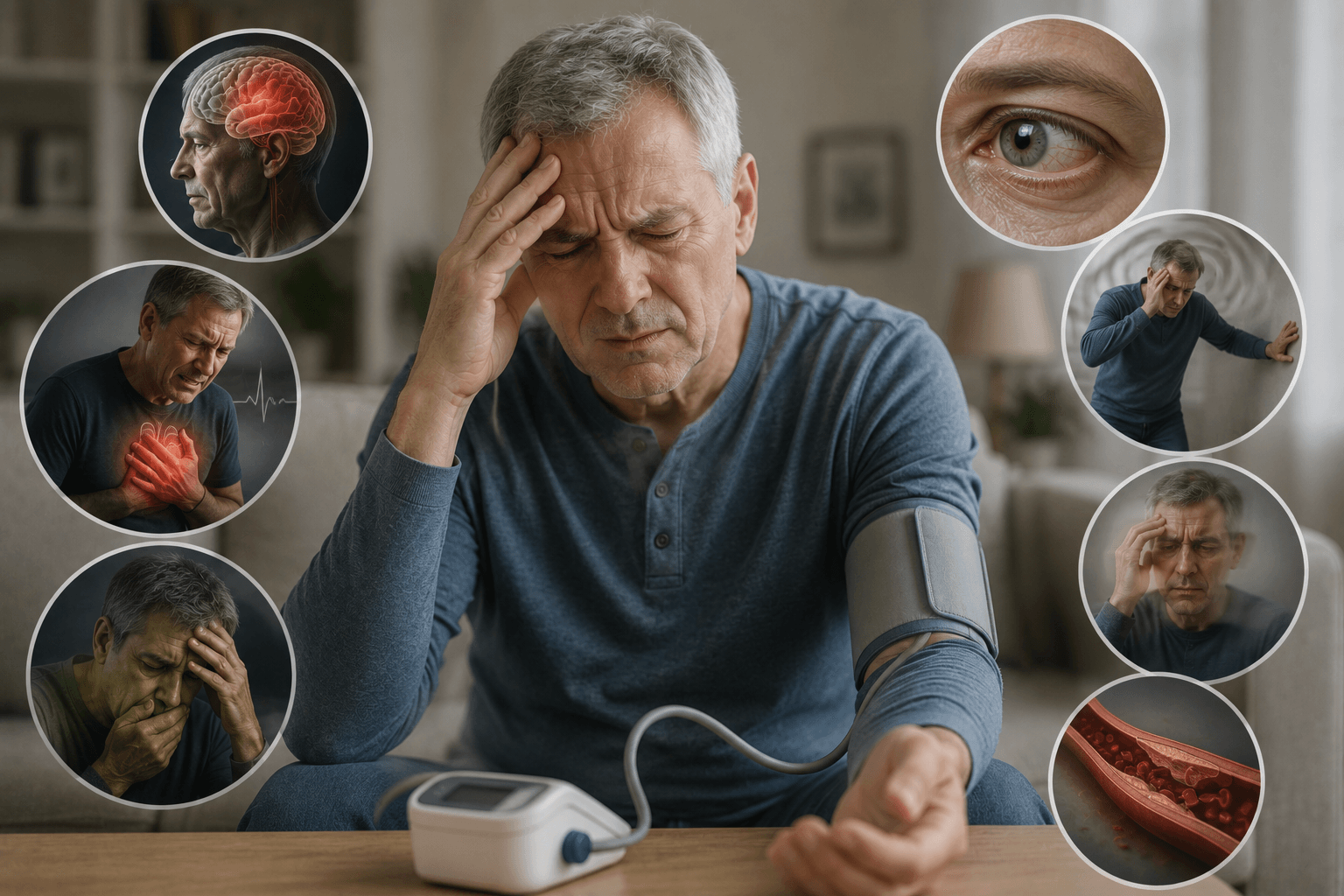
High blood pressure, or hypertension, has earned its grim nickname for a reason. Most of the time it produces no noticeable symptoms at all while it damages blood vessels, the heart, kidneys, and brain over months or years. Millions of people in the United States are living with elevated blood pressure right now and have no idea.
That doesn't mean hypertension is always invisible. There are moments when the body does send signals, and knowing the difference between a symptom that warrants a calm call to your doctor and one that means an immediate trip to the emergency room could save your life. This article covers what you might experience, what it could mean, and the steps worth taking.
Why High Blood Pressure Usually Has No Symptoms
Blood pressure is the force your blood exerts against the walls of your arteries as your heart pumps. When that force stays too high for too long, it stresses the artery walls and forces the heart to work harder, but none of that strain registers as pain or discomfort the way a pulled muscle or a headache does. The damage builds up unnoticed at the cellular level.
This is why routine blood pressure checks matter so much. A simple cuff measurement at a clinic, pharmacy, or even at home with a validated monitor is the only reliable way to know where you stand. Waiting to feel something is a risky strategy.
Symptoms That Can Occur, and What They May Signal
While hypertension itself is usually silent, there are situations where symptoms appear. It's important to understand that most of these symptoms are not specific to high blood pressure; they have many possible causes. But in the right context, they deserve attention.
Severe or Unusual Headaches
The idea that high blood pressure routinely causes headaches is largely a myth for mild-to-moderate elevations. However, when blood pressure climbs to very high levels, what clinicians call a hypertensive crisis, a severe, pounding headache, often felt at the back of the head, can occur. This type of headache is different in character from a typical tension or migraine headache and comes on rapidly. If you experience a sudden, excruciating headache that feels unlike anything you've had before, seek emergency care immediately, especially if you know your blood pressure has been running high.
Vision Changes
The tiny blood vessels inside the eye (the retina) are particularly vulnerable to high blood pressure. Over time, hypertension can damage these vessels in a condition called hypertensive retinopathy. Acutely, a sharp spike in blood pressure can cause blurred vision, seeing spots or floaters, or even sudden vision loss. Any abrupt change in vision should be treated as an emergency; it can also be a sign of stroke, which hypertension dramatically raises your risk for.
Shortness of Breath
When the heart is forced to pump against persistently high pressure, it gradually thickens and stiffens, a process called left ventricular hypertrophy. Over time this can impair the heart's ability to fill and pump efficiently, sometimes leading to heart failure. Unexplained shortness of breath, especially with light exertion or when lying flat, can be an early sign that the heart or lungs are under stress. Don't dismiss it as being out of shape without getting checked.
Chest Pain or Pressure
Chest discomfort is never something to rationalize away. High blood pressure accelerates atherosclerosis, the buildup of fatty plaques inside coronary arteries, and significantly raises the risk of heart attack. Chest pain, tightness, pressure, or a squeezing sensation, particularly if it radiates to the arm, jaw, or back, requires a call to emergency services right away. Time is critical when the heart muscle is involved.
Heart Palpitations
Some people with hypertension notice an awareness of their heartbeat: a fluttering, racing, or pounding sensation in the chest. Palpitations can have many benign causes, including caffeine, stress, or poor sleep. But they can also reflect the heart working harder than it should, or signal an arrhythmia (irregular heartbeat), which becomes more common when blood pressure is poorly controlled. Occasional mild palpitations are often harmless, but persistent or worsening ones are worth discussing with your doctor.
Nosebleeds
The popular belief that frequent nosebleeds are a reliable sign of high blood pressure is somewhat overstated. Most nosebleeds in adults are caused by dry air, irritation, or fragile surface vessels. That said, in the setting of a hypertensive crisis, nosebleeds can occur. If you're experiencing recurring nosebleeds and haven't had your blood pressure checked recently, that's a reasonable prompt to do so.
Dizziness or Lightheadedness
High blood pressure itself is not a common direct cause of dizziness. However, dizziness, especially a sudden spinning sensation called vertigo or a feeling of imbalance, can be a warning sign of stroke, for which hypertension is a major risk factor. Stroke symptoms require immediate emergency attention. See the next section for the key signs.
Facial Flushing or Redness
Some people notice that their face flushes or feels warm and assume their blood pressure must be high at that moment. While blood pressure can temporarily rise with alcohol, hot temperatures, exercise, or emotional stress, facial flushing is not a dependable indicator of hypertension. It's far too inconsistent to rely on as a monitoring tool.
Know the Stroke Warning Signs: FAST
Because hypertension is one of the leading risk factors for stroke, every person with elevated blood pressure should know the warning signs. Use the acronym FAST:
- F, face drooping. One side of the face droops or feels numb. Ask the person to smile; is it uneven?
- A, arm weakness. One arm is weak or numb. Ask the person to raise both arms; does one drift downward?
- S, speech difficulty. Speech is slurred, garbled, or the person can't speak or be understood.
- T, time to call 911. If you observe any of these signs, call emergency services immediately. Note the time symptoms started.
Other stroke symptoms can include sudden severe headache, sudden vision changes in one or both eyes, sudden trouble walking or loss of balance, and sudden confusion. Do not wait to see if symptoms improve on their own.
When to Seek Emergency Care vs. Schedule an Appointment
It helps to have a mental framework for when to act urgently:
- Call 911 or go to the ER immediately if you experience chest pain, sudden severe headache unlike any before, stroke symptoms (FAST), sudden vision loss, difficulty breathing, or loss of consciousness.
- Call your doctor promptly (same day or next day) if your home blood pressure monitor shows readings that are consistently and significantly above your usual numbers, if you have recurring headaches or nosebleeds, or if you notice new palpitations or unexplained shortness of breath with mild activity.
- Schedule a routine appointment if you haven't had your blood pressure checked in over a year, if you have risk factors such as a family history of heart disease, obesity, diabetes, or high sodium intake, or if you're pregnant (hypertension in pregnancy carries its own distinct risks).
The Most Useful Habit: Check Your Numbers Regularly
Because symptoms are so unreliable, the most actionable thing you can do is know your blood pressure numbers. Home blood pressure monitors have become widely available, and many pharmacies offer free in-store screenings. If you've been diagnosed with hypertension, your care team can advise how often to measure and what your personal target range should be.
Lifestyle changes, including reducing sodium, increasing physical activity, managing stress, limiting alcohol, and not smoking, have solid evidence behind them for lowering blood pressure. Many people also benefit from medication, and there is no shame in that. Treating blood pressure effectively is one of the most proven ways to reduce the risk of heart attack, stroke, and kidney disease.
A note of reassurance: If you've been told you have high blood pressure, that diagnosis is information, not a verdict. With the right support from your healthcare team, hypertension is manageable, and managing it matters enormously for your long-term health.
Talk to Your Clinician
This article is meant to help you recognize what deserves attention and what can wait. It does not replace the individualized guidance of a clinician who knows your full health history. If you have concerns about your blood pressure or any of the symptoms described here, please bring them up with your doctor, nurse practitioner, or pharmacist. They can interpret your specific numbers in context, identify any underlying causes, and help you build a plan that fits your life.