Coming home after surgery can feel disorienting. One day you were walking, lifting, and moving through your routine without a second thought. Now standing up from a chair takes planning, and a walk to the bathroom feels like an expedition. This is not a sign that something has gone wrong — it is the predictable biology of surgical healing playing out in real time.
Understanding why mobility changes, and roughly how it tends to evolve over the weeks that follow, can help you set realistic expectations, recognize what is normal, and know when to flag something with your care team.
Why Surgery Affects How You Move
Surgery — even a planned, routine procedure — is a controlled form of physical trauma. The body responds to it the way it responds to any significant injury: with inflammation, protective guarding, and a cascade of healing processes that consume a great deal of energy. Several factors combine to limit your mobility in the early days and weeks.
- Tissue disruption. Incisions cut through layers of skin, fascia, muscle, or other structures. Until those layers knit back together, the surrounding area is fragile and the brain sends protective pain signals that discourage movement near the site.
- Inflammation and swelling. Your immune system floods the area with fluid and repair cells. That swelling can stiffen joints, compress soft tissues, and reduce your range of motion — often more than the incision itself.
- Anesthesia effects. General and regional anesthesia can leave you with fatigue, muscle weakness, and impaired coordination for hours or even days after a procedure.
- Pain and the guarding response. When something hurts, the nervous system instinctively tenses the muscles around it. This protective bracing is useful in the very short term but can create secondary stiffness if it persists.
- Bedrest and deconditioning. Even a short period of limited activity causes measurable muscle weakness and cardiovascular deconditioning. The longer the required rest, the more pronounced this effect.
- Psychological factors. Fear of pain, worry about re-injury, and the emotional weight of being dependent on others can all reduce the willingness to attempt movement — sometimes beyond what the physical injury alone would require.
The Typical Arc of Recovery
Recovery does not follow a single straight line, and the timeline varies enormously depending on the type of surgery, your age, your baseline fitness, and other health factors. That said, most people move through recognizable phases.
The Immediate Postoperative Period
In the first hours after surgery, your main job is often simply to rest and let the anesthesia clear your system. But in many modern surgical settings, care teams aim to get patients upright and taking a few steps surprisingly soon — sometimes within the same day. This practice, sometimes called early mobilization, is supported by research showing that even brief, assisted movement after surgery can help reduce the risk of complications like blood clots in the legs and pneumonia.
If you have had orthopedic, abdominal, or cardiac surgery, your team may introduce specific movements almost immediately, guided by a physical or occupational therapist. These early sessions are typically short and heavily supervised, and they focus on safety — getting you to a standing position, shifting weight, taking a few careful steps.
The First One to Two Weeks
This is often the hardest stretch. Inflammation is at or near its peak, pain is most significant, and fatigue can be overwhelming. Mobility is genuinely limited, and that limitation serves a real biological purpose: it protects tissues while they begin the delicate work of repair.
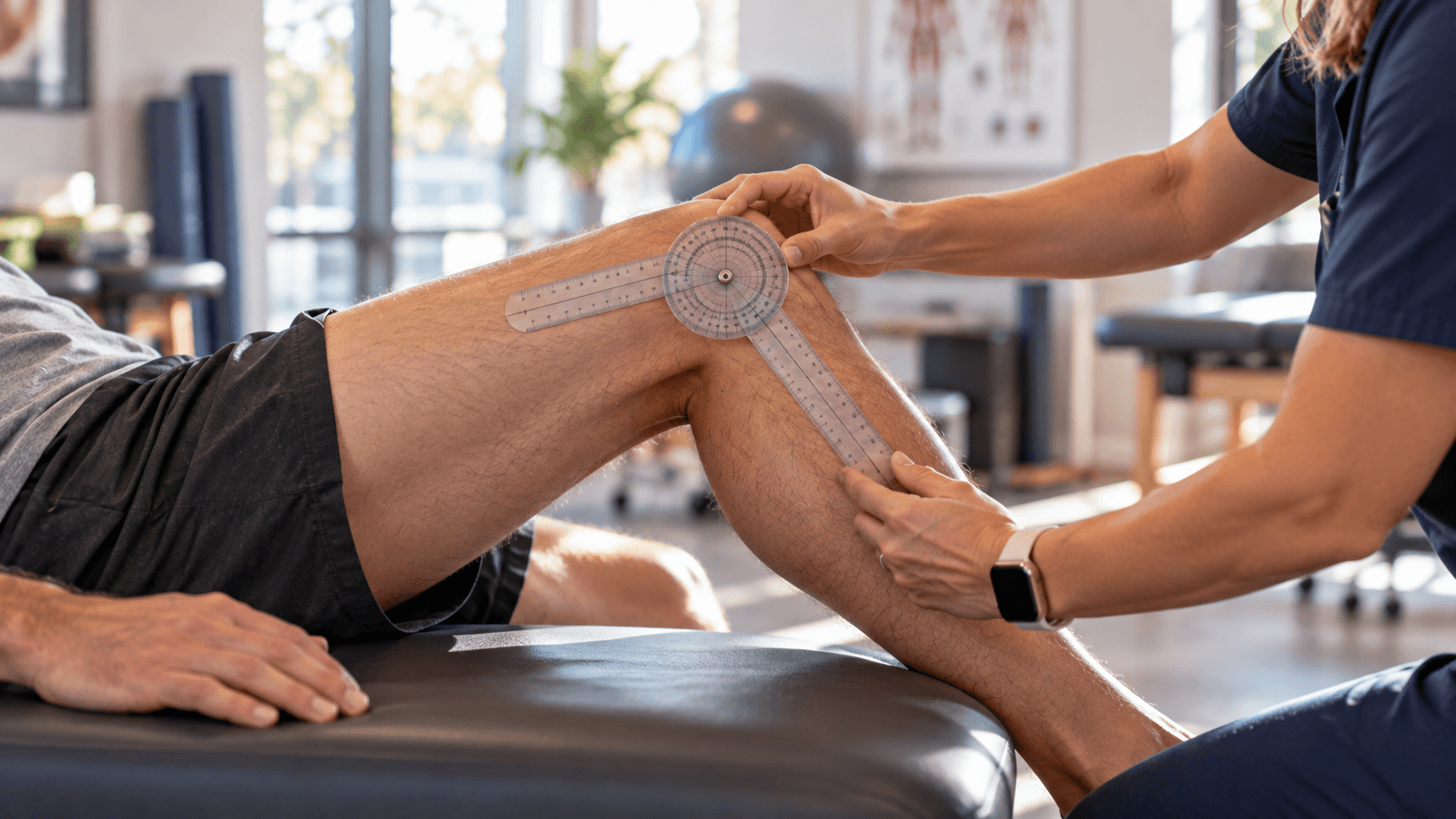
What movement looks like during this phase depends entirely on what was done and where. Someone who had knee replacement surgery may be working with a physical therapist on bending and straightening the joint several times a day. Someone who had abdominal surgery may be focused on slow walks around the house and carefully getting in and out of bed without straining the incision. Both are forms of intentional, therapeutic movement — just calibrated very differently.
It is common during this phase to feel like progress is happening too slowly, or to have days that feel like setbacks. A walk that felt manageable yesterday may feel exhausting today. This fluctuation is normal. Healing is not perfectly linear.
Weeks Three Through Six
For many procedures, this is when mobility begins to noticeably improve. Acute inflammation starts to resolve, energy levels begin returning, and the nervous system gradually relaxes its protective guarding response as it receives signals that the healing tissue is more stable.
Range of motion — how far a joint can bend or extend, how far you can reach or twist — often improves meaningfully during this window. Physical therapy, if it is part of your recovery plan, tends to become more active: exercises may grow in intensity, and you may be encouraged to walk longer distances or attempt activities you were avoiding before.
That said, feeling better does not always mean tissues are fully healed. Internal structures like tendons, ligaments, and deeper muscle layers can take considerably longer to regain their full strength than the surface-level improvements in how you feel might suggest. This is one reason why discharge instructions from surgeons — restrictions on lifting, twisting, or returning to sport — remain important even when you feel largely back to normal.
The Long Tail: Months One Through Six and Beyond
For major surgeries — joint replacements, spinal procedures, cardiac operations, complex abdominal repairs — full functional recovery often unfolds over several months. Tissue remodeling, the process by which the body lays down and reorganizes collagen to form strong scar tissue, continues long after you feel healed on the surface.
During this phase, most people are steadily expanding what they can do. Physical therapy may continue, shift to a home program, or graduate into supervised exercise. The goal becomes rebuilding not just the range of motion lost to surgery, but the strength, balance, and coordination that deconditioning can erode.
Some people notice that mobility actually overshoots their pre-surgery baseline — particularly those who had surgery to address a condition like severe arthritis or a torn ligament that had been limiting them for years. For others, especially after complex or revision surgeries, recovery is slower and the endpoint more uncertain. Both experiences are valid, and both deserve open, ongoing conversation with your surgical team.
Movement as Medicine — With Important Caveats
There is a well-supported principle in rehabilitation medicine: movement, introduced at the right time and in the right dose, accelerates healing. Gentle circulation through a healing tissue delivers oxygen and nutrients. Controlled loading stimulates cells to build stronger collagen. Progressive activity prevents the deep muscle loss that comes with prolonged rest.
But the key phrases here are right time and right dose. Moving too aggressively too soon — or ignoring pain signals that indicate something is wrong — can disrupt the healing process or cause new injury. This is not a situation where more is always better.
If movement causes sharp, worsening, or unusual pain — or if you notice new swelling, warmth, redness, or drainage at an incision site — contact your surgeon's office before pushing through it.
Signs That Your Mobility Recovery May Need More Support
Most mobility limitations after surgery are expected and temporary. But certain patterns are worth raising with your care team:
- Pain that is getting significantly worse rather than gradually improving after the first week or two
- A joint that is completely unable to bear weight or bend when your surgeon expected progress by that point
- Swelling in a leg that is sudden, one-sided, or accompanied by warmth and tenderness (this can signal a blood clot and warrants prompt evaluation)
- Feeling so afraid of movement that you are not attempting the activities your care team has cleared you for
- Persistent weakness, numbness, or tingling beyond what was anticipated for your procedure
Working With Your Care Team
Your surgical team, physical therapist, and primary care provider are your most important resources during recovery. The general information here describes patterns that are common across many types of surgery, but your recovery is specific to you — your procedure, your body, your home environment, and your goals.
If you have questions about what you should or should not be doing, what milestones to watch for, or whether what you are experiencing is within the expected range, ask. Recovery can feel isolating, and many people hesitate to call the surgeon's office with what they worry are small questions. Clinicians would far rather hear from you early than have you struggle through something alone — or push through a warning sign.
Mobility after surgery is not a switch that flips back on overnight. It is a process, and like most biological processes, it unfolds on its own schedule. Understanding that arc — and working with it rather than against it — is one of the most useful things you can do for yourself during recovery.