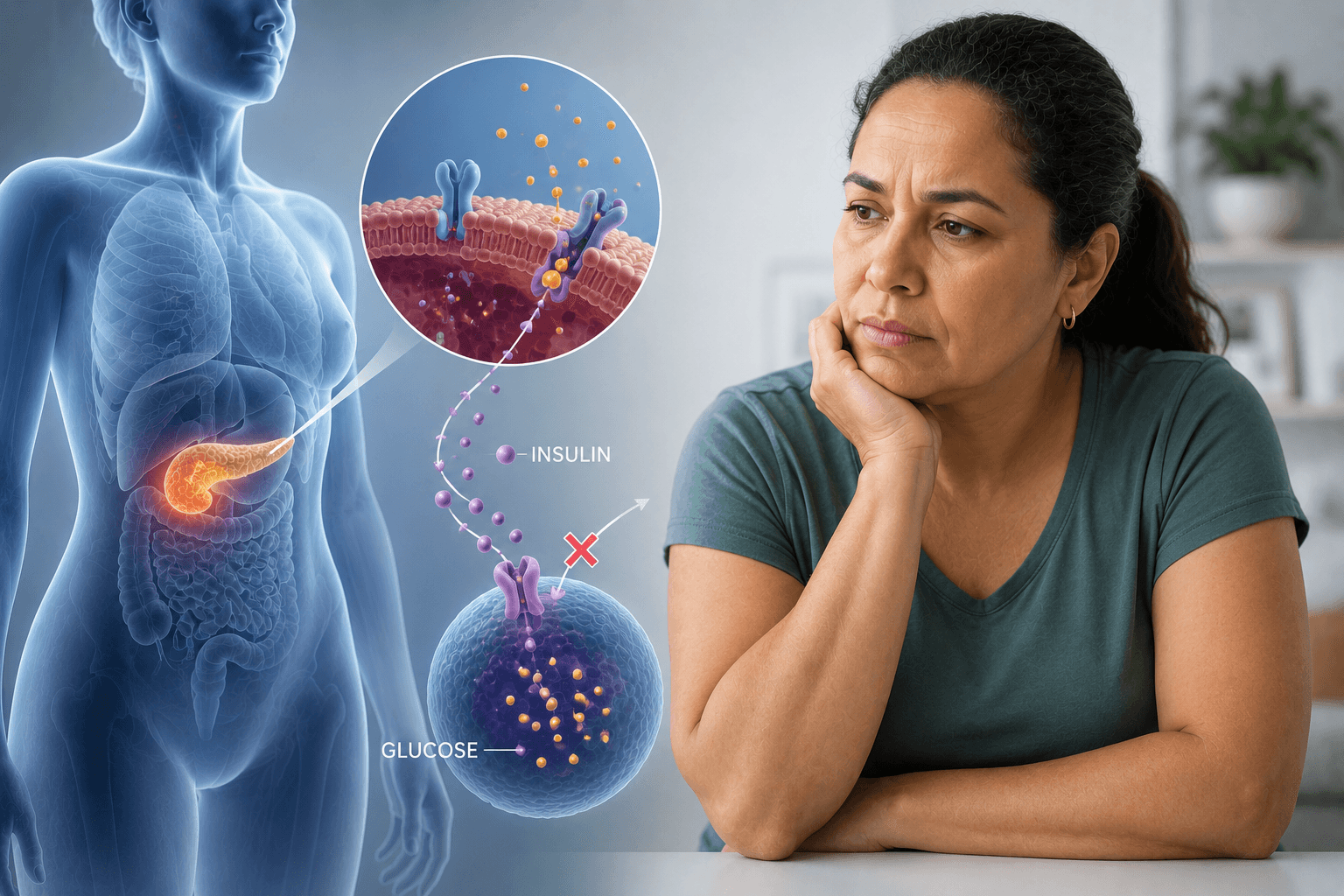
Insulin resistance occurs when your body's cells don't respond properly to insulin, a hormone that helps regulate blood sugar levels. This condition can develop gradually over years and often goes unnoticed until it progresses to prediabetes or type 2 diabetes. Understanding the warning signs, key health numbers, and risk factors can help you work with your healthcare provider to address insulin resistance early.
What Is Insulin Resistance?
When you eat, your body breaks down carbohydrates into glucose (sugar), which enters your bloodstream. In response, your pancreas releases insulin to help move this glucose into your cells for energy. With insulin resistance, your cells become less responsive to insulin's signals, causing your pancreas to produce more insulin to maintain normal blood sugar levels.
Over time, this increased demand can exhaust your pancreas's ability to produce enough insulin, leading to elevated blood sugar levels and potentially progressing to type 2 diabetes. Research suggests that insulin resistance affects millions of Americans and is often present years before diabetes develops.
Key Health Numbers to Monitor
Several laboratory tests and measurements can help identify insulin resistance. Your healthcare provider may use these markers to assess your risk and monitor your metabolic health:
Fasting Blood Glucose: Normal fasting blood sugar levels are typically below 100 mg/dL. Levels between 100-125 mg/dL may indicate prediabetes, while 126 mg/dL or higher on two separate tests suggests diabetes.
Hemoglobin A1C: This test measures your average blood sugar levels over the past two to three months. A normal A1C is below 5.7%, while 5.7% to 6.4% indicates prediabetes, and 6.5% or higher suggests diabetes.
Triglycerides: Elevated triglyceride levels, particularly above 150 mg/dL, are commonly associated with insulin resistance. High triglycerides often occur alongside low HDL cholesterol levels.
HDL Cholesterol: Low levels of HDL (good) cholesterol, below 40 mg/dL in men or below 50 mg/dL in women, may indicate insulin resistance, especially when combined with other metabolic abnormalities.
Blood Pressure: Insulin resistance is frequently associated with elevated blood pressure. Normal blood pressure is less than 120/80 mmHg, while readings consistently above 130/80 mmHg may indicate hypertension.
Waist Circumference: Abdominal obesity, measured as waist circumference greater than 40 inches in men or 35 inches in women, is strongly linked to insulin resistance.
Recognizing the Symptoms
Insulin resistance often develops silently, but some people may experience subtle symptoms that could indicate the condition:
Increased Hunger and Cravings: You might notice persistent hunger, particularly cravings for sugary or high-carbohydrate foods, even shortly after eating. This occurs because your cells aren't effectively using glucose for energy.
Fatigue and Low Energy: Feeling tired or sluggish throughout the day, especially after meals, can be a sign that your body isn't efficiently processing glucose.
Difficulty Losing Weight: Insulin resistance can make it challenging to lose weight, particularly around the midsection, even with diet and exercise efforts.
Dark Patches of Skin: A condition called acanthosis nigricans may cause dark, velvety patches of skin, typically around the neck, armpits, or groin areas. This skin change is often associated with insulin resistance.
Irregular Menstrual Periods: Women with insulin resistance may experience irregular periods or symptoms of polycystic ovary syndrome (PCOS).
Brain Fog: Some people report difficulty concentrating or mental cloudiness, which may be related to fluctuating blood sugar levels.
Many people with insulin resistance experience no obvious symptoms, which makes regular health screenings essential for early detection.
Understanding Risk Factors
Several factors can increase your likelihood of developing insulin resistance. While some risk factors cannot be changed, others are modifiable through lifestyle adjustments:
Non-Modifiable Risk Factors:
- Age: Risk increases with age, particularly after 45
- Family History: Having relatives with type 2 diabetes or insulin resistance increases your risk
- Ethnicity: People of African American, Hispanic, Native American, Asian American, or Pacific Islander descent face higher risk
- Genetics: Certain genetic variants can predispose individuals to insulin resistance
Modifiable Risk Factors:
- Excess Weight: Being overweight or obese, especially with abdominal fat distribution, significantly increases insulin resistance risk
- Physical Inactivity: A sedentary lifestyle reduces your body's ability to use insulin effectively
- Poor Diet: Diets high in processed foods, added sugars, and refined carbohydrates can contribute to insulin resistance
- Sleep Quality: Poor sleep patterns or sleep disorders like sleep apnea are associated with increased insulin resistance
- Chronic Stress: Long-term stress can affect hormone levels and blood sugar regulation
- Smoking: Tobacco use increases inflammation and may worsen insulin sensitivity
Medical Conditions: Certain health conditions can increase insulin resistance risk, including polycystic ovary syndrome (PCOS), non-alcoholic fatty liver disease, and sleep apnea. Some medications, such as certain steroids or antipsychotic drugs, may also affect insulin sensitivity.
The Connection to Other Health Conditions
Insulin resistance doesn't exist in isolation. It's often part of a cluster of metabolic abnormalities sometimes called metabolic syndrome. This syndrome includes high blood pressure, elevated blood sugar, excess abdominal fat, and abnormal cholesterol levels. Having metabolic syndrome significantly increases your risk of heart disease, stroke, and type 2 diabetes.
Research has also shown connections between insulin resistance and other health issues, including non-alcoholic fatty liver disease, certain cancers, and Alzheimer's disease, though scientists are still studying these relationships.
When to Seek Medical Attention
If you have multiple risk factors for insulin resistance or notice potential symptoms, it's important to discuss your concerns with a healthcare provider. They can perform appropriate tests and help you understand your individual risk profile.
Regular screening is particularly important if you have a family history of diabetes, are overweight, lead a sedentary lifestyle, or belong to a higher-risk ethnic group. Early detection and intervention can help prevent or delay the progression to type 2 diabetes and reduce the risk of related complications.
Taking Action
Lifestyle changes can significantly improve insulin sensitivity. Research shows that weight loss, regular physical activity, improved diet quality, better sleep habits, and stress management can all help your body use insulin more effectively.
If you're concerned about insulin resistance, start by scheduling an appointment with your healthcare provider. They can assess your risk factors, order appropriate tests, and work with you to develop a personalized plan for monitoring and improving your metabolic health. Early intervention through lifestyle changes can often prevent or delay the progression to more serious conditions like type 2 diabetes.