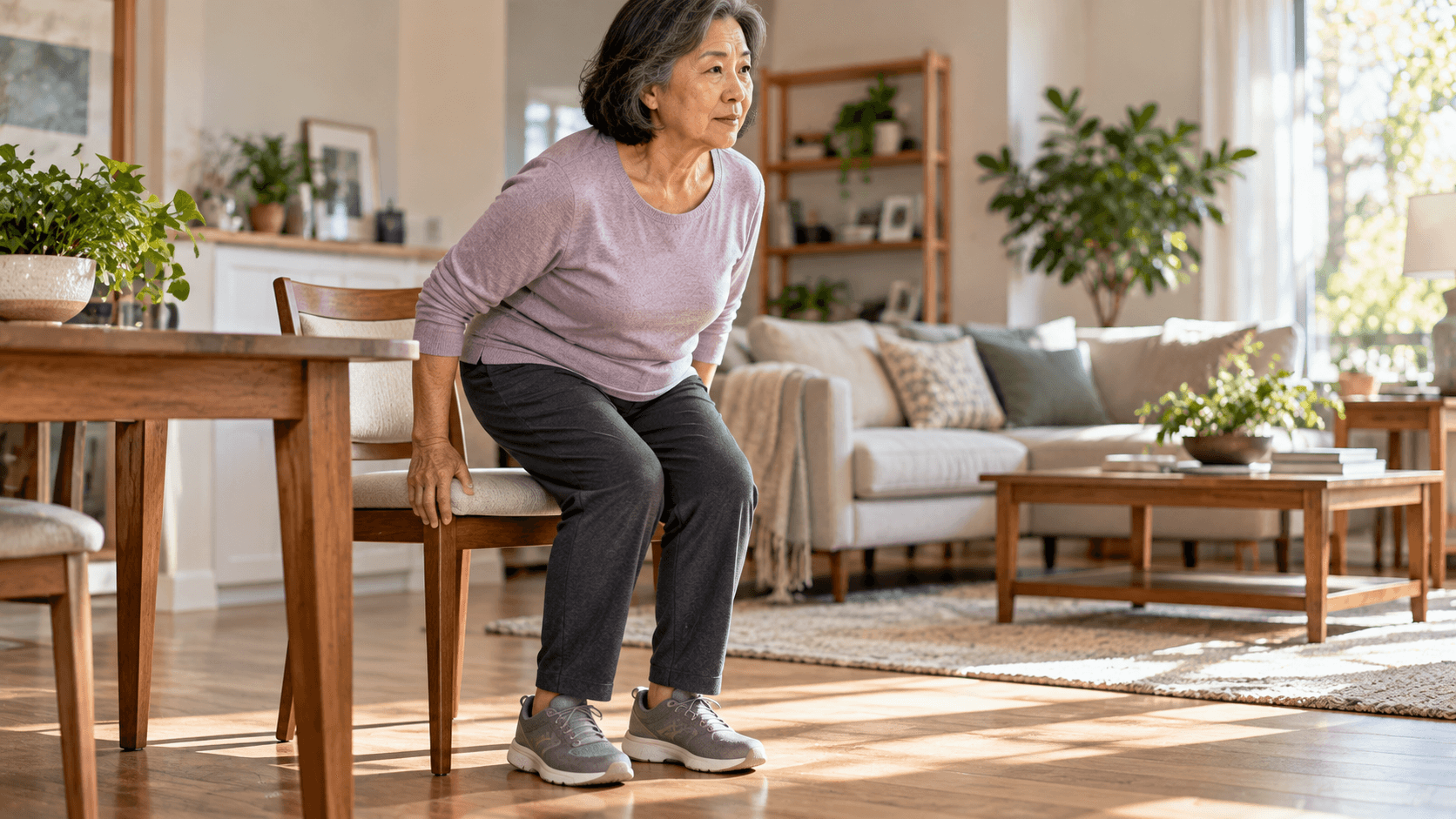
You notice it gradually. The grocery bags feel heavier than they used to. Getting up from a low chair takes more effort. You tire more quickly on a walk that once felt easy. It's tempting to chalk all of this up simply to "getting older" — and in some ways, you'd be right. But for a significant number of adults, what's happening goes beyond typical aging. It may be a condition called sarcopenia.
Sarcopenia is the progressive, generalized loss of skeletal muscle mass and strength that occurs with age. While some degree of muscle loss is expected over a lifetime, sarcopenia refers to a level of decline significant enough to affect physical function and quality of life. Health researchers and clinicians now recognize it as a medical condition in its own right — one that is underdiagnosed, underappreciated, and, importantly, treatable.
What Happens to Muscle as We Age
Starting in our thirties or forties, most people begin losing muscle mass gradually each decade. The process tends to accelerate after age sixty or so. Sarcopenia involves not just a reduction in the size of muscle fibers but also changes in how muscles are controlled by the nervous system, shifts in hormones that support muscle maintenance, and a decline in the body's ability to synthesize new muscle protein efficiently.
Several biological mechanisms are at work. Motor neurons — the nerve cells that signal muscles to contract — are lost with age, and the muscle fibers they once controlled can atrophy or disappear entirely. Hormones such as testosterone, estrogen, growth hormone, and insulin-like growth factor, all of which play roles in building and maintaining muscle, decline over time. Chronic low-grade inflammation, sometimes called "inflammaging," can also accelerate muscle breakdown. And the body gradually becomes less responsive to the anabolic — or muscle-building — signal of dietary protein, a phenomenon researchers call anabolic resistance.
None of this is anyone's fault. These are largely biological processes. But lifestyle factors — including physical inactivity, inadequate protein intake, and poor sleep — can hasten the decline.
How Is Sarcopenia Different From Normal Aging?
This is one of the trickier aspects of the condition. Some muscle loss with age is entirely normal, and not everyone who feels weaker at seventy than they did at forty has sarcopenia. The distinction lies in degree and functional impact.
Clinicians and researchers typically look at three things together:
- Muscle strength — often assessed with a simple handgrip test or by measuring how easily someone can rise from a chair
- Muscle mass or quantity — sometimes measured with imaging or body composition tools
- Physical performance — such as walking speed or balance tests
A person who has low muscle strength alone might be considered "at risk." When low strength is combined with reduced muscle mass or impaired physical performance, a diagnosis of sarcopenia is more likely. When all three are significantly affected, the condition may be described as severe sarcopenia.
It is worth noting that formal diagnostic criteria for sarcopenia have evolved over time and still vary somewhat across major medical organizations worldwide. If you are concerned, speaking with your doctor is the right first step — they can assess your situation in the context of your full health picture.
Who Is Most at Risk?
Sarcopenia becomes increasingly common with advancing age, and adults over sixty-five are most often affected. But age alone is not the only risk factor. Research suggests the following may raise a person's risk:
- Physical inactivity or a sedentary lifestyle, including prolonged bed rest during illness or hospitalization
- Inadequate protein intake, which may be more common in older adults due to reduced appetite, dental problems, or limited food access
- Chronic illnesses such as heart failure, diabetes, kidney disease, cancer, and chronic obstructive pulmonary disease (COPD), which can accelerate muscle loss
- Obesity, which can coexist with low muscle mass — a combination sometimes called sarcopenic obesity
- Hormonal changes, including those related to menopause in women
- Poor nutrition overall, including deficiencies in vitamin D and other nutrients important for muscle and nerve function
Why Sarcopenia Matters Beyond Strength
Feeling weaker is frustrating on its own, but the consequences of sarcopenia can extend well beyond difficulty opening jars or climbing stairs.
Loss of muscle strength and mass is strongly linked to an increased risk of falls and fractures, which are among the most serious health events for older adults. Falls can lead to hospitalization, loss of independence, and, in some cases, life-threatening complications. People with sarcopenia may also have more difficulty recovering from illness or surgery, since muscle tissue plays a central role in immune function and the body's ability to heal.
There is also a meaningful connection to metabolic health. Skeletal muscle is one of the body's primary sites for blood sugar uptake after a meal, so reduced muscle mass can contribute to insulin resistance over time. Beyond the physical, sarcopenia is associated with fatigue and reduced energy, which can affect mood, social participation, and overall sense of well-being.
Muscle is not just about movement — it is a metabolically active tissue that plays a role in immune defense, blood sugar regulation, and physical resilience. Protecting it matters at every age.
Signs That May Warrant a Conversation With Your Doctor
There is no single dramatic symptom that signals sarcopenia — it tends to develop quietly over years. Still, some signs are worth paying attention to:
- Noticeable difficulty with tasks that used to feel manageable, such as carrying groceries, rising from a chair without using your arms, or climbing stairs
- A feeling of generalized weakness or fatigue that seems out of proportion to your activity level
- Slowing down noticeably when you walk, or feeling unsteady on your feet
- Unintentional weight loss, particularly if you seem to be losing muscle rather than fat
- Frequent falls or near-falls
If any of these feel familiar, bring them up at your next appointment. These symptoms can have many causes, and your clinician can help figure out what is actually going on.
What Can Be Done About It
Here is the genuinely encouraging part: sarcopenia is not an irreversible fate. Research consistently points to two interventions as the most effective tools for preventing and treating it — resistance exercise and adequate protein intake — and both are accessible to most people, regardless of age.
Resistance training, sometimes called strength training or weight training, is the most well-supported intervention in the research literature. Studies involving adults in their sixties, seventies, eighties, and even beyond have shown that muscles retain the ability to respond to resistance exercise and grow stronger, even late in life. This does not have to mean heavy barbells or a gym membership. Resistance bands, bodyweight exercises such as squats and modified push-ups, and even water-based resistance exercises can all be effective. The key is consistency and progressive challenge — gradually increasing the difficulty over time. If you are new to this kind of exercise or have health concerns, a physical therapist or certified fitness professional with experience in older adult populations can help you start safely.
Protein intake is the other major lever. Muscle protein synthesis — the process by which the body builds and repairs muscle — depends on having adequate amino acids available, which come from dietary protein. Many older adults do not get enough protein, in part because appetite often decreases with age and in part because the body's response to protein becomes less efficient over time. Current evidence suggests that spreading protein intake fairly evenly across meals throughout the day may support muscle maintenance more effectively than concentrating it in one or two sittings. Good sources include lean meats, poultry, fish, eggs, dairy products, legumes, and soy-based foods. Speak with your doctor or a registered dietitian about what amount and pattern might be right for you.
Other strategies that may support muscle health include:
- Vitamin D, which plays a role in muscle function and is commonly deficient in older adults — though supplementation should be guided by your doctor based on your levels
- Staying physically active overall, not just during dedicated exercise sessions — regular walking, taking the stairs, and avoiding prolonged sitting all contribute
- Managing underlying health conditions that can accelerate muscle loss
- Prioritizing sleep, since much of the body's tissue repair and hormonal recovery happens during sleep
A Note on Supplements
You may have seen products marketed for muscle loss in older adults — creatine, leucine, beta-hydroxy beta-methylbutyrate (HMB), and various protein powders among them. Some of these have been studied in clinical trials with older adults, and certain ones show modest promise as complements to exercise and adequate diet. However, the supplement industry is not regulated the same way medications are, and the evidence base for most products varies considerably in quality. Before adding any supplement to your routine, discuss it with your doctor or a registered dietitian.
The Bottom Line
Muscle loss is a real and meaningful aspect of aging — but sarcopenia, the more significant and functionally impairing form of that loss, is not simply something to accept without question. It is increasingly recognized by the medical community as a condition worth screening for, discussing, and actively addressing.
The most powerful tools available — moving your body with resistance, eating enough protein, and staying engaged with your overall health — are well within reach for most people. And the benefits extend far beyond your muscles, touching energy, independence, metabolic health, and quality of life.
If you are concerned about changes in your strength or physical function, that concern deserves a real conversation with your healthcare provider. You do not have to simply accept feeling weaker — and the sooner you start, the more you stand to gain.