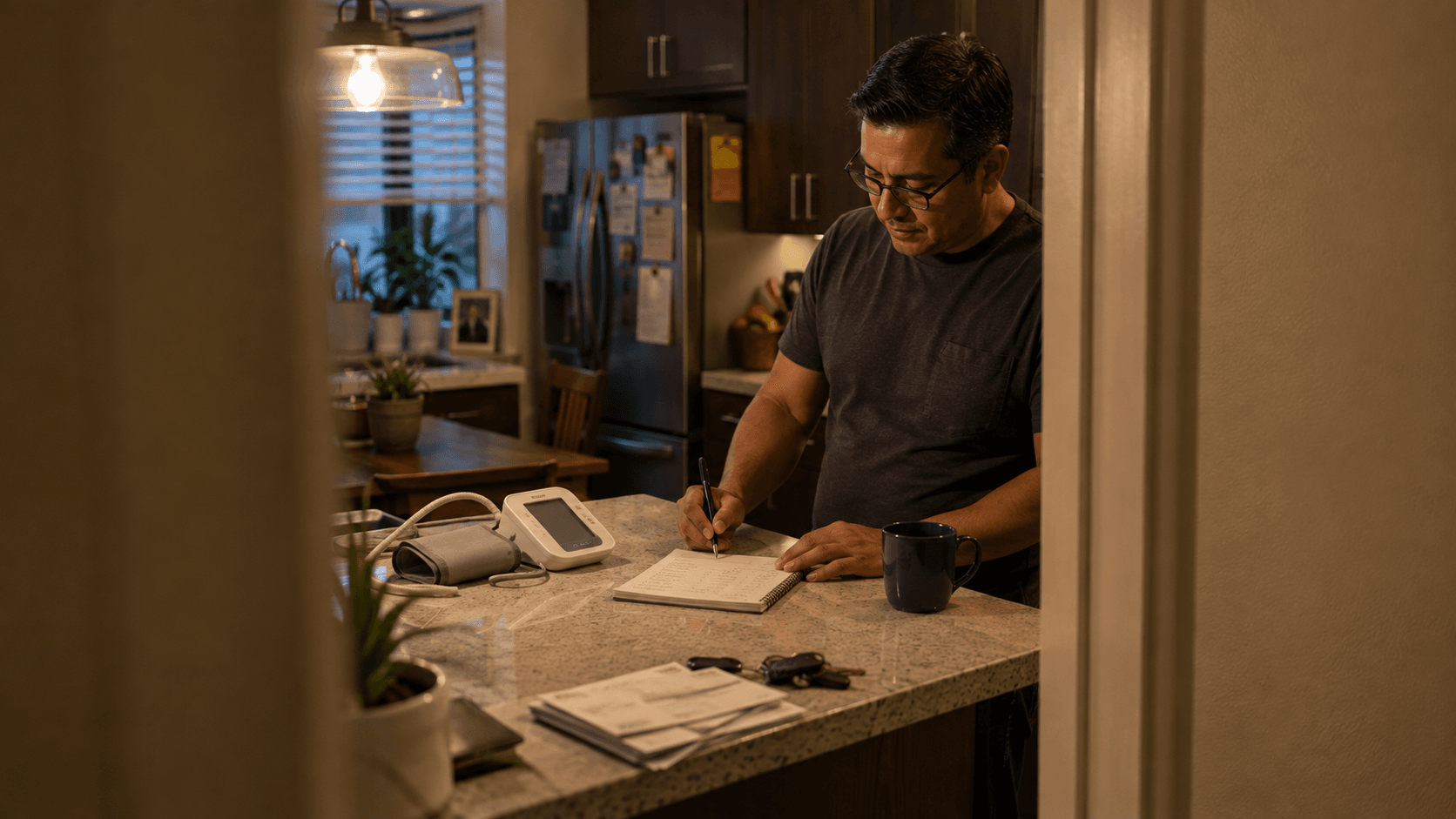
Most conversations about blood pressure focus on readings that run too high. But blood pressure that runs too low can also affect how you feel day to day, and in some situations it can signal something worth discussing with a clinician. With a simple home monitor and a bit of know-how, you can track your own readings, spot patterns over time, and make more informed decisions about when to seek care.
What Does "Low" Blood Pressure Actually Mean?
Blood pressure is measured in two numbers. The top number (systolic) reflects the pressure in your arteries when your heart beats. The bottom number (diastolic) reflects the pressure between beats. A reading is generally considered low, a condition called hypotension, when the systolic falls below 90 mm Hg or the diastolic falls below 60 mm Hg.
Numbers alone don't tell the whole story, though. Some people naturally run low and feel perfectly fine. Others feel dizzy, fatigued, or faint at readings that would be unremarkable for someone else. How you feel alongside your numbers matters just as much as the numbers themselves.
Why Home Monitoring Matters
A single reading taken at a clinic captures one moment in time, often under conditions that can affect the result, like rushing to an appointment or sitting in a waiting room. Home monitoring gives you a much richer picture. It can reveal:
- Patterns tied to time of day. Blood pressure naturally fluctuates throughout the day and tends to dip overnight. Some people experience pronounced drops in the morning after waking, or after meals.
- Responses to medications. Certain drugs, including some prescribed for high blood pressure, heart conditions, depression, or Parkinson's disease, can lower blood pressure as a side effect. Monitoring at home helps you and your clinician see whether a medication may be contributing.
- Positional drops. A well-known form called orthostatic hypotension occurs when blood pressure falls quickly upon standing, sometimes causing lightheadedness or brief vision changes. Checking your pressure while lying down and then standing can help identify this pattern.
- Trends over weeks or months. A log of readings over time is far more meaningful to a clinician than a single number.
Choosing a Home Blood Pressure Monitor
Not all monitors are equal. For the most reliable results, look for an upper-arm cuff monitor that has been validated for clinical accuracy. Your pharmacist or clinician can help you identify reputable options. Wrist monitors can be convenient, but they are more sensitive to positioning errors and tend to be less consistent than upper-arm devices.
Cuff size matters more than most people realize. A cuff that is too small will give falsely high readings; one that is too large may give falsely low ones. Many monitors come with a standard adult cuff, but larger and smaller sizes are widely available. Measure the circumference of your upper arm and match it to the cuff size listed on the packaging.
How to Take an Accurate Reading
Technique has a surprisingly large effect on results. Follow these steps each time you check your pressure:
- Avoid caffeine, exercise, and smoking for at least 30 minutes beforehand.
- Sit quietly for five minutes before you begin. Rest in a chair with back support, feet flat on the floor, and legs uncrossed.
- Position your arm correctly. Rest your bare upper arm on a flat surface so that the cuff is roughly at heart level.
- Apply the cuff snugly (you should be able to slip two fingers underneath it) with the sensor positioned over your inner arm as the monitor's instructions specify.
- Stay still and silent while the monitor takes the reading. Talking or moving can alter the result.
- Take two or three readings, waiting about one to two minutes between each, and record all of them. Averaging repeated measurements reduces the impact of natural beat-to-beat variation.
If you are checking for orthostatic hypotension, take one reading after lying still for five minutes, then stand and take another reading within one to three minutes of standing. Note any symptoms you feel during that transition.
Keeping a Useful Log
A blood pressure diary turns individual readings into something you can act on. You don't need a special app; a notebook works just as well. For each entry, record:
- The date and time
- Both numbers from each reading (and the pulse rate if your monitor displays it)
- Your position (seated, lying, standing)
- Any symptoms you noticed, such as dizziness, fatigue, headache, or blurred vision
- Relevant context: did you just eat a large meal? Did you skip a dose of medication? Were you unusually dehydrated?
Aim to check at the same times each day when possible, such as once in the morning before eating or taking medications and once in the evening. Consistency makes patterns much easier to spot.
Common Patterns Worth Knowing
As your log grows, a few patterns are especially worth bringing to your clinician's attention:
- Postprandial hypotension. Some people, particularly older adults, experience a significant blood pressure drop after eating. This happens because blood flows to the digestive system and, in some people, the body doesn't fully compensate. If you regularly feel lightheaded after meals, note the timing and compare it to your readings.
- Morning lows. Blood pressure rises naturally in the early morning hours as the body prepares to wake. If yours remains unusually low into the morning, that pattern is worth discussing.
- Consistently low readings without symptoms. If your numbers are low but you feel well, your clinician may simply want to monitor the situation rather than treat it. Context matters.
- Readings that vary widely. Large swings in blood pressure from reading to reading, especially when they come with symptoms, may warrant further evaluation.
Symptoms That Should Prompt a Call to Your Clinician
Low blood pressure becomes more urgent when it causes symptoms, particularly those that affect your safety or daily function. Contact your clinician if you experience:
- Frequent dizziness or lightheadedness, especially when standing
- Fainting or near-fainting episodes
- Persistent fatigue that isn't explained by other causes
- Blurred or tunnel vision that comes on suddenly
- Confusion or difficulty concentrating
- Nausea accompanying a low reading
These symptoms, paired with low readings in your log, give your clinician concrete information to work with.
When to Seek Emergency Care
Some situations require more than a phone call. Seek emergency care immediately if you or someone with you experiences a sudden, severe drop in blood pressure along with any of the following:
- Loss of consciousness
- Chest pain or shortness of breath
- Signs of shock: cool, clammy skin, rapid or weak pulse, confusion
- Symptoms following a possible allergic reaction, injury, or significant blood loss
These can indicate serious underlying causes, such as a cardiac event, severe infection, or anaphylaxis, that require immediate medical attention.
What Might Cause Low Blood Pressure?
Low blood pressure has many potential causes, which is part of why it's important to let a clinician evaluate patterns rather than draw conclusions on your own. Common contributors include:
- Dehydration, which reduces blood volume and can quickly lower pressure
- Medications, including blood pressure drugs, diuretics, antidepressants, and others
- Prolonged bed rest or inactivity, which can affect the body's ability to regulate pressure when upright
- Nutritional deficiencies, particularly low intake of certain vitamins involved in blood production
- Underlying health conditions affecting the heart, nervous system, or hormonal regulation
- Pregnancy, during which blood pressure naturally tends to run lower
Talking to Your Clinician: What to Bring
Your log is your most valuable tool for a productive conversation. Bring it to your appointment, or take a photo of it if you use a paper diary. Be prepared to describe:
- When the low readings tend to occur
- What, if anything, seems to trigger them
- Which symptoms, if any, accompany them
- All medications and supplements you take, including over-the-counter products
Your clinician may want to replicate some measurements in the office, order lab work, or review your medications. In some cases, a referral to a cardiologist or specialist in autonomic disorders may be appropriate, depending on what the pattern suggests.
A Few Practical Steps You Can Take Now
While you work with your clinician to understand what's driving your readings, a few general lifestyle measures are often recommended for people who experience low blood pressure, though it's always worth confirming these are appropriate for your individual situation:
- Stay well hydrated, especially in warm weather or during exercise.
- Rise slowly from lying or sitting positions to give your body time to adjust.
- Eat smaller, more frequent meals if postprandial dips are a concern.
- Wear compression stockings if your clinician recommends them; they can help reduce blood pooling in the legs when standing.
- Note environmental triggers, such as heat or prolonged standing, which commonly worsen low blood pressure.
Home monitoring won't replace a clinical evaluation, but it can make that evaluation far more productive. A well-kept log of your readings, paired with honest notes about how you feel, gives your care team the kind of real-world data that a single office visit simply can't provide. If something feels off, trust that instinct and bring your records with you. You'll be in a much stronger position to get the answers you need.