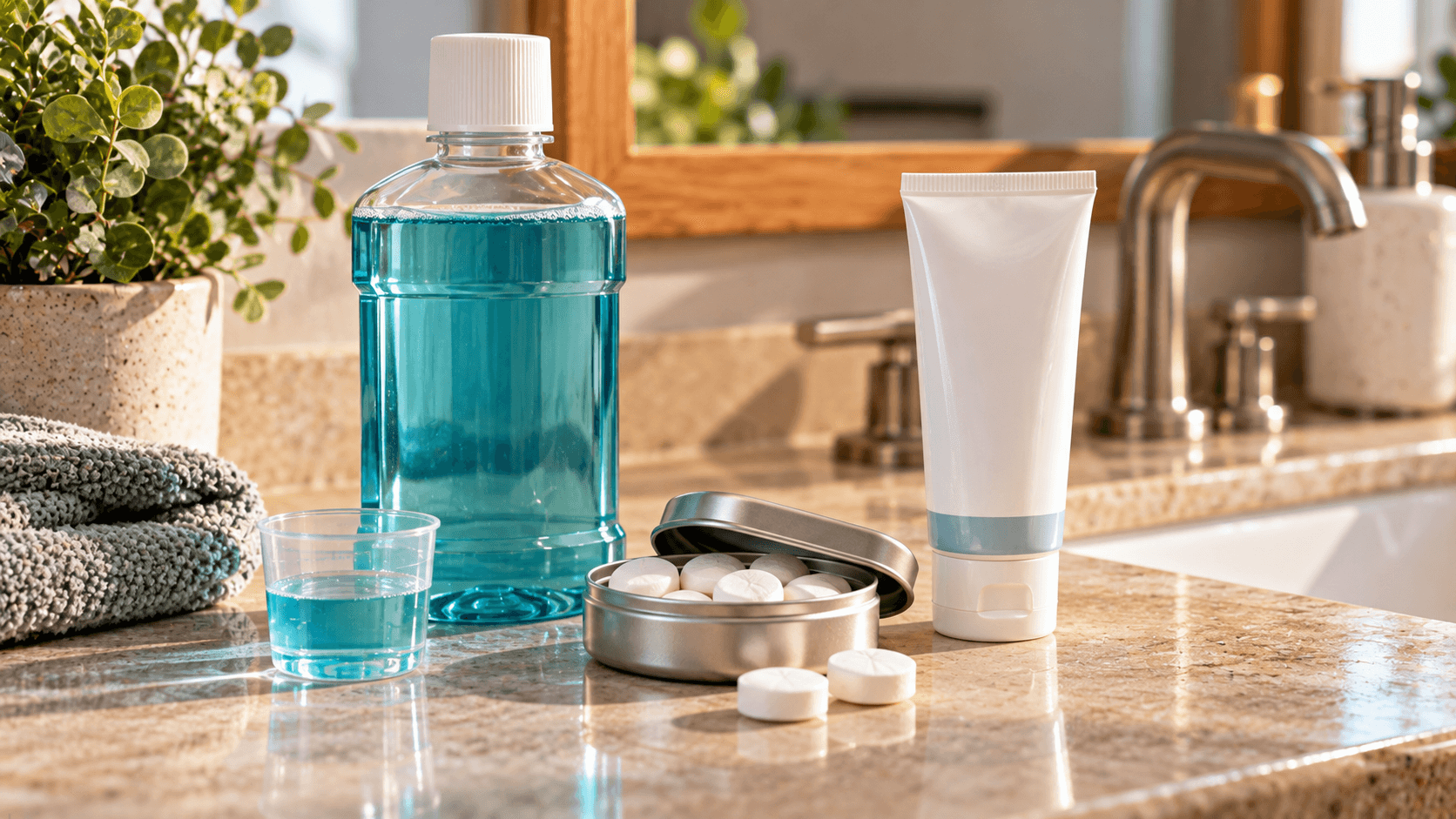
That persistent cottony feeling in your mouth — the one that makes it hard to chew, swallow, or even speak comfortably — has a medical name: xerostomia, commonly called dry mouth. It affects a surprisingly large share of adults, and it can range from a minor annoyance to a condition that meaningfully affects nutrition, sleep, and dental health.
The good news is that a range of over-the-counter products is designed specifically to ease dry mouth symptoms. The less straightforward news is that not every product works the same way, and the right choice depends on what is causing your dryness in the first place. This guide walks through the main categories — mouth rinses, lozenges and mints, and saliva substitutes — so you can make a more informed choice and have a better conversation with your dentist or doctor.
Why Saliva Matters More Than You Might Think
Saliva is easy to take for granted until you don't have enough of it. Beyond keeping your mouth moist, saliva plays several protective roles. It helps break down food and begin digestion, neutralizes acids that erode tooth enamel, washes away bacteria and food debris, and contains proteins that fight infection. When saliva production drops — whether from medication side effects, a medical condition, radiation therapy to the head or neck, or simply aging — all of those protective functions are reduced.
This is why dry mouth isn't just about comfort. Left unmanaged, it can contribute to tooth decay, gum disease, oral infections such as thrush, and difficulty eating certain foods. Relief products can't fully replicate natural saliva, but they can meaningfully reduce discomfort and help protect your mouth in the meantime.
Mouth Rinses Designed for Dry Mouth
Standard mouthwashes — particularly those containing alcohol — can actually worsen dryness by irritating delicate oral tissues. Products marketed specifically for dry mouth are formulated differently. Here's what to look for:
- Alcohol-free formulas: Most dry-mouth rinses skip alcohol entirely, which helps prevent additional moisture loss and tissue irritation.
- Humectants like xylitol or glycerin: These ingredients help attract and retain moisture on the surfaces of the mouth. Xylitol also has the added benefit of being unfriendly to the bacteria most associated with tooth decay.
- Buffering agents: Some rinses include ingredients that help neutralize acids, mimicking one of saliva's natural functions.
- Mucin or carboxymethylcellulose: A small number of rinses contain film-forming agents similar to those found in saliva substitutes (more on those below), which coat the mouth's lining for longer-lasting moisture.
Dry-mouth rinses are generally used after brushing, though some people find it helpful to swish with one before meals to ease chewing and swallowing. They tend to provide relatively short-lived relief — often measured in minutes to an hour or so — which is why many people use them alongside other products throughout the day.
Lozenges, Mints, and Gums
Lozenges and sugar-free mints or gums work through a straightforward mechanism: the act of sucking or chewing stimulates your salivary glands to produce more of your own saliva. This is known as stimulated salivary flow, and for people whose glands are still capable of producing saliva (just not producing enough), it can be one of the most effective short-term strategies available.
Most dry-mouth lozenges and gums contain xylitol as a sweetener rather than sugar. This matters because sugar feeds oral bacteria and can worsen the tooth decay risk that already accompanies dry mouth. Xylitol, by contrast, has been studied for its ability to reduce levels of decay-causing bacteria in the mouth — a meaningful benefit for people dealing with dry mouth long-term.
Some lozenges also include enzymes such as lactoperoxidase, lysozyme, and lactoferrin — proteins naturally present in saliva that have antimicrobial properties. The idea is to partially replicate the protective chemistry of real saliva, not just its moisture. Whether enzyme-containing lozenges offer meaningfully better protection than simpler formulas is still an active area of investigation, but they are generally considered safe and well-tolerated.
One practical note: lozenges and gums require functional salivary glands to work. If your dry mouth is caused by significant gland damage — for example, from radiation therapy — you may get less benefit from stimulation-based products and may do better with saliva substitutes.
Saliva Substitutes and Oral Moisturizing Gels
Saliva substitutes are designed to replace moisture rather than stimulate its production. They are typically available as sprays, gels, or rinse-and-spit liquids, and they coat the lining of the mouth with ingredients that mimic some of saliva's lubricating properties.
Common active ingredients include:
- Carboxymethylcellulose (CMC) or hydroxyethylcellulose: These are water-soluble polymers that create a thin, slippery film over oral tissues, reducing friction and the raw, uncomfortable feeling that severe dryness can cause.
- Mucins: Animal-derived mucins (found in some products) more closely replicate the protein structure of human saliva, which some research suggests may feel more natural, though they are less common in mainstream U.S. products.
- Xylitol and glycerin: Again, these humectants help the product hold moisture against tissue surfaces.
- Electrolytes: Some substitutes include calcium, phosphate, and fluoride to help protect tooth enamel, since the natural mineral-balancing function of saliva is reduced.
Gels tend to last longer than sprays or rinses because they are thicker and adhere more readily to tissue. Many people find them most useful at night, when the mouth tends to dry out more significantly and when sipping water frequently isn't practical. Applying a small amount of oral moisturizing gel to the inside of the cheeks, tongue, and gums before sleep can ease morning discomfort and help protect tissues overnight.
Sprays are more convenient during the day — easy to carry in a pocket or bag and quick to use before speaking, eating, or whenever discomfort spikes.
Fluoride: A Special Consideration
Regardless of which comfort products you choose, fluoride protection deserves separate attention if you have chronic dry mouth. Without adequate saliva to neutralize acids and remineralize enamel, teeth become significantly more vulnerable to decay — often in areas like the gumline or the edges of existing dental work where decay is harder to detect and treat.
A dentist may recommend a prescription-strength fluoride toothpaste, fluoride trays worn at home, or more frequent professional fluoride treatments. Some over-the-counter toothpastes formulated for dry mouth also include higher fluoride concentrations than standard products. This is an important topic to raise with your dentist if dry mouth is an ongoing issue for you.
Putting It Together: Choosing Products for Your Situation
There is no single best dry-mouth product that works for everyone. A few general principles can help you narrow things down:
- If your dry mouth is mild and your glands are mostly functional, stimulation-based products like xylitol lozenges or sugar-free gum may be your most practical first step — they're discreet, portable, and activate your body's own moisture.
- If you experience significant dryness at night or during meals, a gel-based saliva substitute before bed and a rinse or spray during the day can complement each other well.
- If your dry mouth is caused by medications, talk to the prescribing clinician before making any changes — sometimes adjusting the timing or dose of a medication, or switching to an alternative, can meaningfully reduce dryness. Over-the-counter products can help in the meantime, but they don't address the underlying cause.
- If you've had radiation to the head or neck, gland damage may be permanent, and you are likely to benefit most from saliva substitutes rather than stimulation-based approaches. A head and neck cancer care team or specialized dentist can guide you toward the most appropriate products and protective regimen.
When to Talk to a Clinician
Over-the-counter products are a reasonable starting point for managing mild or occasional dry mouth, but they are not a substitute for understanding why your mouth is dry. Chronic dry mouth can be a sign of an underlying condition — including autoimmune diseases such as Sjögren's syndrome, uncontrolled diabetes, or salivary gland disorders — that warrants proper evaluation.
If your dry mouth is persistent, worsening, affecting your ability to eat or speak, or accompanied by other symptoms like dry eyes or joint pain, make an appointment with your primary care clinician or dentist. They can help identify the cause and connect you with the right care.
Your dentist in particular is a valuable partner here. They can monitor your teeth for early signs of decay, recommend protective products tailored to your situation, and refer you to a specialist if needed.
The Bottom Line
Mouth rinses, lozenges, and saliva substitutes each approach dry mouth from a slightly different angle — stimulating saliva, replacing moisture, or protecting tissues. Used thoughtfully, they can make a real difference in day-to-day comfort and oral health. Look for alcohol-free formulas, favor products with xylitol, and don't overlook fluoride protection. And whenever dry mouth is persistent or interfering with your quality of life, a conversation with a clinician is the most important step you can take.