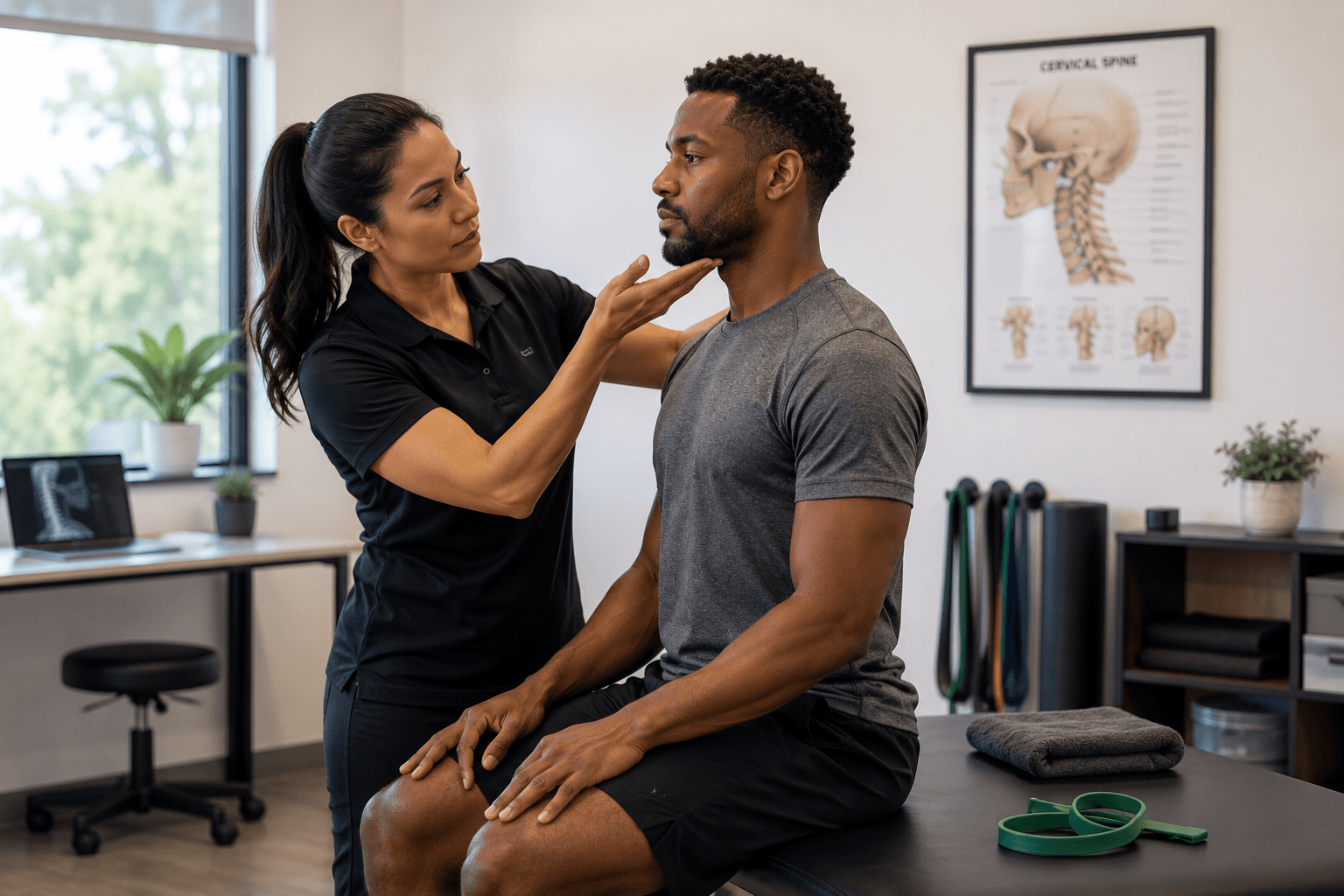
Neck pain is common, especially for people who spend long hours at a desk, use phones frequently, drive often, sleep in awkward positions, or carry stress in the shoulders and upper back. For many people, neck pain is not caused by one dramatic injury. It builds gradually from repeated strain, long static postures, weak support muscles, poor recovery, or a sudden increase in activity.
Many neck pain flare-ups can be reduced with daily habits. Movement breaks, better ergonomics, strength training, sleep adjustments, stress management, and smart recovery can all help lower strain on the neck and shoulders.
This checklist explains practical ways to reduce neck pain risk, what common mistakes to avoid, which home tools may help, and when neck pain should be checked by a healthcare provider.
Why Neck Pain Happens
The neck supports the head, protects the spinal cord, and allows movement in many directions. It includes bones, discs, joints, muscles, ligaments, nerves, and blood vessels. Because it is both mobile and load-bearing, it can become irritated by posture, injury, stress, repetitive movement, or underlying medical conditions.
Common causes of neck pain include muscle strain, joint irritation, disc problems, nerve compression, arthritis, whiplash, tension, and poor workstation or device habits. Mayo Clinic notes that neck pain may be linked to muscle strains, worn joints, nerve compression, injuries, and certain diseases such as rheumatoid arthritis, meningitis, or cancer.
Most neck pain is not a sign of a serious medical problem, but symptoms should be taken seriously when they are severe, follow an injury, spread into the arm, or come with weakness, numbness, fever, headache, or other warning signs.
Checklist Step 1: Change Positions Often
One of the biggest neck pain triggers is staying in one position for too long. Even a "good" posture can become uncomfortable if the body is held there for hours without movement.
Try to change positions regularly during work, driving, reading, or screen time. Stand up, walk, roll your shoulders gently, reset your screen position, or change how you are sitting. The goal is not perfect posture. The goal is frequent variation.
Short movement breaks can reduce stiffness and remind the neck, shoulders, and upper back to share the load. A practical starting point is to move for one to two minutes every 30 to 60 minutes, especially during long computer or phone sessions.
Checklist Step 2: Set Up Your Screen at Eye Level
Looking down at a phone, laptop, or tablet for long periods can increase strain in the neck and upper back. This is sometimes called "tech neck," but the basic issue is simple: the farther the head drifts forward and downward, the harder the neck muscles must work.
For desk work, place your monitor close to eye level so you do not need to constantly look down or crane your neck. If you use a laptop for long periods, consider raising the laptop and using an external keyboard and mouse.
For phone use, bring the phone closer to eye level when possible. Avoid holding the phone between your shoulder and ear. If you take long calls, use headphones, earbuds, or speaker mode when safe and appropriate.
Checklist Step 3: Support Your Arms and Shoulders
The neck and shoulders work together. If your arms are unsupported while typing, mousing, driving, or reading, the muscles around the neck and upper back may stay tense for long periods.
At a desk, keep your elbows near your sides and your shoulders relaxed. Your keyboard and mouse should be close enough that you do not need to reach forward. If your shoulders are shrugged or your arms are floating while you work, adjust the chair, desk, keyboard, or arm support.
For reading or tablet use, support your arms with pillows, a desk, or an angled stand. Small changes can reduce how much the neck has to compensate.
Checklist Step 4: Strengthen the Neck, Upper Back, and Core
Stretching may help temporary tightness, but long-term neck pain prevention often requires strength. The neck is supported by muscles in the upper back, shoulders, chest, core, and deep neck stabilizers. If those muscles are weak or poorly coordinated, the neck may work harder than it should.
A balanced strengthening plan may include rows, band pull-aparts, wall angels, chin tucks, shoulder blade squeezes, gentle neck isometrics, core exercises, and hip and back strengthening. The right exercises depend on your symptoms, fitness level, and medical history.
Start slowly. Exercises should feel controlled, not sharp or electric. If movement causes pain that travels into the arm, numbness, tingling, dizziness, or worsening symptoms, stop and ask a healthcare provider or physical therapist for guidance.
Checklist Step 5: Use Gentle Mobility, Not Aggressive Stretching
Neck stiffness can make stretching tempting, but forcing the neck into deep stretches may irritate muscles, joints, or nerves. More intensity is not always better.
Gentle range-of-motion work is usually safer. This may include slowly turning the head side to side, looking slightly up and down, gently tilting the ear toward the shoulder, or doing shoulder rolls. Movements should stay comfortable and controlled.
Avoid forceful twisting, sudden cracking, aggressive stretching, or pushing through sharp pain. If stiffness is severe, recurring, or linked with headaches, arm symptoms, or dizziness, get evaluated rather than repeatedly trying to stretch it out.
Checklist Step 6: Improve Sleep Position and Pillow Support
Sleep position can contribute to neck pain, especially if the head is held too high, too low, or rotated for hours. Waking with neck pain may point to pillow height, mattress support, or sleeping position.
Many people do better when the head and neck are aligned with the rest of the body. Back sleepers may need a pillow that supports the natural curve of the neck without pushing the head forward. Side sleepers may need enough pillow height to keep the neck level with the spine.
Sleeping on the stomach often forces the neck to stay rotated for long periods and may worsen symptoms for some people. If changing sleep position is difficult, try gradual adjustments rather than forcing a sudden change that disrupts sleep.
Checklist Step 7: Manage Stress and Jaw Tension
Stress does not mean neck pain is "all in your head." Stress can increase muscle tension, change breathing patterns, worsen sleep, and make pain feel more intense. Many people hold tension in the jaw, neck, shoulders, and upper back without noticing it.
Helpful strategies may include breathing exercises, walking, stretching gently, mindfulness, therapy, heat, massage, relaxation routines, or taking brief breaks during stressful tasks. If you clench your jaw or grind your teeth, ask a dentist about bruxism and whether a mouth guard or other treatment may help.
Stress management works best when paired with movement, strength, and ergonomic changes. It should not be used as a substitute for medical care when symptoms are severe or neurological.
Checklist Step 8: Be Careful With Bags, Backpacks, and Repetitive Loads
Carrying heavy bags on one shoulder can strain the neck, shoulder, and upper back. The same can happen with heavy backpacks, camera straps, tool belts, or work equipment.
Use both straps when carrying a backpack, keep the load close to the body, and lighten what you carry when possible. If you use a shoulder bag, switch sides often or choose a crossbody or backpack style that distributes weight more evenly.
Repetitive tasks can also contribute. If your work involves reaching, lifting, bending over patients or equipment, driving, or looking down for long periods, small changes in setup and movement breaks may reduce cumulative strain.
Home Tools That May Help
Home tools can support comfort and recovery, but they should not replace a clear plan. A supportive pillow, ergonomic keyboard and mouse, laptop stand, adjustable chair, heat pack, cold pack, resistance bands, massage tool, or TENS unit may help some people.
Heat may help tight muscles feel more relaxed. Cold may be useful after a sudden strain or when inflammation feels prominent. A TENS unit may provide temporary pain relief for some users, but it does not correct posture, strength, or movement patterns.
Neck braces or collars should be used only when recommended. Mayo Clinic notes that wearing a neck collar for more than three hours at a time or for more than one to two weeks can make symptoms worse.
Common Mistake: Trying to Hold Perfect Posture All Day
Perfect posture is not the goal. Many people try to sit rigidly upright all day, then feel more tense. The body usually does better with movement and variety.
A better approach is to make your most common positions easier on your body, then change positions often. Sit, stand, walk, stretch gently, and adjust your setup throughout the day.
If you constantly have to remind yourself to "sit up straight," your workstation may need support changes. Your screen, chair, keyboard, mouse, and arm position should make relaxed alignment easier.
Common Mistake: Ignoring Arm Symptoms
Neck pain that spreads into the shoulder, arm, or hand may suggest nerve irritation. This is especially important if it comes with numbness, tingling, weakness, clumsiness, or loss of grip strength.
Arm symptoms do not always mean something dangerous, but they should not be ignored if they are new, worsening, one-sided, or interfering with daily activities.
A healthcare provider may check strength, reflexes, sensation, range of motion, and whether imaging or nerve testing is needed.
Common Mistake: Resting Too Much
When neck pain flares, short-term rest may help. But avoiding movement for too long can increase stiffness, weakness, and fear of movement.
Try to keep gentle activity in your day as tolerated. Walking, light household tasks, easy mobility work, and normal daily movement can often support recovery.
If movement causes severe pain, dizziness, arm symptoms, or worsening symptoms, get guidance before continuing.
Common Mistake: Treating Recurring Pain Without Looking for the Pattern
Recurring neck pain usually has a pattern. It may flare after long laptop use, stressful workdays, poor sleep, heavy lifting, driving, certain workouts, or phone use.
A simple symptom log can help identify the pattern. Track pain level, sleep, work hours, screen time, exercise, stress, pillow use, headaches, arm symptoms, and what helped or worsened the pain.
If the same pattern keeps repeating, the solution may not be a single stretch or product. It may require changes in workload, strength, ergonomics, recovery, stress, or medical evaluation.
When to Talk to a Healthcare Provider
Schedule a visit if neck pain lasts longer than a few weeks, keeps coming back, interferes with sleep or work, spreads into the arm, causes headaches, or does not improve with careful self-care.
You should also get checked if you have numbness, tingling, weakness, reduced grip strength, trouble walking, unexplained weight loss, fever, history of cancer, immune system problems, or pain that is worsening instead of improving.
Mayo Clinic advises seeking medical care if neck pain is severe, persists for several days without relief, spreads down the arms or legs, or comes with headache, numbness, weakness, or tingling.
When to Seek Urgent Care
Seek emergency medical care for severe neck pain after an injury such as a car accident, fall, diving accident, or major sports injury.
Also seek urgent care for neck pain with fever, severe headache, confusion, stiff neck with illness, chest pain, trouble breathing, fainting, sudden weakness, loss of coordination, loss of bladder or bowel control, or symptoms that could suggest stroke, infection, heart attack, spinal cord compression, or another emergency.
Do not drive yourself if symptoms are severe, sudden, neurological, or linked with major trauma.
The Bottom Line
Reducing neck pain risk usually requires more than one fix. Movement breaks, better screen height, arm support, strength training, gentle mobility, sleep support, stress management, and smarter load-carrying habits can all help.
The most common mistakes are trying to hold perfect posture, ignoring arm symptoms, resting too long, stretching aggressively, and treating recurring pain without identifying the pattern.
Most neck pain improves with time and careful self-care, but severe pain, pain after injury, arm weakness, numbness, tingling, fever, headache, or symptoms that keep worsening should be checked.
If neck pain keeps returning, ask a healthcare provider or physical therapist what movement, ergonomic, strength, or recovery changes would be safest for your situation.