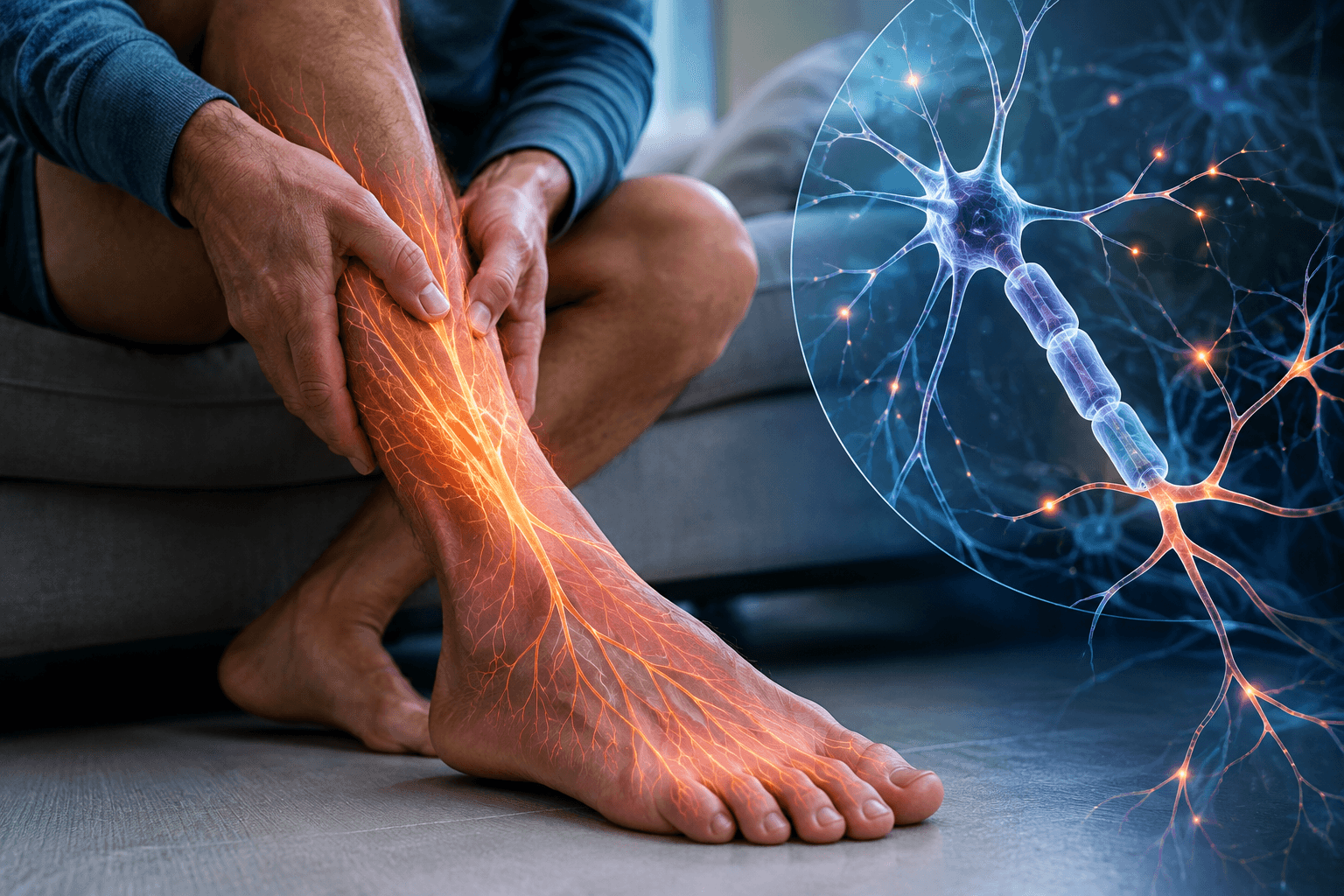
Neuropathy is a general term for nerve damage or nerve dysfunction. It can affect how the body senses touch, temperature, pain, movement, balance, digestion, heart rate, blood pressure, and other automatic functions.
Many people think of neuropathy as tingling or burning in the feet, and that is common. But neuropathy can feel different from person to person. Some people have numbness. Others have sharp pain, weakness, cramps, balance problems, or skin sensitivity that makes even light touch uncomfortable.
Neuropathy can have many causes, including diabetes, vitamin deficiencies, alcohol use, infections, autoimmune conditions, injuries, nerve compression, kidney disease, thyroid disease, medications, and inherited nerve disorders. Because the causes vary, persistent or worsening nerve symptoms should not be ignored.
What Is Neuropathy?
Neuropathy happens when nerves outside the brain and spinal cord are damaged, irritated, compressed, or not working normally. These nerves are part of the peripheral nervous system, which carries signals between the brain, spinal cord, muscles, skin, and organs.
Peripheral neuropathy often affects the feet and legs first, and sometimes the hands and arms. The National Institute of Neurological Disorders and Stroke explains that peripheral neuropathy can be acquired or inherited, and that acquired neuropathies may result from another condition or may have no known cause.
The symptoms depend on which nerves are affected. Sensory nerves affect feeling. Motor nerves affect movement and strength. Autonomic nerves affect automatic body functions such as sweating, digestion, heart rate, bladder function, and blood pressure regulation.
Common Symptoms of Neuropathy
Neuropathy symptoms may develop slowly or appear suddenly, depending on the cause. They may be mild at first and become more noticeable over time.
Common symptoms include numbness, tingling, burning pain, pins-and-needles sensations, electric shock-like pain, stabbing pain, sensitivity to touch, weakness, cramps, poor coordination, balance problems, and trouble sensing temperature or pain.
Symptoms often start in the toes or feet and may move upward over time. Some people describe a "stocking and glove" pattern, meaning symptoms affect the feet first and later the hands. Symptoms may be worse at night, especially burning, tingling, or pain in the feet.
Neuropathy in the Feet and Legs
Neuropathy commonly affects the feet and legs because the longest nerves in the body are often affected first. This can make walking, balance, exercise, and foot care more difficult.
Foot symptoms may include burning, tingling, numbness, pain with light touch, loss of sensation, swelling, weakness, or a feeling that socks are bunched up when they are not. Some people notice they cannot feel hot pavement, cold floors, blisters, cuts, or pressure from shoes as well as before.
Loss of protective sensation can be risky, especially for people with diabetes. A small blister, callus, cut, or ingrown toenail may go unnoticed and become infected. This is why daily foot checks and proper footwear are important for people at higher risk.
Neuropathy in the Hands and Arms
Neuropathy can also affect the hands and arms. Symptoms may include tingling, numbness, burning pain, hand weakness, dropping objects, trouble buttoning clothing, difficulty typing, or reduced grip strength.
Sometimes hand symptoms are caused by a compressed nerve rather than a whole-body neuropathy. Carpal tunnel syndrome, for example, happens when a nerve is compressed at the wrist. Neck problems can also send pain, numbness, or weakness into the arm or hand.
Because symptoms can come from different parts of the nervous system, it is important to describe where symptoms occur, whether they are on one side or both sides, and whether weakness, pain, or numbness is the main problem.
Common Causes and Risk Factors
Diabetes is one of the most common causes of peripheral neuropathy. Over time, high blood sugar and high levels of blood fats such as triglycerides can damage nerves and the small blood vessels that nourish them. The National Institute of Diabetes and Digestive and Kidney Diseases notes that up to one-half of people with diabetes have peripheral neuropathy.
Other risk factors and causes include prediabetes, heavy alcohol use, vitamin B12 deficiency, chemotherapy, certain medications, kidney disease, liver disease, thyroid disease, autoimmune disease, infections, injuries, repetitive strain, spinal problems, inherited conditions, and exposure to toxins.
Neuropathy risk may also increase with age, smoking, high blood pressure, high cholesterol, advanced kidney disease, and being overweight, especially in people with diabetes.
Triggers That Can Make Symptoms Worse
Some people notice that neuropathy symptoms flare or become more noticeable in certain situations. Triggers do not always cause neuropathy, but they may make irritated nerves feel worse.
Common triggers may include high blood sugar, alcohol, poor sleep, stress, prolonged standing, tight shoes, repetitive motion, cold exposure, heat exposure, dehydration, illness, medication changes, and intense exercise without enough recovery.
For people with diabetes, blood sugar patterns can be especially important. Higher glucose levels over time may worsen nerve damage, while sudden changes in glucose may sometimes make nerve symptoms feel more noticeable. A diabetes care team can help identify safe targets and tracking strategies.
How Neuropathy Is Diagnosed
A healthcare provider may diagnose neuropathy by reviewing symptoms, medical history, medications, alcohol use, family history, and risk factors. The exam may include checking reflexes, strength, sensation, balance, skin changes, pulses, and foot health.
Blood tests may be used to look for possible causes such as diabetes, prediabetes, vitamin B12 deficiency, thyroid disease, kidney problems, liver problems, inflammation, infections, or autoimmune conditions. In some cases, nerve conduction studies or electromyography may be used to evaluate how nerves and muscles are working.
Diagnosis is important because treatment depends on the cause. Neuropathy related to diabetes may require blood sugar, blood pressure, cholesterol, and foot-care management. Neuropathy caused by vitamin B12 deficiency, thyroid disease, medication effects, or nerve compression may require a different plan.
Home Monitoring and Foot Checks
Home monitoring can help people notice patterns and prevent complications, especially when neuropathy affects the feet.
If you have diabetes or reduced sensation in your feet, check your feet every day. Look for cuts, blisters, redness, swelling, calluses, cracked skin, ingrown nails, drainage, color changes, or areas that feel warmer than usual. Use a mirror or ask for help if you cannot see the bottoms of your feet.
Home tools may include a blood glucose monitor or continuous glucose monitor for people with diabetes, a blood pressure monitor, supportive footwear, foot protection products, and a symptom diary. A symptom diary can track pain level, numbness, sleep, activity, blood sugar patterns, medications, and possible triggers.
Common Mistake: Ignoring Numbness Because It Does Not Hurt
Pain often gets attention faster than numbness, but numbness can be just as important. Loss of sensation may mean you do not notice injuries, pressure, burns, or infections.
This is especially important for people with diabetes, poor circulation, foot deformities, or a history of foot ulcers. A painless sore can still be serious if it is not healing or if it becomes infected.
If you notice new numbness, reduced temperature sensation, balance changes, or foot injuries you did not feel, schedule a medical evaluation.
Common Mistake: Assuming All Tingling Is From Poor Circulation
People often describe tingling or numbness as "poor circulation," but circulation and nerve function are different. Poor blood flow can cause leg pain, coldness, color changes, or slow wound healing. Neuropathy can cause burning, tingling, numbness, or altered sensation even when blood flow is normal.
Some people have both circulation problems and neuropathy, especially if they have diabetes, smoking history, high blood pressure, high cholesterol, or peripheral artery disease.
Because the symptoms can overlap, a healthcare provider may need to check pulses, sensation, skin, wounds, blood pressure, glucose, cholesterol, and other risk factors.
Common Mistake: Treating Nerve Pain Without Looking for the Cause
Pain relief matters, but it is also important to understand why neuropathy is happening. Taking pain medicine or supplements without evaluating the cause may delay treatment for diabetes, vitamin deficiency, thyroid disease, medication side effects, autoimmune disease, infection, or nerve compression.
Some supplements are marketed for nerve support, but they are not a substitute for diagnosis. Products such as alpha-lipoic acid, acetyl-L-carnitine, B vitamins, or topical creams may be discussed with a healthcare provider, especially if you take medications or have kidney, liver, or diabetes-related concerns.
If symptoms are new, worsening, one-sided, or associated with weakness, it is better to get evaluated than to rely on self-treatment alone.
How Neuropathy Is Treated
Treatment depends on the cause, severity, and type of nerves involved. The first step is usually addressing the underlying problem when possible.
For diabetic neuropathy, treatment may include improving blood sugar patterns, managing blood pressure and cholesterol, foot care, smoking cessation, physical activity, and medications for nerve pain when needed. For vitamin deficiency, supplementation may be recommended. For nerve compression, treatment may involve splints, physical therapy, ergonomic changes, injections, or surgery in selected cases.
Medications may help reduce nerve pain, but they do not always restore sensation. Physical therapy, balance training, protective footwear, fall prevention, and wound prevention can be just as important as pain control.
When to Talk to a Healthcare Provider
Talk to a healthcare provider if you have persistent numbness, tingling, burning pain, weakness, balance problems, foot pain, hand symptoms, or symptoms that interfere with sleep, walking, work, or daily activities.
You should also get checked if you have diabetes, prediabetes, kidney disease, thyroid disease, heavy alcohol use, a history of chemotherapy, or possible vitamin deficiency and you notice nerve symptoms.
If you have diabetes, ask how often you need a foot exam. Many people with diabetes should have their feet checked at least once a year, and more often if they have foot problems, reduced sensation, or previous ulcers.
When to Seek Urgent Care
Seek urgent medical care for sudden weakness, new trouble walking, loss of bladder or bowel control, numbness in the groin or saddle area, severe back or neck pain with weakness, symptoms after a major injury, or sudden numbness on one side of the body.
You should also seek prompt care for a foot wound that is red, swollen, draining, warm, blackened, spreading, or not healing, especially if you have diabetes or poor circulation.
Call emergency services if nerve symptoms appear with facial drooping, arm weakness, speech trouble, sudden confusion, severe dizziness, chest pain, or symptoms that could suggest a stroke or another emergency.
The Bottom Line
Neuropathy can cause numbness, tingling, burning pain, weakness, balance problems, and changes in how the body senses touch, pain, or temperature. It often affects the feet and legs first, but it can also affect the hands, arms, and automatic body functions.
Diabetes is one of the most common causes, but neuropathy can also be related to vitamin deficiencies, alcohol use, medications, injuries, nerve compression, kidney disease, thyroid disease, autoimmune conditions, infections, and inherited disorders.
Do not ignore nerve symptoms, especially numbness, foot wounds, weakness, balance changes, or symptoms that are new or worsening. The right treatment depends on finding the cause and preventing complications.
If you are unsure whether your symptoms are neuropathy, ask a healthcare provider what testing, foot checks, lab work, or treatment steps are appropriate for your health history.