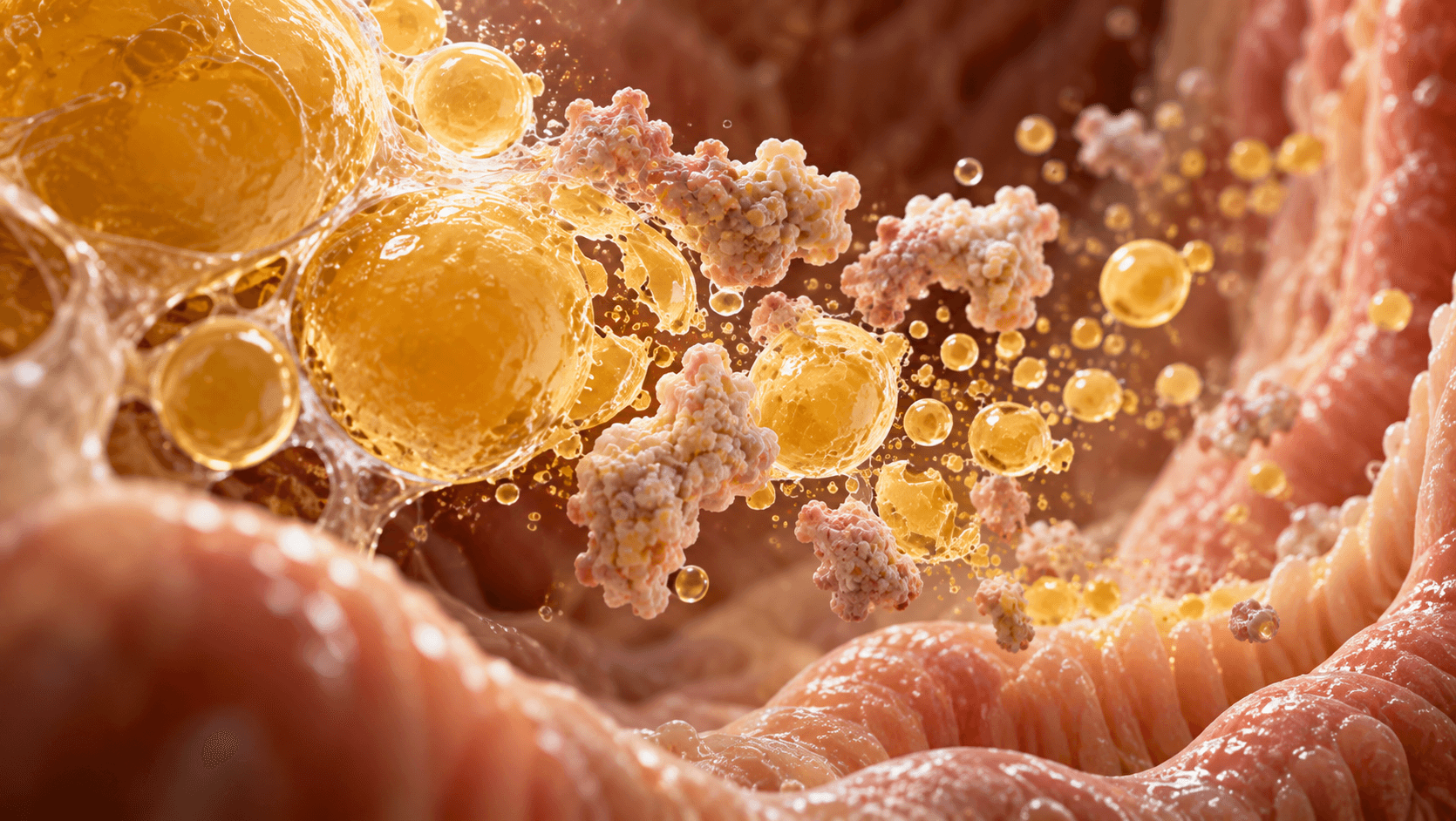
Cystic fibrosis (CF) affects more than the lungs. For the majority of people living with the condition, it also disrupts how the pancreas works — and that has a direct impact on nutrition, growth, and overall health. Understanding the relationship between pancreatic enzymes and the nutrients your body needs can help you ask better questions and work more effectively with your care team.
Why the Pancreas Matters in CF
The same gene mutation that causes the sticky mucus buildup in CF airways also affects the ducts in the pancreas. In most people with CF, thick secretions block the small channels that normally carry digestive enzymes from the pancreas into the small intestine. When those enzymes can't reach food, the body struggles to break down fats, proteins, and fat-soluble vitamins properly.
This condition is called exocrine pancreatic insufficiency (EPI), and it is present in a large proportion of people with CF — often from very early in life. Without treatment, EPI leads to malabsorption: nutrients pass through the gut largely undigested and unabsorbed, even when a person is eating plenty of food. The result can be poor weight gain, low energy, and deficiencies in vitamins that play a critical role in immune function, bone health, and vision.
Pancreatic Enzyme Replacement Therapy (PERT): The Basics
The standard treatment for EPI in CF is pancreatic enzyme replacement therapy (PERT). These are prescription capsules containing a mixture of enzymes — primarily lipase, protease, and amylase — derived from porcine (pig) pancreas. Taken with every meal and most snacks, PERT supplements what the pancreas can no longer deliver on its own.
Getting the dose right is one of the more nuanced parts of CF care. Too little enzyme and malabsorption continues; too much over time carries its own risks. Dosing is typically individualized based on factors like age, weight, fat intake, and how a person's stools look and feel. Your CF care team — often including a registered dietitian with CF experience — will guide adjustments over time.
PERT is taken with food, not separately. Timing matters: the enzymes need to be present in the gut at the same time as the meal to work effectively.
Signs That Enzyme Therapy May Need Adjusting
Even when someone is on PERT, malabsorption can still occur if the dose isn't calibrated correctly for their current diet and body. It's worth knowing the signs that something may be off, so you can flag them with your clinician rather than assuming they're unrelated to enzyme therapy.
- Oily, greasy, or foul-smelling stools — a classic sign that fat is not being absorbed properly, sometimes called steatorrhea
- Frequent, loose, or difficult-to-flush stools — another indicator of fat malabsorption
- Bloating, cramping, or excessive gas after meals
- Unexpected weight loss or difficulty gaining weight despite eating adequate calories
- Fatigue or low energy that doesn't have another clear explanation
- Poor growth in children — height and weight trajectories are closely monitored at CF clinic visits
None of these symptoms automatically confirm a dosing problem, but they are worth discussing. Other factors — including CF-related diabetes, bowel complications, or an acute illness — can also affect digestion and absorption.
Nutritional Markers Worth Tracking
Your CF care team will typically monitor several laboratory and clinical markers to get a clearer picture of nutritional status. Understanding what these measure can help you make sense of your results and engage more actively in your care.
Fat-Soluble Vitamins
Because fat absorption is impaired in CF-related EPI, vitamins A, D, E, and K are particularly vulnerable to deficiency. These vitamins dissolve in fat, so if dietary fat isn't absorbed well, these vitamins aren't absorbed well either — even with supplementation. Most CF care teams check blood levels of these vitamins at least annually.
- Vitamin D plays a central role in bone health and immune function. Deficiency is common in CF, and many people require CF-specific vitamin D supplements rather than standard over-the-counter doses.
- Vitamin A supports vision, immune response, and lung tissue integrity.
- Vitamin E functions as an antioxidant and supports nerve and muscle health.
- Vitamin K is essential for blood clotting and bone metabolism. Low levels can affect how accurately certain lab tests reflect bone health.
CF-specific multivitamins formulated with water-miscible (water-soluble) forms of these fat-soluble vitamins are available and are generally preferred over standard formulations because they are better absorbed in the setting of fat malabsorption.
Weight, BMI, and Growth
Body weight and body mass index (BMI) are among the most closely watched metrics in CF care, because nutritional status has a well-established connection to lung function outcomes. In children, growth charts tracking height and weight over time are a primary tool. In adults, maintaining a healthy BMI is a consistent goal.
It's important to understand that the caloric needs of many people with CF are significantly higher than those of the general population. The increased work of breathing, chronic infection, and inflammation all raise energy expenditure, while malabsorption reduces how much of what's eaten is actually used. This is why high-calorie, high-fat diets are often recommended in CF — an approach that is essentially the opposite of general population dietary guidance.
Prealbumin and Other Protein Markers
Standard nutrition panels sometimes include markers of protein status such as prealbumin (also called transthyretin) or albumin. These can offer a snapshot of protein stores and nutritional adequacy, though they're also influenced by inflammation and acute illness, so clinicians interpret them alongside other findings rather than in isolation.
Bone Density
CF-related bone disease is a recognized complication, driven by a combination of vitamin D and K deficiencies, low weight, chronic inflammation, use of corticosteroids, and reduced physical activity during illness. Dual-energy X-ray absorptiometry (DEXA) scans to measure bone mineral density are typically recommended starting in adolescence or early adulthood, with the frequency guided by individual risk. Adequate calcium and vitamin D intake, along with weight-bearing exercise when health allows, are important protective factors.
CF-Related Diabetes and Nutrition
CF-related diabetes (CFRD) is a distinct form of diabetes that develops in a meaningful proportion of people with CF, typically in adolescence or adulthood. It occurs because scarring and damage to the pancreas over time affects the insulin-producing cells as well as the enzyme-producing ones. CFRD can further complicate nutritional management, since blood sugar control becomes an additional variable. Importantly, the dietary approach in CFRD differs from that in type 1 or type 2 diabetes — caloric restriction is rarely appropriate, and a CF dietitian's involvement is essential.
The Role of CFTR Modulators
In recent years, a class of medications called CFTR modulators has transformed care for many people with CF by targeting the underlying protein defect. For those who are eligible and respond to modulator therapy, pancreatic function may improve, and some individuals see changes in their nutritional status and enzyme needs. This doesn't mean enzyme therapy becomes unnecessary overnight, but it does mean that nutritional monitoring and PERT dosing may need revisiting. If you or your child has started a modulator, talk with your CF team about whether your enzyme dose and vitamin regimen should be reassessed.
Practical Tips for Day-to-Day Tracking
Between clinic visits, there are practical ways to stay on top of nutritional management:
- Take enzymes consistently — with every meal and most snacks that contain fat or protein. Missing doses, even occasionally, can compound malabsorption over time.
- Notice stool changes — while not a pleasant topic, the appearance of stools is a genuinely useful signal. Changes in color, consistency, or odor are worth noting and mentioning at your next appointment.
- Keep a rough food log during flares — if weight starts dropping or GI symptoms worsen, a short-term food diary can help your dietitian identify patterns.
- Don't skip clinic labs — annual or semi-annual bloodwork for vitamin levels, glucose tolerance, and other markers catches deficiencies before they become symptomatic.
- Communicate changes in diet — if your eating habits shift significantly (due to illness, appetite changes, or life circumstances), let your team know, as enzyme dosing may need to change accordingly.
Working With Your CF Care Team
Nutrition in CF is genuinely complex, and the specifics of what to monitor and how to adjust therapy vary considerably from person to person and across different life stages. Accredited CF care centers typically include registered dietitians with specialized CF expertise as core members of the multidisciplinary team. Routine visits — even when things seem stable — provide important opportunities to review nutritional status, catch emerging concerns early, and adjust the care plan.
If something feels off — unexplained weight changes, persistent GI discomfort, unusual fatigue — it's always reasonable to reach out between scheduled appointments rather than waiting. Nutritional status in CF is not a background issue; it's central to how well the body functions and how well lungs are protected over time.
This article is for general informational purposes and is not a substitute for personalized medical advice. Please talk with your CF care team about any questions related to enzyme dosing, nutritional supplements, or monitoring.