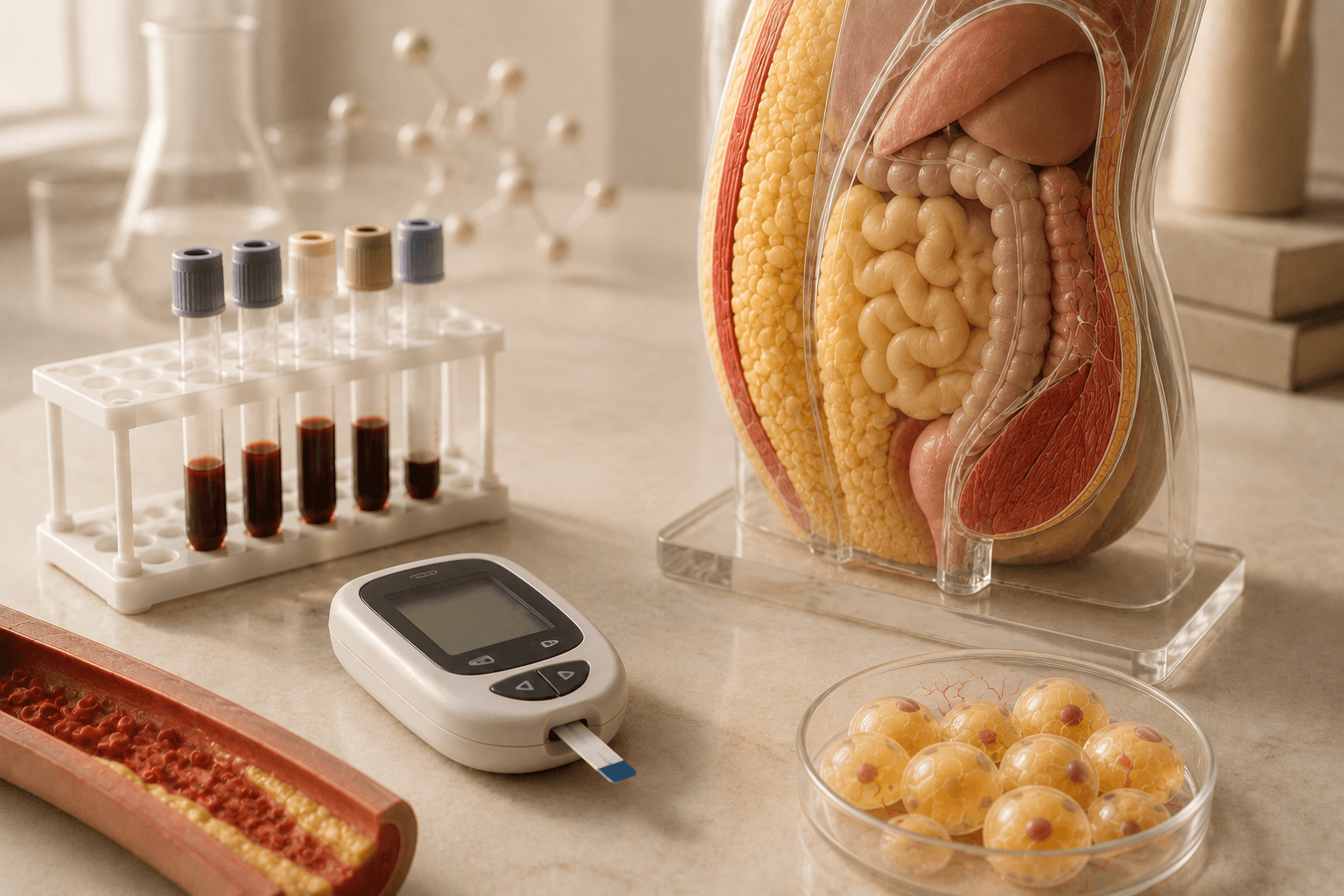
Overweight and obesity are common health terms, but they are often misunderstood. Appearance, willpower, and the number on the scale are only part of it. They are medical risk categories that can affect blood pressure, blood sugar, cholesterol, joints, sleep, breathing, and long-term heart and metabolic health.
Body weight alone does not tell the full story either. Two people can have the same weight or body mass index (BMI) and face very different health risks. Muscle mass, waist size, blood pressure, blood sugar, cholesterol, sleep, medications, family history, and medical conditions all matter.
This guide explains how overweight and obesity are measured, which labs and numbers are most useful, what warning signs to watch for, and when to talk with a healthcare provider.
What Do Overweight and Obesity Mean?
Overweight and obesity are terms used to describe higher-than-recommended levels of body weight or body fat that may increase health risk. In adults, they are most commonly classified using BMI, a calculation based on height and weight.
BMI is not perfect. It does not directly measure body fat, muscle, fitness, or fat distribution. A muscular person may have a high BMI without having high body fat, while another person may have a normal BMI but still have excess abdominal fat or metabolic risk.
For this reason, BMI works best as a screening tool, not a final diagnosis. A more complete picture includes waist circumference, body composition, blood pressure, lab results, symptoms, health history, and lifestyle factors.
BMI: The Most Common Starting Point
BMI is often the first number used to classify weight status in adults. It compares body weight to height and places the result into a category.
Common adult BMI categories include:
- Underweight: BMI below 18.5
- Healthy weight: BMI 18.5 to 24.9
- Overweight: BMI 25.0 to 29.9
- Obesity: BMI 30.0 or higher
Obesity may also be divided into classes. Class 1 obesity is a BMI of 30.0 to 34.9, class 2 obesity is a BMI of 35.0 to 39.9, and class 3 obesity is a BMI of 40.0 or higher.
These categories can help identify possible risk, but they should not be used alone. The Centers for Disease Control and Prevention describes BMI as a screening measure that should be considered with other factors when assessing a person's health.
Waist Circumference: Why Belly Fat Matters
Waist circumference is another important measurement because fat stored around the abdomen is more strongly linked with metabolic and cardiovascular risk than fat stored in some other areas of the body.
A larger waist size can suggest more visceral fat, which is fat stored around internal organs. Visceral fat is linked with insulin resistance, higher triglycerides, lower HDL cholesterol, inflammation, fatty liver disease, high blood pressure, and higher risk of type 2 diabetes.
A commonly used cutoff for increased health risk is a waist circumference greater than 40 inches in men or greater than 35 inches in women. These numbers are general guidelines and may not apply equally to every ethnicity, body type, or individual health situation.
To measure your waist, place a flexible tape measure around your abdomen at about the level of your belly button. Measure after breathing out normally. Keep the tape snug but not tight, and avoid measuring over bulky clothing.
Body Composition: Looking Beyond the Scale
Body composition refers to the amount of fat, muscle, bone, and water in the body. This can be helpful because weight alone cannot show whether changes are coming from fat loss, muscle gain, fluid shifts, or normal day-to-day variation.
Some people use body composition monitors at home. These devices estimate body fat percentage using bioelectrical impedance, which sends a small electrical signal through the body. They can be useful for tracking trends, but they are not perfectly accurate.
Hydration, recent exercise, meals, alcohol, menstrual cycle changes, and device quality can all affect readings. For best results, use the same device under similar conditions and focus on long-term trends rather than one measurement.
Blood Pressure: A Key Number to Track
Excess weight can place extra strain on the heart and blood vessels. It may also increase the risk of high blood pressure, which often has no symptoms.
Blood pressure is written as two numbers. The top number, systolic pressure, measures pressure when the heart beats. The bottom number, diastolic pressure, measures pressure when the heart rests between beats.
Because blood pressure can change during the day, one reading does not always tell the full story. Stress, caffeine, exercise, pain, poor sleep, and measurement technique can affect results. Home blood pressure monitoring may help identify patterns, especially when readings are taken correctly and shared with a healthcare provider.
If your readings are often elevated, do not ignore them just because you feel fine. High blood pressure can raise the risk of heart disease, stroke, kidney disease, and other complications without ever causing symptoms.
Blood Sugar and A1C
Overweight and obesity can increase the risk of insulin resistance, prediabetes, and type 2 diabetes. This is especially true when excess weight is concentrated around the abdomen or when there is a family history of diabetes.
Common blood sugar tests include fasting glucose and A1C. Fasting glucose measures blood sugar after not eating for several hours, usually overnight. A1C estimates average blood sugar over the past two to three months.
High blood sugar may not cause symptoms at first. When symptoms do appear, they may include increased thirst, frequent urination, blurry vision, fatigue, slow-healing cuts, or unexplained weight changes. These symptoms should be discussed with a healthcare provider.
Cholesterol and Triglycerides
Weight-related metabolic changes can affect cholesterol and triglycerides. A lipid panel usually measures total cholesterol, LDL cholesterol, HDL cholesterol, and triglycerides.
LDL cholesterol is often called "bad" cholesterol because higher levels can contribute to plaque buildup in the arteries. HDL cholesterol is often called "good" cholesterol because it helps move cholesterol away from the arteries and back to the liver. Triglycerides are a type of fat in the blood that can rise with insulin resistance, high intake of refined carbohydrates, excess alcohol, and certain medical conditions.
These numbers matter because they help estimate cardiovascular risk. A person may feel completely normal and still have abnormal cholesterol or triglyceride levels, which is why routine testing is important.
Liver, Kidney, and Inflammation Markers
Depending on your health history, your provider may also check liver enzymes, kidney function, and inflammation-related markers. These tests can help identify conditions that may occur alongside overweight or obesity.
Liver enzymes may be checked because excess weight and insulin resistance can be linked with fatty liver disease. Kidney function may be monitored because high blood pressure, diabetes, and obesity can place extra strain on the kidneys over time.
Inflammation markers may be used in some situations, but they are not specific to obesity. Infection, autoimmune conditions, injury, smoking, poor sleep, and many other factors can affect inflammation results.
Warning Signs That Weight May Be Affecting Health
Overweight and obesity do not always cause obvious symptoms. However, certain signs may suggest that weight, body composition, or related metabolic changes are affecting health.
Possible warning signs include shortness of breath with usual activity, loud snoring, pauses in breathing during sleep, morning headaches, daytime sleepiness, chest discomfort, swelling in the legs, joint pain that limits movement, frequent heartburn, increased thirst, frequent urination, slow-healing wounds, and rising blood pressure or blood sugar readings.
Changes in waist size, decreased stamina, worsening knee or back pain, irregular periods, signs of insulin resistance, or new difficulty with daily activities may also be worth discussing with a healthcare provider.
Seek urgent medical care for chest pain, severe shortness of breath, fainting, sudden weakness on one side of the body, sudden confusion, severe headache, or sudden vision changes.
Common Mistake: Focusing Only on the Scale
The scale can be useful, but it is only one tool. Body weight can change from water, digestion, hormones, sodium intake, exercise, and medications. A single daily number may not reflect actual fat loss or health improvement.
Better tracking may include waist circumference, blood pressure, lab results, energy levels, sleep quality, fitness, strength, mobility, and how clothes fit. For some people, improving blood pressure, blood sugar, or cholesterol may be just as important as losing weight.
Progress should be measured in a way that supports health rather than shame. Weight bias can make people avoid medical care, and that can delay diagnosis and treatment. A respectful, health-focused approach is more useful than blame.
Common Mistake: Assuming BMI Tells the Whole Story
BMI is easy to calculate, but it has limitations. It does not distinguish fat from muscle and does not show where fat is stored. It also does not account fully for ethnicity, age, sex, fitness level, or individual health history.
That does not make BMI useless. It can help identify population-level risk and may be a helpful first screen. For an individual, though, BMI should be combined with other measurements and labs.
If your BMI is in the overweight or obesity range, the more useful question is what your health numbers show and what you can do to lower your risk, rather than how much you weigh.
Common Mistake: Waiting for Symptoms
Many weight-related health risks are silent at first. High blood pressure, high cholesterol, high triglycerides, insulin resistance, fatty liver disease, and prediabetes may develop without clear symptoms.
Waiting until symptoms appear can mean missing an earlier opportunity to act. Routine checkups, blood pressure readings, waist measurements, and lab tests can help identify risk before complications develop.
This is especially important if you have a family history of type 2 diabetes, heart disease, stroke, high blood pressure, sleep apnea, or high cholesterol.
Home Monitoring Tools That May Help
Home tools can support awareness, but they should not replace medical care. A body composition monitor may help track weight and estimated body fat trends. A home blood pressure monitor can help identify blood pressure patterns. A flexible tape measure can help track waist circumference over time.
Some people may also use glucose monitors or ketone monitors, especially if they have diabetes, prediabetes, or are following a medically supervised nutrition plan. These tools should be used with professional guidance if you take medications or have a history of blood sugar problems.
The goal of tracking is not perfect numbers. It is to notice patterns that can guide better decisions and more useful conversations with your healthcare provider.
How to Lower Health Risk
Reducing health risk does not always require dramatic weight loss. Even modest improvements in nutrition, movement, sleep, and blood pressure can make a meaningful difference.
A practical plan may include eating more vegetables, fruits, beans, whole grains, lean proteins, nuts, and seeds while reducing sugary drinks, highly processed foods, and excess alcohol. Strength training and aerobic activity can improve insulin sensitivity, blood pressure, mobility, and body composition.
Sleep is also important. Poor sleep and untreated sleep apnea can affect hunger hormones, blood sugar, blood pressure, and weight regulation. Managing stress, reviewing medications, treating medical conditions, and getting support from a healthcare team can also be part of the plan.
Some people may benefit from anti-obesity medications, diabetes medications, structured nutrition programs, behavioral support, or bariatric surgery. These options should be discussed with a qualified healthcare provider and matched to individual risk, goals, and medical history.
When to Talk to a Healthcare Provider
Talk to a healthcare provider if you are concerned about your weight, waist size, blood pressure, blood sugar, cholesterol, triglycerides, sleep, breathing, joint pain, or energy levels.
You should also ask for guidance if you have a family history of diabetes, heart disease, stroke, high blood pressure, high cholesterol, fatty liver disease, or sleep apnea. Early testing can help identify risks before symptoms become obvious.
A healthcare provider may recommend checking BMI, waist circumference, blood pressure, fasting glucose, A1C, cholesterol, triglycerides, liver enzymes, kidney function, thyroid function, and other labs depending on your symptoms and history.
The Bottom Line
Overweight and obesity are health risk categories, but they should not be judged by body weight alone. BMI can be a useful screening tool, but waist circumference, body composition, blood pressure, cholesterol, blood sugar, symptoms, and medical history all matter.
Many weight-related risks are silent, which is why routine measurements and lab testing are important. You may feel fine and still have elevated blood pressure, abnormal cholesterol, insulin resistance, or other early warning signs.
The most helpful approach is not blame or quick fixes. It is understanding your numbers, tracking meaningful changes, addressing warning signs early, and building a realistic plan with support when needed.
If you are unsure where to start, ask your healthcare provider which measurements and labs matter most for your personal risk profile.
Medical disclaimer: This content is for informational purposes only and is not a substitute for professional medical advice, diagnosis, or treatment. Always consult your physician or qualified health provider.