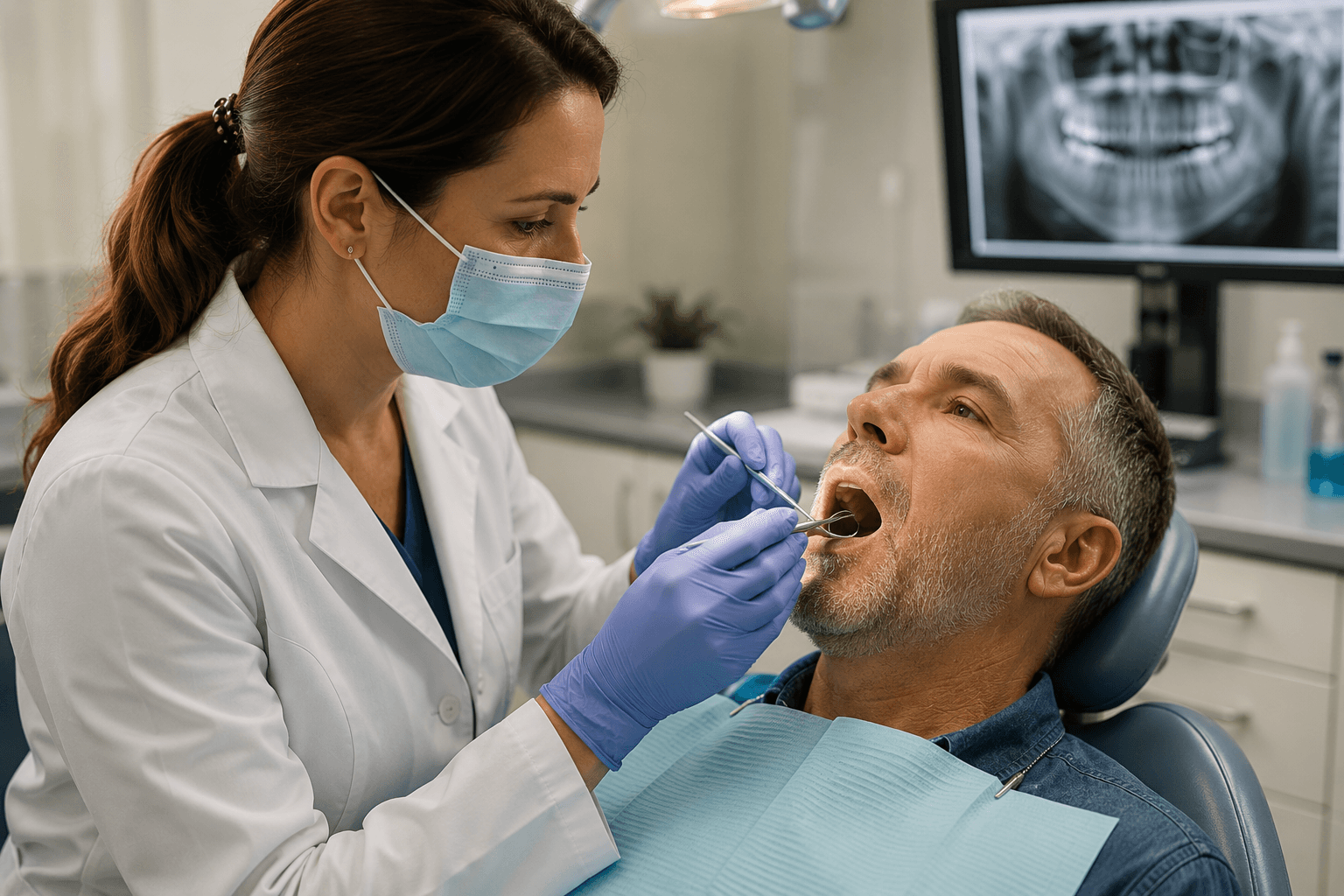
When people think about managing diabetes, they often focus on blood sugar, diet, and medications. The mouth rarely makes the top of the list, yet dental health and blood sugar control are closely linked in ways that can affect both conditions at once. Understanding that connection can help you stay ahead of problems before they become serious.
Why Diabetes and Oral Health Are Connected
Diabetes affects the body's ability to fight infection and heal from injury. Both of those functions matter enormously in the mouth, which is home to hundreds of species of bacteria and faces constant exposure to food, drink, and physical stress.
When blood sugar is elevated over time, a few key things happen that raise the risk of oral health problems:
- Reduced saliva flow. High blood sugar can contribute to dry mouth (a condition called xerostomia), and some diabetes medications can have the same effect. Saliva is your mouth's natural defense system: it rinses away bacteria, neutralizes acids, and delivers minerals that protect tooth enamel. Less saliva means more vulnerability.
- Changes in blood vessels. Over time, poorly controlled diabetes can thicken the walls of small blood vessels, reducing blood flow to tissues including the gums. This makes it harder for the body to deliver nutrients and immune cells to the area.
- Impaired immune response. Diabetes can blunt the body's ability to respond to bacterial infections. In the gums, this means early infections can take hold more easily and progress more quickly.
- Higher glucose in oral fluids. Elevated blood sugar can raise glucose levels in saliva and other oral fluids, which may fuel the growth of certain harmful bacteria.
- Slower wound healing. If you have a dental procedure or a small sore in your mouth, it may take longer to heal if your blood sugar is not well controlled.
These mechanisms help explain why researchers have consistently found higher rates of gum disease and other oral conditions among people with diabetes compared with those without it, particularly when blood sugar is not well managed.
The Two-Way Street: How Gum Disease Can Affect Blood Sugar
The relationship between diabetes and oral health runs in both directions. There is strong evidence that active gum disease, especially the more advanced form called periodontitis, can make blood sugar harder to control. Gum infections trigger a state of chronic low-grade inflammation in the body, and that inflammation can interfere with how cells respond to insulin, potentially worsening insulin resistance.
Studies examining people with type 2 diabetes have found that treating severe gum disease can lead to modest improvements in blood sugar markers. Researchers continue to investigate exactly how much of a difference dental treatment makes, but the direction of the evidence is consistent: a healthier mouth may support better overall metabolic control. Dental care does not replace diabetes treatment, but it can work alongside it.
Common Oral Health Problems in Diabetes
Knowing what to watch for is the first step. The following conditions appear more frequently, and sometimes more severely, in people living with diabetes.
Gum Disease (Gingivitis and Periodontitis)
Gum disease starts with gingivitis, an inflammation of the gums caused by bacterial plaque buildup. Signs include gums that bleed when you brush or floss, look red or swollen, or feel tender. At this stage, the condition is generally reversible with good oral hygiene and professional cleaning.
If gingivitis is not addressed, it can advance to periodontitis, where infection spreads below the gumline and begins to damage the bone and connective tissue that hold teeth in place. Symptoms of periodontitis can include:
- Gums that have pulled away from the teeth, making teeth look longer
- Persistent bad breath that does not resolve with brushing
- Teeth that feel loose or have shifted position
- Pus between the teeth and gums
- Pain when chewing
People with diabetes may develop more aggressive periodontitis and may not respond as well to standard treatment if blood sugar is poorly controlled, which is why coordination between dental and medical care matters.
Dry Mouth
Dry mouth is both uncomfortable and damaging. Without enough saliva, the mouth becomes more acidic, bacteria thrive, and the risk of cavities rises sharply. You may notice a sticky or parched feeling, difficulty chewing or swallowing, a sore throat, or a burning sensation on the tongue. Dry mouth can also make wearing dentures painful.
Thrush (Oral Candidiasis)
Thrush is a fungal infection caused by Candida organisms that normally live in the mouth in small numbers. When blood sugar is high, elevated glucose in saliva can allow Candida to overgrow. Thrush appears as creamy white patches on the tongue, inner cheeks, or roof of the mouth that may be sore or bleed slightly when wiped. People who wear dentures or who take inhaled steroids for other conditions are at particular risk.
Cavities and Tooth Decay
Dry mouth, higher glucose in oral fluids, and changes in the bacterial environment of the mouth can all increase the likelihood of tooth decay. Cavities may develop more quickly and in locations that are not typical, such as near the gumline.
Slow Healing After Dental Procedures
Extractions, implant placements, and other procedures that involve cutting or manipulating tissue may heal more slowly in people with diabetes, especially when blood sugar is elevated. There is also a somewhat higher risk of post-procedure infection.
Burning Mouth Syndrome
Some people with diabetes experience a burning or scalding sensation in the mouth, lips, or tongue that does not have an obvious visible cause. This is not fully understood, but it may relate to nerve changes (neuropathy) that can accompany diabetes over time.
Warning Signs You Should Not Ignore
Some oral symptoms deserve prompt attention. Contact your dentist if you notice any of the following:
- Gums that bleed regularly, even with gentle brushing
- Persistent bad breath despite good hygiene
- White or red patches inside the mouth that do not go away within two weeks
- A tooth that becomes loose without an obvious injury
- Swelling, pain, or a sense of pressure in the jaw
- Sores or wounds in the mouth that are slow to heal
- Significant dry mouth that is new or getting worse
None of these symptoms are automatically cause for alarm, but they are worth discussing with a dental professional who is aware of your diabetes history.
What Good Oral Care Looks Like With Diabetes
The foundation of oral health is the same for everyone, but people with diabetes have extra reason to take it seriously.
- Brush twice a day with a soft-bristled toothbrush and a fluoride toothpaste. Be thorough but gentle; aggressive brushing can irritate already-sensitive gums.
- Floss once a day. Flossing removes plaque from between teeth and just below the gumline where a toothbrush cannot reach.
- Stay hydrated. Drinking water helps compensate for reduced saliva and rinses away food particles and bacteria. Unsweetened options are best.
- Avoid smoking and tobacco. Smoking dramatically worsens gum disease and slows healing, and its effects are compounded in people with diabetes.
- Manage blood sugar as well as possible. Well-controlled blood sugar supports better oral health, and better oral health may support blood sugar control in return.
- Tell your dentist about your diabetes and share any changes in your medications or blood sugar management. This information shapes how your dentist will approach cleanings, procedures, and scheduling.
When and How Often to See a Dentist
Most dental guidelines recommend professional cleanings and checkups at least twice a year for the general population. For people with diabetes, especially those with active gum disease or a history of dental problems, more frequent visits may be appropriate. Your dentist can help you settle on a schedule that fits your situation.
Before any dental procedure, it is worth letting your medical team know, particularly if you take medications that affect bleeding, if your blood sugar has been running high, or if you are managing other complications of diabetes. In some cases, your dentist and your primary care provider or endocrinologist may want to coordinate care directly.
A note on timing: If your blood sugar is significantly elevated on the day of a planned dental procedure, let your dental office know before your appointment. Some non-emergency procedures may be better rescheduled until blood sugar is more stable, to support healing and reduce infection risk. Your care team can advise you on this.
The Bottom Line
Oral health is not separate from the rest of your health, and for people living with diabetes the connection is especially direct. Gum disease, dry mouth, and slow-healing sores are more than inconveniences: they can make blood sugar harder to manage and can signal that something needs attention. With consistent home care, regular dental visits, and open communication between your dental and medical providers, these risks are manageable. Your mouth deserves the same attention as the rest of your diabetes care plan.
This article is for general informational purposes only. It is not a substitute for professional dental or medical advice. If you have concerns about your oral health or diabetes management, please speak with your dentist, primary care provider, or endocrinologist.