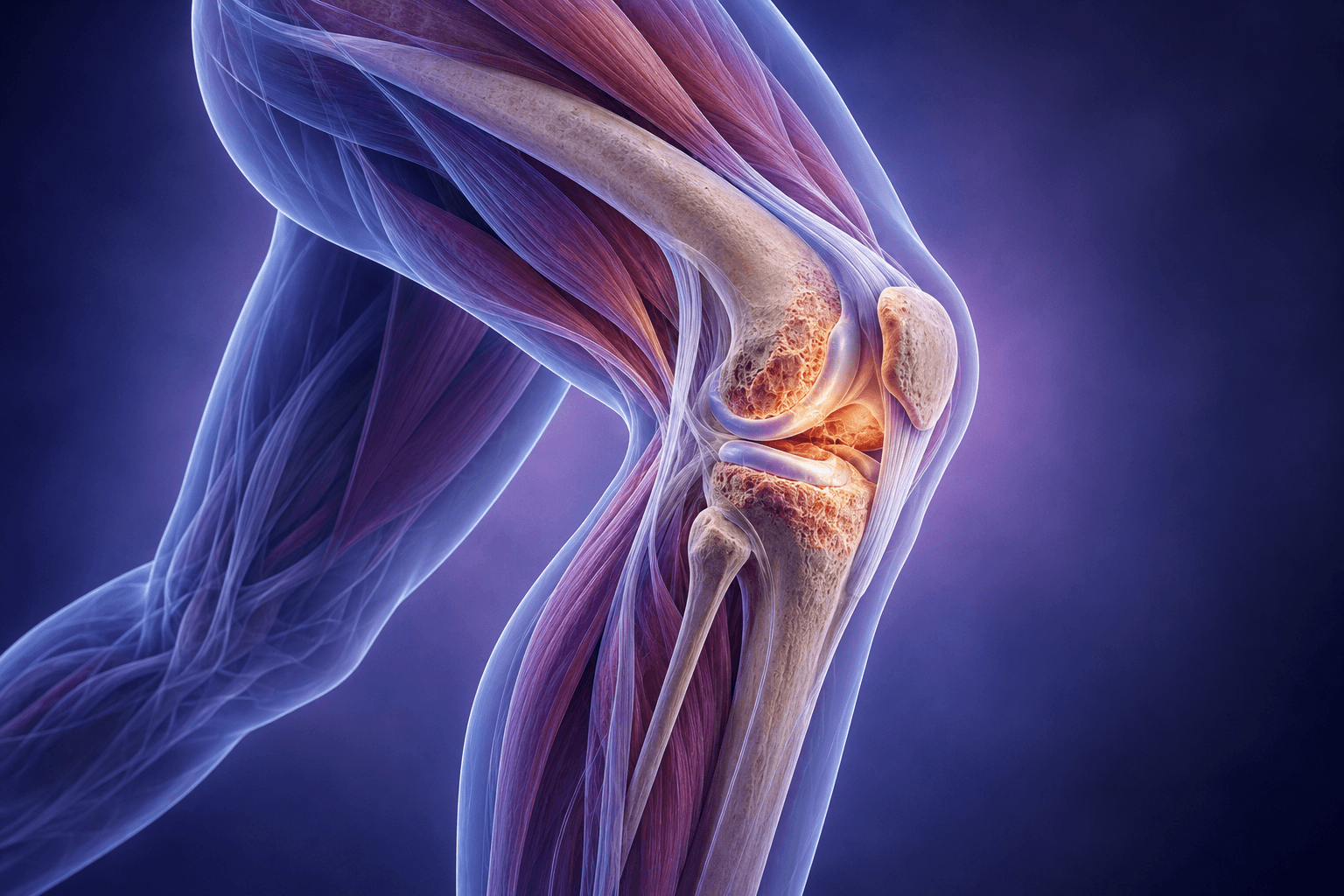
Osteoarthritis is a joint condition in which tissues inside a joint break down over time. It often affects the knees, hips, hands, feet, and spine, and it can cause pain, stiffness, swelling, reduced motion, and difficulty with daily activities.
Recovery with osteoarthritis does not usually mean making the joint "brand new." It means reducing pain, improving strength and mobility, protecting the joint during daily tasks, preventing avoidable flare-ups, and knowing when symptoms need medical evaluation.
A safe osteoarthritis plan often includes low-impact movement, strengthening, pacing, weight management when appropriate, joint supports, heat or cold, medication review, and follow-up with a clinician or physical therapist when symptoms are limiting or changing.
What Is Osteoarthritis?
Osteoarthritis, or OA, is sometimes called degenerative joint disease. NIAMS describes osteoarthritis as a condition in which tissues in the joint break down over time, causing pain, swelling, and reduced movement. People with OA often have joint pain and short-term stiffness after rest or inactivity.
OA can affect cartilage, bone, ligaments, tendons, joint lining, and surrounding muscles. Symptoms may come and go. A flare can happen after overuse, injury, illness, stress, poor sleep, weather changes, or a sudden change in activity.
Although OA is common with aging, it is not simply "normal aging." Joint injury, repeated stress, genetics, body weight, muscle weakness, alignment, and inflammatory factors can all contribute.
Checklist Step 1: Keep Moving, But Choose the Right Dose
Movement helps lubricate joints, maintain flexibility, support circulation, reduce stiffness, and protect strength. Avoiding movement for too long can make joints feel stiffer and muscles weaker, which may place more stress on the joint.
CDC notes that physical activity can help manage arthritis symptoms and improve health and quality of life. CDC-recognized physical activity and self-management programs can help reduce osteoarthritis symptoms such as pain and disability.
The key is dose. Exercise should challenge the body without causing a major flare. If pain is sharply worse during activity, changes your walking, or remains significantly worse the next day, the plan may need adjustment.
Checklist Step 2: Start With Low-Impact Cardio
Low-impact aerobic exercise can improve endurance, joint comfort, weight management, heart health, blood sugar, mood, and sleep without placing as much pounding force on painful joints.
Good options may include walking on even surfaces, cycling, swimming, water aerobics, elliptical training, tai chi, or gentle dancing. People with knee or hip OA may find water exercise especially comfortable because buoyancy reduces joint loading.
Start with short sessions if you are deconditioned or flaring. Even 5 to 10 minutes can be a useful starting point. Build gradually based on symptoms.
Checklist Step 3: Strengthen the Muscles Around the Joint
Strong muscles help absorb force and support painful joints. For knee OA, hip and thigh strength often matters. For hip OA, glute, hip, core, and leg strength may help. For hand OA, gentle grip and range-of-motion work may support function.
The National Institute on Aging notes that a safe, well-rounded exercise program can reduce joint pain and stiffness while increasing flexibility, muscle strength, and endurance.
Strength training may include sit-to-stands, step-ups, wall pushups, bridges, side steps, resistance bands, light weights, or machine exercises. A physical therapist can help choose exercises that fit the joint, pain level, balance, and goals.
Checklist Step 4: Improve Range of Motion Gently
Osteoarthritis can make a joint feel stiff, especially after sitting, sleeping, or avoiding movement. Gentle range-of-motion exercises can help maintain flexibility and make daily tasks easier.
Examples may include knee bends, heel slides, ankle circles, hip mobility, shoulder rolls, gentle hand opening and closing, or slow spine mobility depending on the affected joint.
Stretching should feel controlled, not forced. Avoid bouncing, aggressive twisting, or pushing into sharp pain. If a joint is swollen, hot, or very painful, ask a clinician or physical therapist how much motion is safe.
Checklist Step 5: Use Pacing Instead of Boom-and-Bust Activity
Many people with OA fall into a boom-and-bust pattern: doing too much on a good day, flaring, resting for several days, then starting over. Pacing helps prevent that cycle.
Pacing means spreading activity across the day, taking short breaks before pain spikes, alternating heavier and lighter tasks, and increasing activity gradually.
A helpful rule is to stop before symptoms become severe. You can still be active while respecting the joint's current tolerance.
Checklist Step 6: Use Heat and Cold Strategically
Heat may help stiffness, muscle tension, and morning discomfort. Cold may help swelling, soreness after activity, or a hot-feeling joint.
Mayo Clinic notes that heat and cold can relieve arthritis pain, and that cold can relieve muscle aches after exercise and decrease muscle spasms.
Use a towel barrier to protect the skin. Avoid heat over areas with reduced sensation, open wounds, or active inflammation unless your clinician says it is appropriate. Avoid prolonged ice exposure because it can injure skin or nerves.
Checklist Step 7: Ask About Braces, Orthotics, or Shoe Inserts
Joint supports can help some people feel more stable and confident. They may reduce strain during walking, standing, stairs, work, or exercise.
NIAMS notes that braces or orthotics prescribed by a doctor and fitted by a health professional may help stabilize a joint affected by osteoarthritis. Mayo Clinic also lists braces or shoe inserts among supportive options for OA.
Supports should fit well and be used for a clear purpose. A poorly fitted brace, insert, or sleeve can rub skin, change walking mechanics, or create discomfort.
Checklist Step 8: Consider Canes or Assistive Devices Without Shame
A cane, walking stick, crutch, walker, jar opener, reacher, raised toilet seat, or hand-friendly kitchen tool can reduce joint strain and make daily life easier.
CDC lists supportive devices such as crutches or canes among medical options for osteoarthritis, and CDC provider guidance also notes that assistive devices can make daily tasks easier on the joints.
Assistive devices are not a failure. They can reduce pain, improve safety, and help you stay active. Ask a physical or occupational therapist how to size and use them correctly.
Checklist Step 9: Review Pain Relief Options Safely
Osteoarthritis pain relief may include topical medicines, oral medicines, injections, physical therapy, lifestyle changes, and sometimes surgery. The safest option depends on age, kidney function, heart risk, stomach bleeding risk, blood pressure, other medications, and the joint involved.
Mayo Clinic notes that NSAIDs can help OA pain but can cause stomach upset, cardiovascular problems, bleeding problems, and liver or kidney damage.
Ask your clinician or pharmacist before using NSAIDs regularly, combining pain medicines, or adding supplements. This is especially important if you take blood thinners, have kidney disease, have ulcers, have heart disease, have high blood pressure, or are older.
Checklist Step 10: Protect the Joint During Daily Tasks
Small adjustments can reduce repetitive stress. Use larger joints when possible, carry loads close to the body, avoid gripping tightly for long periods, use two hands, alternate tasks, and keep frequently used items within easy reach.
For knee or hip OA, shoes with good support, shorter steps during flares, stair modifications, and avoiding repeated deep squats may help. For hand OA, larger grips, electric openers, and lighter tools may reduce strain.
Joint protection does not mean avoiding all use. It means using the joint in ways that reduce unnecessary load while keeping it active.
Checklist Step 11: Manage Weight When It Matters for the Joint
For weight-bearing joints such as knees and hips, body weight can affect joint load. Weight management may reduce pain and improve function for some people, but it should be approached without shame or crash dieting.
CDC includes weight management among self-management strategies for arthritis and notes that preventing osteoarthritis can include weight management, sports injury prevention, and falls prevention.
If weight loss is recommended, ask for a realistic target and support from a clinician or registered dietitian. Strength, protein intake, and gradual activity matter so that weight loss does not worsen muscle loss.
Checklist Step 12: Know When Surgery Should Be Discussed
Many people manage OA without surgery, but surgery may be considered when pain, stiffness, deformity, or loss of function remains severe despite a good nonsurgical plan.
Mayo Clinic notes that joint replacement surgery may be an option if conservative treatments do not help, and that artificial joints can wear out or come loose and may eventually need replacement.
Ask what signs suggest it is time for an orthopedic evaluation, what nonsurgical steps should be tried first, and what recovery after surgery would involve.
Exercises That May Help
The best exercises depend on the joint, symptoms, fitness level, and medical history. A physical therapist can tailor the plan, but many OA programs include three categories.
- Range-of-motion exercises: gentle movements that reduce stiffness and maintain joint motion.
- Strength exercises: controlled movements that build support around the joint.
- Aerobic exercises: low-impact activities that improve endurance, circulation, and overall health.
Progress slowly. Add time, resistance, or difficulty in small steps. If a flare happens, reduce the dose rather than quitting completely unless symptoms are severe or concerning.
Supports That May Help
Supports should match the joint and the activity. A knee sleeve may help some people feel warmth or mild compression. An unloading knee brace may be considered for selected knee OA patterns. Shoe inserts may help some foot, knee, or hip mechanics. Hand splints may support painful thumb or finger joints.
A cane can reduce load on a painful hip or knee when used on the opposite side of the affected joint. A walker may be safer when balance is poor or pain affects walking significantly.
Ask a clinician, physical therapist, occupational therapist, podiatrist, or orthotist to help choose and fit supports. The right support should make movement safer or easier, not create new pain.
Home Tools That May Help
Helpful home tools may include heat packs, cold packs, resistance bands, supportive shoes, a cane, jar openers, reachers, raised seats, compression sleeves, braces prescribed for your situation, and a symptom or activity diary.
A TENS unit may provide temporary pain relief for some people, but it should be used with clinician guidance, especially if you have implanted electrical devices, pregnancy, skin problems, reduced sensation, or other medical concerns.
Tools work best when they support movement, strength, and daily function. They should not replace medical follow-up when symptoms are worsening or limiting.
Common Mistake: Resting Until the Joint Feels Perfect
Short rest during a flare can help, but waiting until a joint feels perfect before moving again may lead to stiffness, weakness, and more sensitivity.
Gentle movement, short walks, range-of-motion work, or water exercise may be more helpful than complete inactivity for many people.
Ask your clinician or physical therapist what level of movement is safe during flares.
Common Mistake: Doing Too Much on Good Days
A good day can make it tempting to catch up on chores, errands, exercise, and social plans all at once. This can lead to a flare the next day.
Use pacing even when symptoms are mild. Build tolerance gradually instead of testing the joint with sudden activity spikes.
Progress is easier when your routine is repeatable.
Common Mistake: Avoiding Strength Training
Some people avoid strength training because they worry it will damage the joint. But when done correctly, strengthening can support the joint and improve function.
The exercise dose matters. Start with low resistance, controlled form, and exercises that do not trigger sharp or lasting pain.
If you are unsure how to begin, ask for a physical therapy plan.
Common Mistake: Wearing a Brace Instead of Building Capacity
A brace or support can be helpful, but it should not become the entire plan unless your clinician specifically recommends that. Muscles, balance, mobility, and walking tolerance still matter.
Ask when to wear the support, when to remove it, and how to strengthen around the joint safely.
The goal is usually better function, not dependence on more devices than needed.
Common Mistake: Ignoring a Sudden Change in Symptoms
Osteoarthritis can flare, but sudden severe pain, major swelling, redness, warmth, fever, inability to bear weight, or a joint that looks deformed should not be assumed to be routine OA.
Other problems, such as infection, fracture, gout, blood clot, inflammatory arthritis, or injury, may need prompt evaluation.
When symptoms are new, intense, or different, get medical advice.
When to Talk to a Healthcare Provider
Talk to a healthcare provider if joint pain is persistent, worsening, limiting daily activities, disrupting sleep, causing falls, or not improving with basic self-care. You should also seek care if you need frequent pain medicine or are unsure whether your symptoms are truly OA.
Ask about evaluation if you have swelling, reduced range of motion, morning stiffness that lasts a long time, pain in multiple joints, numbness, weakness, fever, unexplained weight loss, or a history of injury.
A provider may recommend physical therapy, occupational therapy, X-rays, lab tests to rule out other causes, medication review, injections, braces or orthotics, weight support, or referral to rheumatology or orthopedics.
Red Flags: When to Seek Urgent Care
Seek urgent care for sudden severe joint pain, inability to bear weight, major swelling, redness, warmth, fever, chills, a joint that looks deformed, severe pain after a fall or injury, or new weakness or numbness.
Also seek urgent care for calf swelling or pain with shortness of breath, chest pain, or coughing blood, because those symptoms may suggest a blood clot or another emergency.
Do not assume every painful joint flare is osteoarthritis. Red flags need evaluation.
The Bottom Line
Osteoarthritis recovery is about improving function, reducing pain, protecting joints, and staying active at the right dose. Exercise is usually part of the plan, but it should be gradual and tailored to your joint and symptoms.
Helpful strategies include low-impact cardio, strength training, range-of-motion work, pacing, heat or cold, supportive devices, safe pain-relief planning, and home modifications that reduce unnecessary strain.
The most common mistakes are resting until the joint feels perfect, doing too much on good days, avoiding strength training, relying on a brace instead of building capacity, and ignoring sudden changes in symptoms.
If osteoarthritis pain is limiting your daily life, ask your healthcare provider or physical therapist which exercises, supports, medications, and red-flag instructions fit your specific joint and health history.