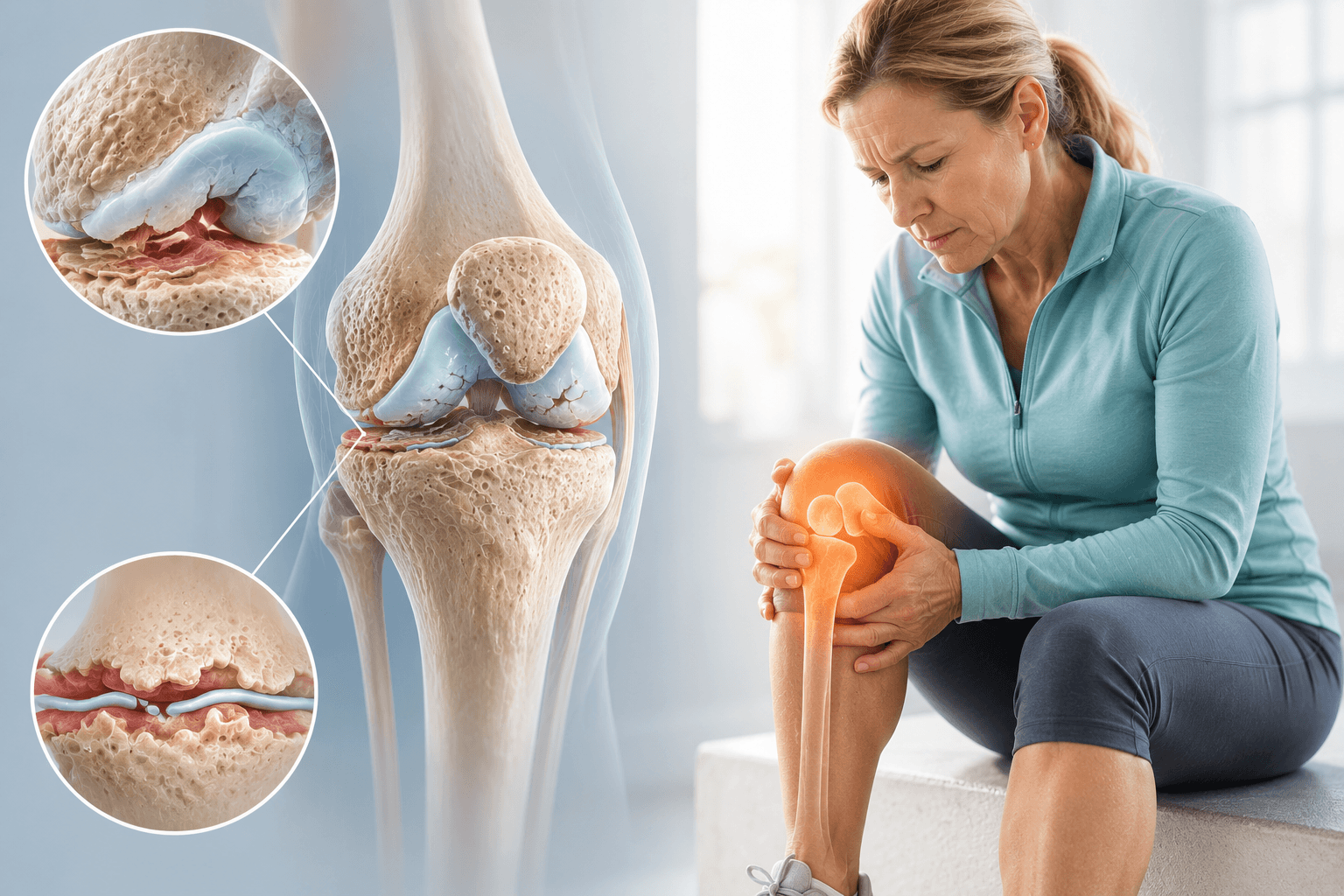
Osteoarthritis affects more than 32 million adults in the United States, making it the most common form of arthritis. This condition occurs when the protective cartilage that cushions the ends of bones gradually breaks down, leading to pain, stiffness, and reduced mobility in affected joints. While osteoarthritis is often associated with aging, it can affect people of various ages and significantly impact quality of life when left unmanaged.
Understanding the signs, causes, and treatment options helps people seek care early and maintain their independence and comfort.
What Is Osteoarthritis?
Osteoarthritis, sometimes called degenerative joint disease, develops when cartilage, the smooth, slippery tissue that covers the ends of bones in joints, begins to deteriorate. This cartilage normally allows bones to glide smoothly against each other during movement. As it wears away, bones may begin to rub directly against each other, causing pain, swelling, and stiffness.
The condition most commonly affects weight-bearing joints such as the knees, hips, and spine, as well as frequently used joints like those in the hands and fingers. Unlike some other forms of arthritis that affect the entire body, osteoarthritis typically develops in specific joints that have experienced wear and tear over time.
Recognizing the Symptoms
Osteoarthritis symptoms often develop gradually and may worsen over time. Early recognition can help individuals seek appropriate care before the condition significantly impacts their daily activities.
Joint pain is typically the first and most noticeable symptom. This pain often occurs during or after movement and may improve with rest. As the condition progresses, pain may persist even during periods of inactivity or occur during sleep.
Stiffness commonly develops, particularly after periods of inactivity such as waking up in the morning or sitting for extended periods. This stiffness usually improves within 30 minutes of beginning movement, distinguishing it from other forms of arthritis where morning stiffness may last much longer.
Reduced range of motion becomes apparent as the joint space narrows and surrounding tissues become inflamed. Individuals may notice difficulty performing previously routine tasks, such as climbing stairs, opening jars, or reaching overhead.
Swelling and tenderness around affected joints may occur due to inflammation. The joint area might feel warm to the touch, and gentle pressure may cause discomfort.
Bone spurs, which are small, hard lumps of extra bone, may develop around affected joints. These are particularly noticeable in the fingers and can cause visible changes in joint appearance.
Grinding sensations, medically known as crepitus, may be felt or heard when moving affected joints. This occurs when roughened cartilage surfaces rub against each other.
Understanding the Causes
While the exact mechanisms that trigger osteoarthritis aren't fully understood, researchers have identified several factors that contribute to cartilage breakdown and joint deterioration.
Age remains the most significant risk factor. The ability of cartilage to heal and regenerate decreases over time, making older adults more susceptible to osteoarthritis. However, the condition is not an inevitable consequence of aging.
Joint injuries from accidents, sports activities, or repetitive stress can damage cartilage and increase the risk of developing osteoarthritis years later. Even injuries that seemed minor at the time may contribute to joint problems in the future.
Obesity places additional stress on weight-bearing joints, particularly the knees, hips, and spine. Excess weight also appears to contribute to osteoarthritis through inflammatory pathways, as fat tissue produces proteins that can promote inflammation throughout the body.
Genetics play a role in osteoarthritis development. Some people inherit genes that make them more likely to develop the condition, particularly in the hands and spine. Family history of osteoarthritis can indicate increased risk.
Joint abnormalities present from birth, such as poorly formed joints or defective cartilage, can accelerate wear and tear. Similarly, conditions that affect joint alignment, like bow legs or knock knees, can create uneven pressure distribution across joint surfaces.
Occupational factors involving repetitive joint use or prolonged kneeling, squatting, or lifting may contribute to osteoarthritis development. Jobs requiring repeated stress on specific joints can accelerate cartilage breakdown over time.
Other medical conditions including diabetes, hypothyroidism, and gout have been associated with increased osteoarthritis risk, though the exact mechanisms linking these conditions remain under investigation.
When to Seek Medical Care
While occasional joint aches are common and often resolve on their own, certain symptoms warrant professional medical evaluation. Early intervention can help slow disease progression and improve long-term outcomes.
Consider consulting a healthcare provider if joint pain persists for more than a few days, especially if it interferes with sleep or daily activities. Pain that worsens progressively or doesn't improve with rest and over-the-counter pain medications should also prompt medical attention.
Sudden onset of severe joint pain, particularly when accompanied by swelling, redness, or warmth, requires prompt evaluation to rule out other conditions such as infection or inflammatory arthritis.
Significant reduction in joint mobility or the inability to perform routine tasks like climbing stairs, gripping objects, or getting in and out of chairs indicates the need for professional assessment and potential intervention.
Joint deformity, locking, or giving way during normal activities are concerning symptoms that require medical evaluation. These may indicate advanced cartilage loss or mechanical problems within the joint.
Diagnostic Process
Healthcare providers use several approaches to diagnose osteoarthritis. The process typically begins with a detailed medical history and physical examination, during which the provider assesses joint range of motion, stability, and areas of tenderness or swelling.
Imaging studies, particularly X-rays, can reveal characteristic changes associated with osteoarthritis, including joint space narrowing, bone spurs, and changes in bone density. In some cases, MRI scans may provide more detailed information about cartilage, ligaments, and other soft tissues.
Blood tests are generally not required for osteoarthritis diagnosis but may be used to rule out other forms of arthritis or underlying conditions. Joint fluid analysis might be recommended if there's concern about infection or inflammatory arthritis.
Treatment and Management Options
While osteoarthritis cannot be cured, several treatment strategies can manage symptoms, slow progression, and help people stay active.
Lifestyle modifications form the foundation of osteoarthritis management. Maintaining a healthy weight reduces stress on joints and may slow disease progression. Regular, low-impact exercise such as swimming, cycling, or walking helps maintain joint flexibility and strengthen supporting muscles.
Physical therapy can teach proper movement techniques, provide targeted exercises to strengthen muscles around affected joints, and help improve overall function and mobility.
Medications may include over-the-counter pain relievers and anti-inflammatory drugs, topical treatments applied directly to the skin, and in some cases, prescription medications for more severe symptoms.
Injections directly into affected joints may provide relief for some individuals. These might include corticosteroids for inflammation or hyaluronic acid to help lubricate the joint.
Assistive devices such as braces, shoe inserts, or mobility aids can help reduce joint stress and improve function during daily activities.
In advanced cases where conservative treatments are insufficient, surgical options including joint replacement may be considered to restore function and relieve pain.
Living Well with Osteoarthritis
Managing osteoarthritis effectively requires a partnership between individuals and their healthcare team. Regular monitoring allows for timely adjustments to treatment plans as the condition evolves.
Staying informed about the condition, maintaining open communication with healthcare providers, and actively participating in treatment decisions contribute to better outcomes and quality of life.
If you're experiencing persistent joint pain, stiffness, or reduced mobility, don't hesitate to discuss your symptoms with a healthcare provider. Early evaluation and appropriate management can help you maintain your independence and continue enjoying the activities that matter most to you.