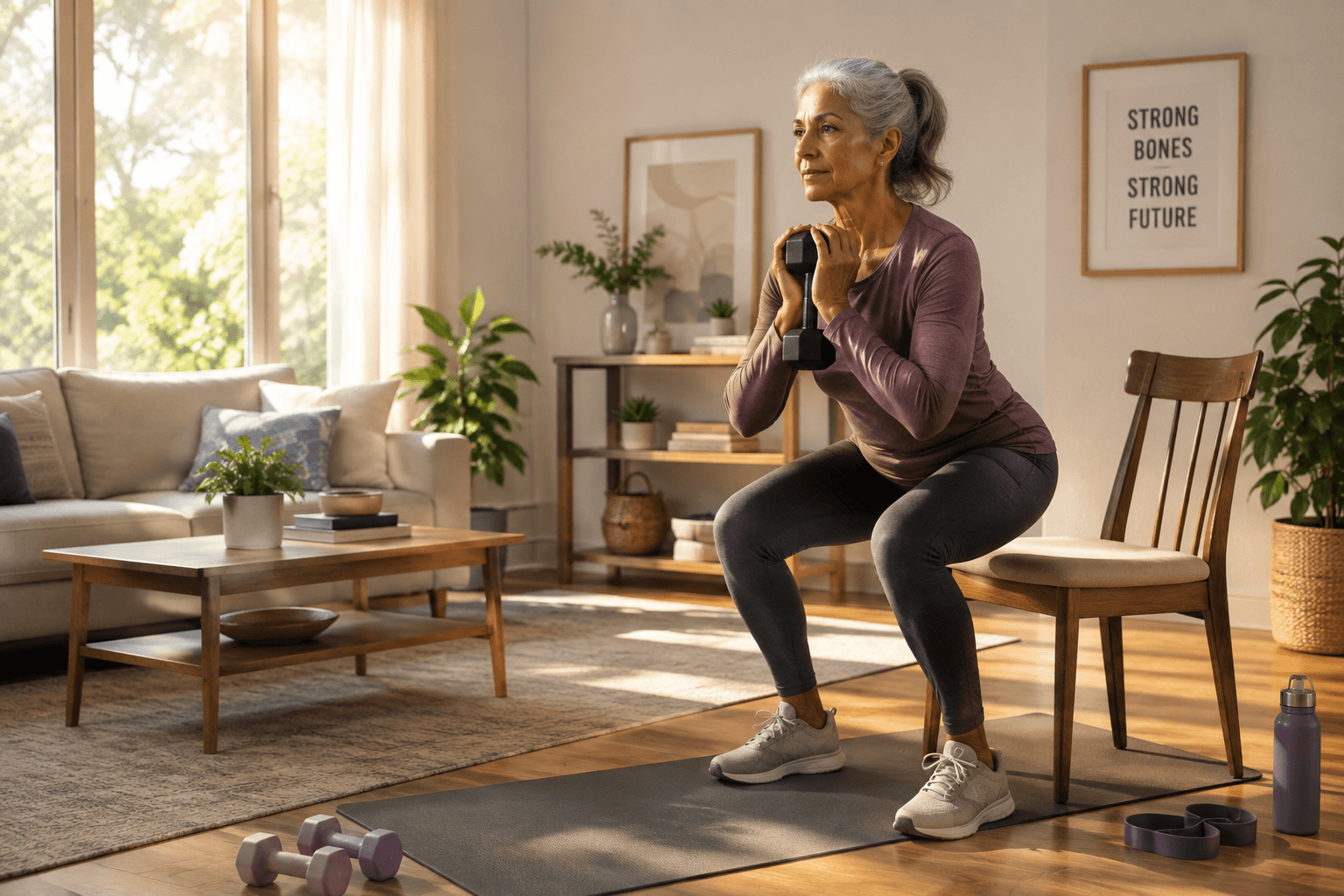
Osteoporosis, a condition in which bones lose density and become more vulnerable to fracture, affects millions of Americans. Because bone loss happens quietly, most people don't realize their skeleton is changing until a break occurs. Bone health is not entirely out of your control, though. Genetics and hormonal shifts play a meaningful role, but research consistently points to lifestyle habits that can slow bone loss and, in some cases, help preserve density over time.
This checklist covers four evidence-informed pillars: movement, ergonomics, strength training, and rest. Use it as a practical guide for your next conversation with a clinician rather than a rigid prescription.
Pillar 1: Movement to Keep Your Skeleton Loaded
Bone is living tissue. It responds to mechanical stress the same way muscle does: by adapting. When you put weight through your skeleton during everyday activity, cells called osteoblasts are stimulated to build new bone. Without that load, a competing process, driven by cells called osteoclasts, begins to dominate, and bone remodeling tips toward net loss.
This is why movement that puts force on the skeleton comes up so often in bone-health research. Useful categories include:
- Weight-bearing aerobic activity: Walking, hiking, dancing, low-impact aerobics, and stair climbing all require your bones to support your body weight against gravity. Swimming and cycling, though excellent for cardiovascular fitness, are not weight-bearing and should not be your only forms of exercise if bone health is a priority.
- Impact activities: For people who are already active and have no fracture risk factors, activities with a modest impact element, such as jogging, tennis, or pickleball, may provide additional skeletal stimulus. Talk to your doctor before starting or increasing impact exercise if you have been diagnosed with low bone density.
- Incidental movement throughout the day: Prolonged sitting reduces the mechanical signals your bones receive. Breaking up long periods of sitting with short walks or standing time is a simple, low-barrier habit that supports overall musculoskeletal health.
A practical starting point: aim to incorporate some form of weight-bearing movement on most days of the week, building duration and variety gradually rather than all at once.
Pillar 2: Ergonomics to Protect the Bones You Have
Ergonomics is usually discussed in the context of preventing workplace injuries, but for people at elevated fracture risk, thoughtful body mechanics are genuinely important. When bones are less dense, everyday stresses like a sudden twist, a reach overhead, or heavy lifting with poor form carry more consequence.
Key ergonomic habits to consider:
- Spine-neutral lifting: When picking up objects, bend at the knees and hips rather than rounding forward through the lumbar spine. Vertebral compression fractures, one of the most common injuries in osteoporosis, can sometimes result from loaded spinal flexion. This includes exercises like crunches and toe-touches, which are worth discussing with a physical therapist if you have confirmed bone loss.
- Fall-prevention awareness at home: Falls are the leading cause of fractures in older adults. Practical steps include securing loose rugs, improving lighting in hallways and stairwells, installing grab bars in bathrooms, and keeping frequently used items at reachable heights to reduce the need to climb or overstretch.
- Supportive footwear: Shoes with good grip and ankle support reduce slip risk. High heels alter your center of gravity and increase the chance of a stumble.
- Mindful posture: A rounded upper back (hyperkyphosis) is both a consequence of vertebral compression and a risk factor for future falls. Practicing upright posture during sitting and standing reduces compressive load on the front of the vertebrae and can help with balance.
If you have been diagnosed with osteoporosis or osteopenia, a physical therapist with experience in bone health can assess your movement patterns and suggest individualized modifications.
Pillar 3: Strength Training to Build the Muscle That Protects Bone
Resistance exercise deserves its own pillar because it does something aerobic movement alone cannot: it applies direct mechanical tension to bones through muscle contractions, and it builds the muscular support system that catches you before a fall happens.
Research on older adults consistently shows that progressive resistance training, exercises that gradually increase in challenge over time, is associated with improvements in muscle mass, balance, and functional strength. These outcomes matter a great deal for fracture prevention.
What a sensible resistance routine might include:
- Multi-joint compound movements: Squats, lunges, step-ups, and hip hinges load the hip and spine, two of the most clinically significant sites for osteoporotic fractures. These movements also improve balance and functional independence.
- Upper-body work: Rows, presses, and shoulder exercises maintain strength in the arms and upper back, which helps with posture and everyday tasks.
- Progressive overload: The key word is progressive. Lifting the same light weight indefinitely provides diminishing stimulus. Gradually increasing resistance, repetitions, or complexity over weeks and months is what drives continued adaptation in both muscle and bone.
- Frequency: Two to three sessions per week, with adequate recovery between sessions targeting the same muscle groups, is a common and evidence-supported starting framework.
If you are new to resistance training or have been sedentary, starting with guidance from a certified trainer or a physical therapist is strongly advisable. This is especially true if you already have low bone density, as some exercises and loading strategies will need to be tailored to your situation.
A note on balance training: Tai chi, yoga, and dedicated balance exercises such as standing on one leg or heel-to-toe walking reduce fall risk by improving proprioception, your body's sense of where it is in space. These complement resistance training rather than replace it.
Pillar 4: Rest and Recovery, When Bone Actually Rebuilds
The stimulus for bone adaptation happens during exercise, but the adaptation itself happens during rest. Sleep is when the body carries out much of its repair and remodeling work, including in the skeletal system. Chronic sleep deprivation has been linked in observational research to unfavorable shifts in the hormones that regulate bone turnover, including cortisol and growth hormone.
What recovery-focused bone health looks like in practice:
- Prioritize consistent sleep: Most adults function best with seven to nine hours of quality sleep per night. Irregular sleep schedules can disrupt the hormonal rhythms that support tissue repair.
- Allow recovery between intense training sessions: Overtraining, particularly high-impact or high-volume exercise without adequate rest, can paradoxically increase fracture risk by not giving bone time to complete its remodeling cycle. Stress fractures are a well-documented consequence of training loads that outpace recovery.
- Manage chronic stress: Persistently elevated cortisol (a stress hormone) is associated with bone loss over time. Mind-body practices such as deep breathing, meditation, and gentle movement like yoga can support cortisol regulation as part of a broader wellness routine.
- Nutrition as part of recovery: Bone remodeling requires raw materials. Adequate calcium and vitamin D are the most recognized, but protein, magnesium, and vitamin K2 also play supporting roles in bone metabolism. A registered dietitian can help you assess whether your diet is meeting your individual needs.
A Word on Screening and Professional Guidance
This checklist is not a substitute for medical care. Bone density is measured through a DEXA scan, and guidelines for who should be screened and when vary based on age, sex, hormonal history, and other risk factors. If you are postmenopausal, over age 50, have a family history of fractures, have taken medications associated with bone loss (such as long-term corticosteroids), or have other risk factors, talking to your primary care provider about a bone density assessment is a reasonable step.
Medications for osteoporosis exist and are effective for the right candidates. Lifestyle changes complement medical treatment when it is warranted; they do not replace it.
Putting It All Together
Protecting your bones is a long game, and the habits that matter most are the ones you can sustain. A brisk daily walk, a twice-weekly resistance session, a home that is set up to prevent falls, and consistent, quality sleep form a practical foundation that the evidence broadly supports. None of these requires a gym membership or a complete lifestyle overhaul. Small, consistent steps compound over months and years.
Use this checklist as a starting point for a conversation with your doctor, physical therapist, or registered dietitian.