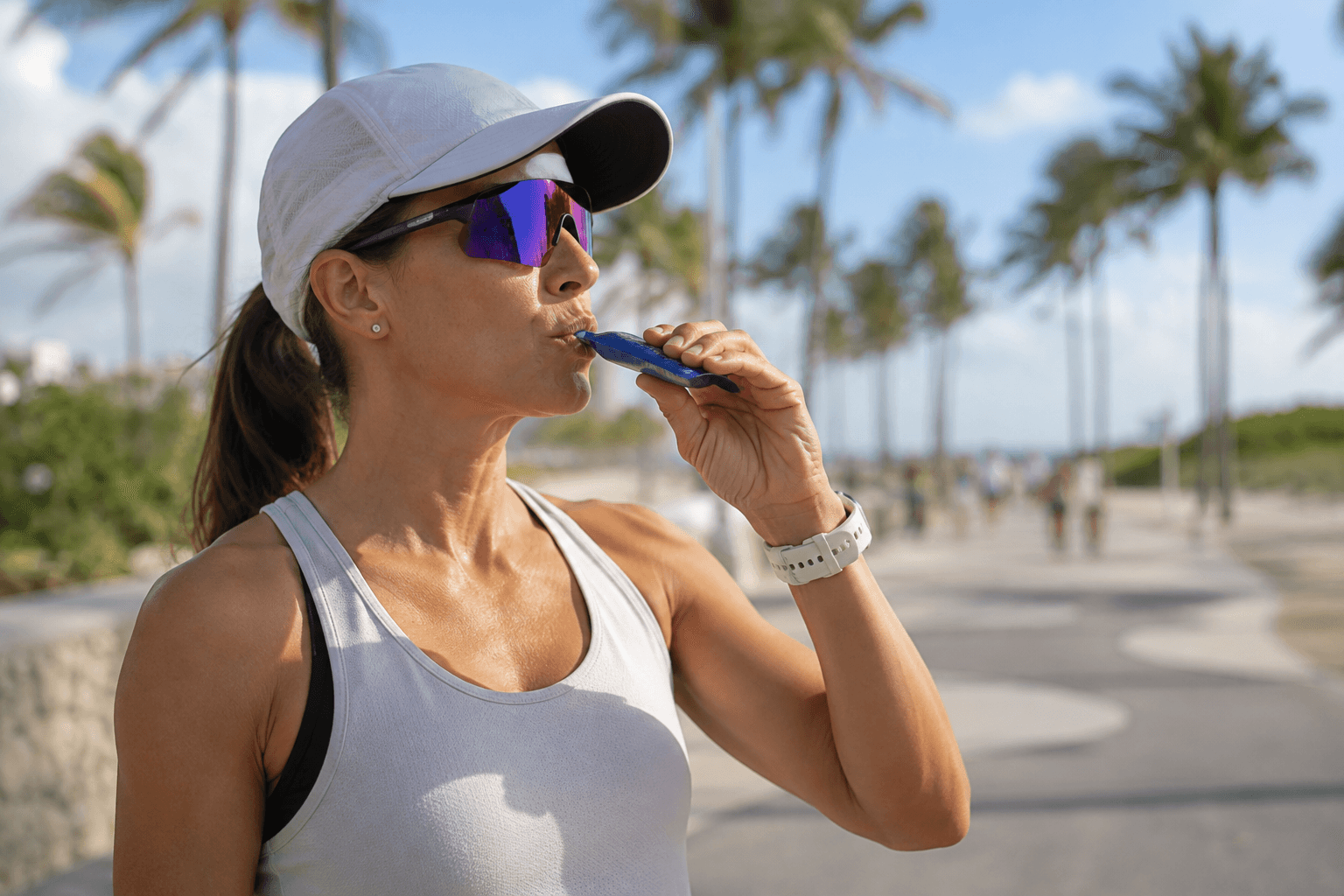
If you've spent time in fitness circles, you've probably heard the term oxidative stress, usually alongside warnings about free radicals or claims about antioxidant supplements. It's more complicated than either the warnings or the claims suggest. In small amounts, oxidative stress is a signal your body uses to get stronger. In excess, it can slow recovery and, over time, contribute to broader health concerns.
This checklist is meant to help you ask better questions about your training load, your recovery habits, and whether the supplements you're taking are doing anything. It isn't a diagnostic tool, and it doesn't replace talking to a clinician, but it can help you have a more informed conversation with one.
First: What Oxidative Stress Actually Is
Every cell in your body runs on oxygen, and that process produces byproducts called reactive oxygen species (ROS), commonly known as free radicals. Normally your body neutralizes these with its own antioxidant defenses, including enzymes and compounds that come from the food you eat. Oxidative stress is what happens when ROS production outpaces your body's ability to neutralize them.
Exercise is one of the most reliable ways to temporarily spike ROS production. That sounds alarming, but research in exercise physiology consistently shows the spike is part of how muscles adapt. It triggers repair processes, improves mitochondrial efficiency, and builds resilience over time. Problems arise when the stress is chronic, the recovery is inadequate, or both.
Training Load: Questions to Ask Yourself
Your training volume, intensity, and variety all influence how much oxidative stress you're generating. Work through these questions honestly.
- Are you increasing intensity or volume rapidly? Increasing training load too quickly, sometimes called overreaching, can tip the balance toward chronic oxidative stress before your body has time to adapt. Gradual progression gives your antioxidant systems time to scale up alongside your workload.
- Are you training at very high intensities most days? High-intensity efforts generate more ROS than moderate exercise. That's not a reason to avoid them, but training at maximum effort every day without adequate recovery days leaves your body in a persistent deficit.
- Do you combine multiple stressors regularly? Heavy training, poor sleep, high psychological stress, and a poor diet all contribute to oxidative burden, and they stack. If your life is demanding in several ways at once, your training load may need to reflect that.
- Have you noticed performance plateaus or unusual fatigue? Persistent fatigue, declining performance despite continued effort, more frequent injuries, and prolonged muscle soreness can all be signs that recovery isn't keeping pace with training. None of these is a definitive red flag on its own, but they're worth noting.
Recovery: Questions to Ask Yourself
Recovery is where adaptation actually happens, and it's also where your body's antioxidant defenses get replenished. These questions can help you spot gaps.
- Are you getting enough sleep? Sleep is one of the most powerful recovery tools available, and it's free. During sleep, the body clears cellular waste, repairs tissue, and restores antioxidant capacity. Consistently short or poor-quality sleep amplifies oxidative stress from training rather than resolving it.
- Is your diet varied and rich in colorful plant foods? Fruits, vegetables, legumes, nuts, and whole grains provide a broad spectrum of antioxidant compounds, including vitamins C and E, polyphenols, and carotenoids, along with the micronutrients your body's own antioxidant enzymes need to function. No single food does it all, so variety matters.
- Are you eating enough overall? Chronic under-eating, whether intentional or not, can impair recovery. Your body needs adequate energy and protein to rebuild muscle tissue and maintain antioxidant defenses. Athletes who restrict calories heavily while training hard are at particular risk.
- Are you including rest days and lower-intensity periods? For serious athletes, active recovery days and planned deload weeks are part of the adaptation process. If every week looks the same intensity-wise, your program may not be giving your system enough room to catch up.
- How is your stress load outside the gym? Psychological stress activates many of the same physiological pathways as physical stress, including oxidative ones. A high-stress season at work or a difficult period personally isn't a reason to stop exercising, but it may be a reason to ease off the hardest sessions for a while.
Supplements: Questions to Ask Before You Buy
The antioxidant supplement market is enormous, and the claims on labels can sound compelling. Before you reach for a bottle, work through these questions.
- Are you trying to plug a dietary gap, or optimize beyond a solid diet? If your diet is consistently varied and plant-forward, you're already delivering antioxidant compounds in the forms and combinations that research suggests work best. Supplements are most useful when your diet genuinely falls short, rather than as a shortcut around a good one.
- Have you heard that antioxidant supplements might blunt training adaptation? This is a real nuance. Some research, mostly in exercise science, has raised the possibility that high doses of certain antioxidant supplements (particularly isolated vitamins C and E) taken around workouts may interfere with the same ROS signals that trigger muscle adaptation. That doesn't mean these vitamins are harmful in general. The concern is specifically about high supplemental doses in the context of performance adaptation. The science is still evolving and findings vary across study designs, so if you're a serious athlete, this is worth discussing with a sports medicine clinician or registered dietitian.
- Is the supplement third-party tested? Supplements in the United States are not reviewed by the FDA before they reach store shelves the way medications are. Look for products that carry independent verification from organizations like NSF International or USP, which test for label accuracy and the absence of contaminants.
- Are you taking multiple antioxidant products simultaneously? It's easy to stack a greens powder, a multivitamin, and a standalone antioxidant supplement without realizing you're getting very high doses of certain compounds. More isn't always better, and in some cases it may work against your goals.
- Is a clinician aware of what you're taking? Some antioxidant compounds can interact with medications or affect lab results. Your primary care provider or pharmacist should have a complete picture of your supplement use, not only your prescriptions.
A Few Compounds Worth Understanding
You'll see these terms often in supplement marketing. Here's what they mean.
- Vitamin C and Vitamin E: Well-established antioxidants from food sources. Whether high-dose supplements help or hinder athletes is an active area of research. Food sources remain the consensus approach.
- Polyphenols (including resveratrol, quercetin, curcumin): Plant compounds with antioxidant and anti-inflammatory properties in laboratory and animal research. Their translation to human benefit at supplemental doses is less clear, though dietary polyphenols from whole foods are consistently associated with positive health outcomes in observational research.
- N-acetylcysteine (NAC): A compound that supports the body's production of glutathione, one of its primary internal antioxidants. It's used clinically in specific medical contexts. Some athletes use it for recovery, but evidence for that specific use in healthy people is mixed, and it should be discussed with a clinician.
- Glutathione: Often marketed directly, though oral absorption is complicated by digestion. Supporting glutathione through diet and precursor compounds is generally considered more reliable than supplementing it directly.
When to Talk to a Clinician
This checklist can help you think more clearly, but it has real limits. Consider reaching out to a doctor, sports medicine specialist, or registered dietitian if you notice:
- Persistent fatigue that doesn't improve with rest
- Frequent illness or infections that seem related to training periods
- Significant unexplained changes in performance or body composition
- Confusion about which supplements, if any, are appropriate for your situation
- Any underlying health condition that might affect how your body handles oxidative stress or how it responds to supplements
The aim is to stay in the range where your body is challenged enough to adapt but supported enough to recover, not to eliminate oxidative stress entirely. That balance looks different for every person.
The Bottom Line
Oxidative stress is a normal part of being physically active. It's happening whether you think about it or not; what matters is whether your training, recovery, and nutrition habits keep it in a productive range. A diet built around varied whole foods, sensible training progression, real rest, and consistent sleep covers the fundamentals better than any supplement on the market. If you're considering antioxidant supplements, take the question to a qualified clinician who understands your health context and goals. The checklist above is a starting point for that conversation, not the end of it.