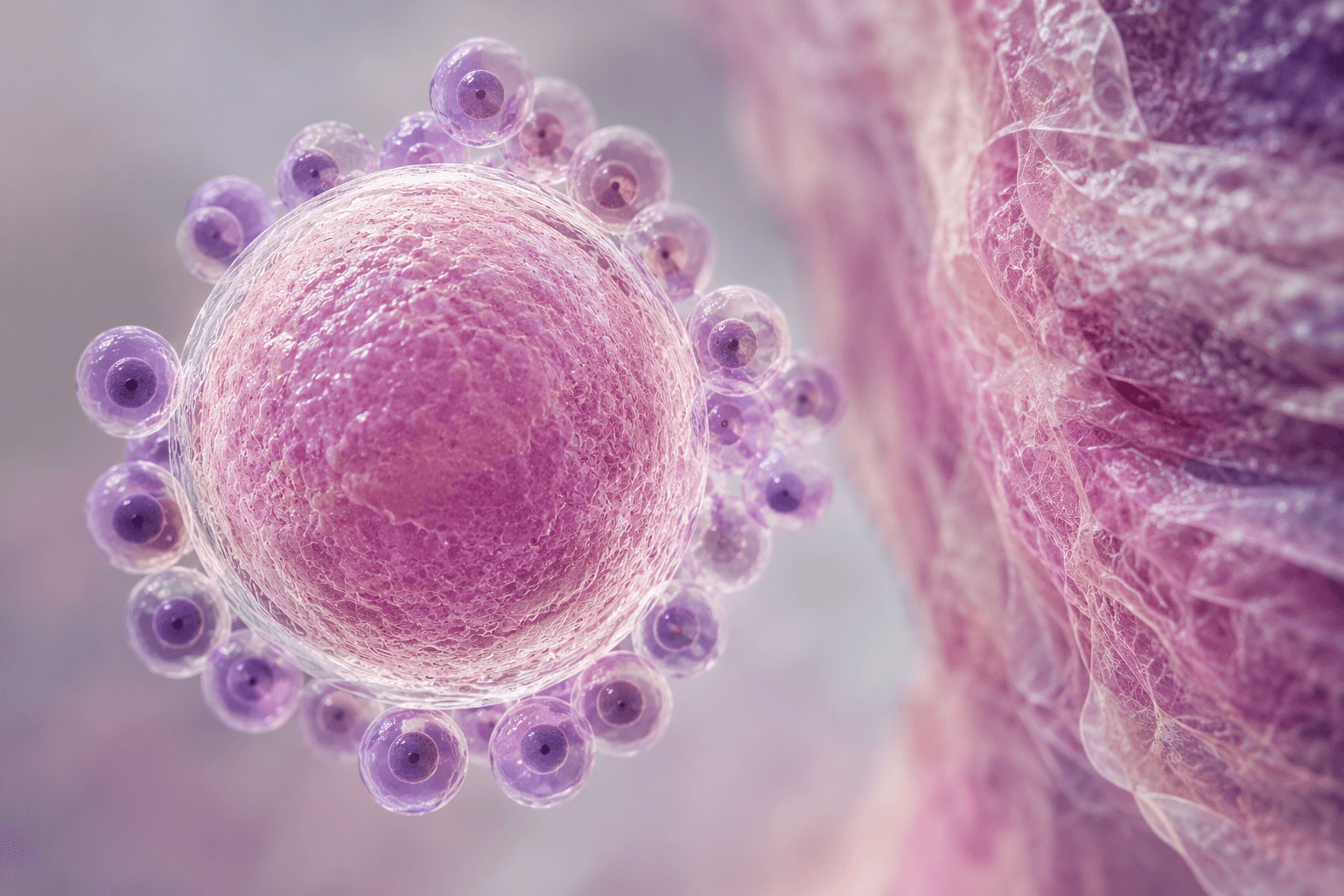
Polycystic ovary syndrome, most people know it as PCOS, is one of the most common hormonal conditions affecting people with ovaries during their reproductive years. Despite how widespread it is, many people go years without a clear diagnosis, often because the symptoms vary so widely from person to person and can overlap with other conditions. If you've been puzzling over irregular periods, unexpected hair changes, or stubborn acne and wondered whether something hormonal might be at the root of it, this guide is for you.
What Is PCOS, Exactly?
PCOS is a hormonal and metabolic condition in which the ovaries produce higher-than-typical levels of androgens, often called "male hormones," though everyone has them in varying amounts. This hormonal imbalance can interfere with the normal development and release of eggs during the menstrual cycle. The name comes from the small fluid-filled follicles that can appear on the ovaries on ultrasound, but it's worth knowing that not everyone with PCOS has these cysts, and not everyone with cysts on their ovaries has PCOS.
Researchers believe the condition involves a mix of genetic predisposition and environmental factors, including how the body regulates insulin. Insulin resistance, where cells don't respond to insulin as efficiently as they should, appears to play a significant role in many cases, though the exact mechanisms are still being studied. PCOS is not caused by anything a person did or didn't do.
The Most Common Symptoms
Because PCOS is a syndrome rather than a single disease, it shows up differently in different people. Still, several symptoms are the ones clinicians look for most often.
- Irregular or infrequent periods. This is one of the hallmark signs. Cycles may be longer than 35 days, unpredictable, or in some cases absent for months at a time. The underlying cause is often anovulation, cycles in which an egg is not released.
- Signs of elevated androgens. Higher androgen levels can cause excess hair growth on the face, chest, or abdomen (a condition called hirsutism), persistent acne, especially along the jaw and chin, and, for some people, thinning hair on the scalp.
- Weight changes or difficulty managing weight. Not everyone with PCOS has overweight, but many people notice that weight tends to accumulate around the midsection and that losing it feels harder than expected. This is often linked to insulin resistance.
- Ovarian cysts on ultrasound. As mentioned, these are common but not universal. A clinician won't diagnose PCOS based on this finding alone.
- Skin changes. Some people develop small, darkened patches of skin in skin folds, under the arms, on the back of the neck, or in the groin. This is called acanthosis nigricans and is associated with insulin resistance.
- Mood changes and fatigue. Research suggests people with PCOS have higher rates of anxiety and depression, though whether this is primarily hormonal, metabolic, or related to the stress of living with a chronic condition, or some combination, is still being studied.
Why Does PCOS So Often Go Undiagnosed?
Several factors contribute to the diagnostic gap. First, symptoms like acne, weight gain, or irregular periods are common on their own and are sometimes dismissed as normal variation or attributed to stress. Second, PCOS exists on a spectrum, so some people have several prominent symptoms, while others have only one or two subtle ones. Third, there is no single definitive test for PCOS; diagnosis involves ruling out other conditions and looking at the overall picture, which takes time and a clinician who is thinking broadly.
People who have a more slender body type, or whose most prominent symptom is something less visible than excess hair growth, may wait even longer for an answer. There is also, unfortunately, a history in medicine of dismissing menstrual irregularities as unimportant, which has contributed to delays in care.
How Is PCOS Diagnosed?
Most clinicians use what's known as the Rotterdam criteria, which requires that at least two of the following three features be present, after other causes have been ruled out:
- Irregular or absent ovulation (often inferred from irregular periods)
- Clinical or biochemical signs of elevated androgens
- Polycystic ovaries on ultrasound
A typical diagnostic workup might include a review of your menstrual history, blood tests to measure hormone levels (including androgens, thyroid hormones, and sometimes insulin and blood sugar), and a pelvic ultrasound. Your clinician will also want to rule out conditions with overlapping symptoms, such as thyroid disorders or elevated prolactin levels.
There is no single blood test that confirms PCOS. The process is more of a careful puzzle than a simple positive-or-negative result, which is another reason it can take time.
When Should You Bring This Up With a Clinician?
You don't need to arrive at a clinician's office with a self-diagnosis. What matters is paying attention to patterns and being willing to describe them clearly. Consider scheduling an appointment if you notice:
- Cycles that are consistently shorter than 21 days or longer than 35 days
- Fewer than eight periods in a year
- Persistent acne that hasn't responded to typical treatments, especially if it appears along the jawline
- Noticeable new hair growth on the face or body
- Hair loss or thinning at the crown of the scalp
- Difficulty conceiving after trying for a year (or six months if you're over 35)
- Any combination of the above symptoms, even if each one seems minor on its own
You know your body. If something feels off and has persisted for more than a few months, that's a reasonable reason to seek an evaluation, not a reason to wait and see.
What Are the Treatment Options?
There is currently no cure for PCOS, but it is very manageable. Treatment is typically personalized based on which symptoms are most affecting your quality of life and whether you're trying to conceive.
Lifestyle approaches are often recommended as a first line of support for people with insulin resistance. Regular physical activity and a balanced diet, particularly one that helps stabilize blood sugar, can improve hormone levels, menstrual regularity, and overall wellbeing in some people. Even modest changes may make a meaningful difference for those whose PCOS is closely tied to insulin resistance.
Hormonal medications, such as combined oral contraceptives, are commonly prescribed to regulate periods and reduce androgen-related symptoms like acne and excess hair growth. These are not appropriate for everyone, particularly those who are trying to conceive, so the conversation with your clinician matters.
Medications that address insulin resistance, such as metformin, are sometimes used, particularly when metabolic concerns are prominent. Research into this approach is ongoing, and it isn't the right fit for every person with PCOS.
Fertility treatments are available for those who want to become pregnant. PCOS is a leading cause of fertility challenges related to ovulation, but many people with PCOS do conceive, sometimes with relatively minor medical support.
Targeted treatments exist for specific symptoms as well: certain medications can address excess hair growth or hair loss, and a dermatologist can be a helpful partner alongside a gynecologist or endocrinologist.
Living With PCOS: The Bigger Picture
Because PCOS involves metabolic as well as hormonal components, clinicians often monitor for related health considerations over time, including blood sugar regulation, cholesterol levels, and blood pressure. This doesn't mean PCOS is a dangerous diagnosis. It means that staying engaged with your healthcare and attending regular checkups is genuinely useful.
Mental health deserves attention too. Living with a chronic condition that affects your appearance, your cycle, and sometimes your fertility plans is hard. If you're struggling emotionally, mentioning it to your clinician is not a digression. It's a central part of the picture.
A note on self-diagnosis: The symptoms of PCOS overlap with those of several other conditions. Reading about PCOS and recognizing yourself in the description is a reasonable starting point, but a clinician's evaluation is essential before drawing conclusions or starting any treatment. This article is for informational purposes and is not a substitute for personalized medical advice.
Key Takeaways
- PCOS is a hormonal condition involving elevated androgens and often disrupted ovulation; it affects people across a wide range of body types and presentations.
- Common symptoms include irregular periods, acne, excess hair growth, and challenges with weight, though not everyone experiences all of these.
- Diagnosis requires ruling out other conditions and typically involves blood tests and ultrasound; there is no single confirming test.
- Treatment is personalized and may involve lifestyle changes, hormonal medications, insulin-sensitizing medications, or fertility support.
- If you've been experiencing relevant symptoms for more than a few months, it's worth bringing them up with a clinician, sooner rather than later.