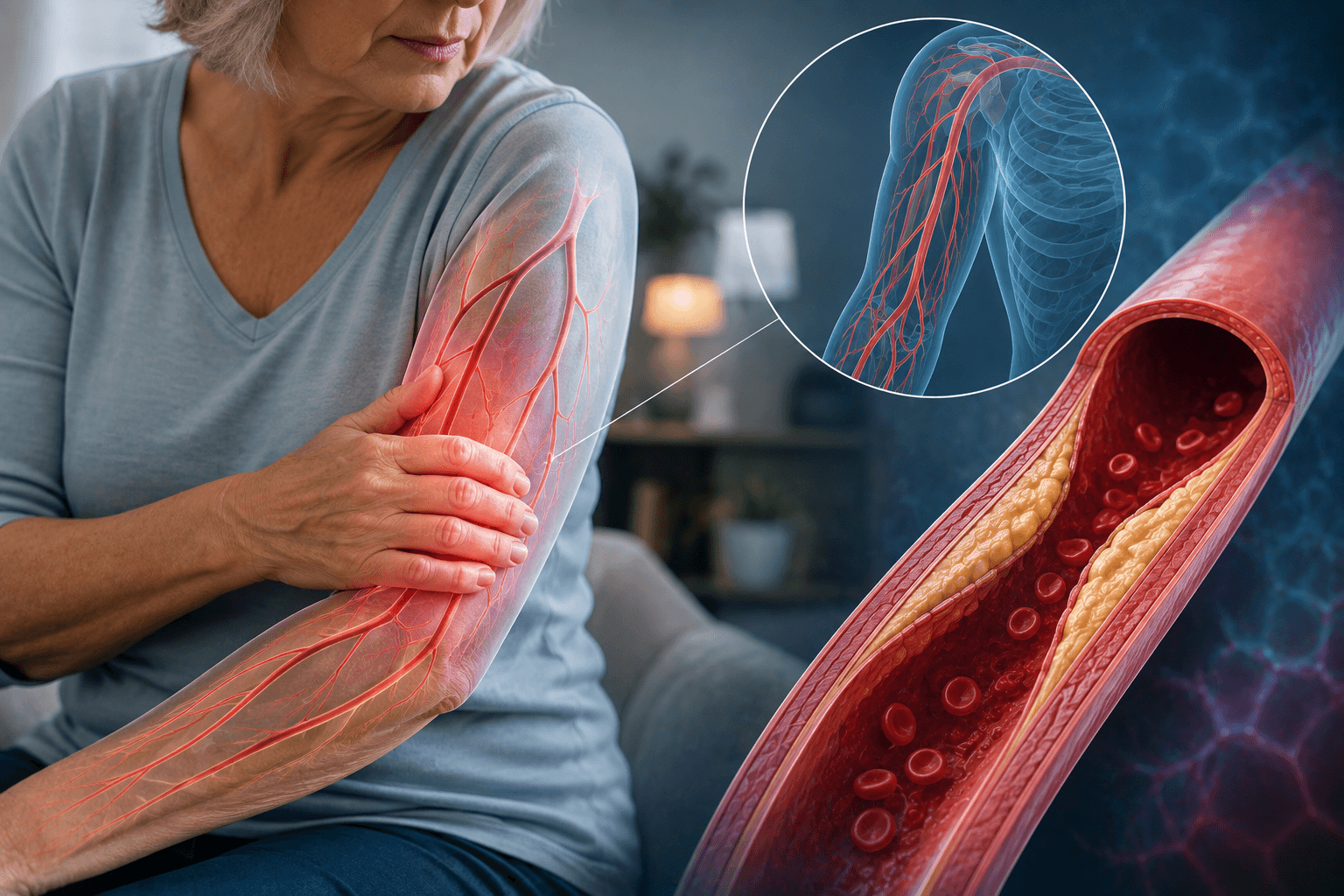
Most people have heard of clogged arteries in the heart. Far fewer know that the same process, plaque building up inside artery walls, can silently narrow the arteries that carry blood to your legs, feet, arms, and other parts of the body away from the heart. That is what peripheral artery disease (PAD) is, and it is more common than many people realize.
What makes PAD tricky is that many people who have it either notice no obvious symptoms at first or write off the ones they do have as a normal part of getting older. A leg ache after a walk gets blamed on being out of shape; cold feet get chalked up to poor circulation. That habit of explaining symptoms away is one reason PAD often goes undetected until it has progressed significantly.
The good news is that when PAD is caught early and managed well, with lifestyle changes, medication, and sometimes procedures, the outlook is much better. Knowing the red flags is the first step.
What Is Actually Happening Inside the Arteries
PAD develops through a process called atherosclerosis, the gradual buildup of fatty deposits, cholesterol, and other substances (collectively called plaque) along the inner walls of arteries. Over time, plaque narrows the channel through which blood flows, reducing the amount of oxygen-rich blood that can reach the muscles and tissues downstream.
In the legs, which are most commonly affected, this reduced blood flow may be tolerable at rest but falls short of what working muscles need during activity. That oxygen gap is what produces many of PAD's signature symptoms. In more advanced cases, blood flow is insufficient even at rest, which signals a much more serious situation.
Because atherosclerosis is a whole-body process, people with PAD also face an elevated risk of heart attack and stroke. PAD is not only a leg problem; it's an important signal about overall cardiovascular health.
The Classic Warning Sign: Claudication
The most well-known symptom of PAD has a medical name worth knowing: claudication. It's pain, cramping, aching, or heaviness in the leg muscles, most often the calf but sometimes the thigh or buttock, that comes on during activity and goes away with rest.
The pattern is fairly consistent: you walk a certain distance, the discomfort builds, you stop and rest for a few minutes, and the pain fades. Then you walk again, and the cycle repeats. The distance you can walk before pain sets in tends to shrink as the disease progresses.
Because claudication is predictable and temporary, many people adapt their lives around it rather than reporting it: taking shorter walks, avoiding stairs, or simply becoming less active. That's understandable, but it means the underlying problem goes unaddressed.
If you notice this pattern of activity-related leg discomfort that reliably eases with rest, mention it to your doctor. It is one of the clearest early clues that PAD may be present.
Other Symptoms That Deserve Attention
Claudication gets the most attention, but PAD can announce itself in other ways too. Some are subtle; others are urgent. Here is what to watch for:
- Leg or foot numbness or weakness. Reduced blood flow can affect nerve function as well as muscle function. If one leg or foot frequently feels numb, weak, or oddly heavy, especially during activity, that is worth evaluating.
- Coldness in one leg or foot. When you notice that one foot or lower leg consistently feels noticeably colder than the other, it may reflect a difference in blood flow between the two sides. Bilateral coldness (both feet) can have other explanations, but asymmetry is a more pointed clue.
- Skin color changes. Skin that appears pale, bluish, or unusually shiny on the lower legs or feet may indicate that circulation is compromised. Some people notice that the skin looks dusky or discolored when the leg is elevated.
- Slow-healing sores or wounds on the legs or feet. Tissues that are not getting enough blood have a limited ability to repair themselves. A minor cut, blister, or sore that seems to stall rather than heal, particularly on the foot or ankle, is a notable warning sign. People with diabetes, who already face slower wound healing, should be especially vigilant.
- Weak or absent pulse in the legs or feet. A clinician checking pulses in the foot or behind the knee can detect reduced blood flow that you would never feel yourself. This is one reason routine physical exams matter.
- Hair loss or slowed nail growth on the legs and feet. These are quieter, longer-term signs that the skin and follicles are not receiving adequate circulation. They are easy to overlook but worth noting alongside other symptoms.
- Erectile dysfunction in men. The arteries supplying the pelvis can also be affected by PAD. When reduced blood flow to the pelvic region is involved, erectile dysfunction may be an early signal, and one that is frequently not connected to PAD in people's minds.
The Red Flags That Signal an Emergency
Some symptoms suggest that blood flow to the limb has been severely or suddenly cut off. This is called critical limb ischemia in its chronic form, or acute limb ischemia when it happens suddenly. Both require urgent medical attention.
Seek emergency care immediately if you experience sudden severe pain in a leg or foot, sudden coldness or pallor in a limb, or a limb that feels numb and looks mottled or white. These can signal a blood clot or sudden blockage that threatens the limb.
Chronic critical limb ischemia develops more gradually and produces:
- Rest pain: aching or burning in the feet or toes that occurs even when you are lying down, often waking you at night. Hanging the foot off the bed may temporarily relieve it because gravity helps blood flow downward.
- Non-healing ulcers or gangrene: open sores that do not respond to normal wound care, or darkening and tissue death in the toes or foot. This is a limb-threatening situation that requires prompt evaluation by a vascular specialist.
If you or someone you love has sores on the feet that are not healing, or pain in the feet at rest, do not wait to see if it improves on its own. These symptoms warrant same-day or emergency medical attention.
Who Is at Higher Risk
PAD shares the same major risk factors as heart disease. Understanding whether you are at higher risk can motivate earlier conversations with your doctor, even before symptoms appear.
- Smoking is one of the strongest risk factors for PAD. People who smoke or have smoked are significantly more likely to develop the condition than non-smokers.
- Diabetes damages blood vessels and nerves in ways that accelerate atherosclerosis and also mask pain signals, meaning diabetic individuals may develop severe PAD with fewer warning symptoms.
- High blood pressure and high cholesterol both contribute to plaque buildup over time.
- Age is a factor: PAD becomes more common after age 50, and risk rises further with each decade.
- A family history of PAD, heart attack, or stroke raises your personal risk as well.
If several of these apply to you, it is especially worthwhile to bring PAD up with your clinician, even if you feel fine. A simple, painless ankle-brachial index (ABI) test, which compares blood pressure readings at the ankle and the arm, can help screen for reduced blood flow in the legs.
Why PAD Is So Often Missed
Several factors keep PAD under the radar. Many people have no symptoms at all in the early stages. When symptoms do appear, they are often attributed to arthritis, aging, or being out of shape. And because PAD primarily affects older adults, there can be a tendency, among both patients and sometimes clinicians, to normalize what should not be normalized.
Awareness is changing, but slowly. Advocacy groups have worked to increase screening, particularly among high-risk populations. Still, many cases go undiagnosed for years.
What Happens If PAD Goes Untreated
Left unmanaged, PAD tends to progress. For the legs, that can mean worsening pain, reduced mobility, non-healing wounds, and in the most serious cases, amputation. The risks extend well beyond the limbs. Because PAD is a marker of widespread atherosclerosis, people with PAD face a substantially elevated risk of heart attack and stroke. That's why treatment addresses the whole cardiovascular picture, not only the legs.
A Note on Next Steps
Reading about symptoms is a starting point, not a diagnosis. Only a clinician, ideally one with experience in vascular conditions, can evaluate whether what you are experiencing is PAD or something else, and what, if anything, should be done about it.
If any of the symptoms described here feel familiar, the most important thing you can do is bring them up at your next appointment rather than waiting to see if they resolve. Write down what you have noticed: when it happens, how long it lasts, whether anything makes it better or worse. That kind of specific detail helps your care team get a clearer picture quickly.
PAD is manageable. With the right care, many people with PAD lead full, active lives. But that starts with not ignoring what your body is trying to tell you.