Peripheral artery disease, commonly called PAD, happens when fatty deposits narrow the arteries that carry blood to the legs, feet, and sometimes the arms. Because those arteries become partly blocked, muscles and tissues downstream don't get enough oxygen-rich blood. The result can range from leg pain or cramping during a walk to, in serious cases, wounds that won't heal.
PAD shares nearly all its risk factors with heart disease and stroke, and those risk factors are largely modifiable. The same daily habits that protect your heart also protect the arteries in your legs. This checklist walks through what you can do at home, when to ask about screening, and how to stay on top of follow-up care if you've already been diagnosed.
Understanding Your Risk
PAD becomes more common with age, but it is not an inevitable part of getting older. Certain factors raise the likelihood that plaque will build up in peripheral arteries:
- Smoking. Tobacco use is one of the strongest drivers of PAD, because chemicals in cigarette smoke damage artery walls and promote inflammation.
- Diabetes. High blood sugar injures blood vessels over time and also impairs the nerve signals that would normally alert you to leg pain, which can delay diagnosis.
- High blood pressure. Persistent pressure damages the artery lining and accelerates plaque formation.
- High LDL cholesterol or low HDL cholesterol. Lipid imbalances contribute to the buildup of fatty deposits inside artery walls.
- Obesity. Excess body weight is linked to inflammation and metabolic changes that strain the cardiovascular system.
- Physical inactivity. A sedentary lifestyle compounds nearly every other risk factor on this list.
- Family history of cardiovascular disease. Genetics play a role, though lifestyle can still make a meaningful difference.
Having one or more of these factors doesn't mean you will develop PAD, but it does mean the prevention habits below deserve extra attention, and that a conversation with your clinician about screening is well worth having.
Home Habits Checklist
1. Prioritize Smoke-Free Living
If you smoke, quitting is the single most impactful step you can take for your peripheral arteries. Research consistently shows that people who quit smoking have better outcomes than those who continue, whether they're trying to prevent PAD or manage it after diagnosis. Talk to your doctor about cessation aids. Nicotine replacement, prescription medications, and behavioral counseling all have evidence behind them, and combining approaches tends to work better than any single method alone.
2. Move Every Day
Regular physical activity improves circulation, helps control blood sugar, lowers blood pressure, and supports healthy weight. For most adults, aiming for at least 150 minutes of moderate-intensity aerobic activity per week (things like brisk walking, cycling, or swimming) is a reasonable target supported by major cardiovascular guidelines. If you already have PAD and leg pain limits you, supervised exercise therapy (a structured walking program often overseen by a physical therapist or cardiac rehab team) has strong evidence for improving walking distance and quality of life. Don't start a new exercise program without checking with your care team first, especially if you have existing heart or vascular conditions.
3. Eat in a Heart- and Artery-Friendly Pattern
No single food prevents PAD, but dietary patterns matter over time. A diet rich in vegetables, fruits, whole grains, legumes, fish, and healthy fats, and lower in processed foods, refined carbohydrates, and saturated fats, is associated with better cardiovascular outcomes in large observational studies. Reducing sodium intake helps with blood pressure control. If you have diabetes, working with a registered dietitian to manage blood sugar through food choices is especially important for artery health.
4. Manage Blood Sugar Carefully
If you have diabetes or prediabetes, keeping blood glucose levels within your clinician-recommended range slows the damage that high sugar does to blood vessel walls. This involves medication (if prescribed), diet, physical activity, and regular monitoring. Ask your care team what your personal targets should be, since they vary based on individual health circumstances.
5. Know and Control Your Blood Pressure
High blood pressure often has no symptoms, which is why checking it regularly matters. Home blood pressure monitors are widely available and reasonably accurate when used correctly. If your readings are consistently elevated, work with your clinician on a plan. Lifestyle changes alone help some people. Others need medication. Either way, controlled blood pressure protects arteries throughout your body, not just in your heart.
6. Address Your Cholesterol
Lipid-lowering therapy, particularly statins, has a well-established role in reducing cardiovascular events in people at elevated risk, including those with PAD. Whether medication is right for you depends on your full risk picture. What you can do at home is support healthy lipid levels through diet (limiting saturated fat, increasing fiber) and exercise, while attending regular checkups where your lipid panel can be reviewed.
7. Protect Your Feet
This step is especially critical if you have diabetes or already have PAD. Poor circulation in the legs means minor cuts, blisters, or pressure sores can become serious infections. Inspect your feet daily for any changes in color, temperature, or skin integrity. Wear well-fitted shoes, keep skin moisturized (but not between the toes), and report any wound that is slow to heal to your doctor promptly.
Screening: When to Start the Conversation
PAD is frequently underdiagnosed because many people either have no symptoms or attribute leg discomfort to normal aging or arthritis. The classic symptom, cramping or aching in the calves, thighs, or buttocks that comes on during walking and eases with rest (called claudication), is actually absent in a significant portion of people who have the disease.
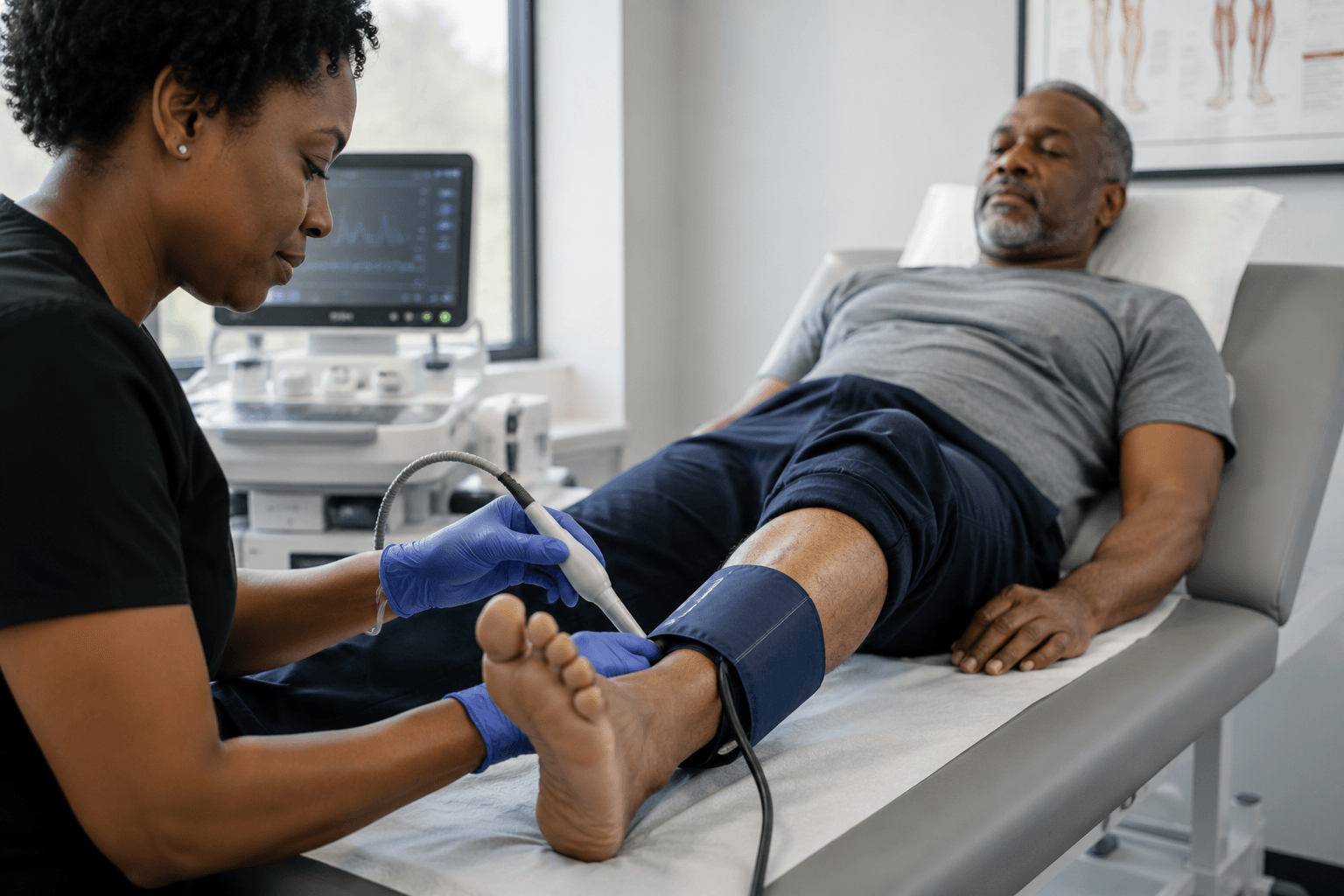
The most common screening test is the ankle-brachial index (ABI), a simple, painless, noninvasive measurement. A clinician uses a blood pressure cuff and a handheld Doppler device to compare blood pressure in your ankle to blood pressure in your arm. A lower-than-normal ratio suggests reduced blood flow in the legs.
Consider asking your clinician about ABI screening if you:
- Are 65 or older
- Are 50 or older with a history of smoking or diabetes
- Have leg symptoms during walking that you haven't fully explored
- Have known atherosclerosis elsewhere (such as coronary artery disease or a prior stroke)
- Have multiple cardiovascular risk factors and have never been evaluated for PAD
Guidelines from major vascular and cardiology societies offer slightly different thresholds, and your clinician can help you decide whether screening makes sense for your situation. The key point: don't wait for symptoms to ask the question.
If You've Already Been Diagnosed: Follow-Up Essentials
A PAD diagnosis opens a new set of priorities. The disease signals that atherosclerosis is present, and people with PAD have a meaningfully elevated risk of heart attack and stroke, because the same plaque process affects coronary and cerebral arteries. Management therefore involves both protecting the legs and protecting the whole cardiovascular system.
Stay Current With Appointments
Regular follow-up allows your clinician to track whether symptoms are stable, worsening, or improving. Don't skip visits because you feel fine. PAD can progress silently, and a change in ABI measurement or physical exam findings can prompt timely adjustments to your care plan.
Take Medications as Prescribed
Depending on your situation, your care team may prescribe antiplatelet medications (to reduce clotting risk), statins (to stabilize plaque and lower cardiovascular risk), blood pressure medications, or medications specifically for claudication. Understand what each medication is for and raise any concerns, including side effects, with your prescriber rather than stopping on your own.
Know the Warning Signs That Need Immediate Attention
Some changes in PAD require urgent evaluation. Contact your care team or seek emergency care promptly if you experience:
- Sudden severe pain, coldness, numbness, or weakness in a leg or foot, which can signal acute limb ischemia, a vascular emergency
- A new wound or sore on the foot or leg that is not healing
- Skin on the foot or lower leg turning dark, blue, or black
- Chest pain, sudden severe headache, or one-sided weakness (signs of possible heart attack or stroke)
Lean on Your Care Team
PAD management often involves several specialists working together: your primary care provider, a cardiologist, a vascular surgeon or vascular medicine specialist, and potentially a podiatrist, endocrinologist, or physical therapist. Don't hesitate to ask for referrals or to clarify who is coordinating your care.
PAD is manageable, and for many people, the same lifestyle changes that help prevent it in the first place also slow its progression after diagnosis.
The Bottom Line
Peripheral artery disease doesn't have to be a surprise or a certainty. By understanding your risk, building sustainable daily habits, asking the right questions at your next appointment, and following through on any monitoring your clinician recommends, you give your arteries the best possible chance. None of these steps require perfection. Even modest, consistent improvements in smoking status, physical activity, blood sugar, or blood pressure add up meaningfully over time.
If any item on this checklist raised a concern for you, bring it up with your doctor. A brief conversation today can make a real difference in what your arteries look like, and how far they can carry you, years from now.