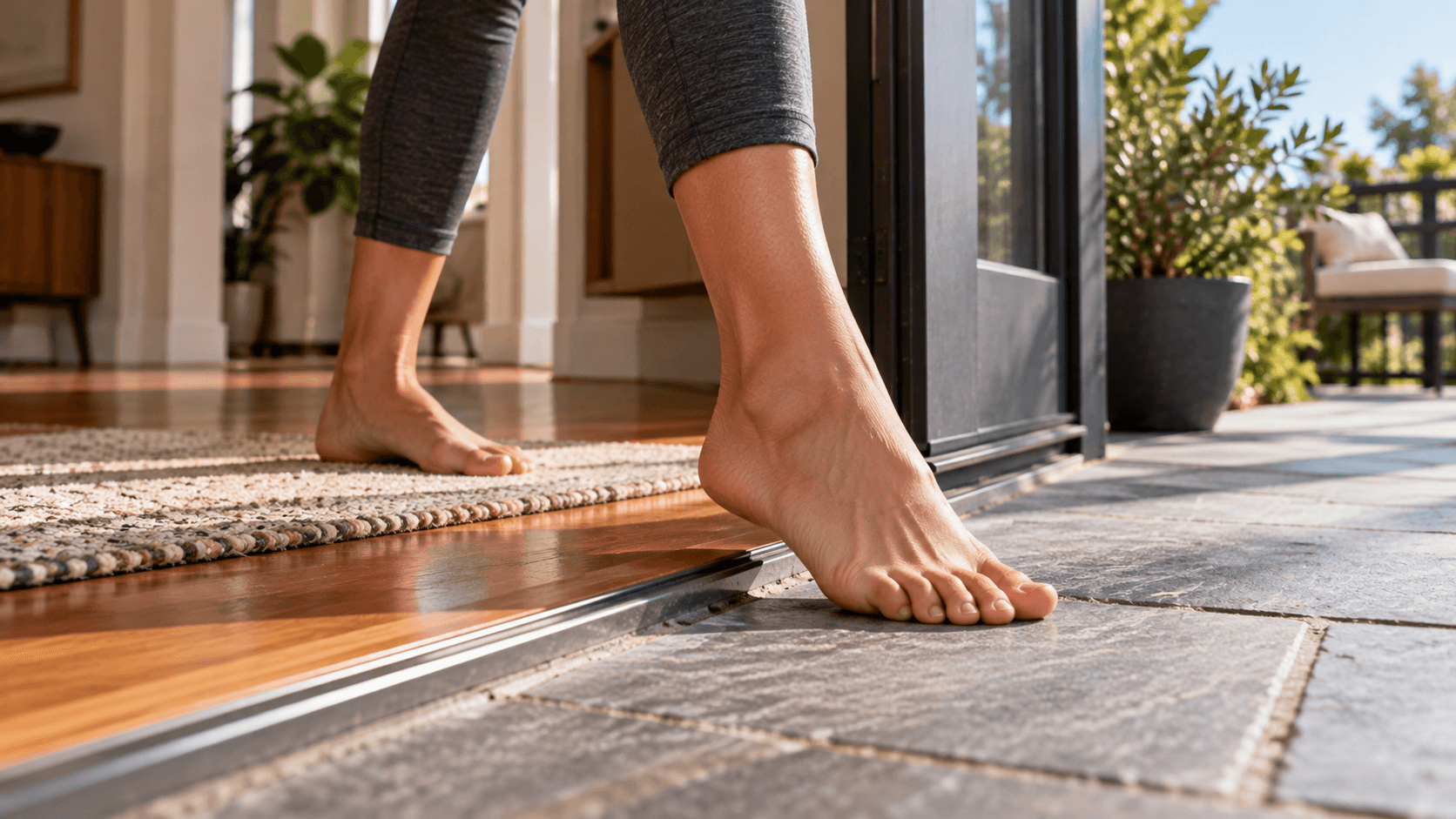
If you have ever taken your first steps out of bed in the morning and felt a sharp, stabbing pain in your heel, you are already familiar with one of the most common calling cards of plantar fasciitis. That signature morning pain — caused by the plantar fascia, a thick band of tissue running along the bottom of your foot, tightening overnight and then being suddenly stretched — affects millions of Americans each year. For many people, the road to relief is long, winding, and done largely at home.
The good news is that most cases of plantar fasciitis do improve over time with consistent self-care. The challenge is knowing whether what you are doing is actually working. That is where a simple home rehab log comes in. Tracking your pain scores, mobility, and activity limits in an organized way gives you — and your clinician — real information to work with, rather than a foggy sense of whether things are better or worse than last week.
This guide walks you through what to track, how to track it, and what the patterns in your log might mean for your recovery.
Why Logging Matters
It is easy to underestimate the value of writing things down. Pain is notoriously hard to remember accurately — research on how people recall pain suggests we tend to smooth it out over time, forgetting the bad days and sometimes the good ones too. A daily log anchors your memory to something concrete.
A written record also helps you spot trends that would otherwise be invisible. Is your pain consistently worse on the days after you stand for several hours at work? Does it improve on days when you do your stretching routine in the morning and evening? Are you slowly needing fewer minutes to walk off the morning stiffness? Without notes, these patterns stay hidden. With them, you can start making smarter adjustments.
Finally, if you see a podiatrist, orthopedic specialist, or physical therapist, a log is one of the most useful things you can bring to an appointment. It replaces vague descriptions with a timeline your provider can actually use to guide your care.
Setting Up Your Log
Your log does not need to be elaborate. A small notebook, a notes app on your phone, or a simple spreadsheet all work equally well. What matters is that you use it consistently — ideally at the same time each day so your entries are comparable.
Consider recording the following each day:
- Date and time of entry
- Morning pain score (see below for how to rate it)
- End-of-day pain score
- Mobility notes — how long it took to walk off stiffness, and whether you were limping
- Activity log — what you did, how long you were on your feet, and any activities you had to skip or modify
- Interventions used — stretching, icing, footwear changes, orthotics, over-the-counter pain relievers, or anything else you tried
- Notes — anything unusual, like new footwear, a longer-than-usual walk, or a stressful day that kept you standing
How to Rate Your Pain
A simple zero-to-ten numeric pain scale is the most practical tool for home logging. Zero means no pain at all; ten means the worst pain you can imagine. The goal is not precision down to the decimal — it is consistency. Use the same mental anchor each time you rate yourself.
A few tips for rating plantar fasciitis pain specifically:
- Rate your first-step morning pain separately from your pain after you have been moving for several minutes. These two numbers often tell different stories and both are clinically meaningful.
- Note your pain at its worst point during the day, not just a general impression.
- If pain wakes you from sleep — which is less typical of plantar fasciitis and more suggestive of other conditions — write that down and mention it to your clinician.
Over weeks, you want to see your morning pain score trending downward, and the gap between your first-step pain and your warmed-up pain narrowing. A consistently high score that is not improving after several weeks of home care is a signal to check in with a healthcare provider.
Tracking Mobility: The Warm-Up Window
One hallmark of plantar fasciitis is that pain is often worst with the first steps of the day or after any period of rest, then gradually eases as the tissue warms up and loosens. Tracking how long this warm-up window lasts is one of the most useful mobility metrics you can record.
Note how many minutes it takes before you are walking without significant pain or a noticeable limp. At the beginning of a flare, this might be ten, fifteen, or even twenty minutes. As you improve, it should shorten. When you are nearing recovery, you may find the morning stiffness resolves in just a minute or two.
Also pay attention to your gait. Are you unconsciously shifting weight to the outside of your foot to protect the heel? This kind of compensation can over time strain other structures — the knee, hip, or lower back — so it is worth noting in your log and discussing with a physical therapist if it persists.
Logging Activity Limits
Plantar fasciitis has a way of quietly reorganizing your life. You stop taking the stairs. You skip the evening walk. You decline to go to a museum because you know you cannot handle the standing. Documenting these changes keeps them visible, which matters for two reasons.
First, it shows you the real impact the condition is having on your daily functioning — important context for any clinician you see. Second, it helps you recognize when you are making progress. The day you write walked around the grocery store without modifying my pace is meaningful data.
Try to note:
- Activities you avoided entirely because of foot pain
- Activities you modified — shorter duration, slower pace, different footwear
- Activities you completed without significant limitation
Over time, the third category should grow. If it is not growing after consistent home rehab, that trend belongs in a conversation with your doctor.
Common Home Rehab Interventions to Track
Logging your interventions alongside your symptoms lets you start to see what is helping. Standard home care for plantar fasciitis typically includes a combination of approaches. Here is a brief overview of the most commonly recommended ones — always confirm with your clinician what is appropriate for your specific situation.
- Calf and plantar fascia stretching: Stretching the calf muscles and the plantar fascia itself is among the most well-supported self-care strategies. Doing this before your first steps in the morning — before your feet even touch the floor — can reduce that sharp initial pain. Note in your log whether you stretched, when, and for how long.
- Ice or cold therapy: Rolling your foot over a frozen water bottle or applying an ice pack after activity may help manage inflammation and discomfort. Log when you iced and whether it seemed to help.
- Supportive footwear and orthotics: Wearing shoes with good arch support and cushioning — and avoiding walking barefoot on hard surfaces, especially first thing in the morning — is frequently recommended. Over-the-counter heel cups or arch supports may provide additional relief for some people. Note any footwear changes and their apparent effect.
- Night splints: Worn during sleep, these devices hold the foot in a position that gently stretches the plantar fascia overnight, which may reduce morning pain. They take some getting used to but can be useful. Log how many nights you wore one and how your morning pain compared.
- Activity modification: Temporarily reducing high-impact activities like running or jumping while maintaining lower-impact movement like swimming or cycling can help the tissue heal without deconditioning your body overall.
Red Flags: When Your Log Tells You to See a Doctor
Home rehab is appropriate for most mild-to-moderate cases of plantar fasciitis, but your log may reveal signs that you need professional evaluation. Contact a healthcare provider if you notice:
- Pain that is not improving after several weeks of consistent home care
- Pain that is getting significantly worse despite rest and treatment
- Sharp, severe pain that came on suddenly after a specific incident — this could indicate a plantar fascia tear rather than typical fasciitis
- Pain that is not heel-centered, or that radiates up the leg or into the toes in an unusual way
- Swelling, bruising, or visible changes to the foot
- Pain that wakes you from sleep regularly
- Difficulty bearing any weight on the foot
A rehab log is a conversation starter, not a substitute for clinical judgment. If something feels wrong, trust that instinct and bring your notes to an appointment.
Staying Consistent When Progress Feels Slow
Plantar fasciitis recovery is often measured in months, not days or weeks. That timeline can be demoralizing, especially for active people who are used to bouncing back quickly from minor injuries. Your log can actually help here too — scrolling back to entries from several weeks ago and comparing them to today's scores is one of the most motivating things you can do when day-to-day progress feels invisible.
Try to resist the temptation to ramp up activity the moment pain subsides. A common pattern is a cycle of feeling better, doing too much, and then flaring back up. Your log will show you this cycle clearly if it is happening, and that visibility is the first step toward breaking it.
Small, steady improvement over a long arc is the goal. A home rehab log is the map that shows you where you have been — and helps you navigate where you are going.
This article is for general informational purposes only and does not constitute medical advice. Please consult a qualified healthcare provider for guidance specific to your condition.