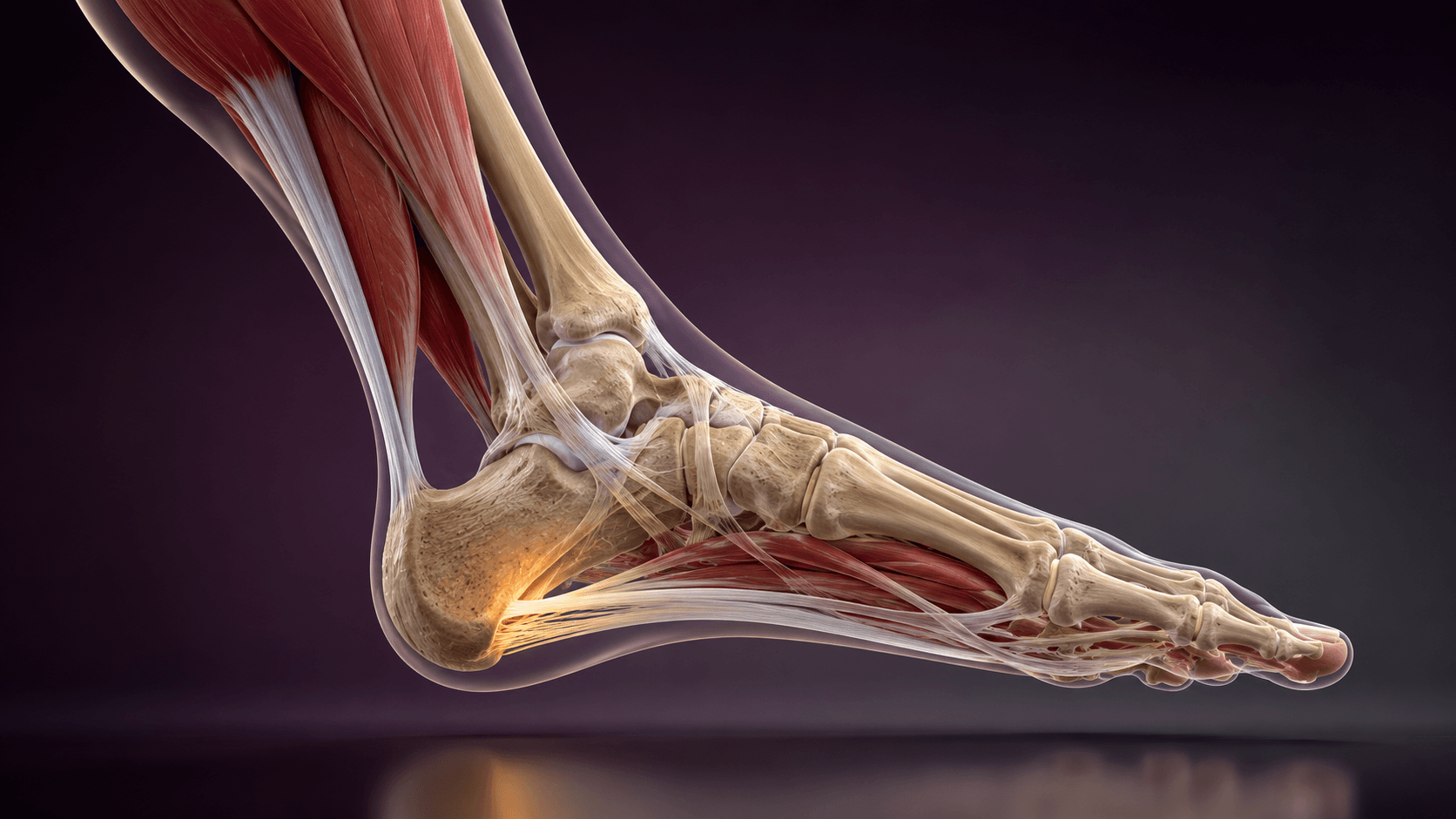
That sharp, stabbing pain in your heel when you take your first steps in the morning is one of the most recognizable feelings in foot health. Plantar fasciitis, inflammation of the thick band of tissue running along the bottom of your foot, is one of the most common causes of heel pain in adults. Most people recover well with consistent, conservative care. What helps is knowing what to do, how to do it, and when the situation calls for a professional evaluation.
What Is Plantar Fasciitis, and Why Does It Hurt So Much?
The plantar fascia is a fibrous band of connective tissue that connects your heel bone (calcaneus) to the base of your toes. It acts like a shock-absorbing bowstring, supporting the arch of your foot with every step. When this tissue is subjected to repeated stress, whether from long hours on your feet, a sudden increase in physical activity, unsupportive footwear, or tight calf muscles, tiny tears can develop. The body responds with inflammation, and that inflammation is what produces pain.
The classic symptom is pain that is worst with your very first steps after rest, especially in the morning. This happens because the fascia tightens overnight and is abruptly stretched when you stand. Many people notice the pain eases after a few minutes of walking, only to return after prolonged activity or again the next morning.
Step One: Reduce What's Driving the Irritation
Before layering on exercises and devices, it helps to reduce the load on the inflamed tissue. This does not mean total rest. Complete inactivity can actually slow recovery and weaken supportive structures. Think of it instead as smart load management.
- Temporarily modify high-impact activity. If running, jumping, or long walks are aggravating your symptoms, scale back and substitute lower-impact movement like swimming or cycling while you recover.
- Check your footwear. Flat, unsupportive shoes, including many popular sandals and walking barefoot on hard floors, can keep symptoms going. Look for shoes with firm arch support and a slight heel cushion.
- Consider your surfaces. Hard floors and concrete are more demanding on the fascia than grass or softer surfaces. Small changes in your environment can make a meaningful difference.
- Apply ice. Rolling a frozen water bottle under the arch for ten to fifteen minutes can help manage inflammation and discomfort, particularly after activity.
Exercises That Research Supports
Targeted stretching and strengthening exercises are the backbone of plantar fasciitis recovery. Clinical evidence consistently points to a few specific approaches as particularly helpful.
Plantar Fascia Stretch
This is often the first exercise clinicians recommend, and for good reason. Sit in a chair and cross the affected foot over your opposite knee. Grasp your toes and gently pull them back toward your shin until you feel a stretch along the arch. Hold for about thirty seconds and repeat several times. Research suggests that performing this stretch before your first steps in the morning, when the fascia is tightest, may significantly reduce that initial pain.
Calf Stretches (Gastrocnemius and Soleus)
Tight calf muscles increase tension on the plantar fascia, so loosening them is a high-priority goal. Two muscle groups are involved:
- Gastrocnemius stretch: Stand facing a wall, step one foot back with the knee straight, and lean forward until you feel a stretch in the upper calf. Hold thirty seconds.
- Soleus stretch: Same position, but this time bend the back knee slightly. You'll feel the stretch lower in the calf. Hold thirty seconds.
Doing both stretches a few times daily, especially first thing in the morning and before and after activity, is a practical habit that most people can maintain.
Intrinsic Foot Strengthening
The small muscles inside the foot help support the arch and reduce demand on the plantar fascia. Two simple exercises build this strength:
- Towel curls: Place a small towel flat on the floor and use your toes to scrunch it toward you. This targets the intrinsic muscles of the foot.
- Marble pickups: Place marbles on the floor and use your toes to pick them up one at a time and drop them into a cup. It sounds simple, and it is, but it works the small muscles of the foot effectively.
Eccentric Heel Drops
Eccentric exercises, where a muscle lengthens under load, have strong support in the research for tendon and fascia rehabilitation. Stand on the edge of a step with your heels hanging off. Rise onto your toes using both feet, then slowly lower your heels below the step level on the affected foot only, taking about three seconds to descend. The slow, controlled lowering is the important part. Start with a small number of repetitions and build gradually over weeks. If this causes significant pain, ease back and consult a physical therapist before continuing.
Supportive Devices: What Helps and How
Exercises alone can take the plantar fascia a long way, but supportive devices are frequently recommended alongside them, especially in the early and middle stages of recovery.
Arch Supports and Orthotics
Over-the-counter arch supports can help redistribute pressure away from the inflamed part of the fascia. They work best when used in supportive shoes (not slipped into flat sandals). For people with significant biomechanical factors, such as flat feet or high arches, custom orthotics prescribed by a podiatrist or physiatrist may be worth discussing, though over-the-counter options are a reasonable starting point for many people.
Night Splints
Night splints hold the foot in a gently dorsiflexed position (toes pulled toward the shin) while you sleep, keeping the plantar fascia in a mild stretch overnight. Clinical studies suggest they can reduce that notorious first-step morning pain. They take some getting used to, and compliance can be challenging, but for people whose morning pain is severe, they are often worth trying. Discuss fit and type (dorsal splints tend to be more comfortable than the boot-style versions for many people) with your clinician or a certified pedorthist.
Heel Cups and Cushioned Insoles
Heel cups provide cushioning to absorb impact at the heel, which can reduce discomfort during daily activity. They are not as effective as arch supports at addressing the biomechanical drivers of the condition, but they can help manage pain in the short term. Think of them as a comfort measure rather than a cure.
Taping
Low-dye taping, a specific technique used by physical therapists and sports medicine clinicians, can provide short-term pain relief by mechanically supporting the arch. Kinesiology tape applied along the plantar surface is another approach some people find helpful. These are most practical when applied by a clinician, though some people learn to do it themselves. Taping is generally a bridge measure while the exercises and other strategies take effect.
How Long Does Recovery Take?
This is the question most people want answered right away. The honest answer is that it varies, but plantar fasciitis usually resolves with time and consistent conservative care. Most people see meaningful improvement within a few months of committing to a stretching and strengthening program. A smaller number experience symptoms that persist longer, and for them, additional treatment options, such as physical therapy, corticosteroid injections, or extracorporeal shockwave therapy, may be discussed with a clinician.
Patience matters here. Returning to full activity too quickly, before the fascia has adequately healed, is one of the most common reasons people end up in a frustrating cycle of improvement and relapse.
Red Flags: When to See a Clinician
Most heel pain is plantar fasciitis, but not all of it is. And even when the diagnosis is plantar fasciitis, some situations warrant professional evaluation sooner rather than later. Seek care from your doctor, a podiatrist, or a physical therapist if you notice any of the following:
- Pain that is severe or worsening despite two to three weeks of consistent self-care.
- Pain that is not worst in the morning but is constant or wakes you from sleep. This pattern is less typical of plantar fasciitis and may suggest a different diagnosis.
- Heel pain accompanied by swelling, bruising, or redness that appeared after a specific injury or fall.
- Numbness or tingling in the foot, which may point to nerve involvement rather than fascia inflammation.
- Pain in both heels simultaneously, especially if you also have pain in other joints. Inflammatory arthritis conditions can sometimes present this way.
- No improvement after six to eight weeks of committed, daily exercise and supportive footwear use.
Heel pain is rarely dangerous, but it is always worth ruling out other causes, especially if your symptoms don't match the typical plantar fasciitis pattern. A brief visit to a clinician can save months of chasing the wrong treatment.
The Bottom Line
Plantar fasciitis is painful and persistent, but it is also one of the more treatable musculoskeletal conditions when managed consistently. A combination of targeted stretching, progressive foot strengthening, appropriate footwear, and supportive devices gives most people a strong foundation for recovery. The most important ingredient, and the hardest one, is consistency. Doing a few minutes of stretching each morning and investing in supportive shoes may feel mundane, but those habits compound over time into real relief.
If you're uncertain about your diagnosis, your exercises aren't helping, or you notice any of the red flags above, talk to a healthcare provider. A physical therapist with experience in foot and ankle conditions can tailor a program to your situation and help you get back to the activities you love.