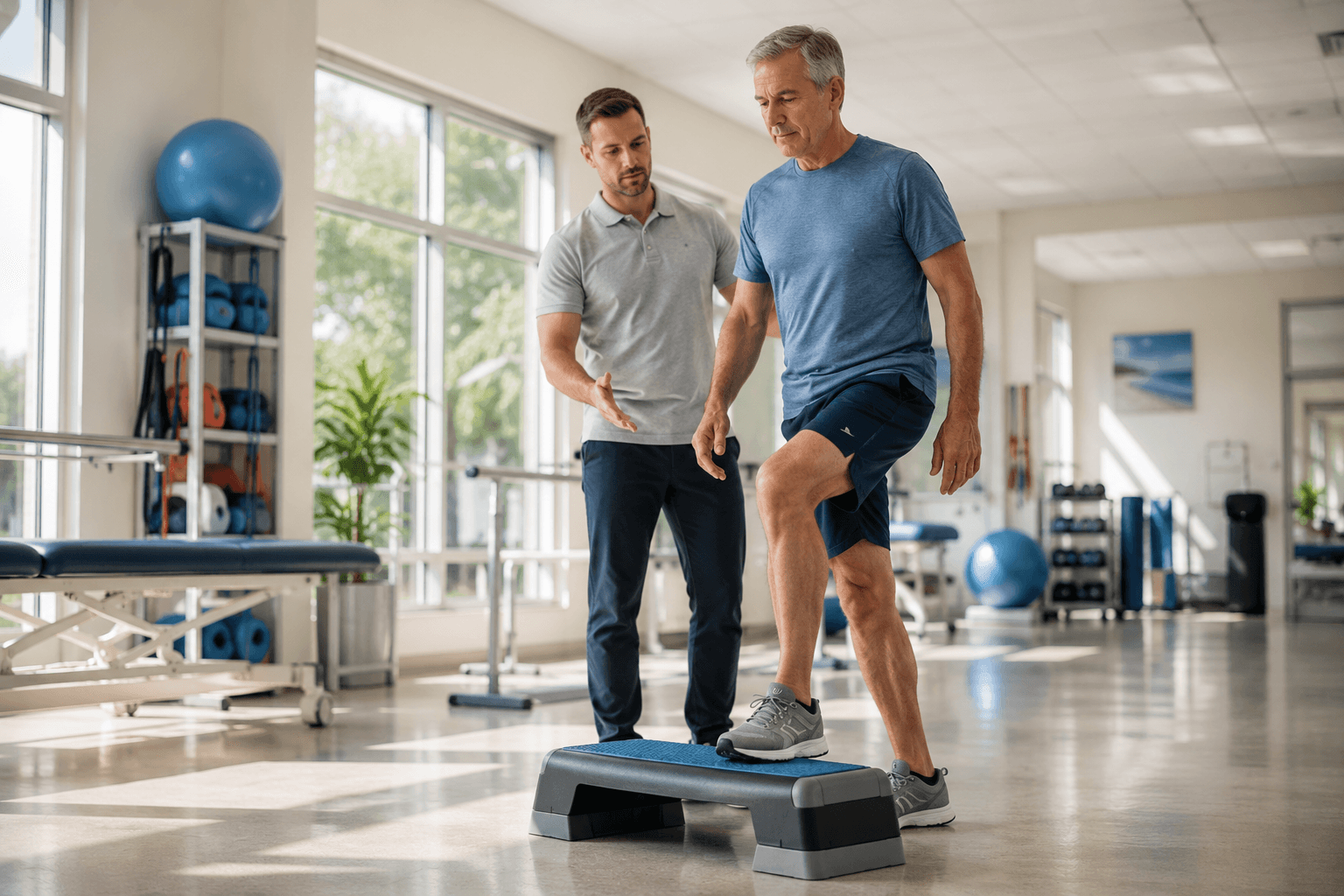
Post-surgical rehabilitation is the process of rebuilding movement, strength, function, and confidence after an operation. It may involve walking, gentle mobility, physical therapy, wound care, pain control, swelling management, breathing exercises, and gradual return to daily activities.
Recovery is not the same for every surgery. A knee replacement, shoulder repair, spine surgery, abdominal surgery, tendon repair, fracture fixation, and minor outpatient procedure can all have different restrictions and timelines. The safest rehab plan is the one provided by your surgeon and rehab team.
Risk reduction means avoiding common setbacks: doing too much too soon, resting too long, ignoring wound changes, skipping follow-up, using poor body mechanics, missing blood clot warning signs, or stopping therapy before strength and function are rebuilt.
What Is Post-Surgical Rehab?
Post-surgical rehab includes the steps used to help the body heal and restore function after surgery. It may begin in the hospital, at home, in an outpatient clinic, or in a rehabilitation facility depending on the procedure and the person’s medical needs.
Rehab can include range-of-motion exercises, strengthening, walking, balance training, transfer practice, posture and ergonomic changes, breathing exercises, pain management strategies, and education on activity restrictions.
Some people need formal physical therapy or occupational therapy. Others receive a home exercise plan and follow-up instructions. Either way, the plan should match the surgery, tissue healing timeline, pain level, strength, mobility, and safety needs.
Checklist Step 1: Follow Your Surgical Restrictions
Every surgery has its own healing rules. Some people may be told not to lift more than a certain weight. Others may have restrictions on bending, twisting, reaching overhead, weight bearing, driving, stairs, bathing, or returning to work.
Do not guess. Read the discharge instructions and ask the surgical team to clarify what you can do, what you should avoid, and when restrictions may change.
Restrictions are not meant to slow you down unnecessarily. They are usually designed to protect healing tissues, implants, incisions, repairs, or bones while the body recovers.
Checklist Step 2: Start Safe Movement When Approved
Movement is often important after surgery, but the timing and type of movement must be approved by the care team. In many cases, early walking or gentle movement helps circulation, breathing, stiffness, swelling, and confidence.
NHLBI notes that after surgery, a provider may tell a person to move around as soon as possible as part of reducing blood clot risk. MedlinePlus also states that early ambulation after surgery can greatly reduce the risk of venous thrombosis and pulmonary embolism.
Safe movement may start with short walks, ankle pumps, gentle range of motion, getting in and out of bed correctly, or breathing exercises. The right plan depends on the surgery and your surgeon’s instructions.
Checklist Step 3: Pace Activity to Avoid Setbacks
One of the most common post-surgical mistakes is doing too much on a good day. Pain medicine, excitement, or temporary improvement can make it easy to overestimate what the body is ready for.
Pacing means breaking activity into shorter sessions, resting before symptoms spike, and increasing activity gradually. A short walk several times per day may be safer than one long walk that causes swelling, pain, or exhaustion.
Track how you feel during activity, later that day, and the next morning. Pain, swelling, fatigue, or reduced movement that worsens after activity may mean the dose was too high.
Checklist Step 4: Use Ergonomics for Daily Tasks
Ergonomics means arranging your body, tools, and environment to reduce strain while healing. After surgery, small setup changes can prevent unnecessary bending, twisting, reaching, or lifting.
Place frequently used items at waist to chest height. Use chairs with armrests when standing is difficult. Keep walkways clear. Use a shower chair, raised toilet seat, grab bars, or reacher if recommended. Set up a recovery station with medications, water, phone charger, wound supplies, and instructions within easy reach.
For desk work, support your back, keep your feet stable, bring your screen to eye level, and take movement breaks. For household tasks, avoid carrying heavy loads, split chores into smaller steps, and ask for help when restrictions apply.
Checklist Step 5: Rebuild Strength Gradually
Surgery, pain, swelling, and reduced activity can quickly reduce strength. Rebuilding strength is often necessary before returning to normal activities, work, sports, or caregiving.
Strength training after surgery should be specific and gradual. It may begin with gentle muscle activation, walking, sit-to-stand practice, light resistance bands, or therapist-guided exercises before progressing to heavier loads.
Do not return to heavy lifting, running, sports, or demanding work simply because the incision looks healed. Internal tissues may need more time, and strength, balance, and coordination may still be reduced.
Checklist Step 6: Protect the Incision
Incision care is an important part of rehab because infection or wound reopening can delay recovery. Follow instructions for dressings, bathing, keeping the area clean and dry, and when stitches, staples, glue, or strips should be checked or removed.
MedlinePlus advises contacting a healthcare provider if there is more redness, pain, swelling, or bleeding at the wound site, if the wound is larger or deeper, if it looks dried out or dark, if drainage increases or becomes thick, tan, green, yellow, or smells bad, or if temperature is 100°F, or 37.7°C, or higher for more than 4 hours.
Do not apply creams, powders, alcohol, peroxide, or home remedies to the incision unless your surgical team says to. If you are unsure whether a wound change is normal, call rather than waiting.
Checklist Step 7: Watch for Blood Clot Symptoms
Surgery and reduced mobility can raise the risk of blood clots, especially in the legs. This risk can be higher after hip, knee, pelvic, abdominal, or cancer-related surgery, or in people with prior clots, smoking, hormone therapy, pregnancy, certain genetic risks, or long immobility.
Warning signs of a possible deep vein thrombosis may include one-sided calf or leg swelling, pain, tenderness, warmth, redness, or a heavy aching feeling. Warning signs of a possible pulmonary embolism may include sudden shortness of breath, chest pain that worsens with deep breathing, rapid breathing, fast heartbeat, coughing blood, fainting, or feeling suddenly very unwell.
MedlinePlus notes that symptoms of blood clots can include shortness of breath, pain with deep breathing, rapid breathing, and increased heart rate when a clot affects the lungs. Blood clot symptoms need urgent medical evaluation.
Checklist Step 8: Take Medications Safely
Post-surgical medication plans may include pain relievers, anti-inflammatory medicines, antibiotics, blood thinners, stool softeners, nausea medicine, or medications to continue from before surgery.
Take medicines exactly as directed. Do not mix opioid pain medicine with alcohol, sleep aids, benzodiazepines, muscle relaxers, or other sedating substances unless your clinician specifically says it is safe. These combinations can slow breathing and increase fall risk.
If you were prescribed a blood thinner, ask what bleeding signs to watch for, what medicines or supplements to avoid, and what to do before dental work, injections, falls, or missed doses.
Checklist Step 9: Use Pain as Feedback, Not as the Only Guide
Some discomfort during rehab can be expected, but severe or worsening pain should not be ignored. Pain can help guide pacing, but it is not the only marker of safety.
Swelling, wound changes, fever, weakness, numbness, dizziness, shortness of breath, calf pain, drainage, or sudden loss of function may be more important than the pain score alone.
Do not use pain medicine to push past restrictions. Pain relief can make activity feel easier, but it does not mean tissues are ready for more load.
Checklist Step 10: Protect Sleep and Recovery
Sleep helps the body heal, but sleep can be difficult after surgery because of pain, positioning, medications, anxiety, swelling, or frequent bathroom trips.
Helpful strategies may include taking medicines as directed, using pillows for supported positioning, keeping essentials near the bed, limiting late caffeine, keeping the room dark and cool, and asking about safe sleep positions for your surgery.
If pain prevents sleep, breathing feels worse lying down, or you are overly sedated from medication, contact your healthcare team. Poor sleep can slow progress and increase fall risk.
Checklist Step 11: Prevent Falls
Falls after surgery can damage healing tissues, disrupt repairs, cause fractures, or lead to emergency care. Fall risk may increase because of pain medicine, anesthesia after-effects, weakness, dizziness, poor sleep, swelling, braces, crutches, walkers, or unfamiliar movement restrictions.
Keep floors clear, remove loose rugs, improve lighting, use non-slip footwear, keep pets away during walking, and use assistive devices exactly as instructed. Do not rush to the bathroom or stairs without support if you feel unsteady.
If you feel dizzy, faint, confused, overly sleepy, or unstable, ask for help before walking.
Checklist Step 12: Keep Follow-Up Visits
Follow-up visits allow the surgical team to check the incision, pain control, swelling, mobility, complications, medication safety, and whether activity restrictions should change.
These visits are also the time to ask about driving, work, bathing, exercise, sex, lifting, stairs, travel, and return to sports or caregiving. Do not assume your timeline is the same as someone else’s.
Missing follow-up can delay detection of infection, stiffness, weakness, poor wound healing, medication problems, or rehab needs.
Home Tools That May Help
Home tools can make post-surgical rehab safer when matched to your procedure and instructions. These may include a walker, cane, crutches, brace, compression stockings, ice pack, heat pack when approved, wedge pillow, shower chair, raised toilet seat, grab bars, reacher, medication organizer, wound care supplies, and a symptom log.
A TENS unit may provide temporary pain relief for some people, but it should not be placed near an incision, implant, or surgical area unless your clinician approves. A body composition monitor is usually not important during early recovery because fluid shifts, swelling, and reduced activity can make readings misleading.
Use assistive devices as taught. A poorly fitted cane, walker, brace, or crutch can create new pain or increase fall risk.
Common Mistake: Doing Too Much Too Soon
Feeling better does not always mean the surgical site is ready for full activity. Internal healing can lag behind how you feel on the outside.
Doing too much too soon may increase swelling, pain, wound stress, bleeding, stiffness, or reinjury risk. It can also slow rehab if it causes a flare that forces several days of rest.
Increase activity only within your surgeon’s guidelines and rehab plan. When in doubt, ask before progressing.
Common Mistake: Resting Too Much
The opposite mistake is avoiding movement for too long. Excessive rest can increase stiffness, weakness, constipation, blood clot risk, breathing issues, and difficulty returning to normal activities.
Unless your surgeon has restricted movement, short and frequent safe movement is often better than staying in bed all day.
If you are afraid to move because of pain or uncertainty, ask your physical therapist or surgical team to show you exactly what is safe.
Common Mistake: Skipping Physical Therapy Exercises
Physical therapy exercises may feel simple, repetitive, or uncomfortable, but they are often designed to restore specific movement, strength, balance, and function.
Skipping exercises can delay progress, especially after joint, tendon, ligament, spine, or fracture-related surgery. Doing too many exercises or adding your own advanced exercises too early can also be risky.
Follow the prescribed dose. Tell your therapist if exercises cause sharp pain, unusual swelling, numbness, or symptoms that last into the next day.
Common Mistake: Ignoring Swelling
Some swelling can be normal after surgery, but swelling that increases suddenly, becomes one-sided in the calf or leg, is associated with redness or warmth, or comes with shortness of breath or chest pain needs urgent attention.
Swelling around the surgical area can also signal that activity is too intense, the limb is not elevated enough when recommended, or there is inflammation, bleeding, infection, or another complication.
Track swelling along with pain, temperature, movement, incision appearance, and activity level. Call your care team if swelling is worsening or does not fit your recovery instructions.
Common Mistake: Returning to Work or Driving Too Early
Driving and work require more than feeling awake. You need reaction time, strength, safe movement, pain control, and freedom from sedating medication effects.
Driving may be unsafe if you are taking opioid pain medicine, wearing certain braces, have limited movement, cannot brake quickly, or have restrictions from your surgeon.
Work return depends on job demands. Desk work, standing work, lifting, climbing, driving, patient care, warehouse tasks, and caregiving all require different levels of healing and conditioning.
When to Talk to Your Surgical Team
Contact your surgical team if pain is worsening, swelling is increasing, the incision changes, fever occurs, medication side effects appear, rehab exercises feel unsafe, or you are unsure about restrictions.
You should also call if you have persistent nausea or vomiting, constipation that does not improve, dizziness, falls, trouble urinating, drainage changes, new numbness or weakness, or difficulty managing daily tasks at home.
It is better to call early than to wait until a small problem becomes a complication.
When to Seek Urgent or Emergency Care
Seek urgent care for signs of infection, such as spreading redness, warmth, worsening swelling, pus-like drainage, bad odor, fever, chills, or a wound that opens.
Call emergency services for chest pain, sudden shortness of breath, coughing blood, fainting, signs of stroke, severe confusion, uncontrolled bleeding, severe allergic reaction, or symptoms of a possible blood clot in the lungs.
Seek urgent evaluation for one-sided calf swelling or pain, sudden severe surgical-site pain, new weakness, loss of feeling, major fall, wound opening, or inability to move or bear weight when you were previously able to.
The Bottom Line
Post-surgical rehab risk reduction is about balancing protection and progress. Safe movement, activity pacing, ergonomics, gradual strength rebuilding, incision care, medication safety, sleep, fall prevention, and follow-up all matter.
The most common mistakes are doing too much too soon, resting too much, skipping therapy exercises, ignoring swelling or wound changes, and returning to work or driving before it is safe.
Your surgery, restrictions, and healing timeline are specific to you. Follow your discharge instructions, keep follow-up visits, and ask your surgeon or rehab team before changing activity, wound care, medication, or exercise plans.