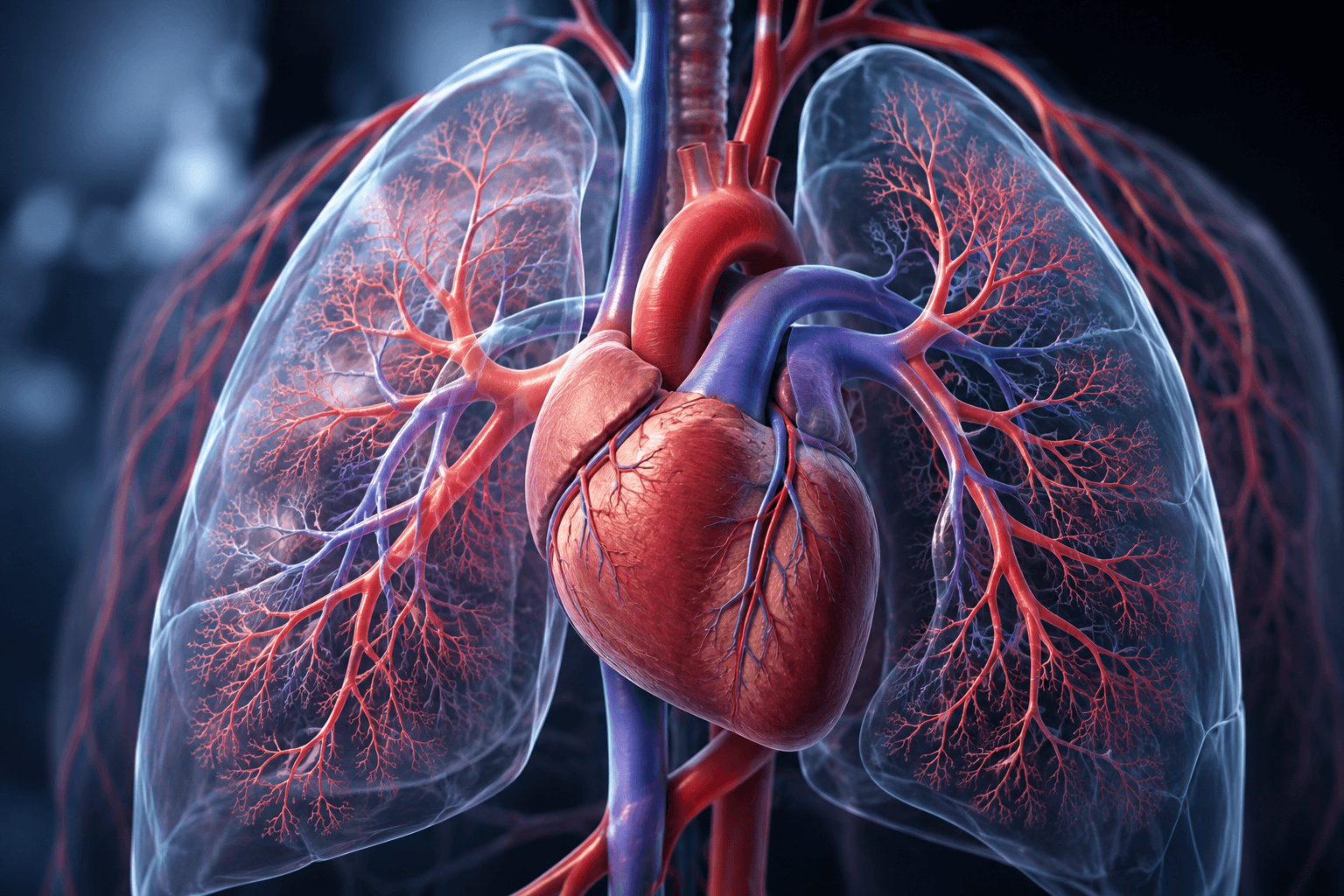
Pulmonary hypertension is high blood pressure in the blood vessels that carry blood from the heart to the lungs. Over time, this can strain the right side of the heart and make it harder for the body to get oxygen where it is needed.
Not all pulmonary hypertension has the same cause. It may be related to pulmonary arterial hypertension, left-sided heart disease, chronic lung disease, blood clots in the lungs, congenital heart disease, connective tissue disease, liver disease, sleep apnea, or other conditions. Because the causes differ, prevention and treatment plans must be individualized.
For many people, risk reduction means preventing respiratory infections, avoiding triggers that worsen breathing, managing air quality, following medication and oxygen plans, pacing activity, and knowing when symptoms need urgent care.
What Is Pulmonary Hypertension?
Pulmonary hypertension, often shortened to PH, means pressure is too high in the arteries of the lungs. The CDC explains that this can damage the heart and cause symptoms such as shortness of breath, chest pain, and lightheadedness. It also notes that PH can be caused by several underlying conditions, including congenital heart disease, connective tissue disease, coronary artery disease, high blood pressure, liver disease, blood clots in the lungs, and chronic lung diseases such as emphysema.
Symptoms can develop slowly and may be mistaken for asthma, deconditioning, anxiety, aging, or other lung or heart conditions. Early symptoms may appear only during activity.
Because PH can worsen over time, accurate diagnosis and follow-up with a clinician experienced in pulmonary hypertension are important.
Checklist Step 1: Know Your PH Type and Treatment Plan
The first prevention step is understanding what type of pulmonary hypertension you have and what is causing it. Treatment for PH related to left heart disease is not the same as treatment for pulmonary arterial hypertension, chronic lung disease, or chronic blood clots.
Ask your care team which PH group or cause applies to you, which medications you take and why, whether oxygen is needed, what activity level is safe, and which symptoms should trigger a call.
The American Lung Association notes that each type of pulmonary hypertension requires a tailored treatment plan that follows current guidelines and recommendations.
Checklist Step 2: Stay Current on Vaccines
Respiratory infections can be more serious for people with pulmonary hypertension because they may worsen oxygen levels, breathing symptoms, inflammation, and strain on the heart and lungs.
The 2022 European Society of Cardiology and European Respiratory Society pulmonary hypertension guideline recommends immunization of patients with pulmonary arterial hypertension against SARS-CoV-2, influenza, and Streptococcus pneumoniae. The Pulmonary Hypertension Association also notes that current PH guidelines recommend vaccination against flu, pneumonia, and COVID-19 and encourages patients to consult their PH care team.
Ask your healthcare provider or pharmacist which vaccines fit your age and health history, including COVID-19, flu, pneumococcal, RSV, and other recommended vaccines.
Checklist Step 3: Reduce Respiratory Infection Exposure
Vaccines are important, but they are not the only protection. People with PH may also benefit from reducing exposure during respiratory virus season or local outbreaks.
Practical steps may include washing hands, avoiding close contact with people who are sick, improving indoor ventilation, using masks in crowded indoor spaces, staying home when sick, and testing early when symptoms suggest COVID-19 or flu.
If you develop fever, cough, sore throat, worsening shortness of breath, chest discomfort, or lower oxygen readings, contact your care team promptly. Some treatments for flu or COVID-19 work best when started early.
Checklist Step 4: Improve Indoor Air Quality
Poor indoor air can irritate the lungs and worsen breathing symptoms. Triggers may include smoke, dust, mold, strong fragrances, chemical fumes, poor ventilation, pet dander, cooking smoke, and indoor pollution.
Helpful steps may include using a high-efficiency air filter when appropriate, changing HVAC filters, ventilating during cooking, controlling moisture to reduce mold, avoiding indoor smoking or vaping, and keeping cleaning products or fragrances from triggering symptoms.
Cleaner air does not treat PH itself, but it may reduce irritation and respiratory flare-ups that make symptoms worse.
Checklist Step 5: Track Outdoor Air Quality and Weather
Outdoor air quality can affect breathing, especially during wildfire smoke, high ozone days, heavy pollution, extreme heat, extreme cold, or high humidity.
Check the air quality index before outdoor activity. On poor air quality days, consider moving activity indoors, using a well-fitting mask designed for particles if appropriate, keeping windows closed, and using indoor filtration.
Heat and cold can also make symptoms harder to manage. Plan errands and exercise for safer times of day, and avoid overexertion during weather extremes.
Checklist Step 6: Avoid Tobacco, Smoke, and Vaping
Smoke exposure can worsen lung irritation, reduce oxygen delivery, and increase cardiovascular risk. This includes cigarettes, cigars, cannabis smoke, secondhand smoke, wildfire smoke, and indoor wood-burning smoke.
Vaping can also irritate the lungs and should not be considered a safe alternative for someone with pulmonary hypertension or chronic breathing symptoms.
If quitting tobacco is difficult, ask for help. Counseling, medications, nicotine replacement, quitlines, and lung health programs can improve the chance of success.
Checklist Step 7: Use Oxygen Exactly as Prescribed
Some people with pulmonary hypertension need supplemental oxygen during sleep, activity, travel, or throughout the day. Oxygen can help when oxygen levels are low, but it must be used safely and as prescribed.
Do not change oxygen flow rates on your own unless your clinician has given specific instructions. Ask when to use oxygen, what oxygen saturation range is expected, how to handle activity, and what to do if readings drop.
Oxygen is a fire risk. Keep oxygen away from smoking, open flames, candles, gas stoves, and flammable materials. Follow equipment safety instructions from your oxygen supplier and care team.
Checklist Step 8: Pace Activity, but Do Not Assume All Movement Is Unsafe
Activity can be complicated with pulmonary hypertension. Too much exertion may trigger shortness of breath, chest pain, dizziness, or fainting, but complete inactivity can lead to deconditioning, weakness, and worse daily function.
The 2022 ESC/ERS guideline recommends supervised exercise training in patients with pulmonary arterial hypertension who are under medical therapy. This means exercise should be planned and supervised when appropriate, not started aggressively without guidance.
Ask your care team whether pulmonary rehabilitation, supervised exercise, walking, light strengthening, or activity pacing is appropriate. Stop activity and seek guidance if you develop chest pain, fainting, severe dizziness, severe shortness of breath, or blue lips.
Checklist Step 9: Plan for Travel and Altitude
Travel can create extra challenges for people with pulmonary hypertension. Long flights, altitude, missed medications, dehydration, infection exposure, and limited access to specialty care can all matter.
Before travel, ask your PH team whether you need oxygen testing, oxygen during flights, medication planning, emergency documents, compression or clot-prevention guidance, or a plan for symptoms away from home.
Carry medications in your hand luggage, bring extra supplies, know how to contact your PH team, and identify medical care near your destination when traveling far from home.
Checklist Step 10: Take PH Medicines Consistently
Pulmonary hypertension medications can be complex. Some must be taken at specific times, some require monitoring, and some should not be stopped suddenly.
Use a medication organizer, alarms, refill reminders, and a written list of prescriptions. Keep a backup plan for pharmacy delays, travel, power outages, pump issues, or delivery problems if you use specialty medications.
Do not stop PH medication because you feel better or because side effects appear. Call your care team to discuss side effects, missed doses, cost concerns, pregnancy planning, or interactions.
Checklist Step 11: Watch Fluid, Swelling, and Weight Changes
Pulmonary hypertension can strain the right side of the heart. Some people develop fluid retention, swelling, or worsening shortness of breath when fluid builds up.
Track swelling in the feet, ankles, legs, or abdomen. A daily weight log may be recommended for some people, especially if diuretics are prescribed or heart strain is present.
Call your care team if swelling increases, weight rises quickly, breathing worsens, or you feel more fatigued than usual. Do not change diuretic doses unless your clinician has given instructions.
Checklist Step 12: Create a Written Action Plan
A written action plan helps you know what to do when symptoms change. It should be specific to your diagnosis, medications, oxygen plan, and risk level.
Your plan may include usual symptoms, warning symptoms, oxygen instructions, medication list, PH specialist contact, local emergency department, vaccine plan, infection plan, travel plan, and when to call versus when to seek emergency care.
Share the plan with family, caregivers, travel companions, and anyone who may help during a flare or emergency.
Home Tools That May Help
Home tools can support monitoring, but they do not replace medical care. A pulse oximeter, blood pressure monitor, scale, symptom diary, medication organizer, air purifier, masks, thermometer, and home respiratory infection tests may be useful depending on your plan.
A pulse oximeter can help some people track oxygen levels, but readings can be affected by cold fingers, nail polish, poor circulation, movement, device quality, and skin pigmentation. Severe symptoms need care even if the number looks acceptable.
Bring home logs to appointments. Trends in oxygen, weight, swelling, activity tolerance, and symptoms can help your care team adjust the plan.
Common Mistake: Treating PH Like Regular High Blood Pressure
Pulmonary hypertension is not the same as high blood pressure measured with an arm cuff. It involves pressure in the lung blood vessels and strain on the right side of the heart.
Usual home blood pressure readings do not measure pulmonary artery pressure. They may still be useful for overall cardiovascular monitoring, but they cannot show whether PH itself is controlled.
Follow-up may require echocardiograms, walking tests, oxygen testing, lab work, imaging, right heart catheterization, or specialty evaluation depending on your condition.
Common Mistake: Ignoring Worsening Shortness of Breath
Shortness of breath can have many causes, but in someone with pulmonary hypertension, worsening breathing should be taken seriously.
NHLBI notes that early PH symptoms may include shortness of breath with exercise, and warns that chest pain should prompt emergency care because it may be a sign of a heart attack or blood clot in the lungs.
Call your care team if you notice less ability to walk, more shortness of breath with usual tasks, new oxygen drops, new swelling, or more dizziness.
Common Mistake: Skipping Vaccines Because Symptoms Are Stable
Stable symptoms do not mean respiratory infections are low-risk. COVID-19, flu, pneumonia, RSV, and other infections can worsen oxygen needs and strain the heart and lungs.
Ask your care team which vaccines are recommended and when to receive them. Vaccine timing may depend on age, immune status, medication plan, prior reactions, pregnancy status, and local respiratory virus activity.
If you are unsure about a vaccine because of PH medications or other health conditions, ask your PH clinician rather than skipping it silently.
Common Mistake: Exercising Hard Without Guidance
Exercise can be helpful when appropriately planned, but pulmonary hypertension changes the safety conversation. Intense exertion, heavy lifting, breath-holding, or exercising through dizziness or chest pain can be dangerous.
Use a supervised plan when recommended. Avoid sudden jumps in intensity. Warm up, cool down, pace activity, and stop if symptoms become concerning.
If you have fainting, chest pain, blue lips, severe breathlessness, or oxygen drops with activity, seek medical guidance before continuing.
Common Mistake: Waiting Too Long to Report Swelling
New or worsening swelling may be a sign of fluid retention or right heart strain. It can also occur for other reasons, but it should not be ignored in someone with PH.
Track daily weight if your clinician recommends it. Note whether swelling is one-sided or both-sided, whether breathing is worse, and whether symptoms improve with rest or elevation.
One-sided leg swelling or pain can also suggest a blood clot and needs prompt medical evaluation.
When to Talk to a Healthcare Provider
Talk to a healthcare provider if you have shortness of breath with activity, unexplained fatigue, chest discomfort, lightheadedness, fainting, blue lips, swelling in the legs or abdomen, or reduced ability to do normal activities.
If you already have PH, contact your care team when symptoms worsen, oxygen needs change, swelling increases, weight rises quickly, medication side effects occur, respiratory infection symptoms appear, or you are planning travel, surgery, pregnancy, or major exercise changes.
A provider may recommend echocardiogram, right heart catheterization, pulmonary function testing, sleep apnea evaluation, CT imaging, ventilation-perfusion scan, blood tests, oxygen testing, medication adjustment, pulmonary rehab, or referral to a PH specialist.
When to Seek Urgent or Emergency Care
Seek emergency care for chest pain, fainting, severe shortness of breath, blue or gray lips, coughing blood, confusion, severe weakness, oxygen levels below the emergency threshold set by your clinician, or symptoms that feel life-threatening.
Seek urgent evaluation for sudden worsening breathlessness, one-sided leg swelling or calf pain, rapid weight gain with swelling, fever with worsening breathing, new irregular heartbeat symptoms, or symptoms after a possible blood clot exposure risk such as surgery, long travel, or prolonged immobility.
Do not drive yourself if symptoms are severe, sudden, or could involve a heart attack, pulmonary embolism, dangerous rhythm problem, severe infection, or respiratory failure.
The Bottom Line
Pulmonary hypertension risk reduction starts with understanding your PH type and following a plan tailored to the cause. It is not the same as regular high blood pressure, and it often requires specialty follow-up.
Key prevention steps include vaccines, infection avoidance, cleaner indoor air, outdoor air quality awareness, tobacco and smoke avoidance, oxygen safety, activity pacing, travel planning, consistent medication use, swelling and weight tracking, and a written action plan.
The most common mistakes are treating PH like regular blood pressure, ignoring worsening shortness of breath, skipping vaccines when stable, exercising hard without guidance, and waiting too long to report swelling.
If you have PH or symptoms that could suggest it, ask your healthcare provider what monitoring, prevention steps, vaccines, activity plan, and urgent-care instructions fit your condition.