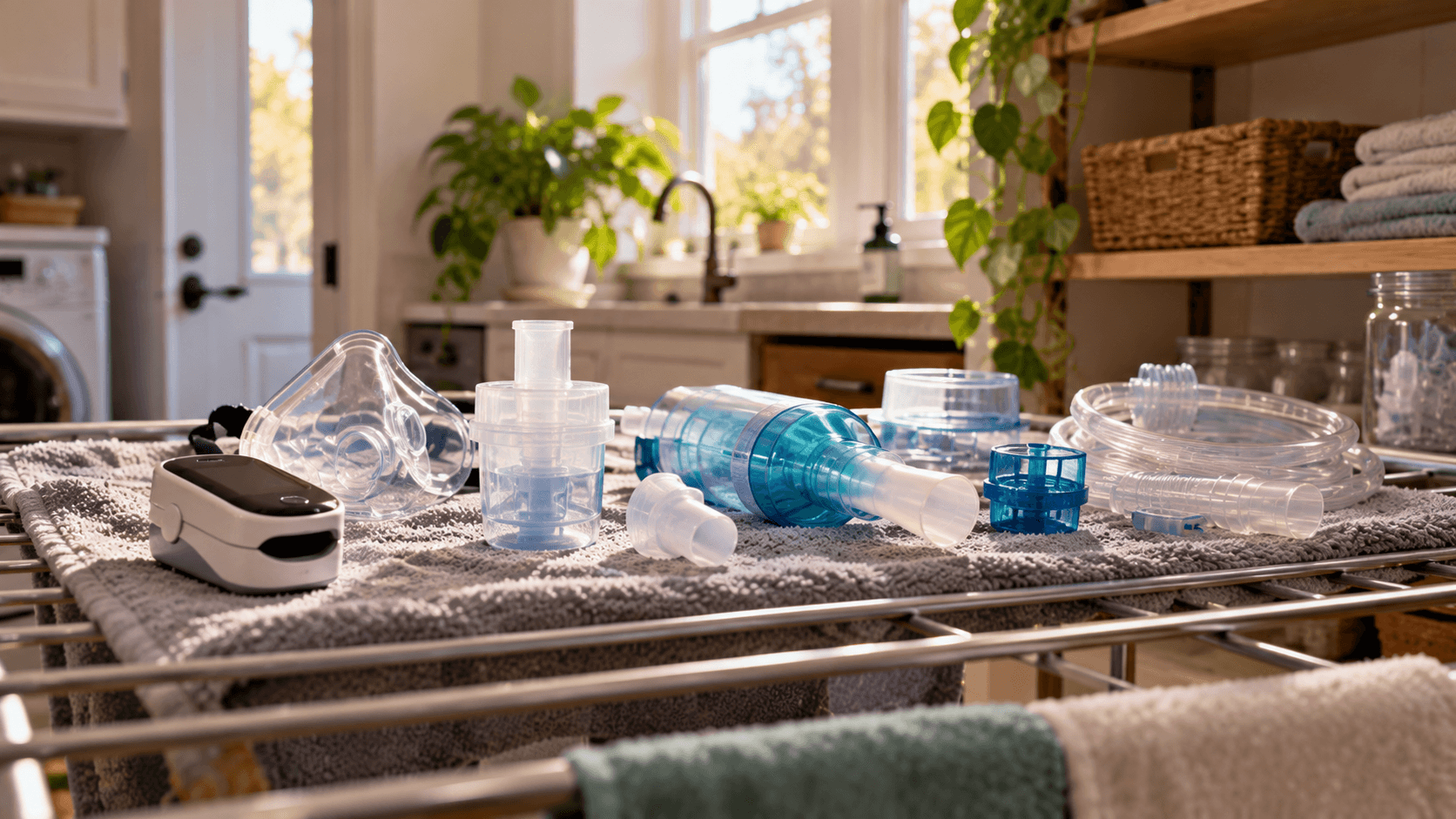
Cystic fibrosis (CF) is a genetic condition that causes thick, sticky mucus to build up in the lungs, digestive tract, and other organs. In the lungs, that mucus traps bacteria, fuels chronic infections, and gradually narrows the airways. Managing it is an ongoing, daily effort—and for many people with CF, the home has become an important extension of the clinic.
Two categories of devices play a central role in that home-based care: pulse oximeters, which measure how well oxygen is reaching the blood, and airway clearance devices, which help loosen and move mucus out of the lungs. Understanding what these tools do, how they work, and where they fit alongside medical care can help people with CF and their caregivers feel more confident and informed.
Why Oxygen Monitoring Matters in CF
Healthy lungs efficiently transfer oxygen from inhaled air into the bloodstream. In CF, chronic mucus buildup and inflammation interfere with that transfer. Over time—or during a pulmonary exacerbation, a flare-up of respiratory symptoms—oxygen levels in the blood can drop below the range the body needs to function well.
A pulse oximeter is a small clip-on device, usually worn on a fingertip, that uses light to estimate the percentage of hemoglobin in the blood that is carrying oxygen. This measurement is called oxygen saturation, often written as SpO2. The device is non-invasive, painless, and provides a reading within seconds.
For people with CF, tracking oxygen saturation at home can serve several purposes:
- Early warning of a flare-up: A drop in readings may signal that airways are more obstructed than usual, prompting a timely call to the care team before symptoms become severe.
- Monitoring during activity: Some people with CF experience drops in oxygen saturation during exercise. Tracking this at home, and sharing the data with a clinician, can inform decisions about supplemental oxygen or adjusted activity levels.
- Overnight monitoring: Sleep-related drops in oxygen saturation can occur in CF, sometimes without obvious symptoms. A clinician may recommend overnight oximetry to screen for this.
- Guiding supplemental oxygen use: For those already prescribed supplemental oxygen, home readings can help confirm that the prescribed flow rate is achieving its goal.
A pulse oximeter is a useful data point, not a diagnosis. Readings should always be interpreted in conversation with a clinician who knows the patient's full picture.
Limitations of Pulse Oximeters
Pulse oximeters are valuable, but they are not perfect. Several factors can affect their accuracy, and it is worth knowing them.
Skin tone and accuracy: Research has raised concerns that pulse oximeters may overestimate oxygen saturation in people with darker skin tones, potentially masking low levels that would otherwise prompt intervention. The U.S. Food and Drug Administration has acknowledged this issue and has encouraged manufacturers to improve testing across diverse populations. If you have concerns about accuracy related to skin tone, talk with your care team about whether additional testing—such as an arterial blood gas measurement drawn in a clinical setting—might be appropriate at times.
Nail polish and acrylic nails can interfere with the light signal. Placing the sensor on a toe or the side of a finger may help, or simply removing nail products from one finger used for monitoring.
Poor circulation and cold hands reduce blood flow to the fingertips and can produce unreliable readings. Warming your hands before testing can help.
Movement artifacts cause the device to register motion as a signal, producing false readings. Staying still during the measurement improves reliability.
Consumer-grade pulse oximeters are not the same as medical-grade devices. If your care team recommends home oximetry as part of a formal monitoring plan, they may specify a particular type of device. It is worth asking.
Airway Clearance: The Core of Daily CF Management
Airway clearance therapy (ACT) is a cornerstone of CF treatment. The goal is to dislodge mucus from the walls of the airways so it can be coughed out of the lungs. This reduces the bacterial load in the lungs, lowers the risk of infection, and helps preserve lung function over time.
There are several categories of breathing devices used for airway clearance in CF:
Oscillating Positive Expiratory Pressure (OPEP) Devices
These handheld devices—sometimes called flutter devices or oscillating PEP devices—work by creating a resistance when you exhale through them. That resistance briefly increases pressure in the airways, helping to hold them open and prevent collapse. At the same time, most of these devices cause a vibration or oscillation that travels back through the airways, physically loosening mucus from the airway walls.
The person with CF breathes in normally, then exhales through the device at a controlled pace. After a series of breaths, they perform controlled coughing or huffing techniques to move the loosened mucus up and out. Sessions typically last fifteen to thirty minutes, though the exact protocol is tailored by the care team.
These devices are compact, do not require electricity, and can be used at home, while traveling, or in other settings. They are often a good fit for older children, adolescents, and adults who are comfortable performing the technique independently.
High-Frequency Chest Wall Oscillation (HFCWO) Vests
Often called airway clearance vests or chest physiotherapy vests, these wearable devices consist of an inflatable vest connected to a machine that rapidly inflates and deflates it. The rapid compression and release of the chest wall creates vibrations throughout the lungs, loosening mucus much as oscillating handheld devices do—but across a larger area of lung tissue simultaneously.
HFCWO vests are commonly prescribed for people with CF who have difficulty performing manual techniques independently, including young children (with appropriate pediatric sizing) and those with more advanced disease. They allow the person to perform airway clearance without a second person assisting, which was a significant barrier with older manual chest physiotherapy techniques.
Sessions are typically scheduled multiple times per day, often in combination with inhaled medications such as bronchodilators (which open the airways first) or mucolytics (which thin the mucus). The order and timing of these treatments—devices, nebulizers, and medications—is carefully coordinated by the CF care team for good reason: sequence matters for effectiveness.
Intrapulmonary Percussive Ventilation (IPV)
IPV devices deliver rapid mini-bursts of pressurized air into the airways through a mouthpiece. These bursts create internal percussion—vibration from inside the airway outward—which can reach areas of the lung that external vibration may not penetrate as effectively. IPV tends to be used in clinical settings or for people with more complex needs, though some home versions exist. A respiratory therapist or clinician should always guide training on this type of device.
Breathing Technique Devices: PEP Without Oscillation
Some devices provide positive expiratory pressure without oscillation. The sustained back-pressure they create helps splint airways open during exhalation, allowing air to get behind mucus plugs and move them toward larger airways where they can be cleared. These are sometimes used as part of a broader regimen or for people who find oscillating devices uncomfortable.
Working With Your CF Care Team on Device Choices
No single device is right for every person with CF. The choice depends on age, lung function, personal preference, lifestyle, and how well a particular device is tolerated over time. Adherence matters enormously: a device that fits into someone's routine and feels manageable is more likely to be used consistently than one that is technically superior but impractical.
CF care is typically delivered through accredited CF care centers, where multidisciplinary teams—including pulmonologists, respiratory therapists, nurses, dietitians, and social workers—coordinate treatment. Respiratory therapists play a particularly important role in teaching airway clearance techniques, troubleshooting device problems, and adjusting protocols as the person's needs change.
If you or a family member has CF and is using home devices, a few questions worth raising with the care team include:
- Is my current airway clearance routine still the right fit, or should we reassess?
- Should I be tracking my oxygen saturation at home, and if so, how often and under what circumstances?
- At what SpO2 reading—or change in readings—should I contact the clinic?
- Are there signs during a device session that should prompt me to stop and seek care?
- How do my inhaled medications interact with the timing of airway clearance?
A Note on New Medications and the Evolving Landscape
Over the past decade, a class of medications called CFTR modulators has dramatically changed the trajectory of CF for many patients. These drugs address the underlying protein defect that causes CF rather than just managing symptoms. For people who are eligible and respond to these therapies, lung function often improves and the burden of daily symptoms can lessen.
Even so, airway clearance and monitoring remain important for most people with CF, including those on modulator therapy. Disease management is typically not abandoned when new treatments are added; rather, the care team reassesses the full regimen to determine what remains necessary and what might be adjusted.
The Bottom Line
Pulse oximeters and airway clearance devices are meaningful tools in the daily management of cystic fibrosis. Used consistently and correctly—and in close partnership with a CF care team—they can help people stay informed about their respiratory health, keep airways as clear as possible, and respond quickly when something changes.
If you are living with CF or caring for someone who is, these devices work best when they are part of a larger, coordinated plan. Regular check-ins with your care center, honest conversations about what is and isn't working, and up-to-date guidance from your clinical team are the foundation on which everything else rests.