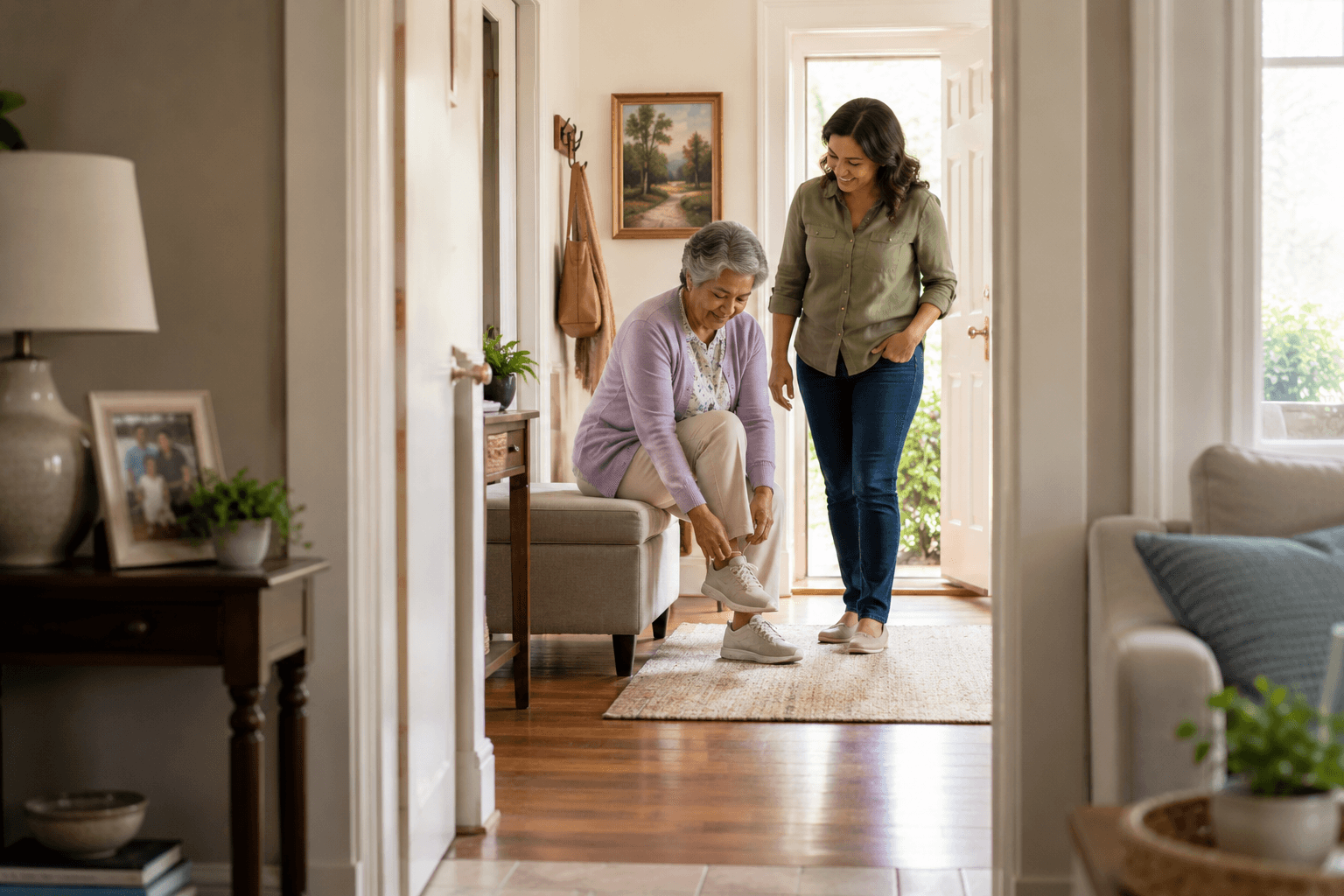
Living with dementia, or caring for someone who does, means facing a condition that rarely stays the same from one day to the next. Alzheimer's disease and related dementias are progressive, but within that longer arc are shorter-term episodes that caregivers often call flare-ups: sudden increases in confusion, agitation, aggression, or disorientation that go beyond a person's usual baseline. These episodes can be frightening and exhausting, and they raise real safety concerns.
Many flare-ups have identifiable triggers, and a combination of environmental adjustments, steadier routines, and close work with a medical team can reduce how often they happen and how severe they get. What follows is what the evidence suggests, in plain language, so caregivers and families can make informed decisions alongside their loved one's care team.
Understanding What Triggers a Flare-Up
One key insight from dementia research is that behavioral symptoms, sometimes called behavioral and psychological symptoms of dementia, or BPSD, are rarely random. They are often a person's only available way of communicating distress. Common triggers include:
- Infections, especially urinary tract infections (UTIs). In older adults with dementia, a UTI can cause sudden, dramatic confusion without the typical pain or urgency that younger people notice. Any abrupt change in behavior warrants a call to a clinician to rule out an underlying infection or illness.
- Medication changes or interactions. Many medications affect cognition and mood. A new prescription, a dosage change, or an over-the-counter addition can destabilize someone who had been relatively stable. Always loop in a pharmacist or physician when any medication changes.
- Pain that can't be communicated. A person who can no longer reliably describe pain may express it through agitation or withdrawal. Dental pain, constipation, joint pain, and skin irritation are particularly common and easy to overlook.
- Environmental overstimulation or sudden change. Loud, busy, or unfamiliar environments can overwhelm a brain that is struggling to process information. Even a change in routine, such as a visit to a new place or a caregiver switching shifts, can be disorienting enough to trigger distress.
- Sleep disruption. Poor sleep worsens virtually every symptom of dementia. Disrupted sleep-wake cycles, sometimes called sundowning, are common and can amplify confusion and agitation in the late afternoon and evening.
- Dehydration and poor nutrition. The brain is highly sensitive to fluid and nutrient imbalances. Because people with dementia may forget to drink or eat, or may lose the ability to recognize thirst and hunger, these basic needs require active attention.
Keeping a simple log of when flare-ups occur, what was happening beforehand, and what seemed to help can reveal patterns that both caregivers and clinicians find invaluable.
Building a Routine That Reduces Stress
Predictability is protective for a brain affected by dementia. Structured daily routines reduce the cognitive work required to navigate each moment and can lower baseline anxiety. Research in dementia care consistently points to routine as one of the most effective non-drug interventions available.
Practical steps include:
- Scheduling meals, personal care, activities, and rest at consistent times each day.
- Keeping the physical environment stable: avoid rearranging furniture, and use familiar objects and photos to anchor a person's sense of place.
- Introducing transitions gradually. If a move to a new care setting is necessary, frequent visits beforehand and familiar items brought to the new space can ease the adjustment.
- Using gentle, consistent language. Short sentences, a calm tone, and the same phrasing for repeated tasks reduce frustration on both sides.
Non-Drug Approaches to Behavioral Symptoms
Major clinical guidelines from geriatric and psychiatric organizations recommend trying non-pharmacological strategies first for most behavioral symptoms of dementia. These approaches carry fewer risks than medications and often address the underlying cause rather than just suppressing symptoms.
- Validation and redirection. Rather than correcting or arguing with a person who is confused or distressed, meet them in their emotional reality by acknowledging how they feel, then gently redirect attention to a calming activity. This tends to de-escalate situations more effectively than logic-based responses.
- Sensory and activity engagement. Music from a person's youth, familiar scents, gentle touch, and hands-on activities that match remaining abilities (folding towels, looking at photographs, tending a small plant) can reduce agitation and provide a sense of purpose.
- Light and movement. Exposure to natural light during the day, and gentle physical activity suited to the person's abilities, support healthier sleep-wake rhythms and may reduce sundowning episodes.
- Social connection. Isolation worsens mood and cognitive symptoms. Even brief, low-key social interactions, like a friendly face, a short conversation, or a familiar voice on the phone, matter more than many caregivers realize.
When Medication Is Part of the Picture
There are situations where behavioral symptoms are severe enough to pose a safety risk or cause significant suffering, and a clinician may recommend medication as part of the care plan. This is a nuanced, individualized decision. Some medications prescribed for dementia symptoms carry serious warnings in older adults, and the risks and benefits must be weighed carefully by someone who knows the person's full medical history.
If medications are prescribed, ask the care team for a clear explanation of what the medication is meant to do, what side effects to watch for, and how success will be measured. Regular reassessment, rather than simply continuing a prescription indefinitely, is best practice.
Home Safety: A Room-by-Room Mindset
Reducing safety risks is just as important as reducing behavioral flare-ups, and the two are often connected. A person who wanders, falls, or accidentally turns on a stove may be responding to unmet needs or disorientation. Approaching home safety room by room can prevent many common accidents.
- Falls. Remove loose rugs, improve lighting (especially at night), install grab bars in the bathroom, and consider a bed or chair alarm for people who tend to get up suddenly. Non-slip mats and proper footwear make a significant difference.
- Wandering. Door alarms, door knob covers, and visual cues (such as a stop sign or a mural over a door) can deter wandering. GPS tracking devices designed for people with dementia are widely available and can provide critical peace of mind. Enrolling in a local or national wandering response program is strongly recommended.
- Kitchen safety. Stove knob covers, automatic shut-off devices, and keeping dangerous items (sharp knives, cleaning products) locked away address common kitchen hazards. Some families disable a stove burner or switch to a microwave-only kitchen when cooking becomes unsafe.
- Medications. A locked medication organizer or a pill dispenser with an alarm reduces the risk of accidental double-dosing or skipped doses.
- Driving. This is one of the most difficult conversations in dementia care. Driving requires rapid judgment, attention, and spatial reasoning, all of which dementia impairs. A clinician, a formal driving evaluation, or both can help families navigate this transition with evidence rather than argument.
Supporting the Caregiver
Caregiver burnout is a predictable consequence of a demanding, often grief-filled role, not a personal failing. A burned-out caregiver is also less able to provide safe, patient-centered care, so supporting the person with dementia means supporting the people who care for them.
Research consistently shows that caregiver support programs, respite care, and peer support groups reduce caregiver stress and can indirectly improve outcomes for the person with dementia. Local chapters of the Alzheimer's Association and similar organizations offer free resources, helplines, and community programs in most parts of the United States.
A note to caregivers: Your well-being is part of your loved one's care, not separate from it. Asking for help is a way of planning ahead.
Partnering With the Medical Team
No set of home strategies replaces ongoing, proactive communication with a dementia-specialized care team. A geriatrician, neurologist, geriatric psychiatrist, or primary care physician experienced in dementia can help distinguish a temporary, treatable flare-up from a sign of disease progression, adjust medications safely, coordinate referrals to social workers or occupational therapists, and help families plan for future stages of care.
Bring your behavioral log to appointments. Ask about advance care planning early, since decisions about future medical care are far easier to navigate when made thoughtfully, before a crisis.
Key Takeaways
- Flare-ups in dementia are often triggered by identifiable causes such as infection, pain, medication changes, or environmental stress, and many can be reduced with prompt attention and planning.
- Non-drug strategies, including routine, validation, sensory engagement, and environmental modification, are first-line approaches recommended by clinical guidelines.
- Home safety changes for falls, wandering, kitchen hazards, and driving protect both the person with dementia and those who care for them.
- Caregiver health is inseparable from the quality of care provided. Support and respite matter.
- A collaborative relationship with the medical team is essential for safely navigating this condition over time.
Every person with dementia is different, and what works for one family may not work for another. The goal of any care plan is to protect dignity, reduce suffering, and preserve quality of life, for as long as possible, at every stage. If you have concerns about a loved one's symptoms or safety, please speak with a qualified healthcare provider.