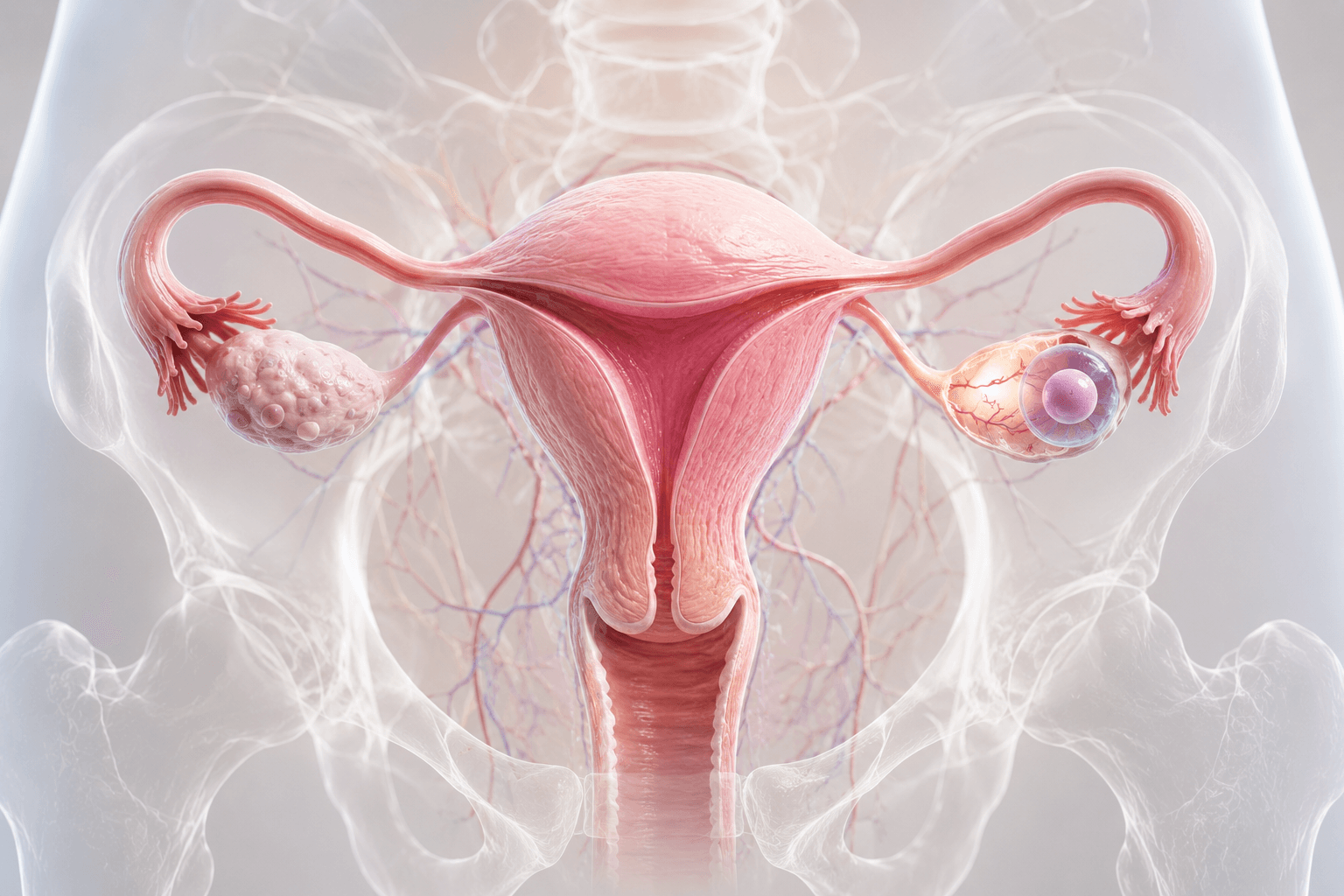
Female infertility can be stressful, confusing, and emotionally exhausting. It can also be difficult to know when to keep trying, when to start tracking more closely, and when to ask for medical help.
In many cases, fertility depends on timing, ovulation, egg quality, sperm health, fallopian tube function, uterine health, hormone patterns, age, lifestyle factors, and underlying medical conditions. Some of these factors can be improved or managed. Others need medical evaluation.
Reducing risks related to female infertility does not mean guaranteeing pregnancy. It means understanding the fertile window, tracking ovulation more accurately, addressing modifiable health factors, and getting follow-up at the right time instead of waiting too long.
What Does Female Infertility Mean?
Female infertility generally refers to difficulty becoming pregnant or carrying a pregnancy when female reproductive factors are involved. It may be related to ovulation problems, blocked fallopian tubes, endometriosis, uterine conditions, age-related changes, hormone disorders, or unexplained factors.
Infertility can also involve male factors, mixed factors, or no clear cause after testing. For this reason, fertility concerns are usually evaluated as a couple or reproductive partnership when applicable. Testing only one person may miss important information.
The American Society for Reproductive Medicine states that evaluation should generally begin after 12 months of regular, unprotected intercourse for women under 35, and after 6 months for women age 35 or older, unless there is a medical reason to evaluate sooner.
Timing Matters More Than Many People Realize
Pregnancy is most likely when sperm are present in the reproductive tract before ovulation. Ovulation is when an ovary releases an egg. The egg can only be fertilized for a limited time after release, while sperm can survive for several days in the reproductive tract.
This is why the fertile window usually includes the days leading up to ovulation and the day of ovulation itself. Having intercourse only after ovulation may miss the best timing.
For people with regular cycles, ovulation often happens about two weeks before the next period starts, not necessarily exactly on day 14. Cycle length can vary, so a person with a 26-day cycle may ovulate earlier than someone with a 34-day cycle.
How to Track Your Cycle
Cycle tracking begins with the first day of menstrual bleeding, which is counted as day 1. Tracking several cycles can help identify whether periods are regular, whether cycle length is changing, and when the fertile window may occur.
A simple tracking log may include period start dates, cycle length, bleeding pattern, cervical mucus changes, ovulation test results, basal body temperature, pelvic pain, spotting, intercourse timing, medications, illness, stress, sleep, and pregnancy test results.
The goal is not to make tracking overwhelming. The goal is to understand patterns. If cycles are very irregular, absent, shorter than expected, much longer than expected, or changing suddenly, that information can help a healthcare provider decide what to evaluate.
Ovulation Predictor Kits
Ovulation predictor kits, often called OPKs, are over-the-counter tests that check urine for a rise in luteinizing hormone, or LH. LH usually rises before ovulation, so a positive test can help identify the most fertile days.
OPKs can be helpful for people who want more specific timing than a calendar app can provide. They may be especially useful when cycles are regular but ovulation timing is not obvious.
However, OPKs are not perfect. They predict an LH surge, but they do not always prove that ovulation happened. Some people with polycystic ovary syndrome, irregular cycles, or hormone changes may see multiple positive or confusing results. If OPKs are consistently unclear, a clinician can help decide whether additional testing is needed.
Cervical Mucus and Body Temperature
Cervical mucus changes around ovulation. As estrogen rises, mucus may become clearer, stretchier, and more slippery, sometimes described as resembling egg whites. This type of mucus can be a sign that the fertile window is approaching.
Basal body temperature tracking measures the body’s resting temperature each morning before getting out of bed. After ovulation, progesterone can cause a small temperature rise. This may help confirm that ovulation likely occurred, but it usually confirms ovulation after the most fertile days have passed.
For many people, combining methods works better than relying on one sign. A calendar can estimate timing, cervical mucus can suggest the fertile window is approaching, OPKs can identify the LH surge, and temperature tracking may help confirm the pattern afterward.
Common Risk Factors for Female Infertility
Some fertility risk factors are related to age or medical history. Others are related to lifestyle, infections, medications, or reproductive conditions.
Common risk factors include increasing age, irregular or absent ovulation, polycystic ovary syndrome, endometriosis, pelvic inflammatory disease, prior sexually transmitted infections, blocked fallopian tubes, uterine fibroids or polyps, prior pelvic surgery, thyroid disease, very low or very high body weight, smoking, heavy alcohol use, and some cancer treatments.
ACOG notes that ovulation problems are the most common cause of female infertility and that age, lifestyle, and health conditions can affect fertility. It also notes that smoking and moderate or heavy alcohol use may reduce fertility.
Age and Fertility
Age is one of the most important fertility factors. Fertility gradually declines with age, and the decline becomes more noticeable in the mid-to-late 30s. This is related partly to changes in egg number and egg quality.
Age does not mean a person cannot become pregnant after 35, but it does mean timing and follow-up matter more. Waiting too long to ask for help may reduce the number of options available.
ASRM states that female age is the single most important predictor of fecundity, which means the chance of achieving pregnancy in a menstrual cycle. This is why evaluation is generally recommended sooner for women age 35 and older.
Medical Conditions That Can Affect Fertility
Several medical conditions can affect ovulation, hormones, the uterus, fallopian tubes, or the ability to carry a pregnancy. These include polycystic ovary syndrome, thyroid disease, endometriosis, fibroids, diabetes, autoimmune disease, eating disorders, pituitary disorders, and a history of pelvic infection or surgery.
Irregular periods can be an important clue. Periods that are very far apart, absent, unpredictable, or associated with signs of excess androgen, such as acne or increased facial hair, may point to ovulation or hormone issues.
Severe menstrual pain, pain with intercourse, pain with bowel movements during periods, or chronic pelvic pain may suggest endometriosis or another pelvic condition. These symptoms should be discussed with a healthcare provider rather than dismissed as normal.
Lifestyle Habits That May Support Fertility
Lifestyle changes cannot fix every fertility problem, but they may support reproductive health and improve the chances of a healthy pregnancy.
Helpful steps may include avoiding tobacco, limiting alcohol, maintaining a healthy weight when possible, eating a nutrient-rich diet, getting regular physical activity, sleeping consistently, managing stress, and reviewing medications and supplements with a clinician.
People trying to conceive are often advised to start a prenatal vitamin with folic acid before pregnancy. Folic acid supports early fetal development, often before someone knows they are pregnant. A healthcare provider can recommend the right prenatal plan based on age, health history, diet, medications, and prior pregnancy history.
Sexually Transmitted Infections and Pelvic Health
Some sexually transmitted infections can affect fertility if they lead to pelvic inflammatory disease or scarring of the fallopian tubes. Chlamydia and gonorrhea are important examples because they can sometimes cause silent infections before complications appear.
STI screening and timely treatment can help reduce the risk of pelvic infection and future fertility problems. Anyone with pelvic pain, unusual discharge, bleeding between periods, pain during sex, or a possible STI exposure should seek testing.
Condoms can reduce STI risk when pregnancy is not being actively attempted. For people trying to conceive, both partners may benefit from STI testing if there is any concern about exposure or history.
Home Fertility Tests and What They Can Tell You
At-home fertility products can be helpful, but they have limits. Ovulation predictor kits can help time intercourse. Pregnancy tests can detect hCG after implantation. Some fertility hormone tests may provide information about ovarian reserve or hormone patterns.
However, at-home tests cannot fully diagnose infertility. They usually cannot show whether fallopian tubes are open, whether sperm parameters are normal, whether endometriosis is present, whether the uterus has a structural issue, or whether ovulation is consistently producing a healthy hormone pattern.
At-home results should be treated as clues, not final answers. If results are abnormal, confusing, or do not match your cycle pattern, bring them to a healthcare provider.
Common Mistake: Tracking Only With a Calendar App
Calendar apps can estimate fertile days, but they are only as accurate as the information and assumptions behind them. If cycle length varies, ovulation can happen earlier or later than the app predicts.
Relying only on an app may lead to missed timing. Adding cervical mucus tracking, ovulation predictor kits, or clinician guidance may improve timing for some people.
If cycles are irregular, very long, or unpredictable, the issue may not be the app. It may be that ovulation is irregular and needs evaluation.
Common Mistake: Waiting Too Long to Ask for Help
Many people wait longer than necessary because they assume infertility evaluation means committing to advanced treatment. In reality, the first step is often a basic evaluation.
A fertility evaluation may include cycle history, ovulation assessment, blood tests, ultrasound, uterine or fallopian tube testing, and semen analysis when applicable. The results can help identify whether the next step is timing support, medication, surgery, lifestyle changes, assisted reproduction, or continued trying with reassurance.
ASRM recommends beginning evaluation after 12 months of regular unprotected intercourse for women under 35 and after 6 months for women 35 or older. Earlier evaluation may be appropriate when there is a known risk factor or concerning history.
Common Mistake: Testing Only the Female Partner
Fertility is not only a female issue. Male factors can contribute to infertility, and they may occur even when there are no obvious symptoms.
If there is a male partner, semen analysis is often part of the evaluation. It can provide information about sperm count, movement, shape, and other factors. Skipping this step can delay diagnosis and treatment.
A complete fertility plan should consider both partners when applicable, as well as timing, ovulation, tubes, uterus, age, medical history, and lifestyle factors.
Common Mistake: Ignoring Irregular Periods
Irregular periods can be a sign that ovulation is not happening regularly. If ovulation is unpredictable, timing intercourse becomes more difficult, and the chance of pregnancy may be lower.
Irregular periods may be related to PCOS, thyroid disease, high prolactin, major weight changes, intense exercise, stress, perimenopause, or other hormone conditions.
If periods are often more than 35 days apart, absent for several months, extremely painful, unusually heavy, or suddenly different from your normal pattern, ask a healthcare provider for evaluation.
When to Talk to a Healthcare Provider
Talk to a healthcare provider if you are under 35 and have been trying to conceive for 12 months without pregnancy, or if you are 35 or older and have been trying for 6 months without pregnancy.
You should also seek care sooner if you are over 40, have irregular or absent periods, known endometriosis, prior pelvic inflammatory disease, prior ectopic pregnancy, repeated miscarriages, known fibroids or uterine problems, cancer treatment history, or a partner with known fertility concerns.
It is also reasonable to ask for preconception counseling before trying, especially if you take medications, have diabetes, thyroid disease, high blood pressure, autoimmune disease, epilepsy, kidney disease, mental health conditions, or a history of pregnancy complications.
What Follow-Up May Include
Follow-up depends on age, symptoms, cycle pattern, medical history, and how long you have been trying. A clinician may ask about menstrual cycles, intercourse timing, prior pregnancies, surgeries, infections, medications, weight changes, acne, hair growth, pain, and family history.
Testing may include ovulation labs, thyroid testing, prolactin testing, ovarian reserve testing, pelvic ultrasound, tubal evaluation, uterine cavity evaluation, and semen analysis when relevant.
The goal is to identify treatable factors and avoid unnecessary delays. Some people may need only timing guidance or ovulation support. Others may need referral to a reproductive endocrinologist or fertility specialist.
When to Seek Prompt Medical Care
Seek prompt medical care for severe pelvic pain, heavy bleeding, positive pregnancy test with one-sided pain or dizziness, fever with pelvic pain, foul-smelling discharge, fainting, or shoulder pain with possible pregnancy. These symptoms may suggest an infection, ectopic pregnancy, miscarriage complication, or another urgent problem.
If you are trying to conceive and have symptoms of a possible sexually transmitted infection, such as pelvic pain, unusual discharge, burning with urination, bleeding between periods, or pain during sex, get tested and treated promptly.
Do not wait for a routine fertility visit if symptoms are severe, sudden, or concerning.
The Bottom Line
Reducing risks related to female infertility starts with understanding timing, tracking ovulation, and knowing when to get follow-up. The most fertile days are usually before ovulation and around ovulation, so timing matters.
Cycle tracking, cervical mucus, ovulation predictor kits, and basal body temperature can all provide useful clues, but they do not replace medical evaluation when pregnancy is not happening or cycles are irregular.
Age, ovulation problems, endometriosis, pelvic infections, uterine conditions, smoking, alcohol, body weight, and underlying health conditions can all affect fertility. Male factors can also contribute and should not be overlooked.
If you are under 35 and have tried for 12 months, or 35 or older and have tried for 6 months, ask a healthcare provider about fertility evaluation. Seek help sooner if you have irregular periods, pelvic pain, known reproductive conditions, prior pregnancy losses, or other risk factors.