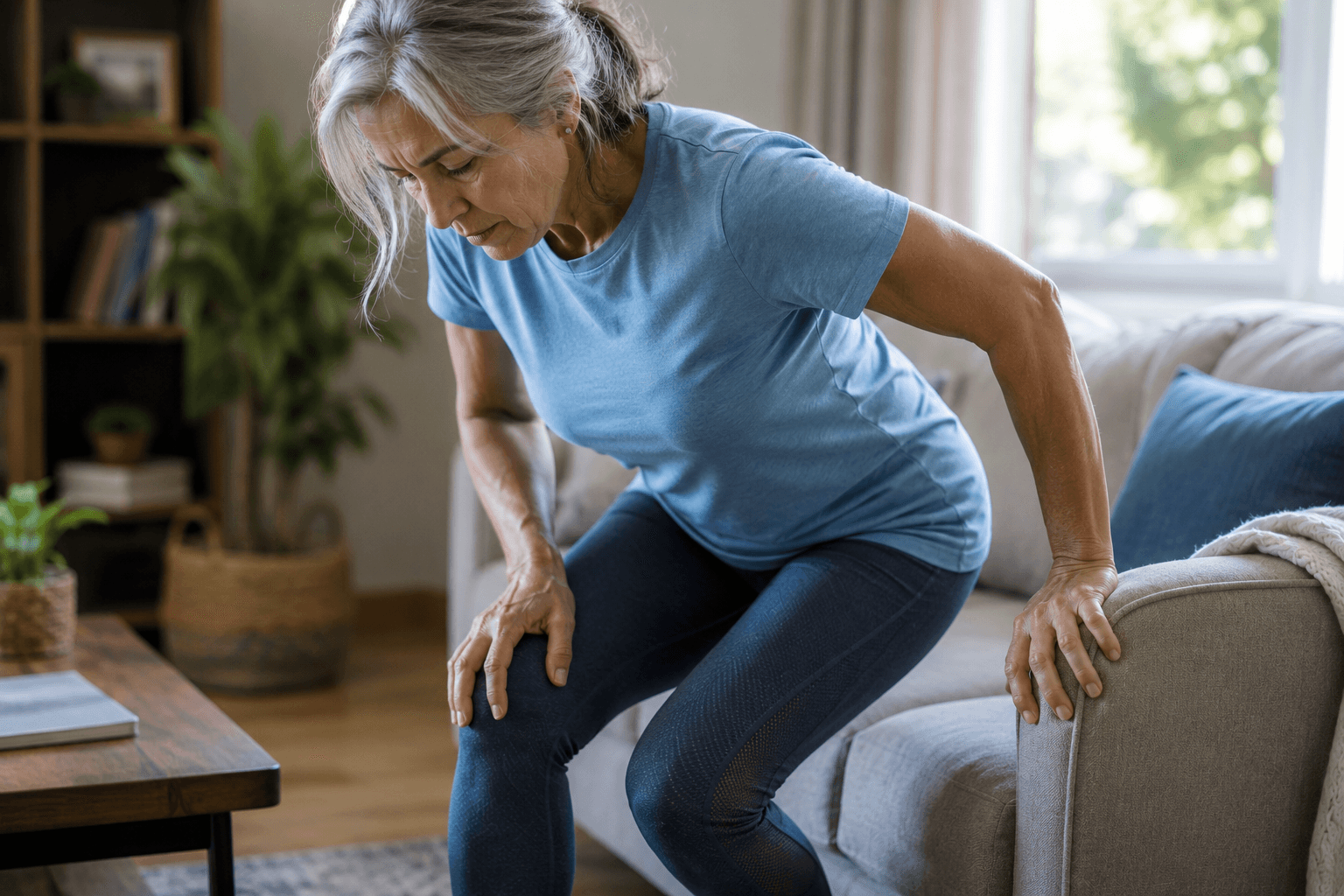
Sarcopenia is the gradual loss of muscle mass, strength, and physical function. It is most often associated with aging, but it can also happen earlier in life because of illness, inactivity, poor nutrition, weight loss, injury, or long periods of reduced movement.
It is easy to assume muscle loss is only about looking smaller or feeling weaker. Sarcopenia can also affect walking speed, balance, posture, joint support, pain, energy, independence, and the ability to do everyday tasks such as standing from a chair, climbing stairs, carrying groceries, or getting up after a fall.
Sarcopenia can develop slowly, which makes it easy to miss. A person may first notice they are moving less, avoiding stairs, feeling unsteady, or needing more effort for activities that used to feel routine. Knowing the warning signs can help people act earlier and protect mobility.
What Is Sarcopenia?
Sarcopenia means a decline in muscle mass, muscle strength, and muscle function. The National Institute on Aging describes sarcopenia as age-related loss of muscle mass and strength that can affect mobility and independence. It may be connected with weakness, fatigue, lower energy, and difficulty standing, walking, or climbing stairs.
Muscle mass and strength usually increase during youth and early adulthood, then begin to decline gradually. The decline may become faster later in life, especially when physical activity decreases, nutrition is inadequate, or chronic disease is present.
Sarcopenia is more than a normal inconvenience of aging. It can increase the risk of falls, fractures, disability, hospitalization, and loss of independence. Muscle loss and weakness can often be improved or slowed with the right combination of strength training, nutrition, medical evaluation, and fall-prevention strategies.
How Sarcopenia Affects Mobility
Mobility depends on muscle strength, power, coordination, balance, joint health, vision, nerve function, and confidence. When muscle strength declines, everyday movements may require more effort.
Early mobility changes may include walking more slowly, needing to use armrests to stand from a chair, avoiding stairs, feeling unsteady on uneven ground, taking shorter steps, or getting tired during errands. A person may not describe these changes as weakness at first. They may simply say they are "slowing down."
Lower-body strength is especially important because the hips, thighs, calves, and core help with standing, walking, climbing, balance, and fall recovery. When these muscle groups weaken, the risk of stumbling, falling, or losing confidence with movement can increase.
Does Sarcopenia Cause Pain?
Sarcopenia does not always cause pain directly. Some people mainly notice weakness, fatigue, or reduced stamina. But muscle loss can contribute to pain indirectly by changing how the body moves and how much support joints receive.
When muscles are weaker, joints may absorb more stress during daily activities. This can aggravate pain in the knees, hips, back, neck, shoulders, or feet. Weakness can also affect posture, balance, and walking pattern, which may lead to overuse of certain muscles or joint strain.
Pain can also worsen sarcopenia. If pain causes someone to avoid walking, exercise, stairs, or daily movement, muscles may weaken further. This creates a cycle: pain reduces activity, reduced activity leads to more weakness, and weakness can make movement more painful or difficult.
Common Symptoms and Warning Signs
Sarcopenia often develops gradually. The warning signs may be subtle at first and may look like normal aging, fatigue, or deconditioning.
Possible signs include reduced grip strength, slower walking speed, trouble rising from a chair, difficulty climbing stairs, needing more help with groceries or household tasks, reduced balance, frequent stumbling, smaller muscles, unexplained weakness, lower stamina, and fear of falling.
Other clues may include taking longer to recover after illness, losing weight unintentionally, avoiding activities that used to be easy, needing to hold furniture while walking, or feeling less confident outside the home.
Who Is at Higher Risk?
Sarcopenia is more common with older age, but age is not the only factor. Risk may increase with physical inactivity, bed rest, hospitalization, poor protein intake, unintended weight loss, chronic inflammation, obesity with low muscle mass, diabetes, kidney disease, heart disease, lung disease, arthritis, cancer, neurologic conditions, and some medications.
People who lose weight quickly may also lose muscle, especially if weight loss happens without strength training or enough protein. This can matter for older adults, people recovering from illness, and people using weight-loss programs or medications.
Low vitamin D, low appetite, dental problems, trouble swallowing, depression, social isolation, and limited access to nutritious food may also contribute by making it harder to eat enough or stay active.
How Sarcopenia Is Measured
There is no single home test that can fully diagnose sarcopenia. Healthcare providers may look at muscle strength, physical performance, body composition, symptoms, medical history, and nutrition status.
Common assessments may include grip strength testing, walking speed, chair-stand tests, balance tests, and questionnaires about daily function. The National Institute on Aging notes that the Short Physical Performance Battery can measure balance, walking speed, and the ability to rise from a chair five times as part of mobility and muscle performance assessment.
Body composition testing may also be used to estimate muscle mass. This may include bioelectrical impedance devices, DEXA scans, or other methods depending on the setting. Home body composition monitors can help track trends, but they are not perfectly accurate and can be affected by hydration, recent exercise, meals, and device quality.
Home Measurements That May Help
Home tracking can help identify changes over time, especially when it focuses on function rather than appearance.
Useful things to track may include how easily you can stand from a chair without using your arms, walking speed, stair tolerance, grip strength if you have a safe device, balance confidence, falls or near-falls, body weight trends, appetite, protein intake, and fatigue during daily tasks.
A body composition monitor may help some people follow estimated muscle and body fat trends, but it should not be treated as a diagnosis. If the device shows a sudden change or the numbers do not match how you feel, discuss it with a healthcare provider rather than assuming the reading is exact.
Common Mistake: Assuming Weakness Is Just Aging
One common mistake is assuming that weakness, slower walking, or trouble standing from a chair is simply "getting older." Aging can contribute, but new or worsening weakness deserves attention.
Weakness can be related to sarcopenia, but it can also come from anemia, thyroid disease, vitamin B12 deficiency, vitamin D deficiency, medication side effects, nerve problems, heart or lung disease, infection, depression, poor sleep, or other medical conditions.
If weakness is new, progressive, one-sided, associated with falls, or interfering with daily life, it should be evaluated rather than dismissed.
Common Mistake: Focusing Only on Weight Loss
For people with overweight or obesity, weight loss may improve health markers, but losing muscle during weight loss can make mobility worse. The goal is not only to change the number on the scale. It is to improve body composition, strength, stamina, and metabolic health.
Older adults are especially vulnerable to losing muscle during dieting, illness, or reduced appetite. A plan that includes enough protein and resistance training can help preserve muscle while supporting healthier weight changes when appropriate.
Rapid or unintentional weight loss should be discussed with a healthcare provider, especially if it comes with weakness, fatigue, loss of appetite, pain, or changes in bowel habits.
Common Mistake: Avoiding Exercise Because of Pain
Pain can make movement feel risky, but avoiding activity completely can lead to more weakness and stiffness. The safest plan depends on the cause of pain, but many people benefit from guided, gradual movement rather than prolonged rest.
Strength training does not always mean heavy weights. It may start with sit-to-stand practice, resistance bands, light dumbbells, water exercise, supervised physical therapy, or simple movements that build confidence and control.
If pain is severe, worsening, associated with swelling, numbness, fever, injury, or sudden weakness, it should be checked before starting a new exercise plan.
How Sarcopenia Is Treated or Managed
Management usually focuses on progressive resistance training, enough protein and calories, balance training, treating underlying medical issues, and reducing fall risk.
Resistance training is one of the most important tools because muscles need challenge to maintain or rebuild strength. This may include bodyweight exercises, resistance bands, machines, free weights, or physical therapy. The National Institute on Aging notes that many older adults can increase muscle strength with exercise, which can help maintain mobility and independence.
Nutrition also matters. Protein provides the building blocks muscles need for repair and maintenance. Some people may need help from a healthcare provider or registered dietitian to determine whether they are getting enough protein, vitamin D, calcium, and total calories.
Fall Prevention and Safety
Because sarcopenia can increase the risk of falls, prevention is part of care. Falls can lead to fractures, head injuries, fear of movement, hospitalization, and loss of independence.
Helpful steps may include strength and balance exercises, reviewing medications that cause dizziness, checking vision and hearing, using supportive footwear, removing trip hazards, improving lighting, installing grab bars when needed, and using a cane or walker if recommended.
The National Institute on Aging recommends staying physically active and using balance and strength training to help reduce the risk of falls and fractures. Activities such as walking, stair climbing, tai chi, resistance bands, and weight training may help when matched to a person's ability and safety needs.
When to Talk to a Healthcare Provider
Talk to a healthcare provider if you notice new weakness, slower walking, trouble standing from a chair, repeated falls, fear of falling, unintentional weight loss, loss of appetite, fatigue, or difficulty with daily activities.
You should also ask for guidance if you have diabetes, kidney disease, heart disease, lung disease, arthritis, osteoporosis, chronic pain, neurologic symptoms, recent hospitalization, or recent major weight loss.
A provider may recommend lab tests, medication review, physical therapy, nutrition support, fall-risk evaluation, bone health screening, or body composition assessment depending on your symptoms and history.
When to Seek Urgent Care
Seek urgent medical care for sudden weakness on one side of the body, facial drooping, trouble speaking, sudden confusion, new severe dizziness, chest pain, severe shortness of breath, fainting, or a fall with head injury, severe pain, inability to stand, or possible fracture.
Also seek prompt care for weakness with fever, severe back pain, loss of bladder or bowel control, numbness in the groin area, or rapidly worsening walking problems.
These symptoms are not typical sarcopenia warning signs and may point to a stroke, heart problem, spinal cord issue, infection, injury, or another urgent condition.
The Bottom Line
Sarcopenia is the loss of muscle mass, strength, and function. It can affect walking, balance, pain, energy, independence, and the ability to do everyday tasks.
Although sarcopenia is more common with aging, it should not be dismissed as "just getting older." Weakness, slower walking, falls, or trouble standing from a chair can be signs that muscle health and mobility need attention.
The most useful approach usually includes strength training, enough protein and calories, balance work, medical evaluation when needed, and fall-prevention steps.
If you or someone you care for is becoming weaker, less steady, or less mobile, ask a healthcare provider what evaluation and support would be appropriate.
Medical disclaimer: This content is for informational purposes only and is not a substitute for professional medical advice, diagnosis, or treatment. Always consult your physician or qualified health provider. If you think you may be having a stroke, heart attack, serious injury, or another medical emergency, call emergency services right away.