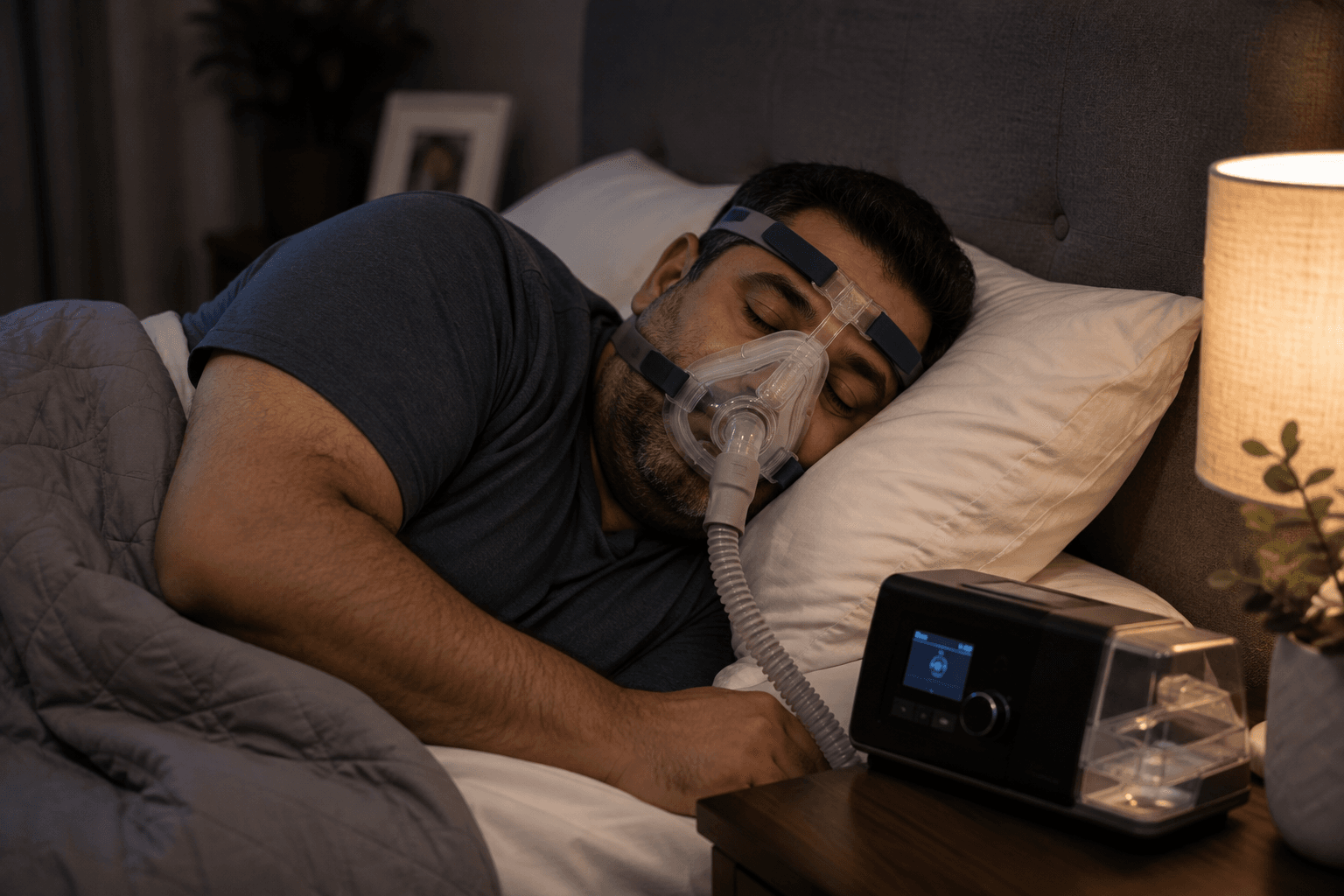
You wake up exhausted after a full night in bed. A partner nudges you awake because you stopped breathing for a moment. A headache greets you every morning before coffee. These experiences are easy to brush off as stress or aging, but they can also be signs of sleep apnea, a common condition in which breathing repeatedly pauses during sleep.
Sleep apnea is more than a snoring problem. Left unrecognized or untreated, it can affect how you feel, think, and function, and over time it may be linked to broader health concerns. It is also well understood and, for most people, very manageable once properly diagnosed.
What Is Sleep Apnea?
Sleep apnea is a sleep-related breathing disorder marked by repeated episodes in which airflow slows significantly or stops altogether. These pauses, which can last from a few seconds to a minute or longer, disrupt the normal sleep cycle and can happen dozens of times each hour without the person ever being fully aware.
There are three main types:
- Obstructive sleep apnea (OSA) is by far the most common. It occurs when the muscles in the throat relax too much during sleep, causing the airway to narrow or collapse and block airflow. The brain eventually signals the body to rouse slightly and reopen the airway, often with a gasp or snort, before the cycle repeats.
- Central sleep apnea is less common and involves the brain rather than a physical blockage. The brain temporarily fails to send the proper signals to the muscles that control breathing.
- Complex sleep apnea syndrome (sometimes called treatment-emergent central sleep apnea) is a combination of both types, sometimes identified when someone begins treatment for OSA.
This article focuses primarily on obstructive sleep apnea, since it accounts for the large majority of cases.
Recognizing the Symptoms
One of the trickier aspects of sleep apnea is that its most dramatic symptom, the actual pause in breathing, happens while you are asleep. Many people have no idea it is occurring, which is why it often takes a bed partner, roommate, or overnight sleep study to first flag the problem.
Still, there are symptoms that show up in waking life as well. Common signs to be aware of include:
- Loud, chronic snoring (though not everyone who snores has sleep apnea, and not everyone with sleep apnea snores)
- Gasping, choking, or snorting sounds during sleep, often reported by a partner
- Witnessed pauses in breathing while asleep
- Excessive daytime sleepiness, feeling drowsy even after what should have been a full night's sleep
- Morning headaches, which may result from reduced oxygen levels overnight
- Waking with a dry mouth or sore throat
- Difficulty concentrating or memory problems during the day
- Mood changes, including irritability or low mood
- Frequent nighttime urination
- Restless or unrefreshing sleep
Because many of these symptoms, such as fatigue, brain fog, and mood shifts, overlap with other conditions like depression, thyroid disorders, or plain sleep deprivation, sleep apnea is frequently missed or misattributed. If several of these signs resonate, that is worth bringing up with a clinician.
Who Is at Greater Risk?
Sleep apnea can affect people of any age, sex, or body type, but certain factors increase the likelihood. These risk factors are not meant to label anyone; they help you know when to pay closer attention.
- Body weight: Excess tissue around the neck and throat can narrow the airway. This is one of the most well-established modifiable risk factors for OSA.
- Neck circumference: A wider neck can be associated with a narrower airway, independent of overall body weight.
- Anatomy: A naturally narrow throat, enlarged tonsils or adenoids, a small jaw, or a large tongue can all contribute to airway obstruction during sleep.
- Age: The risk of OSA tends to increase with age, partly because muscle tone in the throat decreases over time.
- Sex: OSA is diagnosed more often in men, though the gap narrows after menopause, which suggests that hormonal factors play a role in women's relative protection earlier in life.
- Family history: A pattern of OSA in close relatives suggests a genetic component, possibly related to airway anatomy or how the brain regulates breathing during sleep.
- Alcohol and sedative use: These substances relax the throat muscles and can worsen or trigger apnea episodes.
- Smoking: Smoking is associated with inflammation and fluid retention in the upper airway.
- Nasal congestion: Chronic stuffiness, from allergies or structural issues, can make it harder to breathe through the nose and increase mouth breathing during sleep.
- Certain medical conditions: Including type 2 diabetes, high blood pressure, and hypothyroidism, which have observed associations with OSA, though the relationships are complex.
Why It Matters Beyond Tiredness
It is tempting to minimize sleep apnea as a nuisance, a snoring problem that disrupts a partner's rest. But the repeated drops in oxygen that occur during apnea episodes put real physiological stress on the body.
Each time breathing pauses, oxygen levels in the blood can dip and the body activates a brief stress response, releasing hormones like adrenaline. Do this dozens of times a night over months or years, and that chronic low-grade stress may have downstream effects. Research has found associations between untreated OSA and conditions including high blood pressure, cardiovascular disease, and metabolic issues, though these are linked conditions, not necessarily simple cause-and-effect relationships, and many people with OSA have other risk factors for those conditions as well.
On the more immediate side, the daytime sleepiness caused by sleep apnea carries real safety implications. Drowsy driving and impaired judgment at work are practical concerns that deserve serious attention.
Getting Diagnosed
If you suspect sleep apnea, or someone close to you has noticed warning signs, a conversation with a primary care provider is a good starting point. They may ask about your symptoms, review your medical history, and refer you to a sleep specialist or recommend a sleep study.
Sleep studies come in two main forms:
- In-lab polysomnography: An overnight study at a sleep center where sensors monitor your brain waves, oxygen levels, heart rate, breathing patterns, and body movements simultaneously. This is considered the most comprehensive diagnostic approach.
- Home sleep apnea testing: A simplified portable device worn at home that measures breathing, oxygen levels, and airflow. It is less comprehensive than an in-lab study but is appropriate for many adults with a high likelihood of moderate-to-severe OSA and no complicating conditions.
Your clinician can help determine which type of testing makes the most sense for your situation.
Treatment Options
The goal of treatment is to keep the airway open during sleep, which restores normal breathing, improves sleep quality, and reduces the physiological stress that repeated apnea episodes cause.
- CPAP therapy (continuous positive airway pressure) is the most widely used treatment for moderate-to-severe OSA. A machine delivers a gentle, steady stream of pressurized air through a mask worn during sleep, acting as a pneumatic splint to keep the airway open. It is highly effective when used consistently, though getting comfortable with the mask takes adjustment for many people.
- Oral appliance therapy: Custom-fitted mouthguards made by a dentist trained in sleep medicine can reposition the jaw and tongue to keep the airway open. These tend to be more comfortable than CPAP for some people and are often recommended for mild-to-moderate OSA.
- Lifestyle changes: For some people, weight loss, reducing alcohol use, quitting smoking, changing sleep position (sleeping on the side rather than the back), and managing nasal congestion can meaningfully reduce apnea severity.
- Surgery: Various surgical procedures can address structural contributors to airway obstruction, such as removing enlarged tonsils or correcting a deviated septum. These are typically considered when other approaches have not been effective or tolerated.
- Newer options: Nerve stimulation implants that activate the airway muscles during sleep are available for certain patients who cannot tolerate CPAP. A sleep specialist can discuss whether this or other emerging options are appropriate.
When to Reach Out to a Clinician
You do not need to wait until symptoms become severe. Consider talking to a healthcare provider if:
- Someone has told you that you stop breathing, gasp, or choke during sleep
- You regularly feel unrested despite spending adequate time in bed
- Daytime sleepiness is affecting your driving, work, or daily activities
- You wake with frequent headaches or a dry, sore throat
- You have risk factors for OSA and are experiencing any of the symptoms described above
Sleep apnea is common, well-studied, and treatable. If something about your sleep, or the feedback from someone who shares your space, is raising questions, those questions are worth exploring with a clinician. Better sleep is a foundation for almost everything else.
This article is intended for general informational purposes and does not substitute for personalized medical advice. If you have concerns about your sleep or breathing, please speak with a qualified healthcare provider.