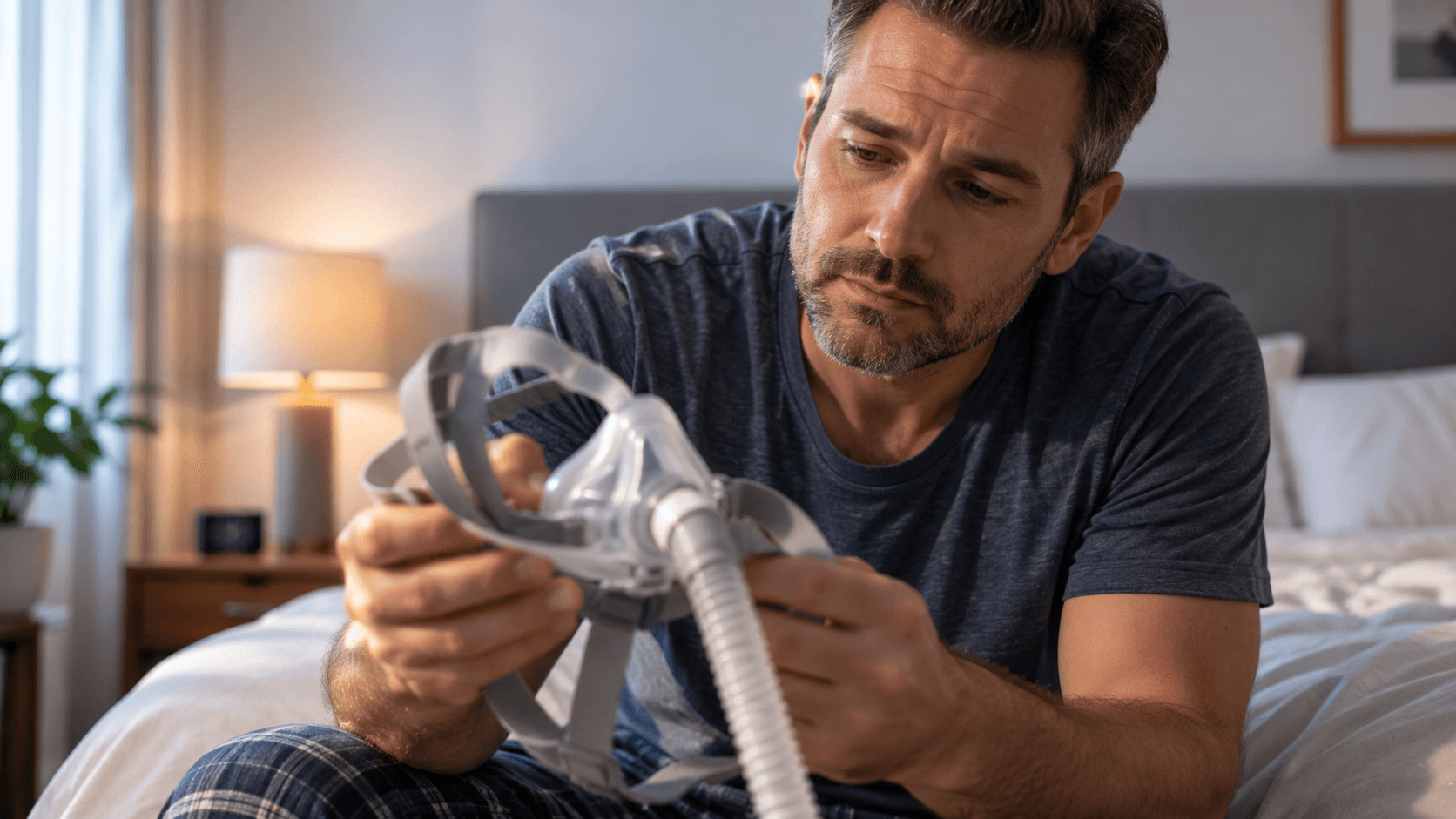
You wake up after a full night in bed feeling like you barely slept. Your partner nudges you in the middle of the night because your snoring woke them up, again. By mid-afternoon, you're fighting to keep your eyes open. It's easy to chalk all of this up to stress, aging, or a busy schedule. But together, these signs can point to sleep apnea, a common and highly treatable condition that many people live with for years without realizing it.
This article won't diagnose you (only a clinician can do that), but it can help you understand what sleep apnea is, why it matters, and what questions to bring to your next appointment.
What Is Sleep Apnea?
Sleep apnea is a condition in which your breathing repeatedly stops and starts during sleep. The most common form, obstructive sleep apnea (OSA), happens when the muscles in the back of the throat relax too much and temporarily block the airway. Each time that happens, your brain senses the drop in oxygen and briefly rouses you to reopen the airway, often so briefly that you don't remember it happening. This cycle can repeat many times per hour throughout the night.
A less common type, central sleep apnea, involves the brain failing to send the right signals to the muscles that control breathing. Some people have a combination of both, sometimes called complex sleep apnea.
Because the disruptions are so brief and frequent, many people with sleep apnea genuinely believe they're sleeping through the night, which is part of why it often goes undiagnosed for so long.
Symptoms Worth Taking Seriously
Sleep apnea can show up differently from person to person, and not everyone who snores has it. Still, there are patterns that researchers and clinicians consistently associate with the condition. Consider whether any of the following sound familiar:
- Loud or frequent snoring, sometimes with gasping, choking, or snorting sounds
- Witnessed pauses in breathing during sleep (a bed partner's observation can be especially valuable here)
- Waking up with a dry mouth or sore throat
- Morning headaches, which can result from drops in oxygen levels overnight
- Excessive daytime sleepiness, even after what felt like a full night of sleep
- Difficulty concentrating or remembering things
- Mood changes, including irritability or feelings of depression
- Frequent nighttime urination, which some research links to disrupted sleep cycles
It's worth noting that not everyone with sleep apnea snores loudly, and not everyone who snores has sleep apnea. Symptoms like fatigue and difficulty concentrating also overlap with many other conditions. That's exactly why a conversation with your doctor, rather than self-diagnosis, is the right next step.
Who Is Most at Risk?
Sleep apnea can affect people of all ages, body types, and backgrounds, but certain factors appear to raise the likelihood of developing it. These include:
- Excess weight, particularly fat deposits around the upper airway
- A larger neck circumference
- Being male, though risk in women increases after menopause
- Older age
- A narrowed airway, which can be hereditary or related to enlarged tonsils or adenoids
- Nasal congestion from allergies or anatomy
- Smoking and alcohol use, both of which can relax throat muscles or cause inflammation
- Family history of sleep apnea
Again, having risk factors doesn't mean you have sleep apnea, and lacking them doesn't mean you're in the clear. Your doctor can help you put your personal picture together.
Why It's Worth Treating
Sleep apnea is about more than poor sleep or annoying snoring. Because it repeatedly disrupts your breathing and oxygen levels overnight, it can affect your overall health over time. Research has found associations between untreated obstructive sleep apnea and elevated blood pressure, cardiovascular strain, blood sugar regulation difficulties, and increased daytime accident risk due to drowsiness. It can also affect mood, relationships, and quality of life in ways that are harder to measure but very real.
The encouraging news: sleep apnea is one of the more treatable sleep conditions. Once properly diagnosed, most people find effective options that can meaningfully improve how they feel and function.
How Is It Diagnosed?
Diagnosis typically involves a sleep study, which sounds more daunting than it usually is. There are two main types:
- In-lab polysomnography: You spend a night at a sleep center, where sensors monitor your brain activity, eye movements, heart rate, breathing patterns, blood oxygen levels, and more. It provides comprehensive data and is particularly useful for complex cases.
- Home sleep apnea testing: For straightforward cases, your doctor may send you home with a portable device that tracks key measurements like breathing effort and oxygen levels while you sleep in your own bed. It's less comprehensive than a lab study but is convenient and often sufficient for diagnosing obstructive sleep apnea.
Your doctor will determine which type of study makes sense based on your symptoms, health history, and what they find during your evaluation.
What Are the Treatment Options?
Treatment depends on the type and severity of sleep apnea, along with your overall health and preferences. Your doctor will guide you through what's appropriate for your situation, but here's a plain-language overview of the most common approaches:
- CPAP (Continuous Positive Airway Pressure): A machine that delivers a steady stream of air through a mask to keep the airway open during sleep. It's the most well-studied treatment for moderate to severe OSA and is highly effective, when people use it consistently. Comfort and mask fit are common challenges, but there are many mask styles and pressure settings available, so it often takes some adjustment to find the right fit.
- APAP and BiPAP: Variations of CPAP that automatically adjust pressure or deliver different pressures for inhaling and exhaling. Some people find these more comfortable.
- Oral appliances: Custom-fitted devices made by a dentist trained in sleep medicine that reposition the jaw or tongue to help keep the airway open. They tend to be better tolerated by people who struggle with CPAP, and are often used for mild to moderate OSA.
- Lifestyle changes: For some people, losing weight, reducing alcohol intake, changing sleep position (sleeping on your side instead of your back), or treating nasal congestion can reduce symptoms significantly. These approaches work best for milder cases or alongside other treatments.
- Surgery: Several surgical options exist that aim to remove or reposition tissue in the airway. Surgery is generally considered when other approaches haven't worked or aren't appropriate. Newer options, like an implantable nerve stimulator that keeps the airway open during sleep, have shown promise for certain patients.
Questions to Bring to Your Doctor
Walking into an appointment with prepared questions helps you get the most out of your time with your clinician. Here are some worth considering:
- Based on my symptoms and history, do you think I should be evaluated for sleep apnea?
- Would a home sleep study be appropriate for me, or would you recommend an in-lab study?
- What would my results need to show for treatment to be recommended?
- If I'm diagnosed, what treatment options are most realistic for my situation?
- Could any of my current medications or health conditions be contributing to my sleep problems?
- Are there lifestyle changes I should try first, or alongside treatment?
- How will we know if treatment is working?
If you share your bed with a partner, consider asking them to help document what they've noticed: when the snoring is loudest, whether they've seen you stop breathing, how often it wakes them. That information can be genuinely useful to your doctor.
A Note on Not Dismissing Your Symptoms
One of the most common reasons sleep apnea goes untreated is that people minimize their symptoms. Snoring feels embarrassing to bring up. Fatigue feels like a normal part of modern life. Waking up groggy seems like a personality trait rather than a medical signal.
If you regularly wake up tired despite adequate time in bed, or if someone has told you that your breathing sounds unusual during sleep, those are symptoms worth mentioning to your doctor rather than explaining away.
Sleep apnea is common, it's diagnosable, and it's treatable. The conversation with your doctor is the first step toward sleeping better and feeling better.
This article is for general informational purposes only and is not a substitute for professional medical advice, diagnosis, or treatment. Always consult your doctor or another qualified health provider with questions about your health or a medical condition.