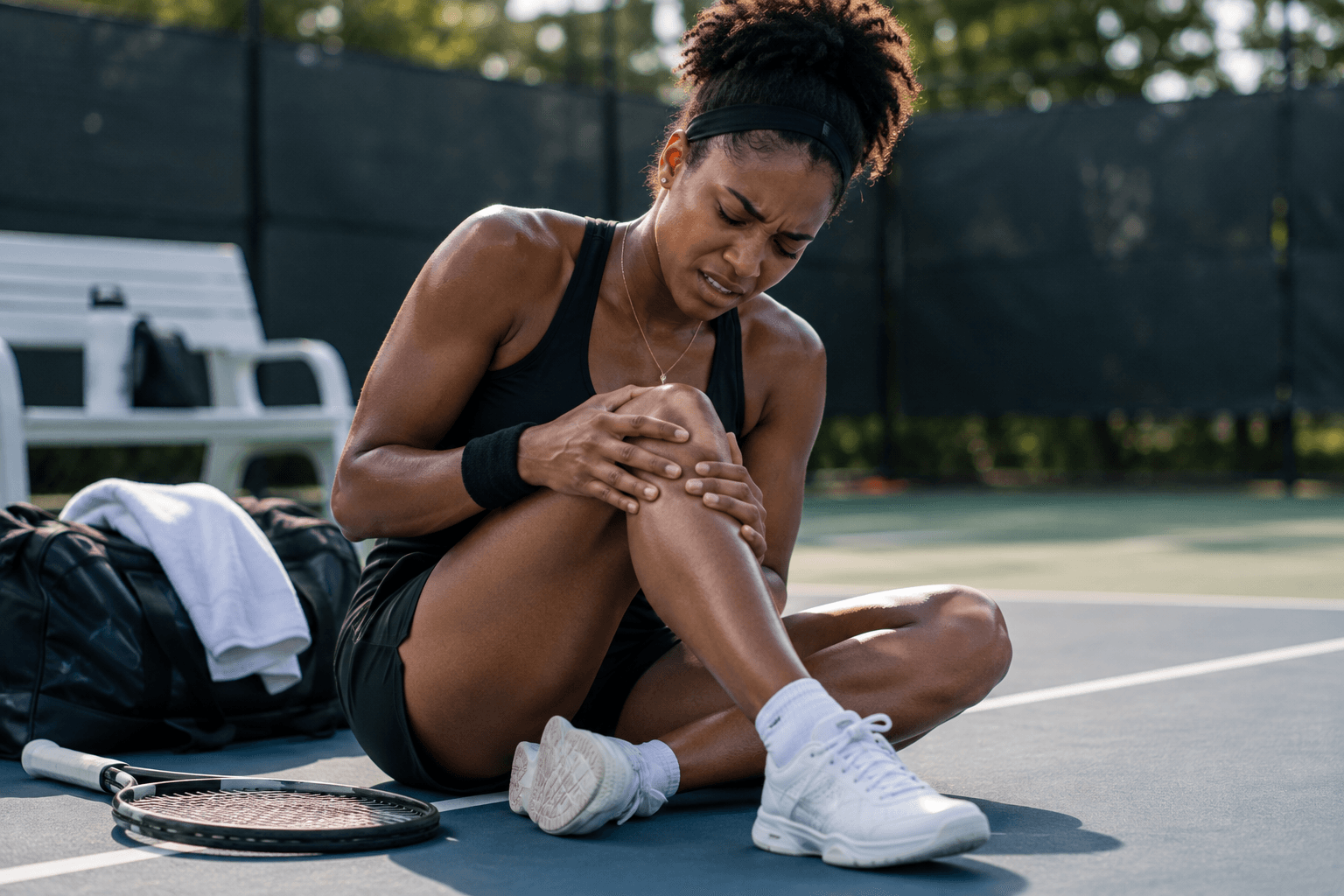
Sports injuries can happen during exercise, organized sports, recreational activities, or everyday movement. Some injuries happen suddenly, such as a twisted ankle or pulled muscle. Others build slowly over time from repeated stress, poor recovery, or training errors.
Pain after activity is not always a medical emergency, but it should not be ignored when it is severe, worsening, or affecting movement. Swelling, bruising, weakness, instability, numbness, deformity, or inability to bear weight can be signs that an injury needs medical care.
Understanding the difference between common soreness and a possible injury can help you make safer decisions about rest, home care, return to activity, and when to see a healthcare provider.
What Is a Sports Injury?
A sports injury is damage to muscles, tendons, ligaments, bones, joints, cartilage, or other tissues that happens during physical activity. Sports injuries can affect the ankles, knees, hips, back, shoulders, elbows, wrists, hands, neck, head, or feet.
Some sports injuries are acute, meaning they happen suddenly. Examples include ankle sprains, muscle strains, fractures, dislocations, ligament tears, and bruises. Others are overuse injuries, meaning they develop gradually when repeated stress exceeds the body’s ability to recover. Examples include tendinitis, stress fractures, shin splints, tennis elbow, runner’s knee, and some shoulder injuries.
The National Institute of Arthritis and Musculoskeletal and Skin Diseases notes that acute sports injuries include injuries such as sprains and dislocations, while chronic sports injuries can include tennis elbow and stress fractures.
Common Symptoms of Sports Injuries
Sports injury symptoms depend on the tissue involved and how severe the injury is. Some symptoms appear immediately. Others may develop hours or days later.
Common symptoms include pain, swelling, bruising, tenderness, stiffness, reduced range of motion, weakness, muscle spasms, instability, limping, difficulty using the injured area, and pain that worsens with activity.
Some injuries may also cause a popping sensation, snapping feeling, visible deformity, numbness, tingling, or inability to put weight on the injured limb. These symptoms are more concerning and should be evaluated promptly.
Sprains vs. Strains
Sprains and strains are two of the most common sports injuries, but they affect different tissues.
A sprain is an injury to a ligament. Ligaments are strong bands of tissue that connect bones to each other and help stabilize joints. An ankle sprain, for example, can happen when the ankle rolls, twists, or turns awkwardly.
A strain is an injury to a muscle or tendon. Tendons attach muscles to bones. Strains can happen suddenly, such as during sprinting or lifting, or gradually from repeated stress. Mayo Clinic describes a sprain as stretching or tearing of ligaments and a strain as injury to a muscle or the tissue that attaches muscle to bone.
Both sprains and strains can cause pain, swelling, limited movement, and difficulty using the injured area. Severe sprains or strains may involve partial or complete tears and may need medical evaluation, bracing, rehabilitation, or sometimes surgery.
Acute Injuries: When Pain Starts Suddenly
Acute injuries happen during a specific event. You may twist, fall, collide, land awkwardly, lift too much, cut suddenly, or feel something pull or pop.
Examples include ankle sprains, knee ligament injuries, shoulder dislocations, wrist fractures, hamstring strains, groin pulls, contusions, and tendon injuries. Symptoms often include sudden pain, swelling, bruising, weakness, or difficulty continuing the activity.
Stop the activity if pain is sharp, severe, or changes how you move. Continuing to play through an acute injury may make the damage worse, especially if the joint feels unstable or you cannot bear weight normally.
Overuse Injuries: When Pain Builds Over Time
Overuse injuries develop when repeated stress is greater than the body’s ability to repair and adapt. They are common in running, jumping, throwing, swimming, cycling, weight training, and sports that repeat the same movement many times.
Early signs may include soreness at the start of activity that improves as you warm up, pain after activity, mild swelling, or stiffness the next morning. As the injury worsens, pain may start earlier, last longer, or appear during everyday activities.
Overuse pain should not be ignored. Stress fractures, tendinopathy, cartilage irritation, and chronic joint problems may become harder to treat if activity continues without rest, load adjustment, or rehabilitation.
Common Causes and Risk Factors
Sports injuries can happen to anyone, but some factors increase risk. These include doing too much too soon, increasing intensity too quickly, poor technique, lack of conditioning, limited flexibility, muscle weakness, poor balance, inadequate recovery, hard playing surfaces, worn-out shoes, missing protective equipment, and previous injury.
NIAMS lists risk factors such as incorrect exercise technique, overtraining, increasing intensity too quickly, playing the same sport year-round, running or jumping on hard surfaces, wearing shoes without enough support, not using proper equipment, prior injury, poor flexibility, and some medications such as fluoroquinolone antibiotics that are linked with tendinitis and tendon rupture.
Age, sport type, training history, anatomy, sleep, nutrition, hydration, and medical conditions can also affect injury risk. A person returning after illness, pregnancy, surgery, or a long break from activity may need a gradual plan to rebuild strength and tolerance.
When Pain May Be Normal
Not all post-exercise pain means injury. Mild muscle soreness after a new or harder workout can be normal, especially 24 to 48 hours after activity. This is often called delayed-onset muscle soreness.
Normal soreness usually affects the muscles on both sides of the body, improves over a few days, and does not cause major swelling, bruising, instability, numbness, or loss of function.
Injury pain is more concerning when it is sharp, one-sided, worsening, linked to a pop or fall, located directly over a bone or joint, or strong enough to change how you walk, lift, throw, or move.
What to Do Right After a Minor Injury
For many minor injuries, early care focuses on protecting the area, reducing swelling, and avoiding movements that make symptoms worse. Rest, ice, compression, and elevation are commonly used early steps for mild sprains and strains.
Rest does not always mean doing nothing. It may mean avoiding the painful activity while continuing gentle movement that does not worsen symptoms. Ice may help with pain and swelling in the first day or two. Compression and elevation may help limit swelling.
Do not apply ice directly to skin, do not wrap compression so tightly that it causes numbness or color changes, and do not return to activity just because pain is temporarily reduced by medication or icing.
Home Tools That May Help
Home care tools can support recovery from mild injuries, but they should be used thoughtfully. Athletic tape, braces, compression wraps, supportive shoes, cold packs, and foam rollers may help in selected situations.
A brace or tape may provide short-term support, but it should not replace rehabilitation when strength, balance, mobility, or technique need improvement. Using support to keep playing through worsening pain can delay healing.
If pain is persistent, recurrent, or linked with weakness or instability, a healthcare provider or physical therapist can help identify whether the issue is a sprain, strain, tendinopathy, stress fracture, nerve problem, or another condition.
Common Mistake: Playing Through Sharp Pain
Playing through discomfort is common in sports, but sharp pain is different from normal effort. Sharp, sudden, or worsening pain can be a sign that tissue is being injured.
Continuing activity when you are limping, compensating, or unable to move normally can shift stress to other joints and muscles. This may turn one injury into several problems.
Stop and reassess if pain changes your form, makes you avoid weight bearing, causes instability, or gets worse as activity continues.
Common Mistake: Returning Too Soon
Another common mistake is returning to sport as soon as pain improves. Pain reduction does not always mean the tissue has fully healed or that strength, balance, and control have returned.
Returning too soon may increase the risk of reinjury, especially after ankle sprains, knee injuries, hamstring strains, shoulder injuries, and stress fractures.
A safer return usually requires pain-free movement, near-normal range of motion, adequate strength, balance, sport-specific control, and the ability to practice at increasing intensity without symptoms returning.
Common Mistake: Ignoring Repeated Injuries
If the same injury keeps happening, the issue may not be random. Repeated ankle sprains, recurring hamstring pulls, ongoing knee pain, shoulder pain with throwing, or shin pain with running may point to an underlying problem.
Possible contributors include weakness, poor movement mechanics, training errors, inadequate recovery, footwear issues, joint instability, limited mobility, or returning before full rehabilitation.
Recurring injuries should be evaluated, especially if they limit activity, require repeated rest, or keep coming back when training increases.
When to See a Healthcare Provider
See a healthcare provider if pain is severe, swelling or bruising is significant, symptoms do not improve after a few days, or you cannot use the injured area normally.
NIAMS recommends seeing a healthcare provider for severe pain, swelling, or bruising; pain and swelling that do not go away after a few days; inability to tolerate any weight on the area; or an obvious deformity.
Mayo Clinic advises medical care for sprain-like injuries if you cannot move or bear weight on the affected joint, have pain directly over the bones of an injured joint, or have numbness in any part of the injured area.
When to Seek Urgent Care
Seek urgent medical care for an obvious deformity, suspected broken bone, joint dislocation, severe swelling, severe pain, inability to bear weight, numbness, tingling, loss of circulation, rapidly worsening symptoms, or a wound with heavy bleeding.
You should also seek urgent care after a head injury with confusion, vomiting, worsening headache, loss of consciousness, seizure, unequal pupils, severe dizziness, or behavior changes.
Call emergency services for chest pain, trouble breathing, fainting during exercise, heat stroke symptoms, severe allergic reaction, spinal injury symptoms, or any injury with loss of consciousness or major trauma.
How Sports Injuries Are Diagnosed
A healthcare provider may ask how the injury happened, where the pain is, what movements make it worse, whether there was a pop or fall, and whether you can bear weight or use the injured area.
The exam may include checking swelling, bruising, range of motion, strength, stability, sensation, circulation, and tenderness over bones or soft tissues. Imaging such as X-rays, ultrasound, CT, or MRI may be used if a fracture, tear, dislocation, tendon injury, or stress injury is suspected.
Diagnosis matters because treatment for a mild strain is different from treatment for a fracture, tendon rupture, ligament tear, stress fracture, or concussion.
How Sports Injuries Are Treated
Treatment depends on the injury type and severity. Mild injuries may improve with activity modification, ice or heat when appropriate, compression, elevation, gentle mobility, and gradual return to activity.
More serious injuries may require immobilization with a sling, brace, splint, or cast. NIAMS notes that serious injuries may require immobilization to limit movement, reduce pain and swelling, and help healing begin. Some cases may require physical therapy, medication, injections, or surgery.
Rehabilitation is often important before returning to sport. A rehab plan may rebuild range of motion, strength, balance, coordination, power, and sport-specific movement patterns.
How to Reduce Future Injury Risk
Injury prevention starts with gradual training, good technique, recovery, and equipment that fits the activity. Warmups, strength training, balance work, mobility exercises, supportive footwear, protective equipment, and rest days can all help.
Avoid increasing training volume, intensity, and frequency all at once. If you are returning after time off, start below your previous level and build slowly.
Previous injury is a major risk factor, so full rehabilitation matters. If an old injury still causes pain, weakness, stiffness, or instability, address it before pushing intensity higher.
The Bottom Line
Sports injuries can happen suddenly or develop gradually from overuse. Common symptoms include pain, swelling, bruising, stiffness, weakness, instability, limited movement, and difficulty using the injured area.
Minor soreness may improve with rest and careful home care. But severe pain, major swelling, bruising, deformity, numbness, inability to bear weight, or pain that does not improve after a few days should be checked.
The biggest mistakes are playing through sharp pain, returning too soon, ignoring repeated injuries, and using braces or tape instead of correcting the underlying problem.
If pain changes how you move, keeps coming back, or limits normal activity, ask a healthcare provider or physical therapist what evaluation and recovery plan is appropriate.