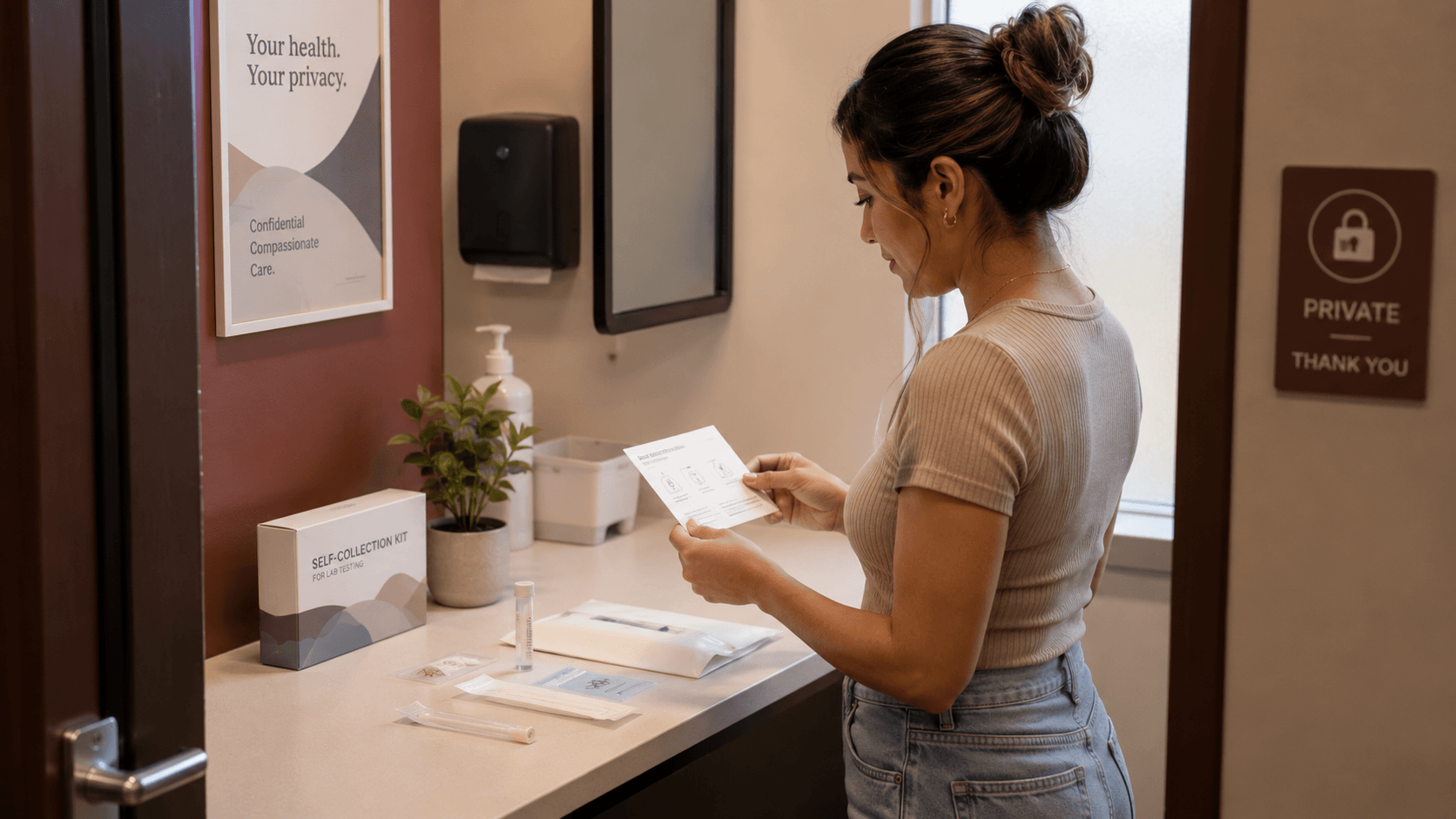
Getting tested for sexually transmitted infections (STIs) is one of the most straightforward things you can do for your long-term health, and for the health of your partners. Still, many people feel unsure about when to test, which tests to ask for, and how to read the results. That is understandable. STI screening involves real science, and knowing a little about how the tests work can reduce anxiety and help you act on your results with confidence.
This guide covers the key ideas: the window period, how different tests work, what affects their accuracy, and what follow-up looks like after a positive or negative result. Your clinician or a sexual health clinic is the best source of guidance for your specific situation.
Why Timing Matters: The Window Period
One of the most important and least understood concepts in STI testing is the window period. It is the time between a possible exposure and when a test can reliably detect an infection.
Most STI tests don't look for the infection itself. They look for your body's response to it, usually antibodies, which your immune system produces once it detects a foreign invader. Antibodies take time to build up to levels a test can measure. Some tests detect the pathogen's own genetic material or proteins, but even those require the infection to have replicated enough to show up.
If you test too soon after an exposure, your result can come back negative even if you are infected. This is called a false negative. It reflects biology rather than a flaw in the test. Testing at the right time matters as much as testing at all.
Window periods vary by infection and by test type, so it's worth asking your provider which window period applies to your situation.
Common STIs and Their Screening Approaches
HIV
HIV testing has changed a lot. Most clinics now use fourth-generation combination tests, which detect both HIV antibodies and a protein called p24 antigen. Because p24 antigen shows up in the blood before antibodies do, these tests have a shorter window period than older antibody-only tests, generally around 18 to 45 days after exposure, though this varies.
Rapid HIV tests (the kind used in some community settings or with at-home kits) are often antibody-only and may have a longer window period. If you use an at-home test or receive a rapid test shortly after a potential exposure, ask whether a follow-up lab test might be advisable.
A nucleic acid test (NAT) detects the virus's genetic material directly and can identify HIV earlier than combination tests, but it is more expensive and not used for routine screening. It may be ordered in certain clinical situations.
Chlamydia and Gonorrhea
These two bacterial infections are among the most commonly diagnosed STIs in the United States, and they're often screened together. Both are detected using a nucleic acid amplification test (NAAT), which looks for the DNA or RNA of the bacteria. NAATs are highly sensitive and can be performed on urine samples, vaginal swabs (which can often be self-collected), or swabs from the throat or rectum depending on sexual practices.
Because chlamydia and gonorrhea can be present without symptoms, regular screening is recommended for sexually active people under 25 and for older adults with risk factors, whether or not anything feels wrong. Untreated, these infections can lead to serious complications including pelvic inflammatory disease and, in some cases, infertility.
The window period for NAAT-based testing for chlamydia and gonorrhea is relatively short, typically around one to two weeks after exposure, which makes early testing more feasible than with antibody-based tests.
Syphilis
Syphilis is a bacterial infection caused by Treponema pallidum, and it's detected through blood tests. Most routine screening uses a combination of two types of tests: a treponemal test (which detects antibodies specific to the bacterium) and a non-treponemal test (which measures indirect markers of infection and is also useful for monitoring treatment response).
Syphilis has a window period of roughly three to six weeks from exposure to detectable antibodies, though it can be longer. Because syphilis moves through stages (primary, secondary, latent, and tertiary), and because symptoms can be subtle or absent, testing matters for anyone who may have been exposed, even without obvious signs.
Herpes (HSV-1 and HSV-2)
Herpes testing is nuanced and worth discussing directly with a clinician. Blood-based antibody tests for herpes detect whether your immune system has responded to the virus, but they have limitations: they can't tell you when or where you acquired the infection, and some tests have relatively high rates of false positives, particularly for HSV-1 (oral herpes), which is extremely common.
If you have an active sore or blister, a swab test of the lesion is generally more accurate and informative than a blood test. Many guidelines don't recommend routine blood-based herpes screening for people without symptoms, but if you have concerns, a conversation with your provider can help you decide what makes sense for you.
Hepatitis B and C
Both hepatitis B and C can be transmitted sexually, though hepatitis C is more commonly spread through blood-to-blood contact. Blood tests for both infections are standard and reliable. Hepatitis B screening looks for surface antigens and antibodies. Hepatitis C screening typically starts with an antibody test, followed by a confirmatory RNA test if the antibody test is reactive.
Effective treatments exist for both infections. Hepatitis B also has a highly effective vaccine, which is a good reason to confirm your vaccination status with your provider if you're unsure.
What Affects Test Accuracy?
Beyond the window period, a few other factors influence whether a test gives you a reliable result:
- The type of sample collected: For infections like gonorrhea, a throat or rectal swab may be needed depending on sexual practices. A urine test alone may miss infections at other sites.
- The type of test used: Not all tests have the same sensitivity and specificity. Ask your provider about the test being used and what its limitations are.
- Lab quality and handling: Proper sample collection and processing matter. Tests performed at accredited labs generally offer more reliable results.
- Your own immune response: People who are immunocompromised may take longer to develop detectable antibodies, which can affect window period estimates.
How Often Should You Get Screened?
Screening frequency depends on your circumstances: your sexual practices, number of partners, whether you use condoms, and other factors. General guidance from major public health organizations includes annual HIV and STI screening for many sexually active adults, and more frequent screening (every three to six months) for people at higher risk, such as those with multiple partners or who don't consistently use barrier methods.
Pregnant people are typically screened for several STIs as part of routine prenatal care, since some infections can affect fetal health.
If you've had a specific exposure you're worried about, don't wait for your next routine checkup. Contact a clinician or sexual health clinic promptly. Some situations may also call for post-exposure prophylaxis (PEP) for HIV, which has to be started within a short window after exposure to work.
What to Do After Your Results
If your result is negative: A negative result is reassuring, but keep the window period in mind. If you tested very soon after an exposure, your provider may recommend retesting after the window period has passed. Continuing to practice safer sex and keeping to a regular screening schedule still matters.
If your result is positive: A positive result can feel overwhelming, but most STIs are either curable with appropriate treatment or manageable with medication. Reaching out to your healthcare provider promptly lets you start treatment, get counseling about what the diagnosis means, and discuss partner notification, which is the process of letting recent sexual partners know they may have been exposed so they can get tested too.
Partner notification can feel uncomfortable, but it's an important part of reducing transmission. Many health departments offer confidential partner notification assistance if you'd rather not make contact yourself.
Remember: A positive STI result is a medical finding, not a moral judgment. Getting tested and following up on results is an act of responsibility toward yourself and your community.
Making Screening Part of Your Routine
Sexual health is a normal part of overall health, and STI screening should feel as routine as a blood pressure check or a cholesterol panel. Many clinics, community health centers, and telehealth services offer confidential, affordable, or free testing options. If cost or access is a barrier, organizations like local health departments and Planned Parenthood affiliates often have resources available.
The most important step is to start the conversation, whether with a clinician, a nurse, or a sexual health counselor who can help you figure out what tests make sense for you, when to get them, and how to read what you learn.