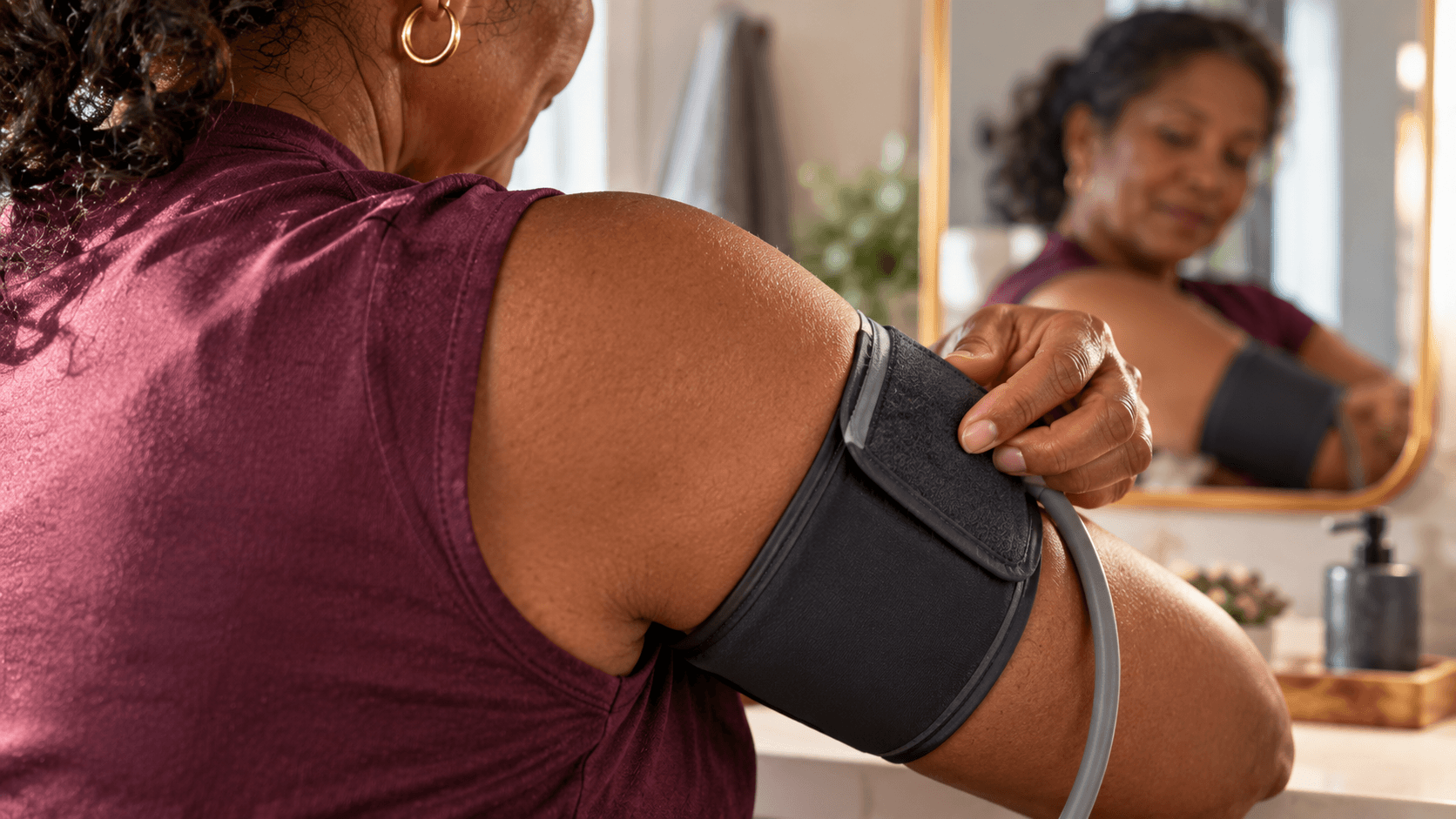
Menopause and perimenopause can bring hot flashes, night sweats, sleep disruption, mood changes, menstrual changes, and shifts in cardiovascular risk. Home tools such as thermometers and blood pressure monitors may help some people track patterns, but they do not diagnose menopause by themselves or replace a clinician’s evaluation.
A thermometer can help distinguish a hot flash from a true fever when illness is possible. A blood pressure monitor can help track a key heart-health marker, especially if blood pressure is elevated, medication is changing, or hormone therapy is being considered. Both tools are most useful when readings are accurate, consistent, and connected to symptoms.
This guide explains what to know before buying thermometers and blood pressure monitors for menopause, what readings can and cannot reveal, and when to call a clinician.
Start With What You Are Trying to Track
The menopause transition usually starts with changes in menstrual cycle patterns and may include hot flashes and other symptoms. The National Institute on Aging explains that a hot flash is a sudden feeling of heat, often in the upper body and face, and that hot flashes are likely related to changing hormone levels during the menopausal transition.
Home tools can help answer practical questions: Is this a hot flash or a fever? Are blood pressure readings changing? Do symptoms cluster after poor sleep, alcohol, stress, spicy food, heat, or missed medication? They cannot answer every medical question.
If symptoms are new, severe, unusual, or paired with chest pain, fainting, heavy bleeding, fever, or shortness of breath, use the readings as supporting information—not as a reason to delay care.
Tool 1: Thermometers
Thermometers measure body temperature. During menopause, they may be helpful because hot flashes and night sweats can feel like fever, but they are not the same thing.
- A hot flash is a sudden heat sensation, often with sweating and flushing.
- A fever is an elevated body temperature that may reflect infection, inflammation, medication effects, or another medical issue.
- A thermometer can help you avoid assuming every heat episode is menopause-related.
- Temperature readings should be interpreted with symptoms such as chills, cough, urinary symptoms, pelvic pain, rash, or severe fatigue.
The National Institute on Aging notes that night sweats can disrupt sleep and suggests practical cooling strategies such as lowering bedroom temperature and drinking small amounts of cold water before bed. It also advises talking with a doctor if hot flashes are affecting daily activities.
Thermometer Types to Compare
Different thermometers have different strengths and limitations. Choose one you can use consistently and correctly.
- Digital oral thermometer: commonly used, inexpensive, and easy to store.
- Temporal artery or forehead thermometer: convenient but technique-sensitive.
- Ear thermometer: fast, but readings can be affected by placement and ear canal factors.
- Non-contact infrared thermometer: useful when avoiding contact, but distance, environment, and technique matter.
FDA explains that non-contact infrared thermometers can be affected by how they are used, including distance from the person, environmental conditions, and following the manufacturer’s instructions.
Thermometer Feature Checklist
Before buying a thermometer, compare ease of use and reliability features.
- Clear display with large numbers
- Fast reading time
- Memory recall if tracking symptoms
- Backlight for nighttime use
- Replaceable or rechargeable battery
- Easy cleaning instructions
- Clear instructions for oral, forehead, ear, or non-contact use
- Protective case for storage
If you often check temperature at night because of night sweats, a backlit display and quiet operation may matter more than app syncing.
How to Use Temperature Readings During Menopause
Temperature tracking is most useful when paired with symptoms and timing.
- Record temperature when you feel unusually hot, chilled, or ill.
- Note whether the episode came with sweating, flushing, cough, sore throat, urinary symptoms, pelvic pain, rash, or body aches.
- Use the same thermometer and same measurement site when possible.
- Do not compare oral readings directly with forehead or ear readings without understanding the difference.
If repeated readings show fever, or if heat episodes come with signs of infection or severe illness, contact a clinician rather than assuming menopause is the cause.
What Thermometers Can and Cannot Reveal
A thermometer can help identify whether body temperature is elevated at the time of measurement. It cannot measure estrogen levels, diagnose menopause, explain night sweats, or rule out infection if technique is poor or symptoms are concerning.
- Can help distinguish hot-feeling episodes from measured fever.
- Can help track illness during perimenopause or menopause.
- Cannot diagnose hot flashes.
- Cannot explain unexplained weight loss, persistent night sweats, or repeated fevers.
Persistent fever, drenching night sweats unrelated to typical hot flashes, unexplained weight loss, or severe fatigue should be discussed with a clinician.
Tool 2: Blood Pressure Monitors
Blood pressure monitoring can be useful during midlife because blood pressure and cardiovascular risk often become more important health topics around and after menopause. A home monitor may be especially helpful if you have high blood pressure, borderline readings, headaches, dizziness, medication changes, family history of heart disease, or are discussing hormone therapy.
The American Heart Association recommends an automatic, cuff-style upper-arm monitor for home blood pressure monitoring and advises discussing home monitoring with a healthcare professional.
- Tracks systolic and diastolic blood pressure.
- Often displays pulse rate.
- Can help identify patterns outside the clinic.
- Does not diagnose the cause of symptoms by itself.
Blood Pressure Monitor Feature Checklist
Choose a monitor that supports accurate technique rather than the most complicated app features.
- Automatic upper-arm cuff model
- Validated device if possible
- Correct cuff size for your arm circumference
- Large display showing systolic, diastolic, and pulse
- Memory storage or easy export
- Irregular heartbeat symbol with clear limitations
- Battery indicator
- Simple cuff placement instructions
The American Heart Association notes that cuff size matters and that the cuff should be placed on bare skin with the arm supported at heart level.
How to Measure Blood Pressure More Accurately
Technique can change the number. Create a calm routine instead of checking repeatedly during anxiety or a hot flash.
- Avoid caffeine, exercise, and smoking for about 30 minutes before measuring.
- Empty your bladder first.
- Sit with your back supported and feet flat on the floor.
- Place the cuff on bare skin, with the arm supported at heart level.
- Rest quietly before the reading and avoid talking during measurement.
- Record date, time, systolic, diastolic, pulse, symptoms, and medication timing.
AHA home measurement instructions emphasize using a validated device with the correct cuff size and resting the arm on a flat surface at heart level.
What Blood Pressure Readings Can and Cannot Reveal
Home blood pressure readings can show whether blood pressure is repeatedly high, low, or changing over time. They can also help your clinician understand whether symptoms are linked with blood pressure or pulse changes.
- Can reveal repeated high readings outside the clinic.
- Can show possible low blood pressure during dizziness.
- Can help monitor medication changes.
- Cannot diagnose heart attack, stroke, menopause, anxiety, or hormone imbalance.
- Cannot replace clinical evaluation when symptoms are severe.
Do not stop blood pressure medication because readings look better. Improved readings may mean the plan is working.
Menopause, Blood Pressure, and Heart Risk
Menopause does not automatically mean a person will develop high blood pressure, but midlife is a time when blood pressure, cholesterol, glucose, sleep, weight, stress, and family history often deserve closer attention.
ACOG explains that hormone therapy is the most effective treatment for hot flashes and night sweats, but it may carry risks for some people; ACOG recommends FDA-approved hormone therapy over compounded hormone therapy.
If you are considering hormone therapy and you have high blood pressure, migraine with aura, blood clot history, stroke history, heart disease, breast cancer history, liver disease, or unusual bleeding, ask your clinician how these factors affect your options.
Hot Flashes vs. Blood Pressure Spikes
Hot flashes can feel intense. They may come with heat, flushing, sweating, anxiety, or a racing sensation. That does not always mean blood pressure is dangerously high.
- If safe, wait until the hot flash passes before checking blood pressure.
- Record whether the reading was taken during symptoms or after resting.
- Do not repeatedly recheck until the number looks perfect.
- Seek urgent care for chest pain, severe shortness of breath, fainting, stroke symptoms, or severe headache with neurologic symptoms.
A symptom log may be more useful than checking blood pressure during every hot flash.
Night Sweats: When a Thermometer Helps
Night sweats are common during the menopause transition, but not every night sweat should be assumed to be hormonal. A thermometer can help if you wake sweaty and wonder whether you have a fever.
- Check temperature if night sweats are new, severe, or paired with chills or illness symptoms.
- Record whether bedding is drenched or mildly damp.
- Note alcohol, spicy foods, room temperature, stress, medications, and sleep disruption.
- Call a clinician for persistent fever, unexplained weight loss, cough, swollen glands, or severe fatigue.
NIA notes that night sweats can disrupt sleep and recommends talking with a doctor if hot flashes are affecting daily activities.
Buying Checklist: Thermometers
Before buying a thermometer, compare how you will actually use it.
- Measurement type: oral, forehead, ear, or non-contact
- Ease of use during nighttime symptoms
- Backlit display
- Memory storage
- Cleaning requirements
- Battery type
- Instructions for accurate placement and timing
- Return policy if readings are inconsistent
For menopause-related symptom tracking, a simple accurate thermometer is usually enough. A thermometer does not need to be connected to an app unless that makes your log easier.
Buying Checklist: Blood Pressure Monitors
Before buying a blood pressure monitor, prioritize fit and validation.
- Automatic upper-arm cuff style
- Correct cuff size for your measured arm circumference
- Validated device if available
- Readable display
- Memory for at least several readings
- Multiple user profiles if shared
- Simple setup without unnecessary alerts
- Ability to bring or export readings to your clinician
The AHA reports that upper-arm cuff devices are preferred over wrist devices, and notes that many home monitors may not be validated or may not fit all arm sizes.
Buying Checklist: Apps and Connected Devices
Connected thermometers and blood pressure monitors can be convenient, but privacy and usability matter.
- Can you use the device without the app?
- Can readings be exported for visits?
- Can you delete data?
- Does the app collect location or share health data?
- Can alerts be turned off if they increase anxiety?
- Does the app separate users correctly?
Menopause data, temperature logs, blood pressure readings, medication notes, and cycle history can be sensitive. Read privacy settings before syncing.
What to Track During Menopause
A short log can help your clinician see patterns without overwhelming you.
- Symptoms: hot flashes, night sweats, sleep, mood, headaches, palpitations, dizziness, vaginal symptoms, and bleeding changes
- Temperature: measured fever, chills, illness symptoms, and timing
- Blood pressure: systolic, diastolic, pulse, date, time, and whether you were resting
- Triggers: alcohol, caffeine, spicy foods, heat, stress, missed sleep, exercise, or medications
- Treatments: hormone therapy, nonhormonal medicines, supplements, lifestyle changes, and side effects
Use the log to prepare for follow-up questions, not to track every sensation all day.
Common Mistake: Treating Hot Flashes as Fever
Hot flashes can feel like fever, but they are usually brief heat episodes related to menopausal changes.
Use a thermometer if illness is possible.
Call a clinician for persistent fever, chills, infection symptoms, or drenching night sweats that feel different from typical hot flashes.
Common Mistake: Checking Blood Pressure During Every Symptom
Checking during every hot flash, palpitation, or anxious moment can create confusing readings and more stress.
Follow a calm routine and track symptoms separately.
Ask your clinician when readings should be taken and what numbers should prompt a call.
Common Mistake: Buying the Wrong Cuff Size
A cuff that is too small or too large can give misleading readings.
Measure your arm before buying.
Bring the monitor to a visit so cuff fit and technique can be checked.
Common Mistake: Assuming Menopause Explains Every Symptom
Menopause can cause many symptoms, but it should not be used to explain everything automatically.
New chest pain, severe headache, fainting, neurologic symptoms, heavy bleeding, persistent fever, or unexplained weight loss needs medical attention.
Use home tools to support follow-up, not to dismiss warning signs.
Common Mistake: Using Readings to Change Medication Alone
Do not start, stop, or change blood pressure medicine, hormone therapy, supplements, or nonhormonal menopause medicines based only on home readings.
Bring readings to your clinician.
Ask how symptoms, blood pressure, risk factors, and treatment options fit together.
When to Talk to a Clinician
Talk to a clinician if hot flashes or night sweats disrupt sleep or daily life, blood pressure readings are repeatedly high or low, symptoms are paired with dizziness or palpitations, or you are considering hormone therapy or nonhormonal medication.
You should also seek care for bleeding after menopause, very heavy bleeding during perimenopause, new pelvic pain, persistent fever, unexplained weight loss, severe fatigue, new headaches, chest discomfort, shortness of breath, or fainting.
A clinician may review menopause symptoms, blood pressure readings, cardiovascular risk, thyroid symptoms, medication side effects, anemia, infection signs, sleep issues, hormone therapy options, nonhormonal treatments, and whether additional testing is needed.
When to Seek Urgent or Emergency Care
Seek urgent or emergency care for chest pain or pressure, severe shortness of breath, stroke symptoms, fainting, severe weakness, confusion, sudden severe headache, blood pressure readings paired with severe symptoms, heavy bleeding with dizziness, fever with severe illness, or symptoms that feel life-threatening.
Seek prompt care for bleeding after menopause, severe pelvic pain, persistent fever, or night sweats with unexplained weight loss.
Do not wait for a home thermometer or blood pressure monitor to explain symptoms that could be urgent.
The Bottom Line
Thermometers and blood pressure monitors can support menopause symptom tracking when used for the right purpose. A thermometer can help distinguish hot-feeling episodes from measured fever when illness is possible. A blood pressure monitor can help track a key cardiovascular marker, especially when readings are elevated, symptoms are changing, medications are being adjusted, or hormone therapy is being discussed.
For thermometers, compare measurement type, clear display, nighttime usability, cleaning, battery, and instructions. For blood pressure monitors, prioritize an automatic upper-arm cuff, correct cuff size, validated device when possible, readable display, memory, and easy sharing with your clinician.
The most common mistakes are treating hot flashes as fever, checking blood pressure during every symptom, buying the wrong cuff size, assuming menopause explains every symptom, and changing medication based on readings alone.
Use readings as part of a broader menopause and heart-health conversation. Bring your symptom log, temperature notes, blood pressure readings, medication list, and questions to your next visit.
Medical disclaimer: This content is for informational purposes only and is not a substitute for professional medical advice, menopause evaluation, blood pressure diagnosis or treatment, fever evaluation, hormone therapy counseling, medication management, cardiovascular care, gynecologic care, or emergency care. Always consult your physician, ob-gyn, primary care clinician, cardiologist, pharmacist, nurse, or qualified health provider before making decisions based on thermometer or blood pressure readings. If you have chest pain, severe shortness of breath, stroke symptoms, fainting, confusion, sudden severe headache, heavy bleeding with dizziness, persistent fever, severe pelvic pain, or another emergency, seek urgent medical care right away.