For many people, a COVID-19 infection follows a familiar arc: a week or two of illness, then a gradual return to normal. But for a meaningful share of survivors, breathing never quite goes back to the way it felt before. Climbing a flight of stairs feels harder than it should. A dry cough lingers for weeks. Taking a deep breath occasionally feels incomplete, like the lungs never fully expand.
These experiences are real, they are recognized by clinicians and researchers, and — importantly — they are often treatable or manageable. Understanding what might be happening in your lungs and airways after COVID-19 is a useful first step toward getting the right support.
Why COVID-19 Affects the Respiratory System
The virus that causes COVID-19, SARS-CoV-2, primarily enters the body through the nose, mouth, and throat. It uses a protein called ACE2 as a doorway into cells, and ACE2 receptors are especially plentiful in the lungs. This makes the respiratory system a primary target.
In mild cases, the infection may stay largely in the upper airways — the nose, throat, and windpipe — and the lungs escape significant damage. In more serious cases, the virus reaches the lower airways and the tiny air sacs called alveoli, where oxygen and carbon dioxide are exchanged. When those sacs become inflamed or fill with fluid, the lungs struggle to do their job efficiently.
Even after the infection is cleared, the aftermath of that inflammation can take time to resolve. In some people, the healing process is straightforward. In others, it is slower or more complicated — and in a smaller group, lasting changes to lung tissue may occur.
What Breathing Symptoms Might Linger — and Why
Post-COVID breathing difficulties are not all the same, and they do not all have the same cause. Researchers have identified several distinct patterns:
- Shortness of breath with exertion. This is one of the most commonly reported lingering symptoms. It can occur even in people who had mild acute illness. One proposed explanation involves a mismatch between what the nervous system expects from breathing and what the body actually delivers — a kind of recalibration problem that can persist after recovery.
- Persistent cough. A dry, tickling cough that outlasts the acute infection is common. In some cases this reflects ongoing airway irritation or hypersensitivity; in others it may be connected to post-nasal drip or acid reflux that COVID-19 can exacerbate.
- Chest tightness or heaviness. Some people describe a feeling of pressure or constriction in the chest, even when standard breathing tests come back normal. Researchers believe this may sometimes involve the muscles of the chest wall or diaphragm, which can become deconditioned or strained during illness.
- Breathing pattern dysfunction. Some survivors develop irregular or inefficient breathing patterns — breathing too shallowly, or over-relying on the chest rather than the diaphragm. This can worsen breathlessness without necessarily reflecting damage to the lungs themselves.
- Reduced exercise tolerance. Fatigue and breathlessness together can make physical activity feel far more demanding than before. This is sometimes partly explained by cardiovascular changes, deconditioning from bed rest, or the broader syndrome known as long COVID.
When Lung Damage Is Involved
In people who experienced severe COVID-19 — particularly those who required hospitalization or supplemental oxygen — imaging studies have sometimes shown changes to lung tissue, including areas of scarring or inflammation that appear on CT scans. The clinical term for widespread scarring of lung tissue is pulmonary fibrosis, though true lasting fibrosis after COVID is considered less common than initially feared for most survivors.
Research following patients after severe illness has found that many show measurable improvement in lung function over months of recovery, though the timeline varies widely. For those with more significant damage, some degree of reduced lung capacity may persist longer — and in a smaller number of cases, it may be permanent. This is why follow-up imaging and lung function testing is often recommended for people who had severe infections.
It is worth noting that researchers are still actively studying who is most likely to experience lasting lung changes and why. Age, severity of acute illness, pre-existing lung conditions, and other individual factors all appear to play a role — but the picture is still coming into focus.
The Role of Long COVID
Breathing problems are one of the most frequently reported features of long COVID, the umbrella term used to describe symptoms that persist beyond the expected recovery window — typically defined as symptoms lasting more than four weeks after initial infection, though definitions vary. Long COVID can affect people regardless of how sick they were initially; some people with very mild acute illness still develop prolonged symptoms.
The mechanisms behind long COVID-related breathlessness are an active area of research. Current hypotheses include ongoing low-level inflammation, immune system dysregulation, disruption of the autonomic nervous system (which controls automatic functions like breathing and heart rate), and microscopic changes in blood vessels. No single explanation accounts for all cases, and it is likely that different people experience long COVID through different biological pathways.
If your breathing symptoms are limiting daily activities or feel different from before your COVID infection, that is worth discussing with a healthcare provider — even if your initial recovery seemed complete.
When to Seek Care
Some degree of gradual improvement in breathing is expected over weeks to months for most people. But certain symptoms warrant prompt medical attention:
- Sudden or rapidly worsening shortness of breath
- Chest pain, especially if it radiates to the arm or jaw
- Coughing up blood
- A bluish tint to the lips or fingertips
- Shortness of breath that is severe at rest
These could signal complications such as blood clots in the lungs (pulmonary embolism), heart problems, or other conditions that need urgent evaluation. COVID-19 is known to increase the risk of blood clots in some people, and pulmonary embolism in particular can present as unexplained breathlessness after infection.
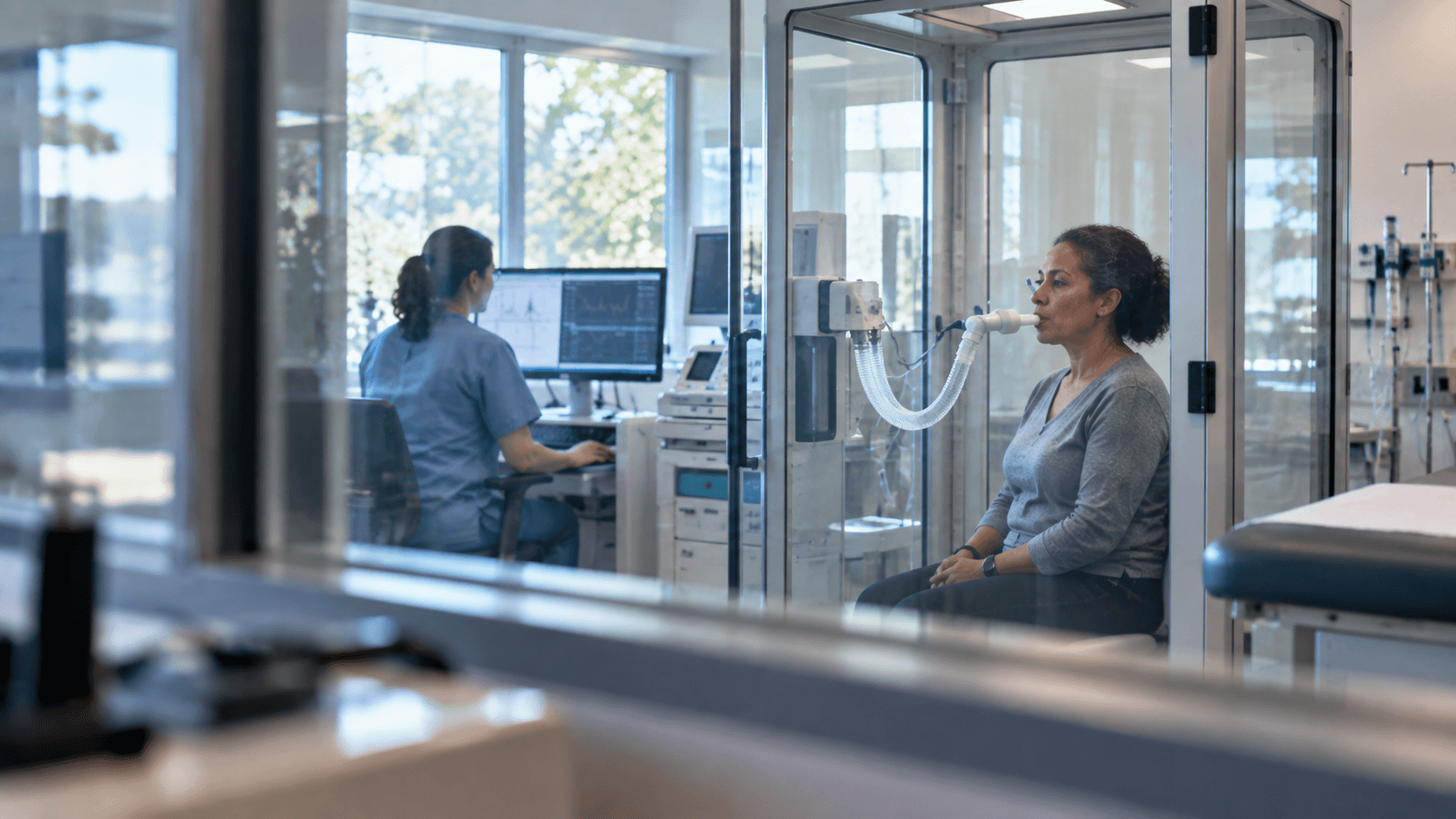
For symptoms that are persistent but not acute — lingering cough, exertional breathlessness, chest tightness that does not seem to be getting better — a primary care visit is a reasonable next step. Your clinician may recommend spirometry (a breathing test), imaging, or a referral to a pulmonologist or a post-COVID specialty clinic, depending on your history and symptoms.
What Rehabilitation and Recovery May Look Like
The good news is that several evidence-informed approaches can support respiratory recovery after COVID-19.
Breathing retraining is one of the most studied interventions for post-COVID breathlessness. Guided by a respiratory physiotherapist, this involves learning to breathe more efficiently — often emphasizing diaphragmatic breathing and pacing strategies. Small clinical studies and clinical experience suggest this can reduce the sensation of breathlessness even when underlying lung function tests are relatively normal.
Pulmonary rehabilitation — structured programs combining exercise, education, and breathing techniques — has a strong evidence base for other chronic lung conditions and is increasingly being offered to COVID survivors with significant respiratory impairment. These programs are typically supervised and tailored to the individual.
Pacing is particularly relevant for people whose breathlessness is linked to the broader long COVID syndrome, where overexertion can sometimes worsen symptoms rather than help. This is sometimes called post-exertional malaise, and the general advice in those cases is to avoid pushing through breathlessness and instead to work with a clinician on a gradual, carefully monitored activity plan.
For people with identifiable underlying causes — such as reactive airways, acid reflux worsening cough, or anxiety driving breathing pattern changes — treating those underlying conditions can provide meaningful relief.
Taking a Longer View
Recovering from significant illness takes time, and the respiratory system is no exception. Most people who experience lingering breathing symptoms after COVID-19 do see gradual improvement over months. For a smaller group, symptoms are more persistent and warrant closer monitoring and support.
What researchers are learning about post-COVID lung health is evolving quickly. Clinics dedicated to long COVID care have grown significantly, and ongoing studies are helping clarify who is at risk for prolonged symptoms and which interventions help most.
If you are struggling with breathing changes after COVID-19, you are not alone — and you do not have to figure it out on your own. Connecting with a clinician who is familiar with post-COVID recovery is the most important step you can take. There is growing infrastructure and growing knowledge to support you.