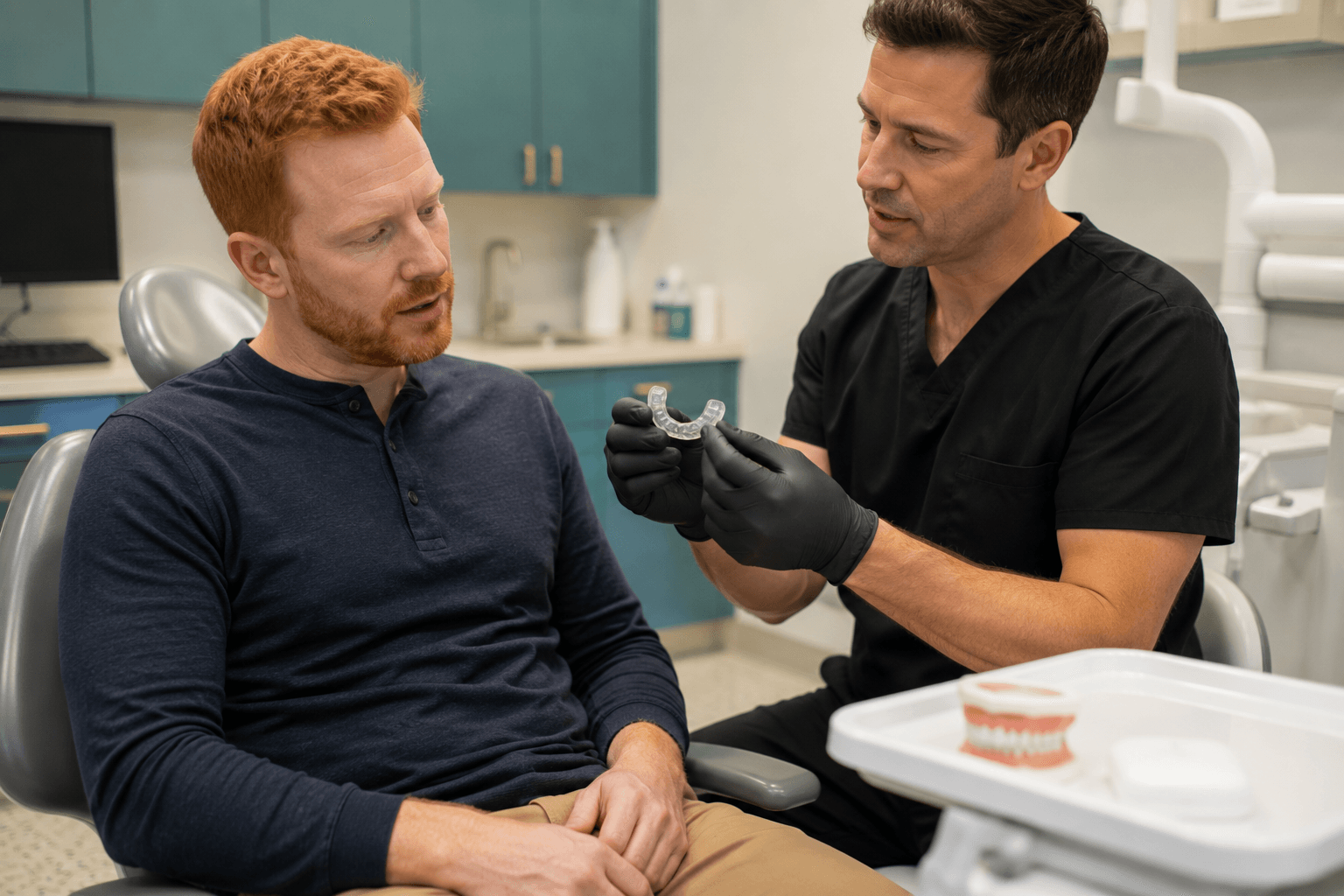
Bruxism is the habit of grinding, clenching, or pressing the teeth together. It can happen while awake, during sleep, or both. Some people know they clench during the day, while others only learn about grinding after a dentist notices tooth wear or a sleep partner hears grinding at night.
A dental visit is the best time to ask what signs are visible, whether your teeth or jaw are being affected, and whether a mouth guard, habit changes, sleep evaluation, or follow-up care may help. Bruxism is not always solved with one device, and the right plan depends on when it happens, what damage is present, and what symptoms you have.
This checklist can help you prepare for a dental appointment. Bring your symptoms, sleep history, stress triggers, medication list, prior dental work, mouth guard if you already have one, and any notes about headaches, jaw pain, tooth sensitivity, or broken restorations.
What Is Bruxism?
Bruxism includes grinding, clenching, and related jaw habits. The National Institute of Dental and Craniofacial Research describes bruxism as habits such as teeth grinding, clenching, and jaw thrusting. Signs and symptoms can include headaches, jaw or ear pain, tooth sensitivity, and noticeable tooth wear.
Bruxism can happen during the day or at night. Awake bruxism is often linked with habits such as clenching during concentration, stress, driving, screen time, or exercise. Sleep bruxism is harder to notice because it happens while the person is asleep.
Not every person with bruxism has pain, and not every jaw pain problem is caused by bruxism. A dentist can help check for tooth wear, cracked teeth, gum changes, jaw muscle tenderness, bite issues, temporomandibular disorder symptoms, and other possible causes.
Checklist Step 1: Ask What Signs You See in My Mouth
Start by asking your dentist what they actually see. Bruxism can leave clues on the teeth, fillings, crowns, gums, cheeks, tongue, jaw muscles, and bite.
- “Do you see signs that I grind or clench my teeth?”
- “Is there tooth wear, flattening, chipping, cracking, gum recession, or tooth sensitivity?”
- “Are my fillings, crowns, veneers, or implants showing signs of extra force?”
- “Does the pattern look old, active, mild, moderate, or severe?”
Mayo Clinic notes that dentists check for signs of bruxism during regular dental exams and may look for changes in teeth and mouth over several visits.
Checklist Step 2: Ask Whether It Looks Like Awake Bruxism, Sleep Bruxism, or Both
Awake and sleep bruxism may need different strategies. A night guard may protect teeth during sleep, but it will not stop daytime clenching during work, driving, or stress.
- “Does my pattern look more like nighttime grinding, daytime clenching, or both?”
- “What symptoms would suggest sleep bruxism?”
- “What habits should I watch for during the day?”
- “Should I track jaw position, headaches, or clenching triggers?”
If daytime clenching is part of the pattern, awareness training, jaw relaxation reminders, posture changes, stress support, and avoiding chewing habits may be part of the plan.
Checklist Step 3: Ask About Tooth Damage and Future Risk
Bruxism can sometimes damage teeth or dental restorations. The risk depends on force, frequency, enamel strength, bite pattern, existing dental work, acid erosion, dry mouth, and whether a guard is used correctly.
- “Are any teeth at risk of cracking or breaking?”
- “Do I have enamel wear or dentin exposure?”
- “Are any crowns, fillings, veneers, bridges, or implants at risk?”
- “Do I need treatment now, or should we monitor changes?”
Ask your dentist to show you the areas of concern with photos, X-rays, a mirror, or an intraoral scan if available. Seeing the pattern can make the treatment plan easier to understand.
Checklist Step 4: Ask Whether You Need a Night Guard or Splint
A night guard, occlusal guard, or splint may protect teeth from damage during sleep. It may also help some people reduce morning jaw soreness, but it does not cure every cause of bruxism.
- “Do I need a night guard or splint?”
- “Would it protect my teeth, reduce pain, or both?”
- “What type do you recommend and why?”
- “How long should I wear it before we reassess?”
The American Dental Association’s MouthHealthy resource notes that a dentist may recommend a night guard to protect teeth while sleeping and that the right treatment depends on what is happening in the mouth and body.
Checklist Step 5: Ask About Custom vs. Over-the-Counter Guards
Over-the-counter guards are easier to buy, but they may not fit well, may feel bulky, may change bite comfort, or may not be appropriate for certain dental conditions. Custom guards are made by a dentist to fit your mouth and bite.
- “Is an over-the-counter guard safe for me to try?”
- “Would a custom guard be better for my bite or dental work?”
- “Could a poorly fitting guard make symptoms worse?”
- “How should the guard feel when it fits correctly?”
Ask whether you need a hard guard, soft guard, dual-laminate guard, stabilization splint, or another design. The best choice depends on your grinding pattern, jaw symptoms, dental work, and bite.
Checklist Step 6: Ask How to Care for the Guard
A guard only helps if it is worn correctly and kept clean. It also needs to be checked for wear, fit, odor, cracks, and bite changes.
- “How should I clean and store the guard?”
- “How often should I bring it in for checks?”
- “How long should it last?”
- “What signs mean it needs adjustment or replacement?”
Bring the guard to dental visits. Your dentist can check whether it still fits, whether you are wearing through it, and whether your bite or symptoms have changed.
Checklist Step 7: Ask About Jaw Pain, TMJ Symptoms, and TMD
Jaw pain, clicking, popping, locking, headaches, and ear-area pain may involve the jaw joints or chewing muscles. These are often discussed as temporomandibular disorders, or TMD.
- “Do my symptoms suggest TMD?”
- “Is my pain coming from the jaw joint, jaw muscles, teeth, sinuses, ears, or another source?”
- “Should I avoid gum, hard foods, wide yawning, or certain jaw movements for now?”
- “Would jaw physical therapy help?”
NIDCR notes that TMD symptoms can include pain in the chewing muscles or jaw joint, jaw stiffness, limited movement or locking of the jaw, painful clicking or popping, and changes in how upper and lower teeth fit together. ([nidcr.nih.gov](https://www.nidcr.nih.gov/health-info/tmd))
Checklist Step 8: Ask Which Home Habits May Help
Home habits can reduce jaw strain, especially for awake clenching and muscle-related discomfort.
- “What should my resting jaw position be?”
- “Should my teeth touch when I am not eating?”
- “Should I avoid gum, nail biting, pen chewing, or chewy foods?”
- “Would heat, stretching, massage, or relaxation exercises help?”
A common cue is “lips together, teeth apart, tongue relaxed.” Ask your dentist whether this cue fits your situation, especially if you have jaw joint problems, orthodontic issues, or pain with certain movements.
Checklist Step 9: Ask About Sleep Quality and Sleep Apnea
Sleep bruxism can overlap with sleep problems. People who grind during sleep may also snore, wake unrefreshed, or have breathing interruptions during sleep.
- “Could my grinding be related to sleep quality?”
- “Should I be screened for sleep apnea?”
- “Do I need to see a sleep medicine clinician?”
- “Would a guard affect snoring or breathing?”
Mayo Clinic notes that people who clench or grind during sleep are more likely to have other sleep disorders, such as snoring and pauses in breathing called sleep apnea. It also notes that a dental exam may find other conditions that cause jaw or ear pain, including TMJ disorders, dental problems, or health conditions such as sleep apnea.
Checklist Step 10: Ask About Stress, Anxiety, and Daytime Clenching
Stress does not explain every case of bruxism, but stress and concentration can make clenching more noticeable for some people. Daytime clenching may happen during work, studying, driving, gaming, exercise, or conflict.
- “Could stress or concentration be contributing to my clenching?”
- “How can I remind myself to relax my jaw during the day?”
- “Would behavior strategies, counseling, or relaxation training help?”
- “Should I track stress and jaw symptoms together?”
Simple steps such as phone reminders, posture breaks, breathing exercises, jaw relaxation practice, and reducing chewing habits may help some people.
Checklist Step 11: Ask About Medications, Caffeine, Alcohol, and Nicotine
Some substances and medications may affect sleep, jaw muscle activity, anxiety, or clenching patterns. This does not mean you should stop prescribed medicine on your own, but it is worth reviewing.
- “Could any of my medications contribute to grinding or clenching?”
- “Could caffeine, alcohol, nicotine, or stimulant use be affecting my symptoms?”
- “Should I talk to my physician or pharmacist before changing anything?”
- “Are any pain relievers or muscle relaxers appropriate or risky for me?”
Bring a complete list of prescription medications, over-the-counter medicines, supplements, nicotine products, cannabis products, and caffeine habits. Your dentist may coordinate with your physician or pharmacist if medication effects are suspected.
Checklist Step 12: Ask Whether Your Bite Needs Treatment
Some people wonder whether bruxism means they need bite adjustment, orthodontics, crowns, or major dental work. These decisions should be made carefully.
- “Is my bite contributing to symptoms, or is it mainly a grinding habit?”
- “Do you recommend any irreversible bite changes?”
- “What are the risks and benefits of adjusting teeth or changing restorations?”
- “Can we try conservative options first?”
Ask for a clear explanation before any irreversible treatment. For many jaw pain and bruxism problems, conservative options are considered before major bite-altering procedures.
Checklist Step 13: Ask About Tooth Sensitivity and Enamel Protection
Grinding can expose dentin, irritate teeth, or make sensitivity worse. Acid reflux, frequent acidic drinks, aggressive brushing, whitening products, and dry mouth can also contribute.
- “Is my sensitivity from grinding, cavities, gum recession, enamel wear, or something else?”
- “Do I need fluoride, desensitizing toothpaste, bonding, or other protection?”
- “Are acidic drinks, reflux, or brushing habits worsening wear?”
- “How should I brush without worsening sensitivity?”
Tooth sensitivity should be evaluated because it can also signal decay, cracks, failing restorations, gum recession, or infection.
Checklist Step 14: Ask About Headaches and Ear Pain
Bruxism-related muscle tension can sometimes contribute to morning headaches, temple soreness, jaw fatigue, or pain near the ears. But headaches and ear pain can also have many other causes.
- “Could my headaches or ear pain be related to clenching?”
- “Are there dental signs that match my symptoms?”
- “Should I also see my physician, ENT, neurologist, or physical therapist?”
- “What symptoms would suggest something other than bruxism?”
Seek medical care for sudden severe headache, neurological symptoms, fever, facial swelling, hearing loss, severe ear pain, or symptoms that feel unusual or dangerous.
Checklist Step 15: Ask How Progress Will Be Measured
Bruxism may not disappear completely, so follow-up should focus on measurable goals: less tooth damage, less jaw soreness, fewer headaches, better sleep, fewer broken restorations, or improved daytime awareness.
- “How will we know if the treatment is working?”
- “Will you monitor tooth wear with photos, scans, or exam notes?”
- “How soon should I expect jaw pain or sensitivity to improve?”
- “When should we change the plan?”
Ask your dentist what changes should be reassessed at the next cleaning, guard check, or follow-up appointment.
Checklist Step 16: Ask When to Come Back
Bruxism needs monitoring because teeth, guards, jaw symptoms, sleep, stress, and dental work can change over time.
- “When should I return for a guard check or bruxism follow-up?”
- “How often should we monitor tooth wear?”
- “Should I come in sooner if the guard feels tight, loose, or painful?”
- “What symptoms mean I should not wait until my next cleaning?”
Follow-up is especially important if you have crowns, veneers, implants, cracked teeth, gum recession, significant wear, jaw locking, or worsening pain.
Home Tools That May Help
Home tools can support a bruxism plan, but they should not replace dental evaluation. Helpful tools may include a dentist-made night guard, jaw symptom diary, phone reminders for daytime clenching, warm compresses when recommended, stress-tracking notes, and a soft-food plan during jaw flares.
A sonic toothbrush or water irrigator can support overall oral hygiene, especially when sensitivity or dental work makes cleaning feel more complicated. These tools do not treat bruxism directly, but they may help protect gum and tooth health while your dentist monitors wear and bite forces.
Avoid using random mouth guards, jaw exercisers, or online bite-changing devices without dental guidance. Poor fit or excessive jaw loading can worsen symptoms for some people.
Common Mistake: Assuming a Night Guard Stops Grinding
A night guard usually protects teeth from force. It may reduce symptoms for some people, but it does not always stop the brain and jaw muscles from grinding or clenching during sleep.
Ask your dentist what the guard is expected to do: protect enamel, reduce tooth fractures, improve jaw comfort, or help stabilize the bite.
If symptoms continue despite wearing a guard, the plan may need adjustment, sleep evaluation, jaw therapy, habit training, or medical review.
Common Mistake: Ignoring Daytime Clenching
Many people focus only on nighttime grinding and miss daytime clenching. Daytime clenching can happen silently while working, concentrating, driving, lifting weights, or using screens.
Because teeth are not meant to stay pressed together all day, frequent clenching can fatigue jaw muscles and worsen soreness.
Use reminders to check whether your teeth are touching. At rest, the jaw should usually be relaxed and the teeth slightly apart.
Common Mistake: Treating Jaw Pain With Chewing Exercises
If the jaw muscles are already overloaded, aggressive chewing exercises, gum chewing, or jaw exerciser devices may worsen pain.
Ask your dentist or physical therapist which exercises are appropriate. Gentle stretching, relaxation, posture changes, or controlled mobility may be more useful than heavy chewing.
Stop any exercise that increases pain, locking, clicking with pain, or reduced mouth opening.
Common Mistake: Delaying Care Until a Tooth Breaks
Bruxism may not hurt until damage is already present. Waiting until a tooth cracks, a crown breaks, or sensitivity becomes severe can make treatment more complicated.
Regular dental exams can help identify wear patterns early. A dentist may spot signs before you notice symptoms.
Call sooner if you notice chipped teeth, cracked fillings, new sensitivity, jaw locking, morning headaches, or a guard that suddenly no longer fits.
When to Talk to Your Dentist
Talk to your dentist if you notice tooth grinding, jaw clenching, morning jaw soreness, headaches, tooth sensitivity, tooth wear, chipped teeth, cracked fillings, gum recession, jaw clicking with pain, jaw locking, or a sleep partner reports grinding sounds.
You should also schedule a visit if a guard feels painful, no longer fits, develops cracks, smells bad despite cleaning, or if symptoms are worsening despite use.
Your dentist may recommend a dental exam, X-rays, photos, bite evaluation, guard adjustment, custom night guard, fluoride or sensitivity treatment, jaw habit counseling, referral to a physician, sleep medicine evaluation, or jaw physical therapy.
When to Seek Urgent Care
Seek urgent dental care for a cracked or broken tooth, severe tooth pain, facial swelling, fever with dental pain, gum swelling with pus, inability to open the mouth normally, jaw locking that does not release, or trauma to the teeth or jaw.
Seek urgent medical care for chest pain, severe headache, neurological symptoms, severe facial swelling, trouble breathing, trouble swallowing, or symptoms that feel sudden and dangerous.
Do not assume severe tooth, jaw, face, or ear pain is only bruxism. Pain can come from infection, injury, nerve problems, sinus disease, ear conditions, or other medical issues.
The Bottom Line
A bruxism visit should help you understand what your dentist sees, whether grinding or clenching is damaging your teeth, and what plan can protect your mouth and reduce symptoms.
Helpful questions include asking about tooth wear, awake versus sleep bruxism, night guards, custom versus over-the-counter guards, jaw pain, TMD, sleep apnea, stress, medications, tooth sensitivity, headaches, home habits, and follow-up timing.
The most common mistakes are assuming a night guard stops grinding, ignoring daytime clenching, treating jaw pain with chewing exercises, and delaying care until a tooth breaks.
Bring this checklist to your next dental visit and ask your dentist which questions matter most for your teeth, jaw, sleep, and dental work.