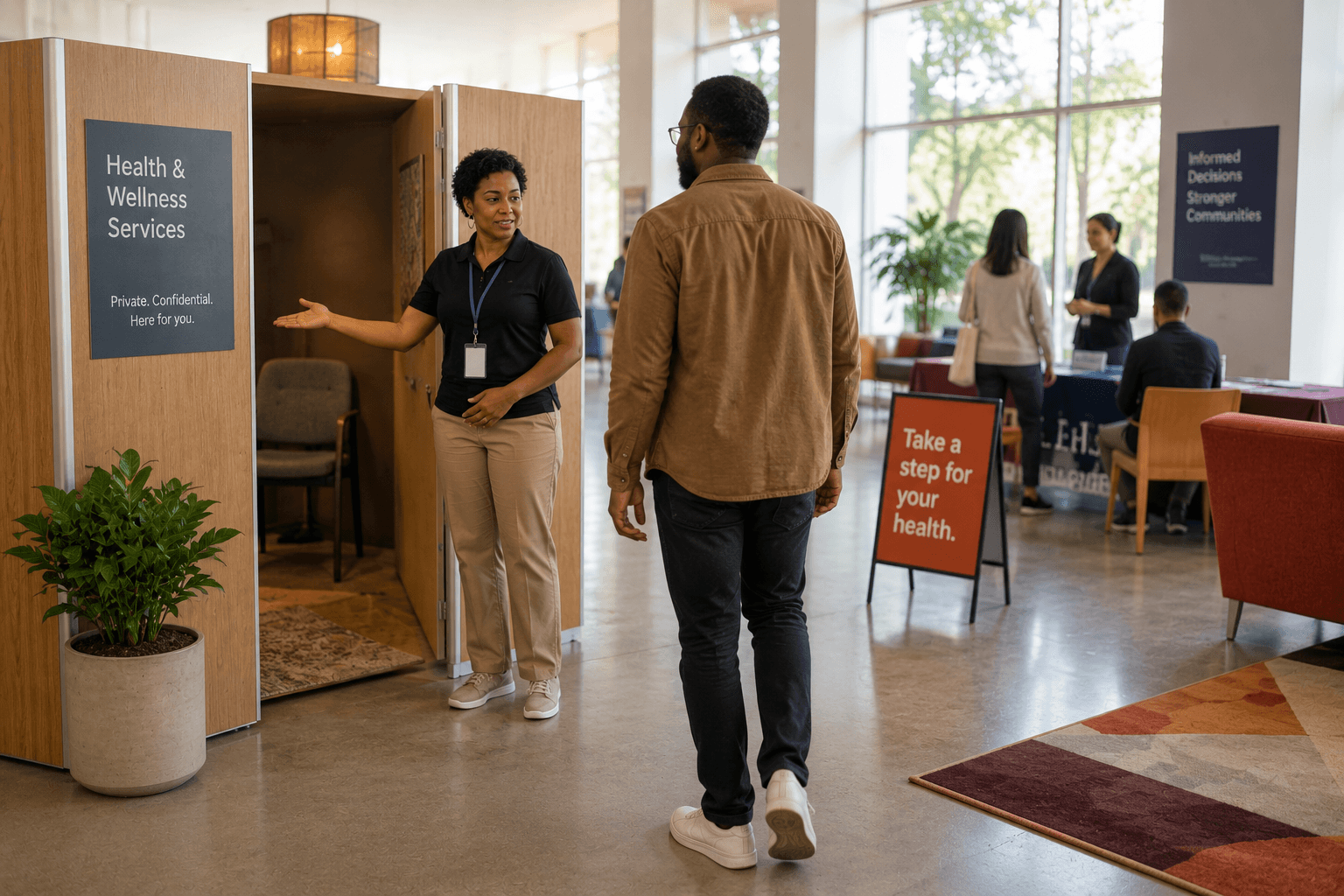
Getting tested for HIV is one of the more straightforward things you can do for your long-term health. The U.S. Centers for Disease Control and Prevention (CDC) recommends that everyone between the ages of 13 and 64 be tested at least once as part of routine care, and that people with ongoing risk factors test more often. Even so, for a lot of people the idea of starting that conversation feels overwhelming.
A little preparation goes a long way. Knowing what to ask your doctor or clinician, before the test and after, helps you understand what's happening, what the results mean, and what comes next. Below is a practical guide to those questions, grouped by when they come up.
Understanding Why Testing Matters
HIV (human immunodeficiency virus) attacks the immune system over time. Without treatment, it can progress to AIDS (acquired immunodeficiency syndrome), a stage in which the immune system is severely weakened. The key point: most people with HIV who are diagnosed early and start treatment live long, healthy lives. Modern antiretroviral therapy is very effective at keeping the virus suppressed.
The challenge is that many people live with HIV for years without obvious symptoms. Testing is the only way to know your status. Early diagnosis also dramatically reduces the chance of unknowingly passing the virus to a partner.
Before the Test: Questions About Which Test Is Right for You
Not all HIV tests work the same way, and your clinician can help you pick the right one for your situation. Consider asking:
- What type of HIV test are you recommending, and why? There are several: antigen/antibody tests (the most common in clinics), antibody-only tests, and nucleic acid tests (NATs), which look for the virus itself. Each has a different detection window, meaning the period after exposure when the test can reliably pick up an infection.
- What is the window period for this test? If you had a recent possible exposure, a test taken too soon may not be accurate yet. Your clinician can help you figure out when to test based on when the exposure happened.
- Should I be tested for other sexually transmitted infections (STIs) at the same time? Having another STI can raise your susceptibility to HIV, so many clinicians recommend testing for infections such as gonorrhea, chlamydia, and syphilis at the same time.
- Is there anything I need to do to prepare, such as fasting or timing? Most HIV tests need no special preparation, but it's always worth confirming.
Questions About Confidentiality and Your Records
Privacy concerns are common and completely valid. Knowing how your results are handled can ease anxiety before the test even happens.
- How will my results be documented and who has access to them? Results generally become part of your medical record, which is protected under federal privacy law (HIPAA). Ask your provider to walk you through what that means in practice at their facility.
- Is confidential testing different from anonymous testing? Yes. Confidential testing links results to your identity in a medical record. Anonymous testing, available at some community health centers and testing sites, does not. If anonymity matters to you, ask whether it's an option.
- Are there reporting requirements I should know about? In the United States, a positive HIV diagnosis is a reportable condition, meaning public health authorities receive the information (typically without your full identifying details, depending on the state). Your clinician can explain how this works locally.
Questions About What a Positive Result Would Mean
It can feel uncomfortable to ask about a positive result before you have one, but doing so puts you in a stronger position and tends to make the whole prospect less frightening.
- If my result is positive, what happens next, both right away and over the coming weeks? A reactive (preliminary positive) screening test is always followed by a confirmatory test. Your doctor can describe exactly what that looks like at your clinic.
- How quickly would I be able to start treatment? Research supports starting antiretroviral therapy as soon as possible after diagnosis. Ask about the typical timeline at your care site.
- What support resources does your practice offer, or can you refer me to? A positive diagnosis carries emotional weight along with the medical side. Many clinics and community health organizations offer counseling, peer support, and case management, so you don't have to handle it by yourself.
- What would a positive result mean for my partner or partners? Your clinician can talk with you about partner notification, which can be handled confidentially through public health channels if that feels safer.
Questions About What a Negative Result Would Mean
A negative result is good news, but context matters.
- Does a negative result mean I definitely do not have HIV? If the test was taken within the window period after a potential exposure, a negative result may not yet be conclusive. Your clinician can tell you whether a follow-up test at a later date makes sense.
- Should I be thinking about PrEP? Pre-exposure prophylaxis (PrEP) is a daily medication for HIV-negative people that substantially lowers the risk of getting HIV. If you have ongoing risk factors, such as an HIV-positive partner, multiple sexual partners, or inconsistent condom use, PrEP is worth discussing. Ask whether it might be right for you.
- How often should I be retested going forward? Frequency depends on your individual circumstances. Your clinician can help you think through a testing schedule that fits your life.
Questions About Prevention, Whatever Your Result
Prevention matters whether your result is positive or negative. For people living with HIV, treatment that brings the viral load down to undetectable levels means the virus can't be sexually transmitted to partners. This is known as Undetectable = Untransmittable, or U=U. Ask your doctor to explain it if it applies to you.
For HIV-negative individuals, the conversation might include:
- PrEP (pre-exposure prophylaxis) as described above
- PEP (post-exposure prophylaxis), an emergency medication course started within 72 hours of a potential exposure
- Consistent and correct condom use
- Harm reduction strategies for people who use injectable drugs, such as needle exchange programs
Do not hesitate to bring any of these topics up directly. A good clinician will welcome the questions.
A Note on Where You Can Get Tested
HIV testing is available in many settings beyond a primary care office: community health centers, sexual health clinics, Planned Parenthood locations, local health departments, and pharmacies. At-home testing kits are also available over the counter. Each setting has different protocols around counseling and follow-up, so it is worth asking ahead of time what support is available wherever you choose to test.
Going Into Your Appointment With Confidence
There are no wrong questions when it comes to your health. Clinicians who provide HIV testing have these conversations every day. Writing your questions down beforehand, or bringing a trusted friend or advocate, are both perfectly reasonable things to do.
Getting tested is a way of looking after yourself and the people in your life.
If you're not sure where to start, just tell your doctor or nurse that you want to understand the process before you begin. From there, ask as many follow-up questions as you need.
This article is intended for general informational purposes only and does not constitute medical advice. Please speak with a qualified healthcare provider about decisions regarding your own health and testing.