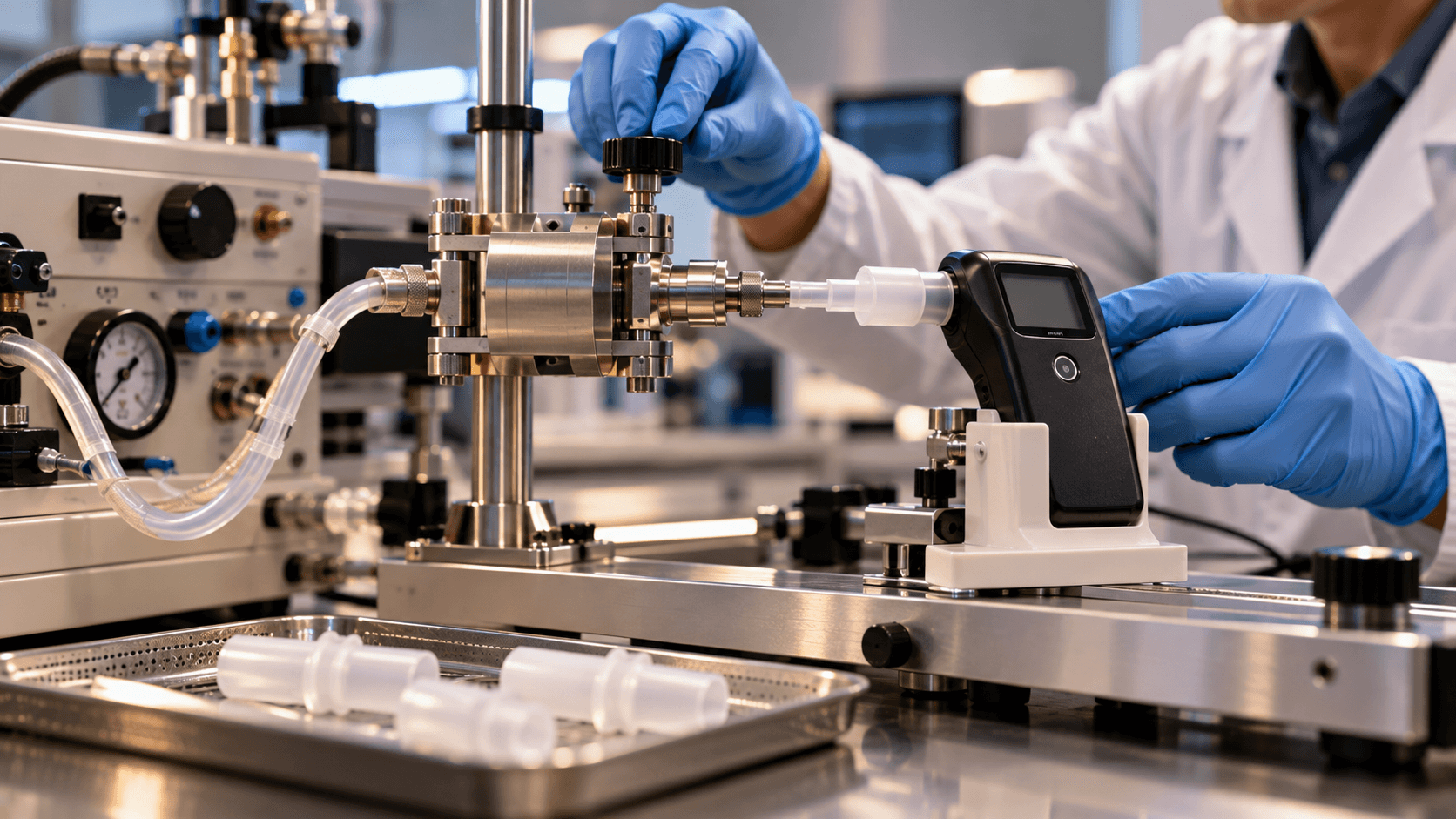
Alcohol breathalyzers are small devices that estimate alcohol from a breath sample. Some people use them to monitor drinking patterns, support accountability, avoid risky decisions, or collect information before talking with a clinician. They can be useful tools, but they have important limits.
A personal breathalyzer should not be used to decide whether it is safe or legal to drive. Alcohol can impair judgment, coordination, reaction time, and decision-making before a device result feels alarming. Readings can also be affected by timing, mouth alcohol, device quality, calibration, user technique, and sensor wear.
This guide explains what to know before buying an alcohol breathalyzer for alcohol monitoring, what features matter, what accuracy depends on, and when alcohol use or alcohol-related symptoms need medical attention.
What an Alcohol Breathalyzer Measures
An alcohol breathalyzer estimates breath alcohol concentration, sometimes called BrAC. Breath alcohol is used as a proxy for blood alcohol concentration, or BAC, because alcohol in the bloodstream is exchanged through the lungs and can be detected in exhaled breath.
NHTSA maintains conforming products lists for alcohol screening devices, evidential breath testing devices, and calibration units that have been tested against NHTSA model specifications. This is mainly relevant to law enforcement and workplace-style testing programs, but it shows why device standards and calibration matter.
For personal use, the main question is not whether a device can produce a number. The question is whether the number is reliable enough for the purpose you are using it for—and whether you understand what it cannot tell you.
What a Breathalyzer Can Help With
A personal breathalyzer may help some people track patterns and make safer plans around alcohol.
- Recording how readings change after different drinking amounts
- Understanding that alcohol may remain detectable longer than expected
- Supporting an alcohol reduction plan
- Adding objective information to a symptom or drinking log
- Providing accountability when used with a clinician, counselor, or recovery plan
CDC defines binge drinking as 4 or more drinks for women or 5 or more drinks for men during an occasion. CDC also notes that beverage sizes may contain more than one standard drink, which can make alcohol tracking harder than people expect.
What a Breathalyzer Cannot Do
A breathalyzer does not measure impairment directly. It also cannot predict whether you will make safe decisions, how alcohol is interacting with medicines, or whether you are at risk for alcohol overdose.
- It cannot prove you are safe to drive.
- It cannot diagnose alcohol use disorder.
- It cannot rule out overdose or poisoning.
- It cannot account for all medication interactions.
- It cannot replace professional care, counseling, or treatment.
NIAAA defines binge drinking as a pattern that brings BAC to 0.08% or higher, but harm can occur at lower levels depending on the person, situation, medications, and activity. NIAAA also notes that alcohol can increase risks such as falls, car crashes, memory blackouts, drowning, assaults, medication interactions, and overdose deaths.
Feature 1: Sensor Type
Consumer breathalyzers commonly use semiconductor sensors or fuel cell sensors. Many higher-quality personal and professional devices use fuel cell technology because it tends to be more specific to alcohol and more stable than older sensor types, though quality still varies by device.
- Fuel cell sensors: often preferred for accuracy and alcohol specificity.
- Semiconductor sensors: may be less expensive but can be more affected by non-alcohol substances and sensor drift.
- Single-use chemical tests: may show threshold-based results but usually provide less detail than digital devices.
NHTSA’s ignition interlock toolkit notes that fuel cell ignition interlocks are specific to alcohol, retain calibration longer under normal operating conditions, and require less maintenance than earlier technologies.
Feature 2: Calibration Requirements
Breathalyzers can drift over time. Calibration means the device is checked and adjusted against a known standard so readings remain reliable.
- Check how often calibration is required.
- Check whether calibration is done by the manufacturer or a service center.
- Check the cost and turnaround time.
- Check whether the device warns when calibration is due.
- Avoid relying on old devices that have not been calibrated.
NHTSA notes that calibration is a crucial part of successful breath testing programs because it helps ensure proper use, care, and accuracy of breath alcohol testing devices.
Feature 3: Warm-Up and Wait Time
Timing affects results. Breathalyzers should not be used immediately after drinking because alcohol remaining in the mouth can distort readings.
- Follow the device’s required wait time after drinking, eating, smoking, vaping, or using mouthwash.
- Do not test immediately after a sip of alcohol.
- Wait long enough for mouth alcohol to clear according to the manual.
- Remember that BAC may continue rising after the last drink.
A common safety mistake is testing too soon, seeing a low number, and assuming alcohol has “cleared.” Alcohol absorption takes time, and readings can change after the last drink.
Feature 4: Measurement Range and Display
A useful monitor should show results clearly and explain units. Some devices display estimated BAC, some display BrAC, and some show color-coded ranges.
- Clear numerical display
- Units explained in the manual
- Easy-to-read screen in low light
- Warning messages for insufficient breath sample
- Ability to store results if tracking patterns
Do not compare numbers across devices unless you understand the units and whether each device has been calibrated.
Feature 5: Breath Sample Quality
Breathalyzers need a proper breath sample. Poor technique can cause errors or failed tests.
- Use the mouthpiece as directed.
- Blow steadily for the required time.
- Do not block the mouthpiece.
- Use fresh mouthpieces if sharing is allowed.
- Do not use when the device is wet, dirty, damaged, or outside the recommended temperature range.
Choose a device with clear sample-quality prompts. If the device frequently says the sample is insufficient, the reading may not be useful.
Feature 6: Memory, App, or Export
Some breathalyzers store readings or connect to an app. This may be helpful for alcohol monitoring, but it also raises privacy questions.
- Can readings be exported for a clinician or counselor?
- Can location data be turned off?
- Can the app share data with other people?
- Can you delete readings?
- Is the account protected with strong security settings?
Alcohol monitoring data can be sensitive. Read privacy policies before connecting a device to an app or sharing reports.
Feature 7: Replaceable Mouthpieces and Cleaning
Breathalyzers that contact the mouth should be easy to keep clean.
- Look for replaceable mouthpieces.
- Do not share mouthpieces.
- Follow cleaning instructions.
- Keep the sensor area dry.
- Store the device away from heat, humidity, and chemicals.
Do not blow smoke, vapor, food particles, liquids, or cleaning sprays into the device. This can damage the sensor and distort future readings.
Feature 8: Power, Battery, and Portability
A monitoring tool is only useful if it works when needed.
- Battery indicator
- Rechargeable or replaceable battery options
- Protective case
- Operating temperature range
- Small enough to carry if monitoring outside the home
Do not leave a breathalyzer in a hot car, damp bathroom, or freezing environment if the manual warns against it.
Feature 9: Regulatory and Testing Information
Before buying, look for evidence that the device’s claims have been reviewed or tested. For professional or legal uses, standards are more important than for casual personal tracking.
- Check whether the product identifies its sensor type.
- Check whether it lists accuracy specifications.
- Check calibration instructions.
- Check whether the device is intended for personal, workplace, or law-enforcement use.
- Be cautious with vague claims such as “police-grade” without documentation.
Some over-the-counter breath alcohol tests appear in FDA databases as breath alcohol testing devices, but buyers should still read the specific intended use, limitations, and instructions for the product being purchased.
Buying Checklist: Accuracy and Maintenance
Before buying, compare the features that affect accuracy over time.
- Fuel cell sensor if accuracy is a priority
- Clear calibration schedule
- Manufacturer calibration service or instructions
- Sample-quality detection
- Replaceable mouthpieces
- Operating temperature range
- Clear instructions for wait time after drinking, eating, smoking, or mouthwash
A lower-cost device that is never calibrated may be less useful than a simpler tracking log plus a clear drinking plan.
Buying Checklist: Safety and Follow-Up
A breathalyzer should be paired with a safety plan.
- How will you avoid driving after drinking?
- Who can help if a reading is high or symptoms are concerning?
- Will you use the data with a clinician, counselor, or support program?
- What symptoms mean emergency care?
- What pattern means alcohol use is becoming risky?
If the only purpose is deciding whether to drive, the safer plan is not to drive after drinking at all.
Buying Checklist: Privacy and Data Sharing
If the device uses an app, privacy matters.
- Read whether data is stored locally or in the cloud.
- Check whether location data is collected.
- Check whether results can be shared automatically.
- Check deletion options.
- Use a strong password if an account is required.
Think carefully before sharing alcohol-monitoring data with employers, partners, family, or third-party platforms unless you understand the consequences and consent is clear.
How to Use a Breathalyzer More Safely
Follow the manual every time. Technique and timing matter.
- Wait the recommended time after drinking, eating, smoking, vaping, or mouthwash.
- Use a clean mouthpiece.
- Blow steadily as instructed.
- Record the time of last drink, number of drinks, food intake, medicines, and symptoms.
- Do not retest repeatedly until you get a lower number.
- Do not use the result as permission to drive.
Alcohol impairment can affect judgment about the reading itself. If you planned not to drive, keep that plan regardless of the number.
What to Track With Alcohol Monitoring
A breathalyzer reading is more useful when paired with context.
- Date and time: when drinking started, stopped, and when the reading was taken
- Amount: number of standard drinks, not just number of glasses
- Food: whether alcohol was taken with or without food
- Symptoms: dizziness, nausea, confusion, blackout, sleepiness, mood changes, or risky behavior
- Medication: sedatives, opioids, antidepressants, sleep medicines, or other interacting drugs
- Plan: transportation, hydration, sleep, support person, or no-driving decision
NIAAA explains that a standard drink in the United States contains about 14 grams of pure alcohol, and that drink size can be misleading. For example, wine, beer, and mixed drinks can contain more than one standard drink depending on size and alcohol content.
How to Interpret a Reading
Interpret breathalyzer readings cautiously. The device gives an estimate at one moment in time.
- A low reading does not prove you are unimpaired.
- A rising reading may occur after the last drink because alcohol is still absorbing.
- A high reading should prompt a no-driving plan and safety support.
- Symptoms should override the number.
- Repeated high readings may be a sign to discuss alcohol use with a clinician.
A breathalyzer result should be used to increase caution, not lower it.
When a Reading Should Not Be Trusted
Some situations make breathalyzer readings less reliable.
- Testing immediately after drinking
- Recent mouthwash, breath spray, or alcohol-containing products
- Vomiting or burping shortly before testing
- Device overdue for calibration
- Very cold or very hot device storage
- Weak breath sample or repeated sample errors
- Damaged, dirty, or old sensor
If the reading does not match the situation or symptoms, do not use it to justify risk. Choose the safer option.
Driving Safety: The Number Is Not the Plan
The safest driving plan is made before drinking starts. Arrange a designated driver, rideshare, public transportation, overnight stay, or no-driving rule.
- Do not use a personal breathalyzer to “test into” driving.
- Do not drive after sedatives, opioids, cannabis, or sleep medicines mixed with alcohol.
- Do not drive if you feel sleepy, dizzy, slowed, nauseated, emotional, or impaired.
- Do not rely on a friend’s device reading as legal protection.
NHTSA states that if you feel different, you drive different, and it emphasizes planning for a sober ride before drinking.
Medication and Health Condition Safety
Alcohol can interact with many medications and medical conditions. Breathalyzer readings do not measure those interactions.
- Sleep medicines, opioids, benzodiazepines, muscle relaxers, and sedating antihistamines
- Antidepressants, antipsychotics, seizure medicines, and some pain medicines
- Diabetes medicines, blood thinners, liver disease medicines, and blood pressure medicines
- Pregnancy, liver disease, pancreatitis, seizures, sleep apnea, heart disease, and mental health conditions
Ask a clinician or pharmacist whether alcohol is safe with your medicines or health conditions. A low breathalyzer reading does not make a dangerous interaction safe.
Signs Alcohol Monitoring Is Not Enough
A breathalyzer may support tracking, but it is not treatment. Consider professional support if alcohol is causing problems or becoming hard to control.
- You often drink more than planned.
- You need a device to negotiate whether to drive.
- You hide drinking or readings from others.
- You have blackouts, injuries, arguments, missed work, or risky behavior after drinking.
- You have withdrawal symptoms such as shaking, sweating, nausea, anxiety, or insomnia when not drinking.
- You keep drinking despite health, relationship, legal, or work consequences.
NIAAA provides an Alcohol Treatment Navigator to help people find evidence-based alcohol treatment and support options.
What to Bring to a Clinician or Counselor
If you are using a breathalyzer for alcohol monitoring, bring a focused summary rather than scattered readings.
- Typical number of drinking days per week
- Typical number of standard drinks per occasion
- Breathalyzer readings with time since last drink
- Blackouts, injuries, sleep problems, mood changes, or withdrawal symptoms
- Medication list and health conditions
- Goals: reduce drinking, stop drinking, avoid binge episodes, protect sleep, avoid driving, or support recovery
Ask whether your pattern suggests risky alcohol use, whether withdrawal risk needs medical planning, and what treatment or support options fit your situation.
Common Mistake: Buying a Breathalyzer Only to Decide Whether to Drive
This is one of the riskiest reasons to buy a device. A personal breathalyzer can be wrong, used too soon, overdue for calibration, or misread by someone whose judgment is already impaired.
Plan not to drive after drinking.
Use the device for awareness, not permission.
Common Mistake: Ignoring Calibration
A breathalyzer is not a one-time purchase if it requires calibration. Sensor accuracy can drift.
Check the calibration schedule before buying.
If calibration is inconvenient or expensive, the device may not stay reliable enough for your goal.
Common Mistake: Testing Too Soon After Drinking
Mouth alcohol can distort readings, and BAC can continue rising after the last drink.
Follow the wait time in the manual.
Do not interpret an early reading as proof that alcohol is already cleared.
Common Mistake: Treating the Number as a Health Score
A breathalyzer reading is not a complete health measure. It does not show liver stress, sleep disruption, medication interactions, injury risk, mood effects, or alcohol use disorder risk.
Track symptoms and patterns too.
Ask for help if alcohol is causing harm even when readings do not seem extreme.
Common Mistake: Ignoring Alcohol Overdose Signs
Alcohol overdose is a medical emergency. Do not wait for a breathalyzer reading if someone is very confused, unconscious, vomiting repeatedly, or breathing abnormally.
NIAAA lists alcohol overdose symptoms such as mental confusion, difficulty remaining conscious, vomiting, seizures, trouble breathing, slow heart rate, clammy skin, dulled responses, and extremely low body temperature.
Call emergency services if overdose is possible.
When to Talk to a Clinician
Talk to a clinician if you are using a breathalyzer because drinking feels hard to control, if readings are repeatedly high, if you binge drink, if alcohol affects sleep, mood, blood pressure, liver tests, relationships, work, driving, or medication safety, or if you are worried about withdrawal.
You should also seek guidance before cutting down suddenly if you drink heavily every day or have withdrawal symptoms. Alcohol withdrawal can be dangerous and may need medical supervision.
A clinician may recommend brief counseling, lab testing, medication review, therapy, alcohol treatment programs, peer support, medications for alcohol use disorder, detox planning, or referral to addiction medicine depending on your pattern and goals.
When to Seek Urgent or Emergency Care
Seek urgent or emergency care for possible alcohol overdose, including confusion, difficulty staying awake, repeated vomiting, seizures, slow or irregular breathing, slow heart rate, clammy skin, blue or pale skin, very low body temperature, or inability to wake someone.
Seek emergency care for chest pain, severe shortness of breath, severe injury, head injury, suicidal thoughts, violence risk, severe dehydration, vomiting blood, black stool, severe abdominal pain, or severe withdrawal symptoms such as seizures, hallucinations, severe agitation, or confusion.
Do not wait for a breathalyzer reading if symptoms suggest overdose, injury, withdrawal, or another emergency.
The Bottom Line
Alcohol breathalyzers can support alcohol monitoring when they are accurate enough, calibrated, used at the right time, and paired with a safety plan. The most useful features include a reliable sensor, clear calibration schedule, sample-quality detection, replaceable mouthpieces, easy display, memory or export options, and privacy controls if an app is used.
The limits matter. A personal breathalyzer cannot prove you are safe to drive, diagnose alcohol use disorder, rule out overdose, or account for medication interactions. A reading is one piece of information, not permission to take risks.
The most common mistakes are buying a breathalyzer only to decide whether to drive, ignoring calibration, testing too soon after drinking, treating the number as a health score, and ignoring alcohol overdose signs.
Use breathalyzer data to increase caution, plan safer transportation, understand patterns, and start better conversations with a clinician or counselor when needed.
Medical disclaimer: This content is for informational purposes only and is not a substitute for professional medical advice, alcohol treatment, addiction counseling, medication review, legal advice, driving safety decisions, emergency care, or alcohol withdrawal management. Always consult your physician, pharmacist, mental health professional, addiction medicine clinician, counselor, or qualified health provider if alcohol use is affecting your health, safety, medications, work, relationships, or driving. If someone may have alcohol overdose, severe withdrawal, chest pain, severe injury, head injury, suicidal thoughts, violence risk, vomiting blood, black stool, severe abdominal pain, or another emergency, seek urgent medical care right away.