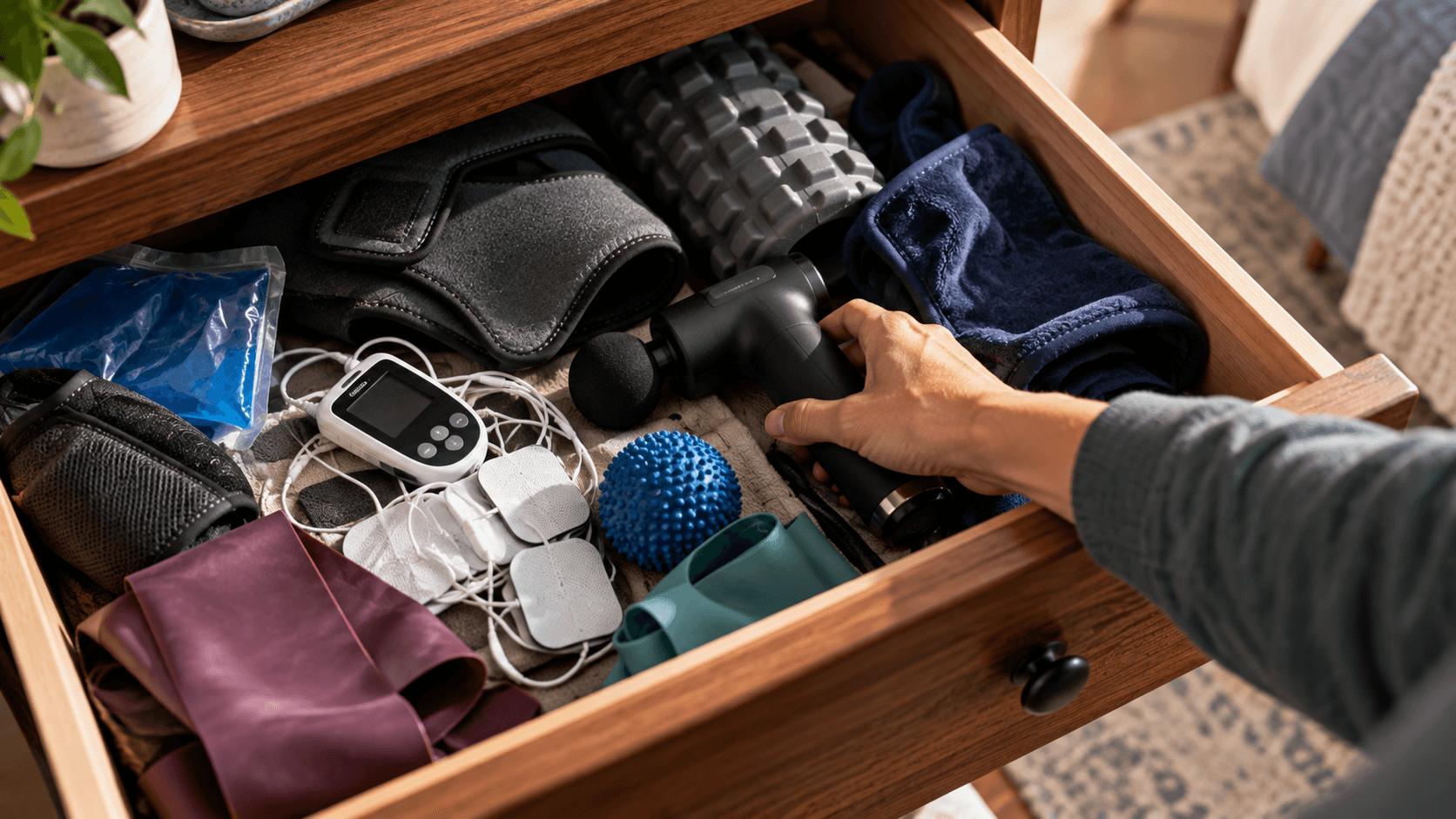
At-home support tools can make chronic pain easier to manage day to day. Heat packs, cold packs, TENS units, braces, cushions, massagers, compression items, mobility aids, activity trackers, and pain logs may help some people reduce discomfort, pace activity, or complete daily tasks more safely.
But support tools have limits. They do not diagnose the cause of pain, replace medical care, reverse nerve damage, treat inflammation by themselves, or make it safe to ignore red flags. The best tool depends on the type of pain, where it is located, what triggers it, what makes it better, and whether there are medical conditions that change safety.
This guide explains what to compare before buying at-home support tools for chronic pain, how to think about evidence and safety, and when to stop using a tool and contact a clinician.
Start With the Type of Pain
Chronic pain can come from many sources, including an injury, inflammation, medical treatment, nerve problems, an underlying condition, or an unknown cause. NCCIH notes that chronic pain may result from disease, injury, medical treatment, inflammation, nervous system problems, or may have no clear cause.
A tool that helps one pain pattern may not help another. Joint stiffness, muscle tension, nerve burning, migraine, pelvic pain, back pain, arthritis pain, fibromyalgia, post-surgical pain, and chronic regional pain may need different strategies.
Before buying, ask: “What problem am I trying to solve?” Pain relief for 20 minutes, safer walking, better sleep, fewer flares, reduced swelling, activity pacing, and medication reminders are different goals.
Compare the Tool to Your Care Plan
Chronic pain treatment is often most effective when it is individualized and combines several approaches. NINDS describes common pain management approaches as including medications, procedures and devices, behavioral approaches, physical therapy, lifestyle changes, and complementary health approaches. It also describes a biopsychosocial approach as important for preventing, assessing, and treating chronic pain.
At-home tools should support your care plan, not replace it. If you have a diagnosis, ask whether the tool fits that diagnosis. If you do not have a diagnosis and pain is persistent, worsening, or unusual, start with evaluation rather than shopping.
Tool Type 1: Heat Therapy Tools
Heat may help some people with muscle tension, stiffness, cramps, or chronic aches. Heat tools may include microwavable packs, electric heating pads, heated wraps, warm baths, or heated massage devices.
- Compare adjustable heat settings.
- Look for automatic shutoff.
- Choose a size that fits the pain area without wrapping too tightly.
- Check whether the cover is washable.
- Avoid falling asleep with heat on.
Heat should feel warm, not burning. Do not use heat over numb skin, open wounds, infection, severe swelling, new injury with bruising, or areas with poor circulation unless a clinician says it is safe.
Tool Type 2: Cold Therapy Tools
Cold may help some people with short-term swelling, inflammation after activity, acute flares, or irritated joints. Cold tools may include gel packs, ice packs, cold wraps, or reusable compression-cold systems.
- Compare flexible packs versus rigid packs.
- Use a cloth barrier to protect skin.
- Choose a shape that fits the body area.
- Check whether compression can be adjusted.
- Stop if skin becomes pale, numb, painful, or unusually red.
Cold therapy may be risky for people with reduced sensation, circulation problems, Raynaud’s phenomenon, neuropathy, open wounds, or cold sensitivity. Ask a clinician if those apply.
Tool Type 3: TENS Units
TENS stands for transcutaneous electrical nerve stimulation. A TENS unit sends mild electrical pulses through pads placed on the skin. Some people use it for temporary pain relief, but evidence depends on the pain condition and the person.
- Compare adjustable intensity settings.
- Look for a timer or automatic shutoff.
- Check pad quality and replacement cost.
- Choose controls that are easy to use.
- Review warnings for pregnancy, epilepsy, implanted devices, heart conditions, and reduced sensation.
NCCIH notes that evidence for TENS varies by chronic pain condition. Its low-back pain resource states that TENS devices should not be used by pregnant women, people with certain conditions such as epilepsy, or people with implanted medical devices such as pacemakers.
TENS Safety Features to Compare
A TENS unit should be easy to control and easy to stop.
- Low starting intensity
- Clearly labeled modes
- Session timer
- Lock feature if accidental button presses are likely
- Clear pad placement instructions
- Replacement pads from a reliable source
- Warnings not to use while driving, bathing, sleeping, or operating equipment
The FDA notes that electrical stimulation devices can interfere with implanted devices such as pacemakers and defibrillators, and that unregulated devices can have safety problems with cables and leads that may lead to shock.
Tool Type 4: Braces, Wraps, and Supports
Braces, sleeves, wraps, and supports may help some people feel more stable or comfortable during specific activities. They may be used for knees, ankles, wrists, elbows, back, neck, or other areas.
- Compare fit and adjustability.
- Choose breathable material if wearing for longer periods.
- Check whether it restricts circulation or causes skin irritation.
- Ask whether rigid, semi-rigid, or soft support is appropriate.
- Use it for defined tasks rather than unlimited dependence unless prescribed.
A support should not cause numbness, tingling, swelling, weakness, color change, or worsening pain. It also should not replace strengthening, mobility work, or evaluation of instability.
Tool Type 5: Cushions, Pillows, and Ergonomic Supports
For chronic back, neck, hip, tailbone, or pelvic pain, positioning tools may reduce strain during sitting, sleep, driving, or work.
- Compare size, firmness, and return policy.
- Check whether it fits your chair, car seat, bed, or desk setup.
- Avoid supports that force a painful posture.
- Look for washable covers.
- Combine positioning with movement breaks.
A cushion can make sitting more tolerable, but it cannot fix the entire problem if long sitting, stress, poor sleep, weakness, or an untreated condition is driving pain.
Tool Type 6: Electric Massagers
Electric massagers include vibration devices, percussion devices, massage cushions, heated massagers, and foot massagers. They may help some people with muscle tension or relaxation, but they are not appropriate for every pain condition.
- Compare adjustable intensity.
- Look for automatic shutoff.
- Check heat settings and overheat protection.
- Choose a device you can use without straining your hands or shoulders.
- Review warnings for blood clot risk, implanted devices, pregnancy, neuropathy, open wounds, and recent surgery.
NCCIH notes that some complementary approaches, including massage, may help selected chronic pain conditions, but evidence and benefit vary by condition. It also emphasizes that physical and psychological approaches are not risk-free for everyone.
Tool Type 7: Mobility Aids
Canes, walkers, trekking poles, grab bars, shower chairs, reachers, and bed rails may help reduce fall risk and make daily tasks safer. The key is fit and training.
- Ask a physical therapist or clinician to size the device.
- Check weight rating and grip comfort.
- Choose rubber tips or stable bases appropriate for your floors.
- Practice stairs, curbs, and transfers safely.
- Reassess if pain, balance, or strength changes.
A mobility aid is not a sign of failure. It can be a tool for independence. But a poorly fitted aid can increase strain or fall risk.
Tool Type 8: Activity Trackers and Pacing Tools
Chronic pain often improves with better pacing, not all-or-nothing activity. A tracker can help you see patterns between activity, flares, sleep, and recovery.
- Track steps, active minutes, standing time, or gentle movement breaks.
- Record flare days and recovery time.
- Avoid using goals that push boom-and-bust cycles.
- Use reminders for breaks, stretching, hydration, or medicine schedules.
- Turn off alerts that increase anxiety or guilt.
NCCIH’s chronic pain evidence summary notes that nonpharmacologic approaches such as exercise, strength training, cognitive behavioral therapy, mindfulness practices, massage, and mind-body approaches may improve pain or function for specific chronic pain conditions.
Tool Type 9: Pain and Symptom Logs
A pain log is often the lowest-cost tool and one of the most useful. It can help your clinician see patterns that are hard to remember later.
- Pain location and type
- Pain score and function level
- Sleep, mood, stress, activity, and flare triggers
- Medicines, support tools, and side effects
- What helped, what did not, and what caused a next-day flare
Track function as well as pain. “I walked 10 minutes with mild pain” may be more useful than a pain score alone.
Tool Type 10: Medication Organizers and Safety Tools
Medication organizers, reminder apps, refill alerts, and side-effect logs can support safer use of pain medicines and related treatments.
- Use one medication list that includes prescriptions, over-the-counter medicines, supplements, and topical products.
- Track side effects such as dizziness, constipation, sleepiness, stomach pain, mood changes, or falls.
- Ask before combining pain medicines, sleep medicines, alcohol, or sedating products.
- Keep medicines secured away from children, pets, and visitors.
Do not increase doses, combine medications, or stop prescribed medicines without guidance. Pain medicine safety depends on your health history and other medicines.
Compare Evidence, Not Just Reviews
Customer reviews can tell you about comfort, durability, noise, and fit. They cannot prove that a tool treats chronic pain safely or effectively for your condition.
- Look for evidence specific to your pain condition.
- Be cautious with claims such as “cures pain” or “repairs nerves.”
- Ask whether the study was about the exact product or only the general category.
- Check whether benefits are short-term comfort or longer-term function.
NCCIH notes that some complementary approaches show modest benefit for chronic pain, but the amount and quality of evidence vary depending on the approach and the pain condition.
Compare Safety Warnings
Safety warnings should be easy to find before you buy. If a product has no meaningful warnings, that is not reassuring; it may mean the company is not providing enough guidance.
- Pregnancy or pregnancy possibility
- Pacemaker, defibrillator, spinal cord stimulator, or other implanted device
- Epilepsy or seizure disorder
- Neuropathy or reduced sensation
- Blood clot history or circulation problems
- Open wounds, infection, burns, or skin conditions
- Recent surgery, fracture, cancer, or unexplained pain
If a warning might apply to you, ask a clinician before using the tool.
Compare Fit, Adjustability, and Return Policy
Fit matters. A tool that does not fit your body, hand strength, home setup, or daily routine may sit unused.
- Adjustable size or intensity
- Low starting setting
- Comfortable grip or hands-free option
- Easy-to-read controls
- Washable or replaceable parts
- Simple charging or battery replacement
- Return policy if the tool does not fit or worsens symptoms
For chronic pain, the safest tools are usually adjustable and gentle enough to use on difficult days.
Compare Heat, Electrical, and Battery Safety
Powered devices require extra caution.
- Automatic shutoff for heat or electrical stimulation
- No damaged cords, exposed wiring, or overheating smell
- Clear charging instructions
- No use in bath, shower, or wet areas unless specifically designed for that purpose
- No use while sleeping unless the product is specifically designed and cleared for that use
Stop using any device that overheats, sparks, shocks you, burns skin, or behaves unpredictably.
Compare Cleaning and Skin Contact
Any tool that touches skin repeatedly should be easy to clean. This matters even more if you sweat, use lotions, share the device, or have sensitive skin.
- Washable covers
- Replaceable pads or sleeves
- Cleaning instructions that are realistic
- Latex-free or fragrance-free materials if sensitive
- Skin checks after heat, cold, compression, braces, or electrodes
Stop using a tool that causes rash, blistering, pressure marks, bruising, numbness, or worsening pain.
Use a Short Trial Before Deciding
Try one tool at a time so you can tell whether it helps. A 1- to 2-week trial is often more useful than buying several devices at once.
- Record pain before and after use.
- Record function, not just pain score.
- Track sleep and next-day flare response.
- Note any side effects.
- Stop if symptoms worsen or safety concerns appear.
A tool is worth keeping if it improves comfort, function, sleep, pacing, or confidence without causing new problems.
What to Bring to a Pain Visit
Bring a simple summary instead of scattered device notes.
- Where the pain is and how long it has been present
- Pain type: burning, aching, stabbing, throbbing, electric, pressure, or cramping
- What worsens or improves it
- Support tools tried, duration, settings, and response
- Medication list and side effects
- Sleep, mood, stress, activity, and work impact
- Weakness, numbness, fever, weight loss, falls, or other warning signs
Ask which tools are safe for your diagnosis and which ones are unlikely to help.
Common Mistake: Buying the Strongest Device
More pressure, heat, vibration, compression, or electrical intensity is not automatically better. Stronger tools can irritate tissue, burn skin, worsen nerve symptoms, or make pain more sensitive.
Start with the lowest comfortable setting.
Stop if pain, numbness, tingling, dizziness, skin changes, or next-day flares increase.
Common Mistake: Treating Tools as a Diagnosis
If heat helps, that does not prove the pain is muscular. If a TENS unit helps, that does not prove the nerves are healed. If a brace helps, that does not prove the joint is stable.
Use tools for support while you continue evaluation and follow-up.
Do not let temporary relief delay care for worsening or unexplained symptoms.
Common Mistake: Ignoring Function
A device may lower pain briefly but not improve daily life. Function is the real test.
Track whether the tool helps you walk, sleep, work, cook, shower, exercise, drive, or participate in daily activities.
If function is not improving, ask for a broader care plan.
Common Mistake: Using Tools to Push Through Red Flags
Support tools should not be used to mask severe or dangerous symptoms.
Do not use a brace, massager, heat pack, cold pack, or TENS unit to push through new weakness, numbness, chest pain, severe headache, fever, swelling, infection, or sudden severe pain.
Red flags need evaluation.
Common Mistake: Buying Too Many Tools at Once
When several tools are started at the same time, it is hard to know what helps and what causes side effects.
Start with one tool matched to one goal.
Use a short trial and keep what clearly improves function or comfort.
When to Talk to a Clinician
Talk to a clinician if chronic pain is worsening, spreading, interfering with sleep or daily function, causing falls, affecting mood, or not improving despite reasonable self-care.
You should also ask before using powered devices, heat, cold, compression, braces, or massagers if you have pregnancy, implanted devices, seizure disorder, neuropathy, reduced sensation, blood clot risk, circulation problems, cancer history, recent surgery, unexplained weight loss, fever, infection, or new neurologic symptoms.
A clinician may recommend physical therapy, occupational therapy, behavioral pain strategies, medication review, imaging, lab testing, injections, specialist referral, assistive device fitting, or a safer home tool plan depending on symptoms and diagnosis.
When to Seek Urgent or Emergency Care
Seek urgent or emergency care for chest pain, severe shortness of breath, stroke symptoms, fainting, sudden severe headache, new weakness, loss of bladder or bowel control, numbness in the groin or saddle area, severe abdominal pain, fever with severe pain, severe swelling, red hot joint, major injury, or symptoms that feel life-threatening.
Seek prompt care for rapidly worsening pain, new numbness or weakness, signs of infection, severe medication side effects, falls with injury, or pain with unexplained weight loss or cancer history.
Do not try to treat emergency symptoms with an at-home support tool.
The Bottom Line
At-home support tools can help some people manage chronic pain, but the right choice depends on the pain pattern, diagnosis, goals, safety risks, and care plan. Useful options may include heat, cold, TENS, braces, cushions, massagers, mobility aids, activity trackers, pain logs, and medication organizers.
Before buying, compare evidence for your pain condition, safety warnings, fit, adjustability, return policy, heat or electrical safety, cleaning, and whether the tool improves function—not just pain score.
The most common mistakes are buying the strongest device, treating tools as a diagnosis, ignoring function, using tools to push through red flags, and buying too many tools at once.
Use one tool at a time, track response for 1 to 2 weeks, and stop if it worsens pain, causes skin changes, increases numbness, raises anxiety, or delays needed care. A good support tool should make daily life safer and more manageable, not replace a complete chronic pain plan.
Medical disclaimer: This content is for informational purposes only and is not a substitute for professional medical advice, diagnosis, chronic pain treatment, physical therapy, occupational therapy, mental health care, medication management, device clearance, or emergency care. Always consult your physician, pain specialist, neurologist, rheumatologist, physical therapist, occupational therapist, pharmacist, mental health professional, or qualified health provider before using chronic pain support tools if you have medical conditions, implanted devices, pregnancy, seizure disorder, reduced sensation, circulation problems, blood clot risk, recent surgery, severe symptoms, or unexplained pain. If you have chest pain, severe shortness of breath, stroke symptoms, fainting, sudden weakness, loss of bowel or bladder control, saddle numbness, fever with severe pain, major injury, or another emergency, seek urgent medical care right away.