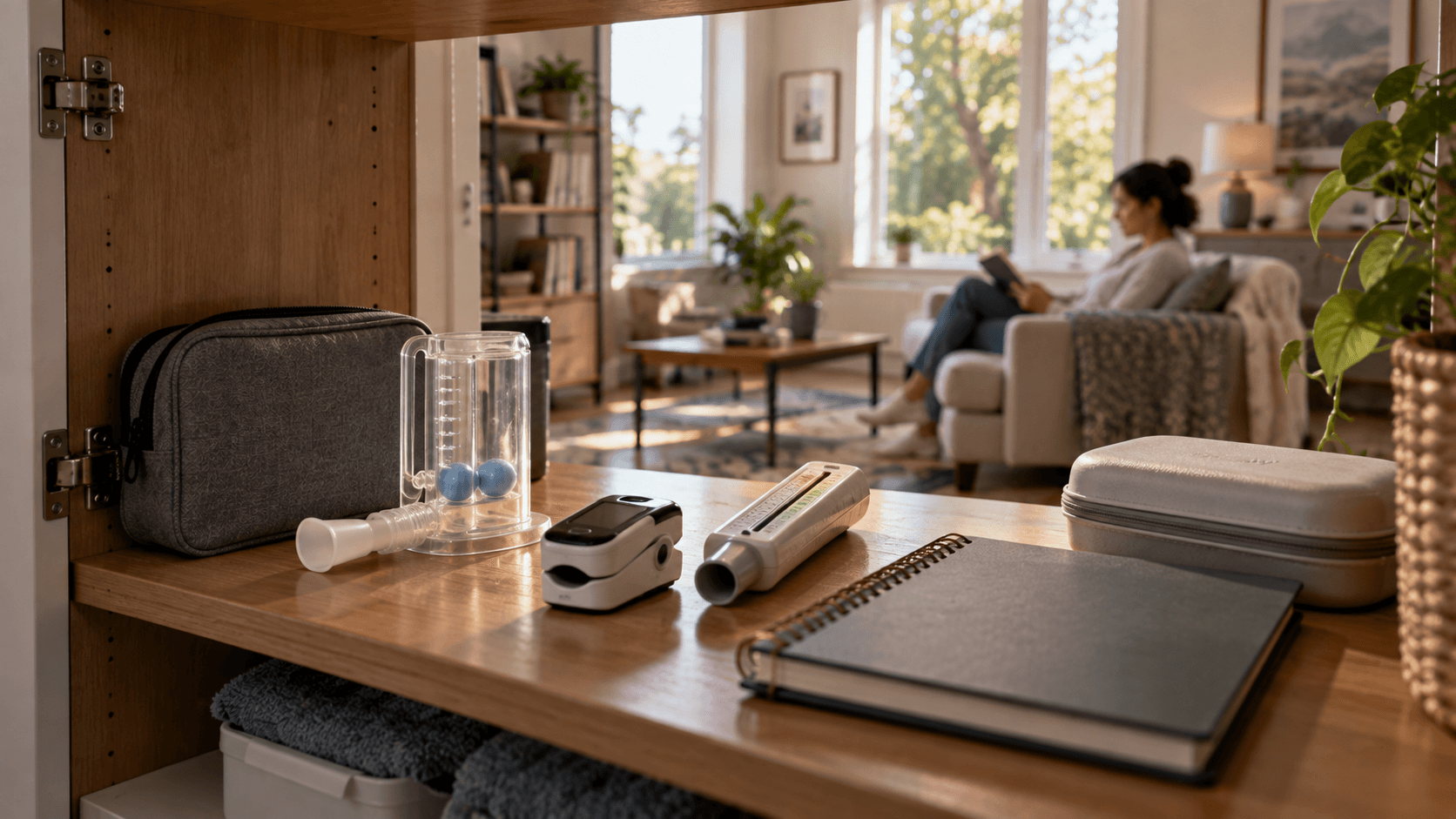
Breathing trainers and pulse oximeters are often marketed for people who want to monitor breathing at home. For asthma, these tools can sometimes support awareness, but they do not replace an asthma action plan, prescribed inhalers, peak flow monitoring when recommended, or medical care during a flare.
A pulse oximeter estimates oxygen saturation, often shown as SpO2. A breathing trainer may guide breathing pace, build respiratory muscle awareness, or add resistance during breathing practice. Both tools have limits. A person can have worsening asthma symptoms before oxygen levels drop, and some breathing devices may feel uncomfortable or trigger dizziness if used too aggressively.
This guide explains what features matter when comparing breathing trainers and pulse oximeters for asthma home monitoring, what to track, what these tools do not tell you, and when symptoms should prompt urgent care.
Start With the Asthma Action Plan
The most important asthma “device” is a written asthma action plan. NHLBI explains that an asthma action plan is created with a provider and helps people monitor asthma and treat changing symptoms or attacks. It may include daily medicines, quick-relief medicines, symptoms to watch for, and peak flow readings if used.
CDC also says everyone with asthma needs their own asthma action plan, and notes that peak flow measurement is a quick test that measures air flowing out of the lungs.
Before buying any asthma home-monitoring tool, ask: “How does this fit into my action plan?” If the answer is unclear, ask your clinician whether symptom tracking, peak flow, pulse oximetry, or another tool is most useful for your situation.
Tool 1: Pulse Oximeters
A pulse oximeter is a small device that clips onto a finger and estimates the percentage of oxygen carried by red blood cells. It may also show pulse rate.
- SpO2: estimated oxygen saturation
- Pulse rate: heartbeats per minute shown by the device
- Trend: whether readings are stable, improving, or falling compared with your usual baseline
- Context: whether the reading was taken at rest, after walking, during symptoms, or after treatment
The American Lung Association explains that a pulse oximeter measures oxygen saturation and that a doctor may recommend one for people with shortness of breath or a known lung or heart condition. It also advises discussing home use with a healthcare provider.
Pulse Oximeter Feature Checklist
For asthma monitoring, choose a device that is easy to use and easy to read. A confusing device is less useful during symptoms.
- Large, bright display with SpO2 and pulse clearly labeled
- Comfortable finger fit for the intended user
- Stable reading indicator or signal-quality indicator
- Battery indicator
- Simple one-button operation
- Readable display in low light
- Storage case and clear instructions
- Appropriate sizing if used for children
For children, ask the pediatric clinician whether a pediatric-specific oximeter is needed. Adult finger clips may not fit smaller fingers reliably.
Pulse Oximeter Safety Limits
A pulse oximeter can be helpful, but it can also create false reassurance. Asthma symptoms can worsen before oxygen saturation drops.
- Do not ignore wheezing, chest tightness, or trouble speaking because the oxygen number looks normal.
- Do not delay rescue medicine or urgent care while rechecking repeatedly.
- Do not use someone else’s oxygen threshold if you have lung or heart disease.
- Do not self-prescribe oxygen based on a home reading.
GINA guidance notes that exacerbation severity is assessed by dyspnea, respiratory rate, pulse rate, oxygen saturation, and lung function, usually peak expiratory flow, while treatment is started. This means oxygen is one part of assessment, not the whole assessment.
How to Measure Oxygen More Reliably
Pulse oximeter readings can be affected by movement, cold fingers, poor circulation, nail polish, artificial nails, device quality, and incorrect placement.
- Sit still and rest for a moment before measuring when possible.
- Warm cold hands before checking.
- Keep the finger still and wait for the reading to stabilize.
- Record symptoms at the same time as the reading.
- Compare readings with your personal baseline rather than one isolated number.
If breathing looks dangerous, seek care even if the device reading is unclear. Severe breathing distress should not depend on a home device confirmation.
Tool 2: Peak Flow Meters
A peak flow meter is often more asthma-specific than a pulse oximeter because it measures how quickly air can be blown out of the lungs. Some action plans use peak flow zones to guide next steps.
- Useful for some people with moderate to severe asthma
- Can help detect narrowing airways before symptoms feel severe
- Works best when compared with your personal best peak flow
- Requires correct technique and clinician guidance
NHLBI says a provider may show people how to track asthma with a peak flow meter as part of an asthma action plan. Expert asthma guidance notes that if peak flow monitoring is used, the written action plan should use the person’s personal best peak flow as the reference value.
Peak Flow Feature Checklist
If your clinician recommends peak flow monitoring, choose a meter that supports consistent technique.
- Easy-to-read scale
- Comfortable mouthpiece
- Clear marker for personal best or zone ranges
- Washable or replaceable mouthpiece
- Compact design if it needs to travel with you
- Instructions for cleaning and storage
Ask your clinician or respiratory therapist to watch your technique. Peak flow numbers are only useful if the test is performed correctly.
Tool 3: Breathing Trainers
Breathing trainers include guided breathing devices, respiratory muscle trainers, resistance devices, and app-connected tools. Some are designed for relaxation; others are designed for inspiratory or expiratory muscle training.
- Guided breathing tools: cue slower breathing with lights, sound, vibration, or an app.
- Resistance trainers: add resistance during inhaling, exhaling, or both.
- Biofeedback-style tools: may pair breathing cues with heart rate or relaxation metrics.
- No-device breathing: may include pursed-lip breathing or belly breathing taught by a clinician.
The American Lung Association describes pursed-lip breathing and belly breathing as breathing exercises that can help with breathing efficiency and are often taught by pulmonary rehabilitation specialists, especially for people with chronic lung diseases such as asthma and COPD.
Breathing Trainer Feature Checklist
For asthma, a breathing trainer should be gentle, adjustable, and easy to stop.
- Adjustable resistance or pace
- Low beginner setting
- Short session timer
- Clear instructions and cleaning steps
- Comfortable mouthpiece if used
- No forced breath-holding unless prescribed
- Easy stop or pause control
- Warnings for asthma flares, dizziness, chest pain, and shortness of breath
Avoid devices that encourage hard, fast, or forceful breathing during asthma symptoms. Training should not feel like you are fighting for air.
Breathing Trainer Safety Limits
Breathing trainers should not be used as rescue treatment during an asthma attack unless a clinician has given a specific plan. They do not replace reliever medicine.
- Do not use a resistance trainer during severe wheezing or chest tightness unless instructed.
- Stop if you feel dizzy, faint, tingly, chest-tight, or more short of breath.
- Do not use breath-holding exercises during a flare if they worsen symptoms.
- Ask a clinician before using if you have uncontrolled asthma, recent hospitalization, heart disease, pregnancy concerns, or unexplained breathing symptoms.
NHLBI advises following your asthma action plan during an asthma attack and seeking medical attention if symptoms do not go away soon after at-home medicines.
Feature That Matters Most: Personal Action Thresholds
A device is only useful if you know what to do with the information. Ask your clinician to write down thresholds.
- What symptoms mean “use reliever medicine”?
- What peak flow number or zone means “step up treatment”?
- What oxygen reading should make you call?
- What symptoms mean “go to urgent care” or “call 911”?
The American Lung Association says an asthma action plan can be based on symptoms or peak flow rate, and a provider may want peak flow monitoring especially for people with moderate to severe asthma.
Feature That Matters: Symptom Logging
Symptoms often matter more than a single device reading. Record symptoms in plain language.
- Cough, wheeze, chest tightness, or shortness of breath
- Nighttime waking or early morning symptoms
- Reliever inhaler use and whether it helped
- Activity limits, such as stairs, sports, work, school, or play
- Triggers such as pollen, smoke, pets, dust, cold air, exercise, infection, or strong odors
NHLBI notes that signs asthma is not well controlled or is getting worse can include symptoms and measurable signs such as low oxygen or high carbon dioxide, depending on the situation.
Feature That Matters: Inhaler and Medication Tracking
Home monitoring should include medication use, because worsening symptoms often connect to missed doses, poor technique, triggers, or running out of medicine.
- Controller medicine use
- Reliever inhaler use
- Spacer use if prescribed
- Missed doses, refill delays, or cost barriers
- Side effects such as shakiness, fast heartbeat, throat irritation, or hoarseness
Bring your inhalers and spacer to visits so technique can be checked. A device log is less useful if medication technique is not working.
Feature That Matters: Trigger Notes
Asthma monitoring is more useful when it includes triggers. This helps your clinician adjust prevention strategies.
- Respiratory infections
- Allergens such as pollen, mold, dust mites, or animal dander
- Smoke, vaping, pollution, or strong smells
- Exercise, cold air, heat, humidity, or weather changes
- Workplace, school, cleaning products, or chemical exposures
CDC recommends working with a doctor to make an asthma action plan, avoid triggers, and manage symptoms.
Buying Checklist for Pulse Oximeters
Before buying a pulse oximeter, compare usability and reliability features.
- Clear SpO2 and pulse display
- Signal-quality indicator
- Comfortable finger fit
- Battery indicator and easy replacement or charging
- Readable instructions
- Appropriate size for adult or child use
- Return policy if the device does not fit or gives unstable readings
Ask your clinician whether you need one at all. Many people with asthma can monitor with symptoms, reliever use, and peak flow when recommended.
Buying Checklist for Breathing Trainers
Before buying a breathing trainer, compare safety and comfort features.
- Adjustable difficulty
- Gentle beginner mode
- Short session options
- Cleaning instructions and replacement mouthpieces if needed
- Clear warning labels
- No exaggerated claims that it treats asthma attacks
- Ability to pause or stop instantly
A breathing trainer should support practice when asthma is stable. It should not encourage delaying reliever medicine during symptoms.
Buying Checklist for Peak Flow Meters
If peak flow is part of your plan, choose a meter that makes consistent tracking easy.
- Readable numbers
- Personal-best marker or zone markers
- Durable mouthpiece
- Easy cleaning
- Portable size if needed for school, work, or travel
- Instructions that match your clinician’s technique teaching
Ask how often to check peak flow and what numbers correspond to your green, yellow, and red zones.
What to Track During Asthma Home Monitoring
You can use a notebook, phone note, app, printed worksheet, or asthma action plan form.
- Symptoms: cough, wheeze, chest tightness, shortness of breath, nighttime waking, and activity limits
- Reliever use: how often, dose, and whether it helped
- Peak flow: number and zone if your clinician recommends it
- Oxygen: SpO2, pulse, time, and symptoms if your clinician recommends oximetry
- Triggers: infection, pollen, smoke, pets, exercise, weather, or workplace exposure
- Medication: controller use, missed doses, inhaler technique concerns, and refills
- Action taken: followed green, yellow, or red zone instructions; called clinician; or sought urgent care
A short daily log during flares may be enough. During stable periods, your clinician may only want periodic updates.
What to Bring to Asthma Visits
Bring information that helps your clinician judge control, triggers, and treatment response.
- Asthma action plan and any questions about it
- Symptom and trigger log
- Reliever inhaler use frequency
- Controller medicine use and missed doses
- Peak flow readings if used
- Pulse oximeter readings if recommended
- Breathing trainer use and any symptoms during use
- Inhalers, spacer, peak flow meter, and device manuals if technique needs review
Ask your clinician which tool matters most for you. For one person, the answer may be a peak flow meter. For another, it may be better inhaler technique, trigger control, or a clearer action plan.
Home Tools That May Help
Home tools can support asthma care when they are matched to a clinician-approved plan. Helpful options may include an asthma action plan, symptom diary, peak flow meter, spacer, medication organizer, refill reminders, trigger log, pulse oximeter if recommended, and gentle breathing trainer if appropriate for stable practice.
Do not use home tools to delay treatment during an asthma flare. A normal oxygen reading, a calming breathing app, or a device routine should not override worsening symptoms.
If tracking increases anxiety, simplify it and ask your clinician which measurements are truly necessary.
Common Mistake: Treating Oxygen as the Main Asthma Score
Oxygen saturation can be important, but asthma can worsen before oxygen drops. Wheezing, chest tightness, cough, reliever use, nighttime symptoms, peak flow, and activity limits all matter.
Do not ignore symptoms because the oxygen number looks normal.
Follow your asthma action plan.
Common Mistake: Using a Breathing Trainer During a Flare
Resistance breathing or intense breathing practice can make symptoms feel worse during an asthma flare.
Use prescribed reliever medicine and your action plan for worsening symptoms.
Ask whether breathing exercises are appropriate when symptoms are stable.
Common Mistake: Skipping Peak Flow When It Is in Your Plan
If your clinician included peak flow in your action plan, skipping it can make it harder to know which zone you are in.
Use your personal best, not someone else’s number.
Ask for technique coaching if the numbers seem inconsistent.
Common Mistake: Buying Tools Instead of Checking Inhaler Technique
A new device will not help if controller medicine is missed or inhaler technique is poor.
Bring your inhaler and spacer to visits.
Ask your clinician or pharmacist to watch you use them.
Common Mistake: Overchecking Until Anxiety Rises
Repeated oxygen checks can increase anxiety and make normal variation feel alarming.
Use the schedule your clinician recommends.
Check symptoms and action steps, not just numbers.
When to Talk to a Clinician
Talk to a clinician if asthma symptoms are waking you at night, limiting activity, requiring frequent reliever use, worsening during exercise, or not responding to your usual plan.
You should also seek guidance before using a breathing trainer if you have uncontrolled asthma, recent emergency visits, frequent flares, severe shortness of breath, heart disease, pregnancy concerns, or dizziness with breathing exercises.
A clinician may recommend updating your action plan, checking inhaler technique, adjusting controller medicine, adding or reviewing peak flow monitoring, reviewing triggers, treating allergies or reflux, checking for respiratory infection, or deciding whether a pulse oximeter is useful for your situation.
When to Seek Urgent or Emergency Care
Seek urgent or emergency care if symptoms do not improve soon after using at-home reliever medicine as directed, breathing is getting worse, you have trouble speaking full sentences, lips or face look blue or gray, ribs or neck muscles pull in with breathing, you feel confused or faint, or oxygen readings are low for you and not improving.
Call emergency services for severe breathing trouble, chest pain, severe weakness, inability to stay awake, or symptoms that feel life-threatening.
Do not wait for a device reading to confirm an emergency if asthma symptoms are severe.
The Bottom Line
Breathing trainers and pulse oximeters can support asthma awareness for some people, but they are not substitutes for an asthma action plan, prescribed medicines, inhaler technique, trigger control, or clinician follow-up.
For pulse oximeters, useful features include a clear SpO2 and pulse display, good finger fit, signal-quality indicator, battery indicator, and simple instructions. For breathing trainers, useful features include adjustable settings, gentle beginner mode, short sessions, clear cleaning steps, and safety warnings. For many people, a peak flow meter may be more directly tied to asthma action zones if the clinician recommends it.
The most common mistakes are treating oxygen as the main asthma score, using a breathing trainer during a flare, skipping peak flow when it is in the plan, buying tools instead of checking inhaler technique, and overchecking until anxiety rises.
Bring your tools, readings, symptom log, and asthma action plan to your next visit. Ask which measurements matter for you, what thresholds should prompt action, and what symptoms mean you should seek urgent care.