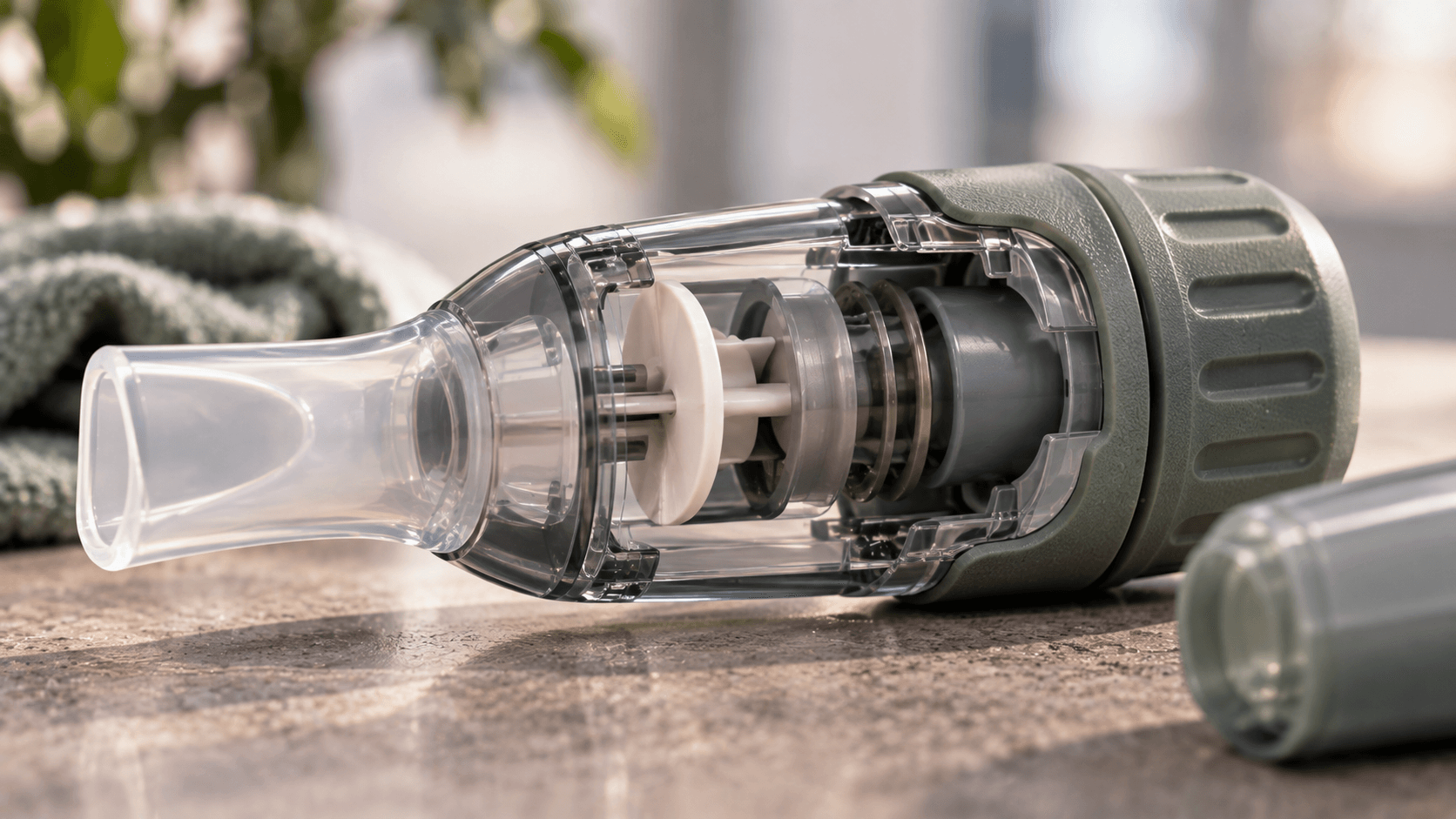
People with chronic obstructive pulmonary disease, or COPD, often use home respiratory tools to track symptoms, take medicines, manage shortness of breath, and stay active. These tools may include inhalers, spacers, nebulizers, pulse oximeters, oxygen equipment, breathing exercise devices, mucus-clearance tools, activity trackers, and symptom logs.
The evidence is not the same for every tool. Some tools are central to COPD care when prescribed, such as inhaled medicines, oxygen therapy for people who meet criteria, and pulmonary rehabilitation. Other tools may help selected people but should not be treated as cures or replacements for a medical plan.
This guide explains what the evidence shows about common COPD home respiratory tools, what each tool can and cannot do, and when symptoms should prompt urgent medical attention.
Start With the COPD Care Plan
Home tools work best when they are connected to a clinician-approved COPD plan. NHLBI explains that COPD treatment may include bronchodilators, inhaled steroids, pulmonary rehabilitation, oxygen therapy, and other options depending on symptoms and severity. Pulmonary rehabilitation is described as a supervised program that includes exercise training, health education, and breathing techniques.
GOLD’s COPD strategy emphasizes that pulmonary rehabilitation improves shortness of breath, health status, and exercise tolerance in stable COPD, with high-quality evidence.
The first question is not “Which device should I buy?” The better question is “Which tool supports my written COPD plan, medicines, oxygen instructions, exercise plan, and flare-up action steps?”
Tool 1: Inhalers
Inhalers are one of the most important home tools for COPD because they deliver medicine directly to the lungs. Depending on the person, inhaled medicines may include short-acting bronchodilators, long-acting bronchodilators, inhaled corticosteroids, or combination inhalers.
- Help open airways or reduce inflammation when prescribed
- May be used daily, as needed, or both depending on the medication
- Require correct technique to work well
- Should not be changed or stopped without clinician guidance
NHLBI lists bronchodilators and inhaled corticosteroids among COPD treatment options and notes that inhalers must be used correctly.
What the Evidence Shows About Inhalers
Inhalers are evidence-based treatment tools for COPD when matched to symptoms, exacerbation history, lung function, and clinician guidance. The main home-use issue is technique. A person may have the right medicine but not get the full benefit if the inhaler is used incorrectly.
- Bring inhalers to visits for technique checks.
- Ask whether a spacer is recommended for metered-dose inhalers.
- Track rescue inhaler use and whether it helps.
- Track side effects such as shakiness, fast heartbeat, dry mouth, hoarseness, thrush, or urinary symptoms.
If symptoms are worsening despite inhaler use, do not keep repeating doses beyond your action plan. Call your clinician or seek urgent care depending on severity.
Tool 2: Spacers and Valved Holding Chambers
A spacer or valved holding chamber can make some metered-dose inhalers easier to use by helping coordinate the spray with inhalation. This may be especially helpful for people who have trouble timing the inhaler puff.
- May improve medication delivery for selected inhalers
- Can reduce medicine left in the mouth or throat
- Needs cleaning and drying according to instructions
- Does not work with every inhaler type
Ask your clinician, pharmacist, or respiratory therapist whether your inhaler should be used with a spacer. Dry powder inhalers and soft mist inhalers may have different technique needs.
Tool 3: Nebulizers
Nebulizers turn liquid medicine into a mist that can be breathed through a mouthpiece or mask. Some people with COPD use nebulized bronchodilators or other medicines when prescribed.
- May be useful for people who have trouble using certain inhalers
- Can deliver prescribed medicines over several minutes
- Requires regular cleaning to reduce infection risk
- Should use only medicines prescribed for nebulizer use
Nebulizers are not automatically stronger or better than inhalers. The best option depends on the medication, technique, symptoms, insurance coverage, and ability to clean and maintain the device.
Tool 4: Pulse Oximeters
A pulse oximeter clips onto a finger and estimates oxygen saturation, usually shown as SpO2. It may also show pulse rate. For COPD, a pulse oximeter can help some people track oxygen trends during symptoms, activity, respiratory infection, or oxygen therapy, but it should not replace symptom assessment.
- Can estimate oxygen saturation at rest
- Can show changes with walking or activity if your clinician recommends tracking
- May help people prescribed oxygen follow an action plan
- Can be inaccurate if hands are cold, circulation is poor, there is movement, or device fit is poor
The American Lung Association explains that a pulse oximeter measures oxygen saturation and that a doctor may recommend one for people with shortness of breath or a known lung or heart condition. It also notes that poor circulation, skin pigmentation, cool skin, tobacco use, nail polish, artificial nails, and dirty fingers may affect readings.
What the Evidence Shows About Pulse Oximeters
Pulse oximeters can be useful monitoring tools, but oxygen saturation is only one part of COPD assessment. A normal or near-normal reading does not always explain shortness of breath, and a low reading does not identify the cause by itself.
- Use oxygen thresholds given by your clinician, not someone else’s number.
- Record symptoms with the reading.
- Do not self-prescribe oxygen based on a home number.
- Do not delay urgent care for severe shortness of breath while rechecking repeatedly.
An American Thoracic Society research statement on home monitoring in chronic lung disease describes home oximetry as a monitoring area that needs careful evaluation for clinical utility, including use during home-based exercise and pulmonary rehabilitation.
Tool 5: Home Oxygen Equipment
Oxygen therapy is a medical treatment, not a general wellness tool. Some people with COPD need oxygen at home because blood oxygen levels are low. Others do not benefit from oxygen and may be harmed by incorrect use.
- Use oxygen only as prescribed.
- Do not change flow rate unless your clinician instructs you.
- Keep oxygen away from flames, smoking, candles, gas stoves, and sparks.
- Ask what oxygen level should prompt a call or emergency care.
NHLBI explains that oxygen therapy delivers oxygen for breathing and can be used short-term or long-term in the hospital or at home. It is one of several COPD treatment options when appropriate.
What the Evidence Shows About Oxygen
Long-term oxygen therapy can be important for people with severe chronic low oxygen, but oxygen is not helpful for every person with COPD. NHLBI’s Long-Term Oxygen Treatment Trial reported that long-term supplemental oxygen did not benefit some people with COPD who had moderately low oxygen levels.
This is why oxygen decisions should be based on prescribed criteria and medical testing, not just buying equipment or reacting to a single home reading.
Tool 6: Breathing Exercises
Breathing exercises such as pursed-lip breathing and belly breathing are commonly taught in pulmonary rehabilitation. They may help some people manage breathlessness and breathing efficiency.
- Pursed-lip breathing may help slow breathing and reduce air trapping for some people.
- Belly breathing may help focus on diaphragmatic movement.
- Breathing exercises are usually safest when taught by a clinician, respiratory therapist, or pulmonary rehab team.
- They are not a replacement for prescribed medicines during a flare.
The American Lung Association describes pursed-lip breathing and belly breathing as useful breathing exercises taught by pulmonary rehabilitation specialists to people with chronic lung diseases such as COPD and asthma.
What the Evidence Shows About Breathing Exercises
Breathing exercises may help selected people, but the evidence does not support using them as the main COPD treatment for everyone. A Cochrane review concluded that breathing exercises may improve exercise tolerance in selected people with COPD who are unable to undertake exercise training, but the data do not suggest a widespread role in comprehensive COPD management.
In practical terms, breathing exercises may be useful as a skill, especially during breathlessness or activity. They should not replace pulmonary rehabilitation, inhaled medicines, smoking cessation, vaccines, oxygen when prescribed, or flare-up treatment.
Tool 7: Inspiratory Muscle Trainers
Inspiratory muscle trainers create resistance while breathing in. They are designed to train the muscles used for inhalation. Some people with COPD use them as part of a structured program.
- Adjustable resistance is important.
- Training load should be prescribed or supervised when possible.
- Symptoms such as dizziness, chest pain, severe breathlessness, or wheezing should stop the session.
- They should not be used during a flare unless instructed.
Cochrane evidence on inspiratory muscle training in COPD found that the added benefit of inspiratory muscle training on top of pulmonary rehabilitation may be limited, and exercise combined with specific breathing muscle exercises may not improve breathlessness, physical fitness, or quality of life compared with pulmonary rehabilitation alone.
Tool 8: Airway Clearance and Mucus Tools
Some people with COPD, chronic bronchitis, bronchiectasis overlap, or frequent mucus may be given airway-clearance techniques or devices. These may include huff coughing, positive expiratory pressure devices, oscillating devices, or other methods.
- May be useful when mucus retention is a major problem
- Works best when taught by a respiratory therapist or clinician
- Requires cleaning if the device contacts the mouth
- Should be stopped if it causes severe breathlessness, chest pain, dizziness, or bleeding
Airway-clearance tools are not necessary for everyone with COPD. Ask whether mucus volume, infections, imaging, or bronchiectasis overlap makes them relevant for you.
Tool 9: Activity Trackers
Activity trackers can help some people monitor steps, walking time, activity minutes, and recovery. For COPD, activity data is most useful when it supports pulmonary rehabilitation or a clinician-approved walking plan.
- Track walking minutes or step trends.
- Record breathlessness during activity.
- Pair activity data with pulse oximeter readings only if your clinician recommends it.
- Watch for overdoing it during flares or illness.
The American Lung Association notes that regular exercise is part of a healthy lifestyle for people with COPD and advises asking a doctor or respiratory therapist to show appropriate exercises that can be done at home.
Tool 10: Symptom and Exacerbation Logs
A simple symptom log may be one of the most useful home tools because it connects breathing changes with actions.
- Shortness of breath compared with usual baseline
- Cough, wheeze, chest tightness, mucus amount, or mucus color
- Fever, infection symptoms, fatigue, or reduced activity
- Rescue inhaler or nebulizer use
- Oxygen use if prescribed
- Triggers such as smoke, pollution, cold air, heat, humidity, dust, illness, or exertion
Tracking these patterns can help your clinician decide whether you need medication changes, pulmonary rehab, oxygen assessment, vaccination updates, infection evaluation, or a revised action plan.
Tool 11: Home Spirometers
Home spirometers measure breathing numbers such as forced expiratory volume, depending on the device. They may be useful in some respiratory conditions when prescribed, but they are not a simple replacement for clinical spirometry.
- Technique strongly affects results.
- Numbers may be confusing without clinician interpretation.
- Device quality varies.
- Home spirometry should not delay care for worsening symptoms.
GOLD states that spirometry is required to establish the diagnosis of COPD. Home devices may help selected monitoring plans, but diagnosis and treatment decisions require clinician interpretation.
Tool 12: Smart Inhaler Sensors and Apps
Some inhalers or add-on sensors track medication use, reminders, or inhaler events. Apps may also track symptoms, oxygen readings, activity, and rescue medicine use.
- May help identify missed doses or overuse of rescue medicine
- May support reminders and refill planning
- Does not prove inhaler technique is correct
- Requires privacy review and data-sharing choices
Ask your clinician whether app data will be reviewed and what action should follow increased rescue inhaler use or worsening symptoms.
Evidence Strongest For: Pulmonary Rehabilitation
If you are comparing home tools, remember that pulmonary rehabilitation has stronger evidence than many standalone devices. NHLBI describes pulmonary rehabilitation as a supervised program that includes exercise training, health education, and breathing techniques for lung conditions such as COPD. It can help people breathe easier and improve quality of life.
Home tools should support, not replace, the habits learned in pulmonary rehabilitation: safe exercise, breathing strategies, energy conservation, medicine use, oxygen planning if prescribed, and flare-up recognition.
Evidence Mixed or Limited For: Standalone Breathing Devices
Breathing trainers and breathing exercises may help selected people, especially when exercise training is not possible or when a clinician includes them in a plan. But they should not be advertised or used as a substitute for evidence-based COPD treatment.
- They may help some people feel more in control during breathlessness.
- They may support breathing awareness and practice.
- They may not add much when pulmonary rehabilitation is already being done.
- They should be stopped if they worsen symptoms.
When buying a breathing device, look for adjustable resistance, low beginner settings, cleaning instructions, session limits, and clear safety warnings.
Evidence Depends on the User: Pulse Oximetry and Wearables
Pulse oximeters, step trackers, and wearable devices can help selected people track trends, but they do not automatically improve COPD outcomes by themselves. They are most useful when tied to an action plan.
- What number should make you rest?
- What number should make you call the clinic?
- What symptoms should override the number?
- How often should you check without increasing anxiety?
If the answer is unclear, ask your clinician before buying more monitoring devices.
Buying Checklist for COPD Home Respiratory Tools
Before buying, compare safety, usefulness, and fit with your care plan.
- Does the tool match a clinician-recommended goal?
- Does it have clear instructions and safety warnings?
- Can you clean it easily if it touches the mouth or mucus?
- Can you start at a low setting and adjust gradually?
- Does it avoid exaggerated claims such as curing COPD?
- Does it have replacement parts, customer support, and a return policy?
- Will your care team actually use the data?
Do not buy a tool simply because it promises stronger lungs, better oxygen, or fewer flares. COPD tools should fit the treatment plan.
What to Track at Home
A short COPD log can be more useful than multiple devices with disconnected numbers.
- Symptoms: shortness of breath, cough, wheeze, chest tightness, mucus, fatigue, and activity limits
- Medicine: daily inhalers, rescue inhaler, nebulizer use, missed doses, side effects, and refills
- Oxygen: SpO2 readings if recommended, oxygen flow if prescribed, and symptoms
- Activity: steps, walking time, breathlessness, recovery, and oxygen response if monitored
- Triggers: smoke, pollution, weather, infection, exertion, allergens, or strong odors
- Action: followed action plan, called clinician, used rescue medicine, or sought urgent care
Bring a weekly summary to appointments, especially if symptoms are changing.
Common Mistake: Buying Oxygen Equipment Without a Prescription Plan
Oxygen therapy is a medical treatment. It should be prescribed, adjusted, and monitored by a clinician.
Do not change oxygen flow based on a single home oximeter reading unless your care team has given that instruction.
Use oxygen safely and keep it away from smoking, flames, and sparks.
Common Mistake: Treating a Pulse Oximeter as the Whole Story
Oxygen numbers matter, but COPD assessment also includes symptoms, activity tolerance, mucus changes, infection signs, inhaler use, and recovery.
Severe breathlessness should not wait for a device reading.
Ask what oxygen numbers are meaningful for your baseline.
Common Mistake: Using Breathing Devices During a Flare
Resistance breathing or aggressive breathing practice may worsen symptoms during a COPD flare.
Follow your COPD action plan for worsening breathlessness, cough, wheeze, mucus changes, or infection symptoms.
Use breathing exercises only as instructed, especially during exacerbations.
Common Mistake: Skipping Pulmonary Rehabilitation
Many home tools are less evidence-supported than pulmonary rehabilitation. If pulmonary rehab is recommended and available, ask how to participate or how to adapt it for home barriers.
NHLBI notes that pulmonary rehabilitation may help people breathe easier and improve quality of life in lung conditions such as COPD.
Devices should support rehab goals, not replace them.
Common Mistake: Ignoring Device Cleaning
Any tool that contacts the mouth, mucus, medication mist, or humidified air needs cleaning. Poor cleaning can increase contamination risk.
Follow the manual for nebulizers, spacers, mouthpieces, masks, tubing, and airway-clearance devices.
Replace parts on the schedule recommended by the manufacturer or care team.
When to Talk to a Clinician
Talk to a clinician if shortness of breath is increasing, rescue inhaler or nebulizer use is rising, mucus amount or color changes, cough or wheeze worsens, activity tolerance drops, oxygen readings are lower than your usual baseline, or you are unsure whether home tools are helping.
Ask before using breathing trainers, resistance devices, home spirometers, airway-clearance tools, or oxygen equipment if you have severe COPD, recent hospitalization, heart disease, pulmonary hypertension, oxygen therapy, frequent exacerbations, dizziness, chest pain, or unexplained worsening symptoms.
A clinician may recommend inhaler technique review, medication adjustment, pulmonary rehabilitation, oxygen assessment, vaccination updates, infection testing, imaging, lung function testing, mucus-clearance coaching, or an updated COPD action plan.
When to Seek Urgent or Emergency Care
Seek urgent or emergency care for severe shortness of breath, blue or gray lips or face, confusion, fainting, chest pain, severe weakness, inability to speak full sentences, oxygen readings that are low for you and not improving, or symptoms that feel life-threatening.
Seek prompt care for fever with worsening breathing, new or worsening chest pain, coughing blood, severe dehydration, worsening swelling, or a sudden major drop in activity tolerance.
Do not wait for a home tool to confirm an emergency. Severe symptoms should override device readings.
The Bottom Line
COPD home respiratory tools can support care, but the evidence varies by tool. Inhalers, prescribed oxygen for people who meet criteria, and pulmonary rehabilitation are central parts of COPD care when recommended. Pulse oximeters, breathing exercises, inspiratory muscle trainers, activity trackers, airway-clearance devices, home spirometers, and apps may help selected people when tied to a clear action plan.
The strongest evidence is for pulmonary rehabilitation improving breathlessness, health status, and exercise tolerance. Breathing exercises and breathing trainers may help selected people but should not replace comprehensive care. Pulse oximeters can support monitoring but should not be treated as the whole story.
The most common mistakes are buying oxygen equipment without a prescription plan, treating a pulse oximeter as the whole story, using breathing devices during a flare, skipping pulmonary rehabilitation, and ignoring device cleaning.
Before buying a COPD tool, ask what problem it solves, whether your care team recommends it, how to use it safely, and what readings or symptoms should trigger action.
Medical disclaimer: This content is for informational purposes only and is not a substitute for professional medical advice, COPD diagnosis, COPD treatment, inhaler instruction, oxygen prescription, pulmonary rehabilitation, respiratory therapy, device clearance, medication management, or emergency care. Always consult your physician, pulmonologist, respiratory therapist, pharmacist, nurse, pulmonary rehabilitation team, or qualified health provider before using home respiratory tools or changing your care plan. If you have severe shortness of breath, blue or gray lips, confusion, fainting, chest pain, inability to speak full sentences, low oxygen readings, coughing blood, or another emergency, seek urgent medical care right away.