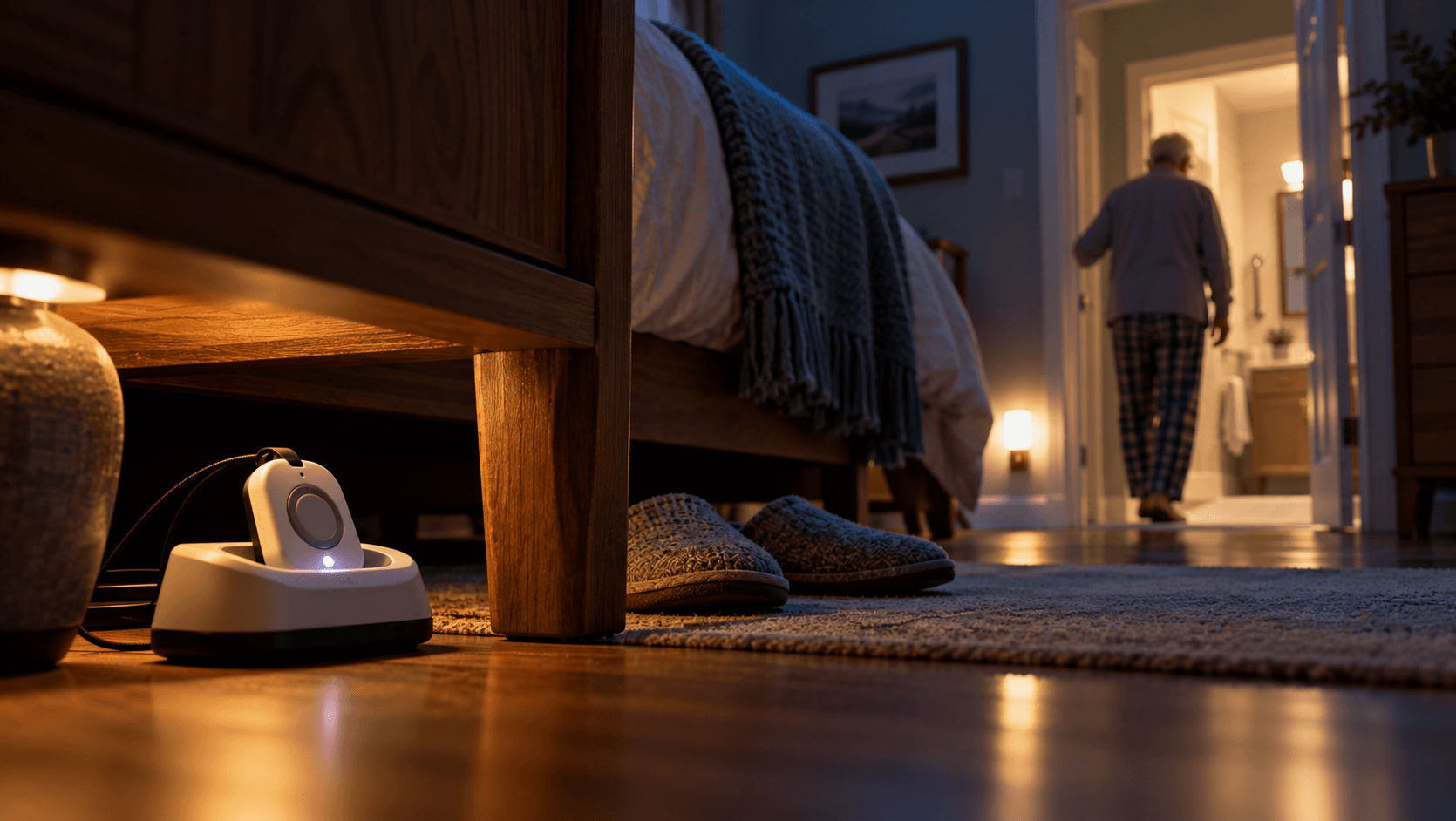
Parkinson's disease can affect movement, balance, walking, posture, blood pressure regulation, sleep, thinking, and daily safety. Health alert systems and blood pressure monitors may help some people live more safely at home, especially when falls, dizziness, freezing, medication changes, or caregiver concerns are part of the picture.
These devices are support tools. A medical alert system cannot prevent every fall, and a blood pressure monitor cannot diagnose why someone feels dizzy or weak. But when chosen carefully and connected to a care plan, they can help people respond faster, track patterns, and share useful information with clinicians.
This guide explains how health alert systems and blood pressure monitors fit into Parkinson's disease care, which safety features matter, what to ask before buying, and when symptoms need medical attention.
Why Safety Tools Matter in Parkinson's Disease
Parkinson's disease can cause tremor, slowness, stiffness, balance problems, freezing of gait, and changes in posture. NINDS notes that postural instability can increase fall risk, and that Parkinson's disease can also involve blood pressure changes and orthostatic hypotension, which may cause dizziness and lightheadedness.
The Parkinson's Foundation says falls often become more common as Parkinson's disease progresses and recommends identifying fall risks such as medication side effects, low blood pressure, thinking changes, or freezing. It also lists fall detection systems, such as medical alert devices or smart watches, as one safety option.
For many people, the goal is not to buy the most advanced device. The goal is to match the device to the real risk: falls, getting stuck on the floor, dizziness after standing, wandering, medication timing, caregiver response, or difficulty calling for help.
Tool 1: Medical Alert Systems
A medical alert system is designed to help someone call for assistance quickly. Some systems use a pendant, wrist button, wall button, mobile device, smart watch, or home base station. Some connect to a monitoring center; others alert family or caregivers directly.
- May help if someone falls and cannot reach a phone
- May support people who live alone or spend time alone
- May reduce caregiver worry when used consistently
- Cannot prevent falls by itself
- Requires charging, wearing, testing, and a response plan
The Parkinson's Foundation states that people who frequently fall are recommended to enroll in a home emergency response system.
Health Alert System Buying Checklist
Before buying a medical alert system, compare practical safety features.
- Wearable button that is comfortable enough to use daily
- Water-resistant design for bathroom use
- Automatic fall detection, if appropriate
- Two-way voice communication
- Cellular or landline connection that works in the home
- Battery backup for power outages
- Simple caregiver contact settings
- Clear monthly cost, cancellation policy, and equipment return rules
The best system is one the person will actually wear and can use during a stressful moment.
Feature 1: Fall Detection
Automatic fall detection may be useful for people who fall, freeze, faint, or cannot reliably press a button. But fall detection is not perfect. It may miss some falls or trigger false alarms.
- Helpful when falls happen without warning
- Helpful if someone may lose consciousness or become confused
- Less useful if the device is not worn consistently
- May not detect slow slides, freezing, or all bathroom falls
Use fall detection as a backup, not a guarantee. The home should still be checked for trip hazards, lighting, bathroom safety, footwear, medication side effects, and mobility needs.
Feature 2: Bathroom and Shower Safety
Bathrooms are high-risk areas because of wet floors, tight spaces, turns, nighttime urgency, and difficulty standing from low surfaces. A medical alert device that is removed before bathing may not help when it is needed most.
- Choose water-resistant or waterproof options when appropriate.
- Ask whether the device works in the shower or only near water.
- Consider wall buttons near the toilet or shower.
- Pair alerts with grab bars, non-slip surfaces, and shower chairs when needed.
A medical alert system should be part of a home safety plan, not the only safety measure.
Feature 3: GPS and Outside-the-Home Coverage
Some people with Parkinson's disease need safety support outside the home, such as during walks, appointments, errands, or travel. Mobile alert devices may include GPS location sharing, cellular connection, and caregiver alerts.
- Useful for people who walk alone
- Useful if freezing or falls happen outdoors
- May help caregivers locate someone after an alert
- Requires cellular coverage and battery charge
- Raises privacy questions about location sharing
Choose GPS features only if they support safety and the person agrees to how location information is shared.
Feature 4: Caregiver Alerts and Response Plan
A health alert system is only as useful as the response plan behind it. Decide who receives alerts, who has a key, who can help someone off the floor, and when emergency services should be called.
- Primary and backup contacts
- Neighbor or family access plan
- Lockbox or smart-lock plan if appropriate
- Medication and diagnosis information available for responders
- Instructions for when to call emergency services immediately
Do not rely on a single caregiver if that person may be unavailable. Build a backup plan before an emergency happens.
Feature 5: Ease of Use With Parkinson's Symptoms
Parkinson's symptoms can make small buttons, tiny screens, complicated charging docks, and app-only controls difficult. Test the device during a realistic day.
- Large button that is easy to press
- Simple charging routine
- Comfortable wrist or pendant placement
- Loud speaker and clear microphone
- Easy cancellation of false alarms
- Caregiver setup support if technology is difficult
If the person has tremor, stiffness, vision changes, freezing, or cognitive changes, simpler may be safer.
Tool 2: Blood Pressure Monitors
Blood pressure changes can contribute to dizziness, falls, fatigue, weakness, and confusion in some people with Parkinson's disease. A home monitor may help identify patterns, especially when symptoms happen after standing, meals, medication doses, dehydration, or heat.
The Parkinson's Foundation explains that low blood pressure in Parkinson's disease may be related to neurogenic orthostatic hypotension, a drop in blood pressure when standing, and that falls, dizziness, lightheadedness, fatigue, and weakness can occur. It also notes that dehydration, heart disease, fever, anemia, and medications can lower blood pressure.
Home blood pressure tracking can be useful, but the numbers need context. A reading taken while seated may miss a standing blood pressure drop.
Blood Pressure Monitor Buying Checklist
For most people, choose a validated automatic upper-arm monitor with the correct cuff size.
- Automatic upper-arm cuff design
- Correct cuff size for the upper arm
- Large, easy-to-read display
- Memory with date and time
- Ability to record pulse
- Simple controls for people with tremor or stiffness
- Export or paper log option for clinician review
- Return policy if the cuff does not fit
The American Heart Association recommends an automatic cuff-style upper-arm monitor for most home users and advises choosing a cuff that fits the upper arm correctly.
Feature 1: Correct Cuff Size
Cuff size matters. A cuff that is too small or too large can give misleading readings, which can be especially confusing when dizziness or falls are being evaluated.
- Measure around the upper arm before buying.
- Compare the measurement with the cuff range on the box.
- Ask about a larger or smaller cuff if needed.
- Place the cuff on bare skin, not over clothing.
- Bring the monitor to a visit so technique can be checked.
The American Heart Association notes that the cuff should be placed on the bare upper arm at heart level and that correct cuff size is essential for accurate home readings.
Feature 2: Seated and Standing Tracking
For Parkinson's disease, standing readings may be important when orthostatic hypotension is suspected. Ask your clinician whether to record seated, lying, and standing readings and exactly when to measure after standing.
- Record symptoms with each position.
- Use caregiver support if standing is unsafe.
- Do not test standing readings alone if fainting or falls have occurred.
- Record medication timing, meals, hydration, and heat exposure.
The Parkinson's Foundation describes orthostatic hypotension as a significant drop in blood pressure that happens when standing up and notes that it is one of the common non-movement symptoms in Parkinson's disease.
Feature 3: Memory and Symptom Notes
A blood pressure monitor that stores readings can be helpful, but symptom notes are just as important. A number without context may not explain why someone fell or felt weak.
- Date and time
- Seated or standing position
- Blood pressure and pulse
- Dizziness, faintness, weakness, fatigue, confusion, or falls
- Parkinson's medication timing
- Blood pressure medication timing
- Meals, hydration, heat, alcohol, or illness
Bring both the numbers and the context to neurology, primary care, cardiology, or rehabilitation visits.
Feature 4: Large Display and One-Touch Start
A monitor should be easy to use on difficult days. Parkinson's symptoms can vary throughout the day, and tremor or slowness can make small buttons frustrating.
- Large numbers
- One-touch start
- Easy cuff wrapping
- Clear error messages
- Battery indicator or power adapter
- Caregiver-friendly instructions
If the device is too difficult to use, people may stop tracking or take rushed readings that are less reliable.
How to Measure Blood Pressure More Accurately
Measurement technique affects results. Use the same routine each time unless your clinician gives different instructions.
- Avoid caffeine, exercise, and smoking for about 30 minutes before measuring.
- Empty your bladder first.
- Sit with your back supported and feet flat on the floor.
- Rest quietly before measuring.
- Support the arm at heart level.
- Place the cuff on bare skin.
- Do not talk during the reading.
The American Heart Association advises sitting correctly, supporting the arm at heart level, placing the cuff on bare skin, and measuring at the same time each day when possible.
When Blood Pressure Tracking May Help in Parkinson's Disease
Ask your clinician whether home blood pressure tracking is appropriate if any of these patterns are present.
- Dizziness after standing
- Fainting or near-fainting
- Falls without a clear trip
- Weakness or fatigue after meals
- Symptoms after Parkinson's medication doses
- Symptoms after blood pressure medication changes
- Confusion, sleepiness, or lightheadedness during the day
The Parkinson's Foundation notes that managing dizziness and postural low blood pressure may include monitoring blood pressure, staying hydrated, changing positions slowly, and evaluating other causes with a doctor.
What These Devices Can Tell You
Health alert systems and blood pressure monitors can provide useful information.
- Whether help can be called quickly after a fall or emergency
- Whether falls or near-falls are happening more often
- Whether blood pressure drops after standing or meals
- Whether symptoms cluster around medication timing
- Whether caregivers need a faster response plan
- Whether home safety changes or therapy referral may be needed
These tools are strongest when their data leads to action: medication review, fall-prevention planning, physical therapy, occupational therapy, hydration review, home modifications, or medical evaluation.
What These Devices Cannot Tell You
Devices have limits.
- A fall detector cannot prevent all falls.
- A medical alert button cannot help if it is not worn.
- A blood pressure monitor cannot diagnose the cause of dizziness by itself.
- A normal blood pressure reading does not rule out stroke, infection, heart rhythm problems, medication side effects, or dehydration.
- A high or low reading should not automatically trigger medication changes without guidance.
Do not use a device reading to delay care for severe or new symptoms.
Buying Checklist: Medical Alert Systems
Compare systems based on the person’s real daily routine.
- Does the person live alone or spend time alone?
- Do falls happen indoors, outdoors, or in the bathroom?
- Is automatic fall detection needed?
- Is GPS needed outside the home?
- Does the device work with landline, cellular, or Wi-Fi?
- Does it have battery backup?
- Can the person press the button during tremor, stiffness, or freezing?
- Who receives the alert, and how fast can they respond?
Test the system after setup. Everyone involved should know what happens when the alert button is pressed.
Buying Checklist: Blood Pressure Monitors
Compare monitors based on accuracy, fit, and usability.
- Validated upper-arm monitor
- Correct cuff size
- Large display
- One-button start
- Memory storage
- Pulse display
- Easy log or export feature
- Caregiver-friendly cuff placement
- Clear return policy if it does not fit
Ask whether your clinician wants seated and standing readings, and whether any medication timing should be recorded.
Privacy and Caregiver Sharing
Safety devices may collect location, fall, emergency, blood pressure, pulse, contact, and health information. Sharing can be helpful, but it should be discussed openly when possible.
- Who can see alerts or location?
- Who can access blood pressure logs?
- Can data be deleted or exported?
- Does the company share data with third parties?
- What happens if the person wants privacy but caregivers are worried?
Safety planning works best when it respects the person’s dignity and independence while still reducing preventable risk.
How to Build a Safer Home Routine
Devices work better when daily routines are simple and consistent.
- Wear the alert device during high-risk activities.
- Keep charging simple and visible.
- Use night lights and clear walking paths.
- Stand up slowly, especially after lying down or meals.
- Record dizziness, falls, and blood pressure patterns.
- Review medications that may worsen dizziness or falls.
- Ask about physical therapy, balance training, or occupational therapy.
The Parkinson's Foundation fall-prevention guidance recommends working with care teams to identify fall risks, including medication side effects, low blood pressure, thinking changes, or freezing.
Common Mistake: Buying Fall Detection but Not Wearing It
A medical alert device only helps if it is worn during real-life risk moments. Falls often happen in bathrooms, bedrooms, kitchens, garages, or during quick trips across the room.
Choose a comfortable device.
Build wearing it into the daily routine.
Common Mistake: Ignoring Blood Pressure Drops
Parkinson's disease can involve orthostatic hypotension, and low blood pressure can contribute to dizziness and falls.
Do not track only high readings.
Record symptoms when moving from lying or sitting to standing if your clinician recommends it.
Common Mistake: Treating a Device as a Replacement for Therapy
Health alert systems and monitors support safety, but they do not replace physical therapy, occupational therapy, medication review, exercise planning, home safety changes, or caregiver training.
If falls continue, the plan needs review.
Do not rely on alerts alone.
Common Mistake: Changing Medication Based on One Reading
Blood pressure can change with meals, hydration, heat, activity, stress, and medication timing. One reading should not automatically lead to stopping Parkinson's medicine or blood pressure medicine.
Record the pattern.
Call the clinician for medication guidance.
Common Mistake: Missing Emergency Symptoms
Not every fall or dizzy spell is “just Parkinson's.” Stroke, infection, dehydration, heart rhythm problems, medication reactions, fractures, and head injuries can all happen in people with Parkinson's disease.
Seek medical care for sudden changes, injuries, confusion, severe weakness, or symptoms that feel different from the usual pattern.
Use devices to get help faster, not to avoid evaluation.
When to Talk to a Clinician
Talk to a neurologist, primary care clinician, cardiologist, physical therapist, occupational therapist, or pharmacist if falls, near-falls, freezing, dizziness, fainting, weakness, confusion, sleepiness, or blood pressure changes are increasing.
You should also seek guidance if symptoms cluster around Parkinson's medications, blood pressure medications, meals, dehydration, heat, alcohol, infection, or nighttime bathroom trips.
A clinician may recommend seated and standing blood pressure testing, medication review, hydration strategies, compression garments, physical therapy, balance training, occupational therapy, home safety evaluation, heart rhythm testing, lab testing, or changes to the care plan depending on symptoms.
When to Seek Urgent or Emergency Care
Seek urgent or emergency care for a fall with head injury, loss of consciousness, new confusion, severe pain, suspected fracture, new inability to walk, chest pain, severe shortness of breath, stroke symptoms, fainting, severe dehydration, black or bloody stool, severe weakness, or symptoms that feel life-threatening.
Seek urgent care for sudden new dizziness, repeated fainting, very low blood pressure with severe symptoms, very high blood pressure with chest pain or neurologic symptoms, fever with confusion, or a sudden major change from the person’s usual Parkinson's pattern.
Do not wait for a medical alert device or blood pressure monitor to explain symptoms that could signal stroke, heart problem, infection, dehydration, bleeding, fracture, or another emergency.
The Bottom Line
Health alert systems and blood pressure monitors can support safer Parkinson's disease care at home. Medical alert systems may help people call for help after falls or emergencies, especially if they live alone, fall frequently, or have trouble reaching a phone. Blood pressure monitors may help identify patterns related to dizziness, standing, meals, medications, and falls.
The most important features are comfort, consistent wear, water resistance, fall detection when appropriate, GPS when needed, caregiver response planning, validated upper-arm blood pressure monitoring, correct cuff size, simple controls, and clear logs for seated or standing symptoms.
The most common mistakes are buying fall detection but not wearing it, ignoring blood pressure drops, treating devices as replacements for therapy, changing medication based on one reading, and missing emergency symptoms.
Use these tools to support independence, safety, and better conversations with the care team. If falls, dizziness, confusion, fainting, or blood pressure changes are worsening, the care plan needs review.
Medical disclaimer: This content is for informational purposes only and is not a substitute for professional medical advice, Parkinson's disease diagnosis or treatment, fall-risk assessment, blood pressure treatment, medication management, physical therapy, occupational therapy, cardiology care, emergency response planning, or emergency care. Always consult your neurologist, primary care clinician, cardiologist, pharmacist, physical therapist, occupational therapist, nurse, caregiver team, or qualified health provider before choosing health alert systems, changing blood pressure monitoring routines, or making medication decisions. If you have a fall with head injury, loss of consciousness, new confusion, suspected fracture, new inability to walk, chest pain, severe shortness of breath, stroke symptoms, fainting, severe dehydration, severe weakness, very low or very high blood pressure with severe symptoms, or another emergency, seek urgent medical care right away.