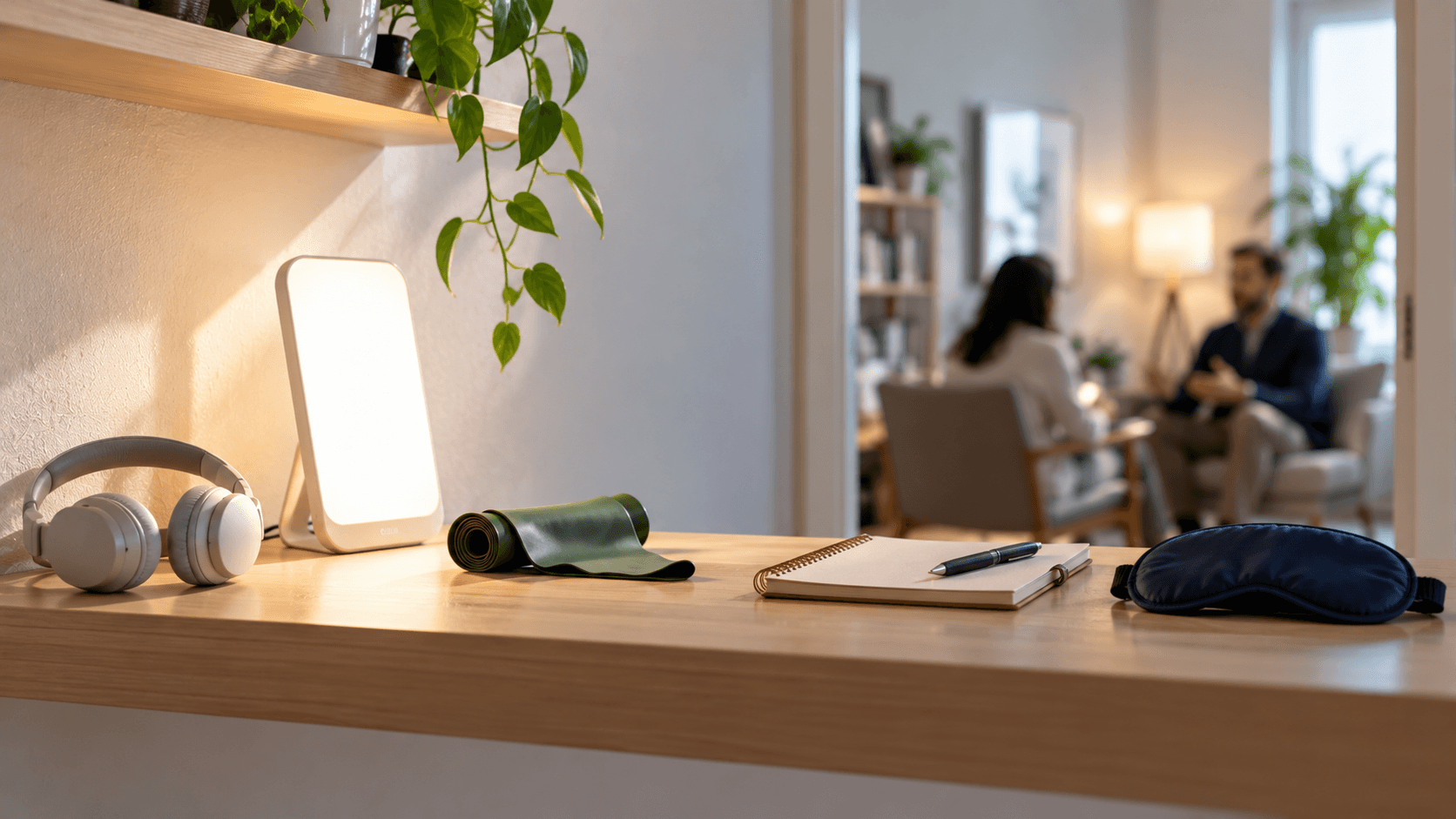
If you or someone you love is living with depression, you've probably noticed that treatment doesn't begin and end in a clinician's office. The hours between therapy sessions, the mornings when motivation feels impossible, the evenings when anxious thoughts crowd out sleep—those stretches of daily life are where so much of the real work happens. A growing range of home support tools, from smartphone apps to light therapy lamps to structured journaling, are designed to help fill that space.
These tools are not cures, and they aren't substitutes for professional care. But used thoughtfully, many of them can meaningfully support a treatment plan. Understanding what the evidence says—and what it doesn't—can help you make informed choices alongside your care team.
Why the Gaps Between Appointments Matter
Depression is a complex condition influenced by brain chemistry, life circumstances, sleep, social connection, physical health, and more. Most people with depression who receive professional care see a therapist once a week or less, and many face barriers—cost, geography, waitlists—that make even that level of access difficult. That leaves a lot of time when a person is managing their symptoms largely on their own.
Research on what clinicians call behavioral activation—the idea that gently increasing engagement with rewarding or meaningful activities can help lift mood—suggests that what people do day to day genuinely affects the course of depression. This is one reason clinicians often encourage structured routines, physical activity, and social contact as part of treatment. Home tools, at their best, help people put those recommendations into practice.
Mood Tracking Apps: A Daily Check-In
One of the most widely used categories of mental health apps involves mood tracking—logging how you feel each day, often with a few taps. At first glance this might seem trivial, but there are a few reasons clinicians find it useful.
First, depression can distort memory. When someone is in a low period, it's easy to feel as though things have always been this bad and always will be. A log of the past few weeks can provide a more accurate picture, sometimes revealing patterns—certain times of day, social situations, or sleep quality—that influence mood. Second, sharing that data with a therapist or psychiatrist gives them a richer view of your experience between sessions.
Some apps go further, incorporating techniques drawn from cognitive behavioral therapy (CBT), a well-studied form of psychotherapy. Interactive exercises that help users identify and gently challenge unhelpful thought patterns can be genuinely beneficial, particularly for people on a waitlist for in-person care or those supplementing ongoing treatment. Studies have found that app-based CBT tools can reduce depressive symptoms, though effects tend to be more modest than those seen in face-to-face therapy. Think of them as a useful complement, not a replacement.
When evaluating a mental health app, look for transparency about what techniques it uses and whether those techniques have been tested in clinical research. Be cautious about apps that make bold claims or collect extensive personal data without clear privacy protections.
Light Therapy: A Tool With Solid Evidence for Some
Light therapy—sitting near a bright light box for a set period each morning—has the strongest evidence base in seasonal affective disorder (SAD), a pattern of depression that typically emerges in fall and winter and is thought to be related to reduced sunlight exposure. For SAD specifically, light therapy is considered a first-line treatment by many clinical guidelines.
Research also suggests it may benefit non-seasonal depression in some people, though the evidence there is less definitive. The proposed mechanism involves the effect of bright light on the body's internal clock and on the brain chemicals involved in mood regulation, including serotonin and melatonin.
Light therapy is generally considered safe for most people, but it's not risk-free. It can trigger headaches or eye strain in some individuals, and people with certain eye conditions or those taking medications that increase light sensitivity should talk to a clinician before starting. If you're curious whether light therapy might fit into your care, it's a good topic to raise at your next appointment.
Sleep Hygiene Tools: Addressing a Common Complication
Sleep and depression are deeply intertwined. Disrupted sleep is both a common symptom of depression and a factor that can make depression worse—a cycle that can be genuinely difficult to break. Tools that support better sleep habits, sometimes called sleep hygiene tools, address one piece of that cycle.
These range from simple habit trackers and bedtime reminder apps to white noise machines, blue-light-blocking glasses, and wearables that monitor sleep stages. The underlying behavioral approach—consistent sleep and wake times, limiting screens before bed, creating a cool and dark sleep environment—is well supported by sleep science. Tools that make these habits easier to maintain can have real value.
For people whose depression is accompanied by significant insomnia, a structured approach called cognitive behavioral therapy for insomnia (CBT-I) is considered highly effective and is increasingly available through digital programs as well as in-person care. If sleep is a major part of your struggle, asking your clinician specifically about CBT-I is worthwhile.
Physical Activity Reminders and Fitness Tools
The relationship between physical activity and depression has been studied extensively. A substantial body of research—including randomized controlled trials, the most rigorous study design—suggests that regular aerobic exercise can have meaningful antidepressant effects, particularly for mild to moderate depression. The mechanisms likely involve changes in brain chemistry, inflammation, and stress hormones, as well as the psychological benefits of accomplishment and routine.
Home tools that support physical activity—fitness trackers, guided workout apps, even simple reminder notifications—can help reduce the friction that depression itself creates. One of depression's most disabling features is a loss of motivation and energy, which makes starting any new habit feel monumental. Wearables that set very small daily step goals and celebrate incremental progress are sometimes more useful than ambitious fitness apps that assume a baseline of motivation you may not currently have.
The goal here isn't athletic performance. It's gentle, consistent movement as a complement to other treatment.
Journaling and Structured Self-Reflection
Writing about thoughts and feelings has a long history in psychological care. Some research suggests that expressive writing—not just venting, but making sense of experiences—can have modest positive effects on mood and well-being. Structured approaches, like gratitude journaling or guided prompts based on CBT principles, give that practice more shape.
Journaling is low-cost, private, and flexible. Its limitations are also worth noting: for people in a severe depressive episode, open-ended self-reflection can sometimes amplify rumination rather than ease it. Structured prompts tend to work better than blank-page journaling in those moments. If you find that writing about your thoughts consistently makes you feel worse, that's worth mentioning to your therapist.
What These Tools Can't Do
It would be a disservice not to be direct about this. Home support tools are not a treatment for clinical depression on their own. Depression is a medical condition, and for many people it requires professional care—therapy, medication, or both. Tools that help you track your mood, sleep better, or stay active are valuable supports, but they cannot replace an accurate diagnosis, a personalized treatment plan, or the human relationship at the heart of good therapy.
There is also a real risk that the availability of wellness apps and self-help tools leads some people to delay seeking professional care, particularly if they feel embarrassed about the severity of their symptoms or believe they should be able to manage on their own. If you are experiencing symptoms of depression that are affecting your daily life, please reach out to a clinician. If you are in crisis or having thoughts of suicide, contact the 988 Suicide and Crisis Lifeline by calling or texting 988.
How to Talk to Your Clinician About Home Tools
If you're interested in adding any of these tools to your care, your clinician is your best starting point. A few questions worth raising:
- Would mood tracking be useful for our sessions, and if so, what information would be most helpful to log?
- Given my symptoms and any medications I take, are there tools I should avoid or be cautious about?
- Is light therapy or CBT-I something that might fit my situation?
- What level of physical activity would be realistic and safe for me right now?
A good clinician will welcome these questions. Home tools that are chosen thoughtfully and used as part of a broader plan—not as a substitute for one—can make a genuine difference in the day-to-day experience of living with depression.
The bottom line: Apps, routines, and home wellness tools occupy a real and useful place in depression care. They work best as supports layered onto professional treatment, chosen with your clinician's input, and used with realistic expectations. Small, consistent actions between appointments can add up—and that's worth taking seriously.