If you've ever woken up with a sore jaw, a dull headache behind your eyes, or a partner complaining about grinding sounds in the night, you may be living with bruxism—the clinical term for habitual teeth grinding or jaw clenching. It's a surprisingly common condition, and while it can happen during the day, most people grind without realizing it because it happens while they sleep.
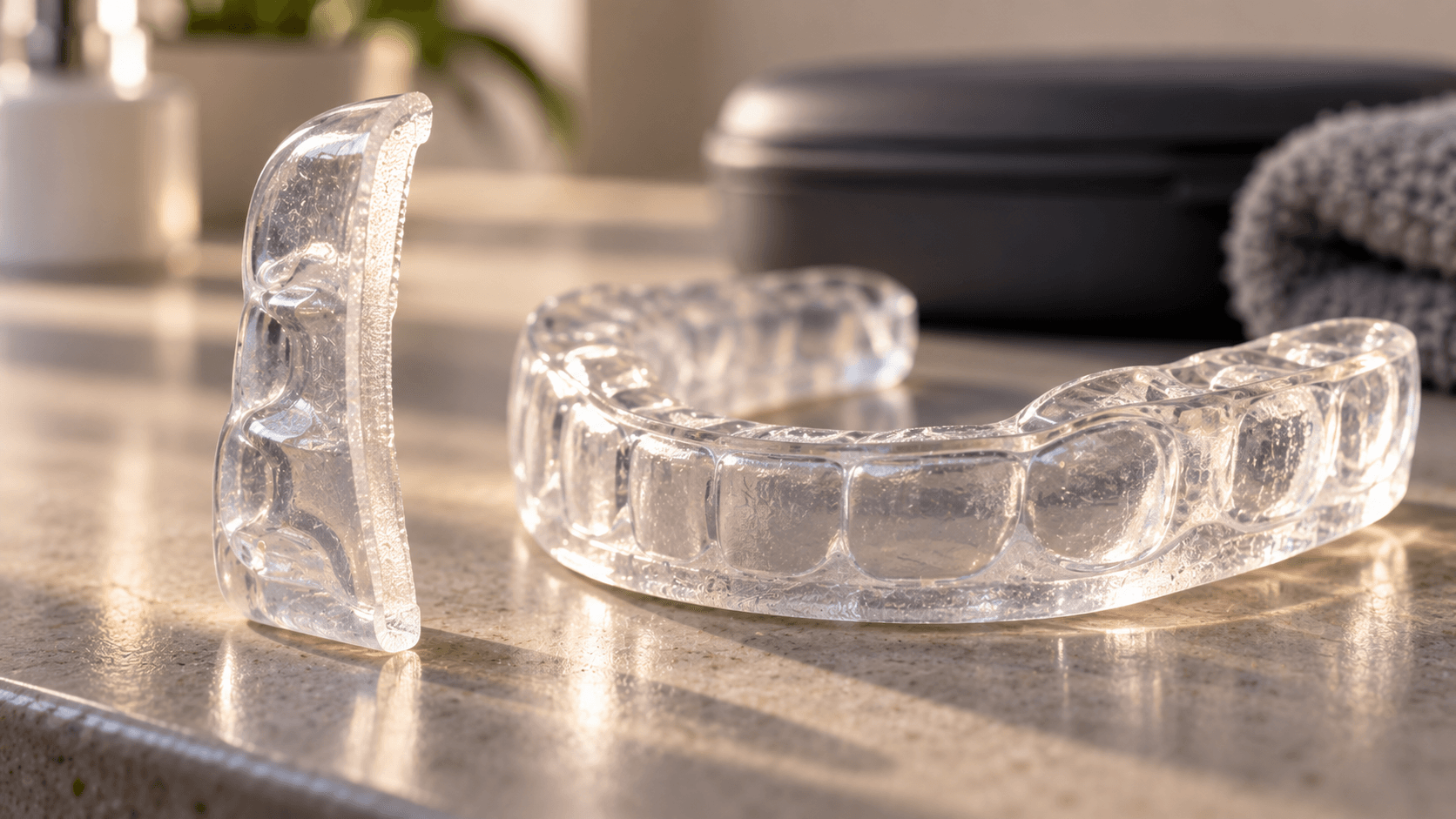
One of the most widely recommended first-line strategies is wearing an oral appliance—commonly called a night guard, bite guard, or occlusal splint. But walk into a pharmacy or search online and you'll find dozens of options at wildly different price points, with marketing language that can be hard to parse. So what actually matters when choosing one?
First, Understand What a Night Guard Actually Does
A night guard doesn't stop you from grinding. That's an important distinction. Instead, it creates a protective barrier between your upper and lower teeth, absorbing and redistributing the forces generated when you clench or grind. Think of it as a shock absorber for your bite.
Over time, unmanaged bruxism can wear down tooth enamel, chip or crack teeth, stress the jaw joints (the temporomandibular joints, or TMJ), and contribute to muscle soreness. A well-fitted guard helps reduce these downstream effects. Some designs are also intended to subtly reposition the jaw in a way that reduces muscle tension, though the evidence for this varies by appliance type, and a dentist can help you understand what's appropriate for your situation.
Custom vs. Over-the-Counter: The Most Important Decision
The single biggest variable in night guard performance is fit, and fit is where custom and over-the-counter (OTC) products diverge dramatically.
Custom-fitted guards, made from impressions of your teeth either by a dentist in-office or through a reputable mail-order dental lab, conform precisely to your bite. Because they're made specifically for your mouth, they tend to stay in place better, feel less intrusive, and more accurately distribute clenching forces. Dentists often consider these the gold standard, particularly for people with moderate to severe bruxism or existing jaw issues.
Over-the-counter guards fall into two categories. Boil-and-bite guards are softened in hot water and then molded to the teeth by biting down—a rough approximation of a custom fit. Stock (one-size-fits-all) guards require no molding at all; they simply slide over the teeth. Stock guards are generally considered the least precise option, and some dental professionals caution that a poorly fitting guard can actually increase muscle activity or cause jaw discomfort.
That said, OTC options have a role. For someone who suspects bruxism and wants to try a guard before committing to a custom appliance, a boil-and-bite can be a reasonable starting point—as long as it's comfortable and you follow up with a dentist.
Material: Hard, Soft, or Dual-Laminate?
Night guards are typically made from one of three material types, each with different properties:
- Soft guards are flexible and often the most comfortable for new wearers. They're commonly available OTC. However, some research and clinical experience suggests that soft guards may encourage more clenching in certain individuals—the compressible material can feel like something to bite into. They tend to wear down faster and may not be the best choice for heavy grinders.
- Hard (rigid) guards are made from a firm acrylic. They're durable, resist wear well, and are often preferred by dentists for moderate to severe grinders. They can take more time to adjust to, and they're almost always custom-made because a hard guard that doesn't fit well can feel very uncomfortable.
- Dual-laminate (hybrid) guards have a soft inner layer for comfort and a hard outer layer for durability and protection. Many people find these a good middle ground—comfortable enough to wear consistently while still offering meaningful resistance to grinding forces.
If you're unsure which material is right for you, this is genuinely a conversation worth having with a dentist or dental hygienist who knows your bite and grinding history.
Thickness: More Isn't Always Better
Thicker guards offer more material between the teeth, which might seem like better protection. And for very heavy grinders, some additional thickness can help. But a guard that's too thick can make it hard to close your mouth naturally, disrupt sleep, or strain the jaw muscles—the opposite of what you want.
Lighter grinders or people who primarily clench (rather than grind with a sliding motion) may do well with a thinner profile that's less intrusive during sleep. Again, the severity of your bruxism and the geometry of your bite matter here, which is why professional guidance is valuable.
Upper vs. Lower Arch: Does It Matter?
Most OTC guards are designed for the upper teeth, which is the more traditional placement. Upper guards tend to stay in place more easily for many people.
Lower arch guards are also available and may be preferable for people who feel that upper guards trigger their gag reflex—a real concern for some. Some clinicians also prefer lower guards for certain jaw positioning goals. If you have a strong gag reflex or have tried upper guards without success, a lower guard is worth discussing with your dentist.
Coverage: Full-Arch vs. Anterior-Only
Most standard night guards cover all of the teeth on one arch (full-arch coverage). There are also anterior guards—small devices that cover only the front teeth—sometimes called NTI-tss devices. These work by preventing the back molars from making contact, which proponents argue reduces the intensity of clenching.
Anterior guards have shown promise in some clinical contexts, particularly for TMJ-related pain and headaches. However, they require careful fitting and monitoring by a dental professional, because prolonged use without oversight has been associated with changes in bite alignment in some individuals. They are generally not recommended as a DIY solution.
Durability and How Long a Guard Will Last
A night guard is a wearable item under significant mechanical stress, and it won't last forever. Soft OTC guards may show meaningful wear within weeks to months for heavy grinders. Custom hard or dual-laminate guards typically last longer—often a year or more with proper care—though this varies with grinding intensity.
Signs that a guard needs replacing include visible deep grooves or holes worn through the material, a change in how your bite feels when wearing it, or physical discomfort that wasn't there before. Don't continue using a guard that's structurally compromised.
Fit, Comfort, and the Compliance Factor
The best night guard is the one you'll actually wear. A guard that feels uncomfortable, bulky, or makes you feel like you can't breathe through your mouth will end up in a drawer within a week. Comfort and wearability are legitimate criteria—not just nice-to-haves.
If you're trying a new guard and experiencing significant jaw soreness, bite changes that persist into the day, or worsening headaches, stop wearing it and consult a dentist. Some jaw soreness in the first few nights is common as muscles adjust, but persistent or worsening symptoms are a signal to get professional eyes on the situation.
Caring for Your Guard
A night guard sits in your mouth for hours and needs regular cleaning. Rinse it with cool water immediately after removal each morning. Brush it gently with a soft toothbrush—most manufacturers and dentists advise against toothpaste, which can be abrasive and scratch the material, creating grooves where bacteria can accumulate. Let it air dry before storing in its case, and keep the case clean too. Avoid hot water or leaving the guard in direct sunlight, which can warp the material.
When to See a Dentist—Not Just Buy a Guard
An OTC guard can be a reasonable short-term measure, but bruxism often warrants professional evaluation for a few reasons. A dentist can assess how much wear your teeth have already sustained, check for signs of TMJ stress, and help identify whether daytime clenching, stress, sleep disorders (bruxism has an established association with sleep apnea in some people), or other factors might be contributing to the problem.
Treatment for bruxism may go beyond a guard—stress management techniques, physical therapy for the jaw, and in some cases other interventions are part of a comprehensive approach. A guard addresses the consequences of grinding; addressing the underlying drivers requires a broader conversation.
A note on medical advice: This article is for general informational purposes and is not a substitute for personalized dental or medical care. If you're experiencing jaw pain, significant tooth wear, or other symptoms, please consult a licensed dentist or healthcare provider.