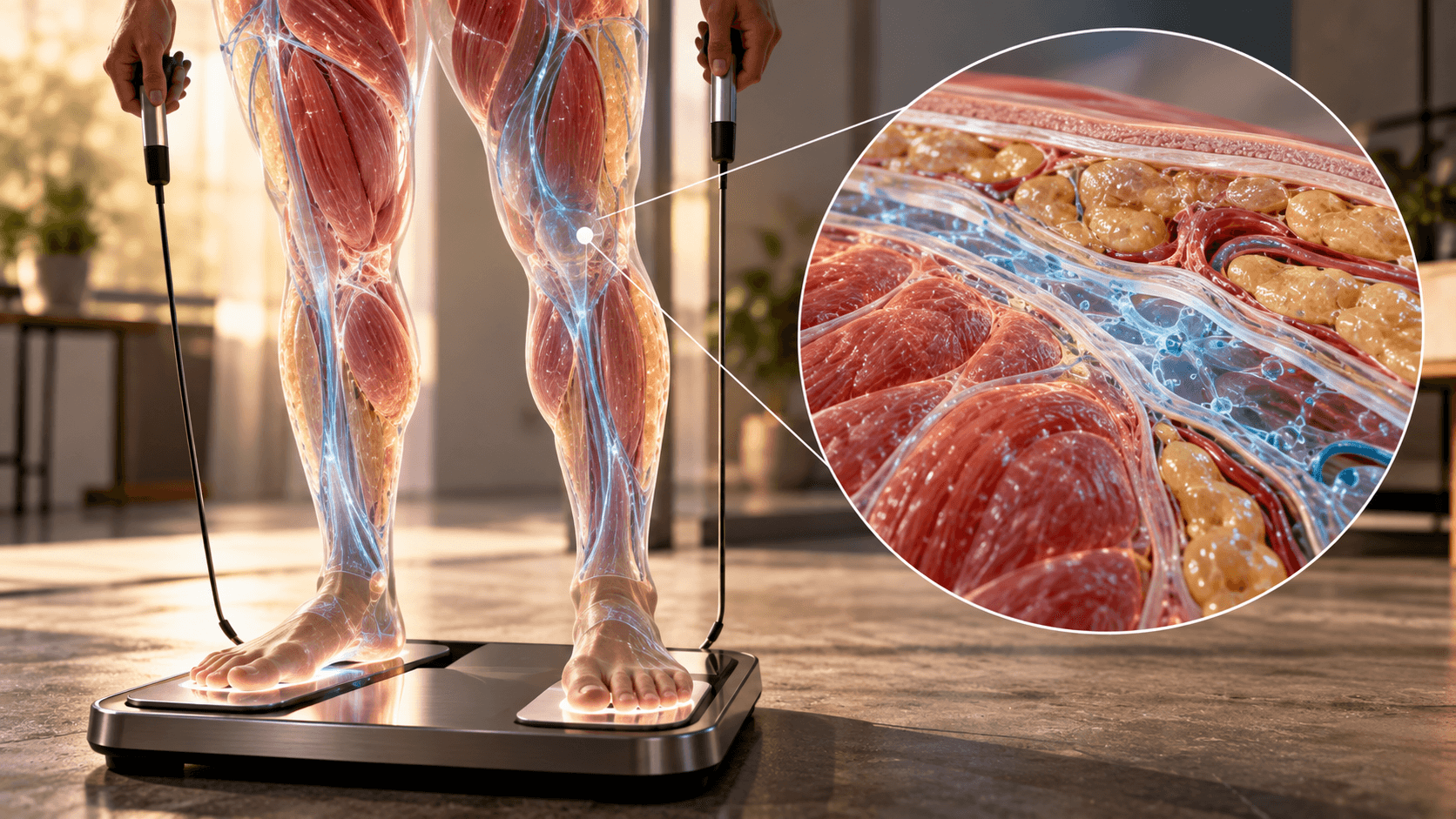
Ketone readings and body composition changes are often tracked by people following a ketogenic diet, very-low-carbohydrate diet, fasting routine, or medically supervised nutrition plan. A ketone meter can show whether ketones are present. A body composition monitor may estimate fat mass, lean mass, body water, or muscle mass. Both can provide useful context, but both can also be misunderstood.
Higher ketones do not automatically mean better health, faster fat loss, better athletic performance, or safer diabetes control. Body composition changes can reflect fat loss, water shifts, glycogen changes, food volume, lean tissue changes, or device error. The key is to interpret readings with symptoms, nutrition, medications, glucose levels when relevant, and clinical guidance.
This guide explains what ketone readings can and cannot tell you, how body composition can change during low-carb or ketogenic eating, and when to seek medical follow-up.
What Ketones Are
Ketones are substances the body can make when it uses fat for energy. This can happen during fasting, prolonged exercise, very-low-carbohydrate eating, or when the body cannot use glucose properly. MedlinePlus explains that people who follow a low-carbohydrate ketogenic diet may have blood ketone levels that are higher than usual but generally not high enough to be ketoacidosis.
Ketones are not automatically dangerous. The context matters. Nutritional ketosis is different from diabetic ketoacidosis, a dangerous medical emergency that can occur when ketones become high along with metabolic acidosis, often in people with diabetes.
If you have diabetes, use insulin, take SGLT2 inhibitors, are pregnant, have a history of eating disorder, have kidney or liver disease, or are planning prolonged fasting, ask a clinician before trying to raise ketones intentionally.
Ketone Reading Type 1: Blood Ketones
Blood ketone meters usually measure beta-hydroxybutyrate, often shortened to BHB. This is generally the most direct home measure of current ketone status.
- Shows ketones at the time of testing
- May be useful for diabetes sick-day plans when recommended
- Requires test strips that can be expensive
- Can vary with fasting, carbohydrate intake, exercise, alcohol, illness, and insulin status
The ADA laboratory guidance notes that some people following very-low-carbohydrate ketogenic diets check blood or urine ketones at home, and that diabetes sick-day rules may include frequent glucose and ketone monitoring, hydration, insulin adjustment as directed, and medical advice if ketones rise or symptoms worsen.
Ketone Reading Type 2: Urine Ketones
Urine ketone strips usually detect acetoacetate. They can show that ketones have been present, but they do not always reflect current blood ketone levels.
- Often lower cost than blood strips
- Can be useful for screening in some diabetes plans
- May be affected by hydration and urine concentration
- May become less reflective of ketosis over time for some people
Cleveland Clinic explains that urine tests cannot tell you your body’s current ketone levels the way a blood test can, but they can show ketone levels from within the last few hours.
Ketone Reading Type 3: Breath Ketones
Breath ketone devices estimate acetone in breath. They are reusable and do not require blood or urine strips, but results can vary based on device quality, breathing technique, alcohol intake, hydration, and other factors.
- May be convenient for trend tracking
- Does not directly measure blood BHB
- Requires consistent technique
- Should not be used for diabetes emergency decisions unless a clinician specifically approves the device and plan
If ketone tracking is medically important, such as during diabetes illness or medication changes, ask which test method your care team wants you to use.
What Ketone Readings Can Tell You
Ketone readings can help confirm whether ketones are present and whether they are changing over time.
- Whether carbohydrate restriction or fasting is producing measurable ketones
- Whether ketones are rising during illness if you have diabetes and are instructed to monitor
- Whether a nutrition plan is producing a consistent trend
- Whether symptoms and readings should prompt follow-up
For people with diabetes, NIDDK notes that a health care team may ask some people to test urine at home for ketones, especially in certain circumstances such as type 1 diabetes management.
What Ketone Readings Cannot Tell You
A ketone reading is not a complete health score. It does not show whether the diet is nutritionally adequate, whether fat loss is happening, whether performance is improving, or whether the plan is safe for your medical history.
- Higher ketones do not automatically mean more fat loss.
- Low ketones do not automatically mean a nutrition plan is failing.
- Ketone readings do not measure muscle mass.
- Ketone readings do not diagnose diabetes or rule out ketoacidosis by themselves.
- Ketone readings do not replace glucose monitoring when glucose monitoring is part of your care plan.
NIDDK notes that blood testing equipment bought over the counter, such as a blood glucose meter, cannot diagnose diabetes. Similarly, home ketone tools should be used for monitoring in context, not self-diagnosis.
Nutritional Ketosis vs. Ketoacidosis
Nutritional ketosis is usually a diet-related state in which ketones are present because carbohydrate intake is low or fasting has occurred. Ketoacidosis is a dangerous medical condition in which ketones and acidity become unsafe.
- Nutritional ketosis is usually intentional and occurs without severe illness.
- Diabetic ketoacidosis can occur with high ketones, dehydration, vomiting, abdominal pain, rapid breathing, confusion, and high or sometimes not-severely-high glucose depending on medication context.
- People with type 1 diabetes are at higher risk, but some type 2 diabetes medications can also change risk.
- Symptoms matter as much as numbers.
MedlinePlus explains that blood ketone testing can help detect high ketone levels early in people with diabetes so they can get treatment right away.
When Ketones Need Medical Attention
Seek medical guidance if ketones are rising and you feel ill, especially if you have diabetes, use insulin, take SGLT2 inhibitor medicines, are pregnant, or cannot keep fluids down.
- Vomiting or inability to drink fluids
- Abdominal pain
- Confusion, severe fatigue, or unusual sleepiness
- Deep or rapid breathing
- Fruity-smelling breath
- High glucose, low glucose with illness, or ketones that remain elevated despite your action plan
ADA laboratory guidance describes diabetes sick-day rules as including hydration, insulin and carbohydrate instructions, frequent glucose and ketone monitoring, seeking medical advice if symptoms worsen or ketones increase, and going to the emergency room if oral hydration cannot be maintained because of vomiting or mental status changes.
Body Composition Change 1: Early Water and Glycogen Loss
Many people see quick scale changes early in a low-carbohydrate or ketogenic diet. Some of that early change may be water and glycogen rather than body fat.
- Glycogen is stored carbohydrate in muscle and liver.
- Water is stored along with glycogen.
- Reducing carbohydrate can lower glycogen stores and shift water balance.
- Early weight loss does not always equal fat loss.
This is why body composition and waist trends over several weeks are more meaningful than a few days of scale change.
Body Composition Change 2: Fat Mass Changes
Ketogenic diets can reduce body weight and fat mass for some people, especially when they reduce overall calorie intake and are easier to follow than prior eating patterns. But fat loss depends on energy balance, protein intake, training, sleep, medical conditions, and adherence.
A systematic review of ketogenic diets in physically active people found evidence suggesting ketogenic diets may reduce total body mass and fat mass while retaining fat-free mass, but the review also noted study limitations and bias concerns.
- Fat loss is not guaranteed by ketone presence.
- Calorie intake still matters.
- Protein and resistance training help protect lean tissue.
- Progress should be judged over weeks and months, not days.
Body Composition Change 3: Lean Mass Changes
Lean mass includes muscle, water, organs, bone, and other non-fat tissue. A body composition monitor may label changes as “muscle,” but some shifts are actually water or glycogen.
- Low-carb eating may change water stored in muscle.
- Weight loss can include some lean mass loss if protein and strength training are inadequate.
- Body composition devices can mislabel water shifts as muscle changes.
- Strength, function, and training performance help interpret the numbers.
The International Society of Sports Nutrition position stand on ketogenic diets reports that, compared with higher-carbohydrate, lower-fat diets, ketogenic diets may cause greater losses in body weight, fat mass, and fat-free mass, and may heighten losses of lean tissue in some contexts.
Body Composition Change 4: Waist and Clothing Fit
Waist measurements and clothing fit can add context to scale and body composition readings.
- Measure waist at the same location each time.
- Use the same tape measure and similar posture.
- Track monthly rather than daily.
- Compare waist changes with weight, strength, energy, and lab markers.
If weight is changing but waist, energy, strength, sleep, and labs are worsening, the plan may not be working well for overall health.
Body Composition Change 5: Performance and Recovery
Body composition changes should not be interpreted separately from performance and recovery. Some people feel better on lower-carb plans. Others notice reduced high-intensity performance, worse sleep, constipation, low energy, or difficulty training.
- Track strength, pace, endurance, and recovery.
- Note cramps, dizziness, mood changes, sleep, and appetite.
- Watch for excessive restriction, binge cycles, or fear of carbohydrates.
- Ask a sports dietitian if training performance declines.
ISSN notes that ketogenic diets in exercising adults can affect body composition and performance differently depending on context, training status, and comparison diet.
Why Body Composition Monitors Can Be Misleading
Most home body composition monitors use bioelectrical impedance analysis, or BIA. BIA estimates body composition based partly on how electrical signals move through body tissues. Hydration changes can alter the estimate.
- Measure under similar conditions each time.
- Avoid measuring right after exercise, sauna, alcohol, large meals, or dehydration.
- Use trends over 4 to 8 weeks rather than single readings.
- Do not treat “muscle up” or “fat down” as exact day-to-day changes.
A review of body composition changes in ketogenic diets noted that future studies should use more sensitive techniques to measure body composition, which highlights the limits of less precise methods.
Buying Checklist: Ketone Meters
Before buying a ketone meter, decide why you need it.
- Blood, urine, or breath method
- Cost of ongoing strips or sensors
- Accuracy and intended use
- Clear result display
- Ability to log date, time, meals, exercise, glucose, and symptoms
- Instructions for diabetes illness or medication context if relevant
- Customer support and quality-control instructions
If you have diabetes or take medications that affect glucose or ketone risk, ask your clinician which ketone test method to use and what readings should prompt action.
Buying Checklist: Body Composition Monitors
Before buying a body composition monitor, compare consistency features rather than flashy scores.
- Clear weight, body fat, lean mass, and body water estimates
- Trend tracking over weeks or months
- Multiple user profiles if needed
- Instructions about hydration, meals, exercise, and timing
- Data privacy settings if app-connected
- Return policy if readings are unstable or confusing
A body composition monitor should help identify broad trends. It should not decide whether your diet is healthy by itself.
What to Track With Ketones and Body Composition
A short log can make readings more useful.
- Ketones: blood, urine, or breath result; date; time; fasting status; meals; exercise; alcohol; illness; and symptoms
- Glucose: if you have diabetes or your clinician recommends checking
- Body composition: weight, waist, body fat estimate, lean mass estimate, and body water estimate
- Nutrition: protein, fiber, vegetables, fluids, electrolytes, and overall intake pattern
- Function: strength, endurance, energy, mood, sleep, constipation, cramps, dizziness, and recovery
- Safety: medication changes, illness, vomiting, pregnancy, or symptoms of ketoacidosis
The goal is to connect numbers with health and function, not chase the highest ketone reading.
Common Mistake: Chasing Higher Ketones
Higher ketones are not automatically better. Very high ketones can be dangerous in the wrong setting, especially with diabetes, illness, vomiting, dehydration, pregnancy, or certain medicines.
Ask what range, if any, matters for your goal.
Do not use ketone numbers to justify extreme restriction or unsafe fasting.
Common Mistake: Treating Urine Ketones as Current Blood Levels
Urine strips can reflect ketones from earlier hours and can be affected by hydration.
If current ketone status is medically important, ask whether blood ketone testing is more appropriate.
Follow your clinician’s sick-day plan if you have diabetes.
Common Mistake: Confusing Water Loss With Fat Loss
Early scale changes on a ketogenic diet can include water and glycogen shifts.
Use waist, strength, energy, labs, and several-week trends to judge progress.
Do not assume rapid early loss will continue at the same pace.
Common Mistake: Ignoring Lean Mass
Weight loss that includes too much lean tissue may hurt strength, function, metabolism, and training.
Prioritize adequate protein, resistance training when appropriate, sleep, and gradual changes.
Ask for help if strength, energy, or function declines.
Common Mistake: Skipping Medical Guidance With Diabetes or Medications
Ketogenic diets and fasting can change glucose, insulin needs, blood pressure, fluid balance, and medication safety.
People using insulin, sulfonylureas, SGLT2 inhibitors, blood pressure medicines, diuretics, or other medications should ask a clinician before major carbohydrate restriction.
Do not adjust medicines on your own based on ketone readings.
When to Talk to a Clinician or Dietitian
Talk to a clinician or registered dietitian before using ketone readings to guide diet changes if you have diabetes, kidney disease, liver disease, heart disease, pregnancy, history of eating disorder, gallbladder disease, pancreatitis, gout, low blood pressure, or take medications that affect glucose, fluid balance, or blood pressure.
You should also seek guidance if ketone readings are high and you feel ill, body composition changes are rapid or concerning, menstruation stops, constipation is severe, cholesterol rises substantially, training performance falls, or the diet is causing anxiety or social restriction.
A clinician may recommend glucose monitoring, ketone monitoring instructions, medication review, lipid testing, kidney testing, liver testing, nutrition changes, hydration and electrolyte guidance, or a different eating pattern based on your goals and health history.
When to Seek Urgent or Emergency Care
Seek urgent or emergency care for vomiting with ketones, inability to keep fluids down, confusion, deep or rapid breathing, severe weakness, severe abdominal pain, fainting, chest pain, severe dehydration, fruity-smelling breath with illness, or symptoms that feel life-threatening.
People with diabetes should follow their sick-day plan and seek urgent care if ketones are rising, glucose is very high or unexpectedly abnormal, symptoms are worsening, or hydration cannot be maintained.
Do not wait for a home ketone reading to improve if symptoms suggest ketoacidosis, severe dehydration, heart problems, infection, or another emergency.
The Bottom Line
Ketone readings can show whether ketones are present and whether they are changing, but they do not prove fat loss, health, or performance. Blood ketones show a more current measure than urine ketones, while breath devices estimate a different ketone-related marker and may vary by device and technique.
Body composition changes on a ketogenic or very-low-carbohydrate diet can reflect fat loss, water and glycogen shifts, lean mass changes, hydration, training, protein intake, and measurement error. Home body composition monitors are best used for broad trends under consistent conditions, not precise daily judgments.
The most common mistakes are chasing higher ketones, treating urine ketones as current blood levels, confusing water loss with fat loss, ignoring lean mass, and skipping medical guidance with diabetes or medications.
Use ketone and body composition tools to support safer decisions, not to chase extreme numbers. If readings are confusing, symptoms are concerning, or medical conditions are involved, review the plan with a clinician or registered dietitian.
Medical disclaimer: This content is for informational purposes only and is not a substitute for professional medical advice, diabetes care, nutrition counseling, ketone monitoring instructions, medication management, eating disorder care, body composition assessment, lab interpretation, or emergency care. Always consult your physician, endocrinologist, registered dietitian, diabetes educator, pharmacist, sports medicine clinician, or qualified health provider before using ketone readings to guide diet, fasting, exercise, supplements, or medication decisions. If you have vomiting with ketones, inability to keep fluids down, confusion, deep or rapid breathing, severe abdominal pain, severe weakness, fainting, chest pain, severe dehydration, fruity-smelling breath with illness, or another emergency, seek urgent medical care right away.